Brendan Wayne of “Cowboys & Aliens” is the grandson of movie legend John Wayne. He talked to me about visiting his grandfather’s movie sets and acting and doing his own stunts in one of this year’s most anticipated blockbusters. And it was a blast to compare notes with him on our favorite John Wayne films.
I’m so excited about your movie!
We’re in the same boat! I love the story. I love the mash-up of the two genres. It’s a classic Western told the only way we could tell it today since you can’t really do cowboys and Indians without insulting history and culture. You get to tell the tried and true Western in such an exciting new way, the story we love to tell about the human spirit overcoming greater odds. It’s really fun, Daniel Craig jumping, riding, and shooting, Harrison Ford, in and of itself making the movie exciting.
The movie takes place in the 1870’s, a small town run by Harrison’s character, Col. Woodrow Dolarhyde. And Daniel is Jake, a kind of a loner drifter who seems to have amnesia, and we proceed to be attacked. We don’t know what it is and it is very time period specific so we don’t have electricity or cars or computers to fight back with. And then these flying objects come in and we have to figure out what’s going on and then take care of business. That’s where it really gets fun, when we go after them on our horses.
And you did your own stunts!
Every single one of them. I have to thank two people, Bobby Aldridge for helping me get on a horse and really understand what a stunt guy does and Terry Leonard for making sure I didn’t look like an idiot and making sure I didn’t make my grand-dad look like a jerk. Terry was second unit director and the first film he ever worked on was “Rio Lobo” with my grandfather. He took care of me like a big brother and made sure that I was safe and willing to challenge myself. I was riding flat-out on that horse getting cactus stuck on me but having a lot of fun. I did a lot of stunts that were really just dumb, but it was great.
But you were an experienced rider already, right?
I would never denigrate those real cowboys out there by saying I was experienced. I had been around cowboys but this was a whole other level of riding. Taking on these things was a whole different level of physical demand and those guys really helped me understand what it is to be a stunt man. I barely scratched the surface but a bunch of stunt guys when I did my bigger stunt (I can’t tell you the details!) shook my hand and said they were proud. I was really proud that they acknowledged it. You don’t get their respect unless it is the real deal.
I also had a bar fight with Daniel Craig. He and Olivia Wilde were just great about wanting to do their own stunts. It was pretty amazing.
How did it feel to look in the mirror and see yourself in cowboy gear?
Our costume designer, Mary Zophres, is incredible. She was up for an Oscar last year for “True Grit.” For wardrobe, you just hope it will fit and work right, but she added so much, really helps you create the character, helped the story. We were able to step into another time period and understand what it was like to wear those clothes and how it affects you. She was fantastic.
What are your favorite of your grandfather’s movies?
“The Shootist,” because he was so dang good in that. It was his last film and I visited him on the set. “The Cowboys,” “The Quiet Man,” and “The Man Who Shot Liberty Valance” is always at the top of my list. I still am amazed at how good he was. “Liberty Valance” is such a great story about doing the right thing, not always being the right guy but doing the right thing.
One of the great pleasures of Comic-Con is hearing film-makers talk to us about their movies. But it gets exponentially better when we get to listen in to them talk to each other. The infinitely generous Guillermo Del Toro (he gave out his email address and invited fans to write to ask to visit him on set) shared the stage at Comic-Con’s largest venue in two separate events, one with Jon Favreau and one with protege Nicolas Winding Refn.
Del Toro co-wrote and produced a remake of the cult classic “Don’t Be Afraid of the Dark.” The original, a 1973 made-for-television movie starring Kim Darby and Jim Hutton was about a young wife who discovers scary creatures in a house she has inherited. In the new version, it is a little girl living with her father (Guy Pearce) and his new girlfriend (Katie Holmes) who hears the creepy rasp, “Saaaaaally, Saaaaaaally….” In the first-ever Comic-Con event from impressive new studio Film District, he appeared to discuss the film with Danish director Refn, of “Drive,” also produced by Del Toro. “It is our duty to produce first-time film-makers,” Del Toro, told the crowd. He spoke about the power of fantasy. His background was in special effects and creature fabrication and he speaks lovingly of the monsters he creates and the importance of details. “Context is everything in a fable because every story has already been told.” Refn said that “tracking is good, but still imprints on our brains.” He loves the images where what matters is what is behind, when what is in the background engulfs the image.
Later, Del Toro appeared with Favreau to compare and appreciate each other’s approach. Favreau, as shown in “Iron Man,” likes mechanical effects. Del Toro (“Hellboy”) takes advantage of whatever illusions technology can provide. “There was not a single real thing in ‘Pan’s Labyrinth.'” Favreau called in Del Toro for advice on some of the action scenes in “Cowboys & Aliens.” And he urged us all to be on the lookout for a new book about Del Toro’s “Bleak House,” his very own haunted mansion. Speaking of which, one thing these two directors have in common is forthcoming films based on Disney theme park attractions. Favreau is working with Michael Chabon on “The Magic Kingdom,” and Del Toro will direct “The Haunted Mansion,” which will do its job if it erases the memory of the Eddie Murphy version. Del Toro assured us that this one will not be a comedy.
Interview: Mike Cahill and Brit Marling of ‘Another Earth’
Posted on July 22, 2011 at 10:27 pm
Mike Cahill and Brit Marling co-wrote “Another Earth.” He directed, shot, and edited, and she stars as Rhoda, a gifted teenager who makes a tragic mistake. Driving home after a party, she causes an accident that kills a young mother and her son and injures the father, a professor of music, played by William Mapother (“In the Bedroom” and “Lost”). When she gets out of prison, she goes to see him to apologize, but when he answers the door she loses her nerve. She tells him she is there to offer a trial house-cleaning service, and ends up going back every week.
Meanwhile, another planet has been discovered that looks exactly like earth, and an industrialist is planning to take an expedition to see if it is really an exact parallel.
It is an extraordinarily accomplished film and I was delighted to get a chance to speak with Mike and Brit.
Mike Cahill
What was it like to have your movie premiere at Sundance?
It was a dream come true, so much fun. It was interesting to have this little baby and release it to the world there. The programmers are so cool and thoughtful. I loved every moment.
And what has been the reaction now that it is about to be released?
It’s been positive. The Q&A’s have been one of my favorite things. There’s always something new that comes out of them. They haven’t been repetitive.
William Mapother is extraordinary in the film. How did he work with you on creating his character?
I loved how in “In the Bedroom” he had such a fully realized character. He had this intensity and intimidating screen energy that was wonderful because I could harness that for the beginning of his arc, and then as his character develops, we could crack that open and this joyous light that he does have inside could shine through and it would be really beautiful. He read the script, we talked for two hours on the phone and he said, “I’m in.” What was great was that he really dug into his character. I really wanted to have rehearsals with Brit and he was very generous to give us two weeks. We would meet every day at his house in Los Angeles and read the script and get on our feet and work through scenes. I wanted to create an atmosphere that was very free and open for collaboration. Because both Brit and William cared so deeply and did so much homework, their ideas about how things would unfold were very important to me. So almost in a Mike Leigh way we would just freeform and feel it out. We didn’t change too much but we did add a few scenes and tweak a little bit of dialog and subtract some things. It was really organic and freeing and really helped me. When someone enters the room who is living from the POV of their character so deeply, and you can tell that they’ve done that hard work of imagining the childhood, the lifelong experience prior to the first frame of the film, they have that passion for the project and what they are bringing is really valuable.
There’s a moment where he’s parked outside her house. She comes over to the car and William said, “My character would ask her to come around the other side because he’d be scared of traffic, right?” One little line, one little idea, yet so meaningful about that person’s life and experience. One extra beat in the film but it adds a great deal of authenticity.
One thing that surprised me about the film is how expensive it looks because I know you made it for very little money. If you had another million dollars in the budget, what would you have spent it on?
Better craft services! I think the budgetary constraints are a gift to the artist. Your mind has to be creative in different ways and it opens up different channels and makes you think of interesting solutions. I wouldn’t change it. I’d pay everyone more if I had more money but that’s it.
One of my favorite scenes is when the earth scientist communicates with her counterpart on the other planet. It was really well done.
That was inspired by the moon landing. The everyman and everywoman experience of watching it on television, and all these people walking out of their houses and looking up at the moon. I took those stories and said, we’re not the hundred million dollar Hollywood movie, where you can show the spacecraft landing. We’re telling the story of the people who watch what is happening on television. And somehow there is a power and connection because it affects everyone. And that moment when she realizes she is talking to herself in a way worked on the page, in rehearsals, right from the beginning. The performance by Diane Cielsa was wonderful, so specific.
Tell me about your ideas on the look of the film.
There were certain colors that were very important. In the first ten minutes of the film, Rhoda has this red dress and it’s the only time we see red. It was symbolic of her energy and vitality. Later we only see it with the two things that remind us of John’s past, his child’s robot and his wife’s sweater. Other than that, it’s all blue, gray, very drab. All of it reflects the story. As their relationship begins to blossom, the colors warm up. As he gets his life back, he begins to dress like the man he was. We wanted it to be subtle but enough to inform the story.
You mentioned Mike Leigh. What other film-makers have inspired you?
Julian Schnabel’s film, “Basquiat” made me want to make films. I’d always been interested in film but it was my hobby. There was something about the way he made the film, so freeing, breaking convention in an artful way, it is poetry. Then I became obsessed! And I love Krzysztof Kieslowski, the way his films are based in realism but with something magical underneath.
You didn’t study film at Georgetown. You studied economics.
With economics, you understand incentives, opportunity costs, efficiency, all vital elements to making a film and living life!
Brit Marling
Mike told me about how closely you worked with William Mapother on your characters and their relationship. What was that like for you?
The moment he signed on was the moment we had a movie. Mike and I had both seen his work in “Lost,” and when the casting director recommended him, and we were like, “He’s perfect! The part seemed so right for him.” He has such a gravitas on screen. No one else could have filled out the part the way he did. He has this intense energy and this very deep romantic side. He is really thorough at how he approaches the character, which is really inspiring. He thinks of every date, the times, the season, what it has been like to be on these medicines, what he is still taking, how that is affecting him. It feels very real because he’s done his homework. He also showed us that Rhoda and John needed a bit more time to come together. He said, “I wouldn’t open up that quickly. It’s going to take a few goes.” We added more time, more breath into that and it felt more natural.
How do you as a screenwriter learn from your experience as an actress or the other way around?
When you begin the acting part of it, you’ve done a lot of the homework for the part through the writing. You have spent so much time daydreaming and imagining Rhoda from a writing perspective that when you put on the actor hat you have already thought through quite a bit of the story. You’re always trying to say the most through the fewest number of scenes and the least dialog. The power of cinema is not auditory — someone once told me a play is 80 percent auditory and 20 percent visual and a film is the reverse. You’re really thinking of everything as part of the whole. How do you get to the heart of the relationship between two people in three scenes as opposed to five? How can you keep whittling it away to get to the center of emotion?
You set a challenge for yourself as an actress in creating a character who does so much internally, very subdued. You had to convey a lot through expression rather than dialog.
I didn’t really notice because when you’re in it, you feel like it is deafeningly loud. The emotions are like nuclear bombs and fireworks are going on inside you, the sight of his house — you don’t say anything because you don’t need to. What could you possibly say?
Rhoda is befriended by a janitor who takes a shocking and tragic step. Tell me about his contribution to the story.
We felt that both John and Rhoda really needed to be disconnected from other people. That’s why the connection they find in each other is so important. But we also liked the idea of someone who has a foil or a mirror to Rhoda who is also suffering tremendous grief. You don’t find out why but you don’t need to. They recognize in each other the symptoms of grief. And in the way he hurts himself, you feel that potential danger for her, too. You see what that intensity of internal suffering can cause.
What does the element of science fiction, which is underplayed but important, add to this film?
I love “Twelve Monkeys,” the power of that final scene. There is something about science fiction that can get to the ineffable things that we feel but cannot explain, the way we feel connected to each other and to alternate versions of ourselves. We can’t articulate that yet through science. Are there an infinite number of mes talking to an infinite number of yous? Science fiction, like spirituality, gives us a vocabulary, a poetry, a breath, to get to the unsayable things.
Overall, there were about 72% fewer on-screen appearances of smoking and tobacco products in G, PG, and PG-13 movies in 2010 than there were in 2005, according to Stanton Glantz, PhD, of the University of California San Francisco, and colleagues…
For the three studios that had actual written policies to reduce tobacco use in their movies, there was an average drop of 95.8% in tobacco appearances, compared with a fall of just 41.7% for the three major studios and some independent film companies that had no such policies.
Among the three with anti-tobacco policies, 88.2% of their top-grossing youth films never featured smoking or tobacco, compared with 57.4% of those from companies without policies.
“This finding indicates that an enforceable policy aimed at reducing tobacco use in youth-rated movies can lead to substantially fewer tobacco incidents in movies and help prevent adolescent initiation of smoking,” Glantz and colleagues wrote.
Advocacy groups have urged film studios not to make smoking look glamorous and sophisticated. The study relied on scenesmoking.org, which has detailed documentation of the frequency and context of smoking in movies and the impact it has on young viewers. The World Health Organization has recommended an automatic R rating for any movie with tobacco smoking, except for those like “Good Night and Good Luck,” where the smoking is included for historical accuracy.


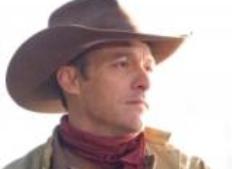 about visiting his grandfather’s movie sets and acting and doing his own stunts in one of this year’s most anticipated blockbusters. And it was a blast to compare notes with him on our favorite John Wayne films.


 !