1. The Magic School Bus Oh, if only every school field trip could be as exciting and informative as the ones the indefatigable Miss Frizzle goes on with her students. From the farthest reaches of the solar system to the smallest cells of the human body, Miss Frizzle and her students take us with them.
2. Miss Nelson Has a Field Day Miss Nelson is a sweet-tempered soul, but when students do not behave, watch out! Miss Viola Swamp is the substitute teacher. Between them, they teach their students many very important lessons.
3. High School Musical Go Wildcats! Jocks and brainiacs find common ground in singing and dancing in these tuneful, irresistibly disarming instant classics from Disney.
4. Lucas Everyone — yes everyone — feels like an insecure outsider at some point in school. I like the way this film shows us from the beginning that while its main character may still be a caterpillar, we know he will be a butterfly long before he does. Great performances by all, including a young Charlie Sheen, and props to the film-makers for staying far away from easy stereotypes.
5. Mad Hot Ballroom A program to teach ballroom dancing to New York City 5th graders in Brooklyn, the Bronx, and Queens sounds like the last thing in the world that would be interesting or relevant to today’s 5th graders. But the beauty of this movie is the way that it shows that grace, dignity, elegance, and pride in mastering a skill are important, thrilling, and transformational.
Copyright MPAA 2009
As I describe in an exclusive story today’s Chicago Sun-Times, The Motion Picture Association of America’s Ratings Board made an unannounced change in April of this year that eliminated almost all restrictions on the content of movie trailers, the brief previews of upcoming films that appear before the feature in theaters and in promotional websites. This was done so quietly that my article is the first public notice of the change.
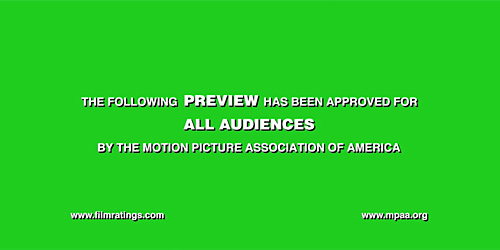
Whether a film is rated G (general audiences), PG (parental guidance suggested), PG-13 (parents strongly cautioned), and R (restricted to ages 17 and up), the “green screen” trailers shown in theaters and online were always preceded by a notice on a green background noting that “the following preview has been approved for all audiences.” A movie could have violence, strong language, nudity, drug use, or other mature content was included in the movie, but the trailer would at most imply it.
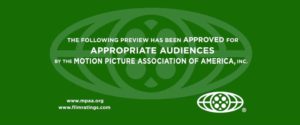
That is, until April, when the green screen trailer language quietly switched from “approved for all audiences” to “approved for appropriate audiences.”
“Appropriate?” Even with context, that word has almost no content. Without any context, it is positively Orwellian. This comes as the MPAA has included increasingly more specific descriptors since 1990 to explain the basis for its movie ratings, after pressure from the Federal Trade Commission, public interest groups, and even the movie-makers like the Directors Guild.
The MPAA does not reveal much about its ratings board, even the names of its members. And its processes and the ratings themselves are still often confusing and inconsistent as demonstrated in the documentary “This Film is Not Yet Rated.” Material that would get an R in a drama gets a PG-13 in a comedy. The F-word can be used twice in a PG-13 as long as it does not refer to sex. The MPAA has improved its descriptors, especially for tobacco and substance abuse. The raunchy comedy “Land of the Lost” was based on a family-friendly 1970’s television show but it was rated “PG-13 for crude and sexual content, and for language including a drug reference.” “Shorts,” a family film about a wishing stone from Robert Rodriguez is “Rated PG for mild action and some rude humor.”
But those descriptors can often be Delphic. You would need a PhD in semiotics to figure out what the often-used “mild thematic elements” is supposed to mean. Last year’s PG-rated “Marley & Me” was marketed to kids as a cute puppy movie, but its “thematic material” included postpartum depression and the very sad death of the dog in the title. A much more kid-friendly pooch movie, “Hotel for Dogs,” is also rated PG for “brief mild thematic elements, language and some crude humor.” “Brief mild thematic elements” in that film presumably refers to the mean foster parents of the orphan characters and some law-breaking by the children.
It used to be that trailers were all essentially rated G. Until this year, there have been basically two categories of MPAA-approved trailers. The “green band” trailers, with the MPAA’s approval on a green background, were approved for audiences of all ages. “Red band” trailers, to be shown in theaters only before R-rated movies, included R-rated material, thus ensuring, the theory went, that they would be seen only by adults who were by definition interested in movies with mature content.
Since the internet has become a key element of movie marketing, however, it has been impossible to limit red band trailers to adult audiences. On the contrary — teenagers are naturally very interested in seeing red band trailers and very good at using the internet to find them. They are also very good at getting around the wispy “restrictions” that at most ask for a name and birth date in order to be able to access the mature material.
“Green band” trailers disclose what the movie’s rating was, but before April of this year, the clips from the movie in the trailer itself would in theory not include anything inappropriate for general audiences. This has had some absurd, even misleading results. The trailer for the raunchy 2001 comedy “Saving Silverman” (“Rated R for sexual content and language”) put CGI underpants on actor Steve Zahn; in the movie itself, he was nude. Despite the “green band” assurance, the trailers often include material that is hardly G-rated. The trailer for the upcoming comedy “Extract” (“Rated R for language, sexual references and some drug use”), which for some inexplicable and inexcusable reason still carries the original green band “approved for all audiences” language, includes references to a part of the male anatomy and marital sexual frustration, and it depicts the main character smoking marijuana.
Now MPAA will make some effort to ensure “appropriate” audiences by matching the content of the trailer to the film it precedes in the theater. However, a trailer for a film rated PG-13 for violence may appear before a movie rated PG-13 for language, so that might not be an “appropriate” audience. And since most young people watch trailers online, there will be no controls whatsoever.
I asked the MPAA about this change. Elizabeth Kaltman, Vice President for
Corporate Communications, acknowledged in an email that they had not made any public announcement of the change, which was “intended to allow motion picture distributors and exhibitors greater freedom to accurately promote motion pictures to appropriate audiences while honoring our pledge to American parents that stronger advertising material will not reach inappropriate younger audiences. Whether a movie is rated G or PG, the appropriate audience tag still maintains that the trailer is appropriate for the viewing audience.”
There are still some glitches in the system. In addition to the PG-13 “Extract,” the trailer for the R-rated horror film “Sorority Girls” mistakenly has the “all audiences” green band but includes some material that is highly inappropriate for children. And it is available to anyone online.
I understand the frustration of the movie studios in trying to convey an accurate and appealing sense of a PG-13 or R-rated movie within the confines of an essentially G-rated trailer. And I recognize the way that the prevalence of almost-universally available red band trailers online has opened the door for previews that provide a more accurate sense of what is in the film. But it is absurd for the MPAA Ratings Board advertising rules to be so obfuscatory and coy with the “appropriate audiences” language. If the material in the trailer is judged to be at the same level of the feature it precedes, there is no reason not to assign a rating and descriptors to the trailer. The “Extract” trailer should begin with a caution that it is rated PG-13 for crude humor, sexual references, and drug use. That is my definition of appropriate.
To express your concerns about this change and ask that trailers reveal their rating, contact Chairman/CEO Dan Glickman:
MPAA
1600 Eye St., NW
Washington, DC 20006
(202) 293-1966 (main)
(202) 296-7410 (fax)
“The Maltese Falcon” Humphrey Bogart, Sidney Greenstreet, Peter Lorre, and Mary Astor are after the item in the title, a jewel-encrusted sculpture. Double and triple cross has never been better or more entertainingly portrayed. An indispensable film, number 23 on the American Film Institute’s list of the top 100 American films of all time.
“The Big Sleep” William Faulker worked on the screenply but the oppressive gothic overtone of the narration is straight from the Raymond Chandler novel in this story so filled with corruption and plot twists that when director Howard Hawks wrote to Chandler to ask him who had committed one of the murders and he admitted that even he didn’t know. The repartee between Lauren Bacall and Humphrey Bogart sizzles.
“Dial M for Murder” One of the nastiest plots ever put on screen, this claustrophobic thriller stars Grace Kelly and Ray Milland. It was originally shot by Alfred Hitchcock in 3D and you can almost feel Kelly’s desperate hand reaching out of the screen — the hand holding those very sharp scissors.
“The Postman Always Rings Twice” The camera is in love with Lana Turner in this movie, made when she was at her most delectably seductive. Poor drifter John Garfield doesn’t have a chance in this Tay Garnett-directed version of the James M. Cain novel about the plot to kill an inconvenient husband. One mystery? The meaning of the title, which is not explained in the book and which has provoked some interesting theories, one of which is mentioned in the movie.
Humanity’s earliest stories were about heroes. I’m sure that the same people who created those breathtaking cave paintings up to 25 thousand years ago sat around the campfire telling stories of people who triumphed over charging sabertooth tigers or assaults from other tribes. The great myths and legends of ancient Greece first used the word that became “hero.” Those literally larger-than-life figures were demi-gods like Hercules who exemplified courage and protecting others without regard to risk.
In 1903, one of the very first films to tell a story, “The Great Train Robbery,” featured a heroic posse who captured the title thieves. And since then the movies have given us unforgettable heroes and heroines who continue to enthrall and inspire us. I’m going to list a dozen of my favorites — six fictional characters and six inspired by real-life heroes. And of course I want to hear about your favorites, too.
FICTION
1. Indiana Jones in Indiana Jones and the Raiders of the Lost Ark and its sequels. What could be more dashing than an adventurer/scholar? Jones admits that even he gets frightened sometimes (he hates snakes). But he always keeps his cool, whether he is facing an enormous opponent who is brandishing a gigantic sword or escaping from an underground temple. His courage, determination, and integrity are what make the non-stop action in this box office champ and its sequels so enthralling.
2. Ellen Ripley in Aliens. Ripley (Sigourney Weaver) shows great courage in the first film of the series, but it is really in the second that we see what a hero she is. In Aliens Ripley saves not just herself but the little girl who is the only survivor of the alien’s attack on a space colony. Ripley’s indomitable spirit is shown right from the beginning, when she deliberately takes on the mission to confront the fears she still harbors from her previous encounter with the alien. And the movie creates a fascinating parallel between Ripley as the child’s substitute mother and the alien itself, who is also trying to protect her children.
3. Jefferson Smith in Mr. Smith Goes to Washington. James Stewart plays a naive young man who is appointed to fill a term in the Senate because the politicians in the state think he will be easy to control. He makes some foolish decisions at first but his honesty and concern for the boys of his state win him the support of his staff. When the corrupt politicians find him less easy to manipulate than they thought, they try to smear him. But he will not back down. His moral courage is what makes him a hero.
4. Virgil Tibbs in In the Heat of the Night. Sidney Poitier plays a Philadelphia homicide detective who is first a suspect in a murder in a small Southern town and then stays on to help solve the crime. Both he and the local sheriff (Oscar-winner Rod Steiger) have to confront their prejudices and acknowledge their similarities. Tibbs exemplifies the famous Hemingway definition of courage as “grace under pressure” as he maintains his dignity and sense of honor in an environment of bigotry and ignorance.
5. Tom Doniphon in The Man Who Shot Liberty Valance John Wayne often played the hero, and one of his best roles was the rancher who stood up to a gunslinging bully (Lee Marvin) who terrorized the town. What makes Doniphon so interesting is hinted in the title. An idealistic young lawyer played by James Stewart builds a political career out of being credited with shooting Valance, a career that enables him to do a lot of good for a lot of people. But Doniphon’s heroism goes beyond the courage to take on the outlaws. He also has the wisdom and modesty to let someone else get the credit and win the woman they both love because he knows it is best for all three of them and for the people of the territory.
6. Han Solo/Luke Skywalker in the Star Wars Trilogy Han Solo (Harrison Ford) and Luke Skywalker (Mark Hamill) are more than a team; they are two sides of one heroic character. Luke is the young, inexperienced “chosen one” and Han is the cynical, cocky rogue. Together, they make a thrilling hero — hope tempered with skepticism, talent tempered with expertise.
And many runners-up (some with more than one hero), including “Goodbye, Mr. Chips,” “Captains Courageous,” “High Noon,” “It’s a Wonderful Life,” “Sister Kenny,” “The Magnificent Seven,” “The Terminator,” “Mad Max,” “Sherlock Holmes,” “Transformers,” “Sleeping Beauty,” and “Twelve Angry Men”
NON-FICTION
1. Norma Rae in Norma Rae Sally Field won an Oscar for playing a character based on real-life activist Crystal Lee Sutton, who helped organize millworkers to get safer working conditions and better wages. Seeing Norma Rae’s growing understanding of her own power and her ability to help her community is like watching a flower bloom.
2. Robin Hood in The Adventures of Robin Hood The real-life Robin Hood was probably not as dashing as Errol Flynn and his legend owes as much to folklore as history. But this stirring story of a truly great hero who fought a corrupt would-be king on behalf of the commoners has inspired people for centuries and he could not ask for better than this magnificent telling. Flynn’s Robin Hood laughs when he is defeated by Little John, exclaiming, “I love a man who can best me!” True heroes surround themselves with people they respect and admire; they love to be challenged.
3. Spartacus in Spartacus Kirk Douglas plays the leader of a slave rebellion in the last century A.D., willing to sacrifice himself for freedom. His example of courage and integrity is so powerful that hundreds of other slaves are inspired to give their own lives in a struggle that still touches us two thousand years later.
4. Erin Brockovich in Erin Brockovich A clerk in a tiny law firm uncovers a cover-up of water contamination by the Pacific Gas and Electric Company that led to a payment of $333 million to the victims. Julia Roberts won an Oscar for her portrayal of the single mother who would not give up. She was tenderhearted and sympathetic with those who had been hurt, and she was fearless in a fight.
5. Atticus Finch in To Kill a Mockingbird Author Harper Lee based this character on her own father, a small-town lawyer. Finch is a man of quiet integrity who teaches his children about the importance of courtesy toward everyone at all times. And in an era when “justice” for African-Americans in the South often meant lynching, Finch insisted on representing a black man unfairly accused of rape. Gregory Peck won an Oscar for his portrayal of a man of impeccable honor and courage.
6. Jaime Escalante in Stand and Deliver Jaime Escalante believed that inner-city high school students could not just study calculus; they could excel. And they did — their test score were so high they were accused of cheating. Sometimes the greatest heroes are those who show us not what they are capable of but what we are capable of. He could have taught math at a school for college-bound kids but he chose to spend his life teaching teenagers to believe in themselves and to dream of greatness along with lessons about derivatives and integrals.
And many runners-up, including “A Man for All Seasons,” “Serpico,” “Amistad,” “Schindler’s List,” “Gandhi,” “Glory,” “Sergeant York,” and “All the President’s Men”
Minow smartly distills plots and rates films with kids and families in mind. In two minutes I learned that “Brüno” uses “very strong, vulgar language” along with “extremely graphic and explicit nudity (male and female).”



 , featuring:
 and its sequels. What could be more dashing than an adventurer/scholar? Jones admits that even he gets frightened sometimes (he hates snakes). But he always keeps his cool, whether he is facing an enormous opponent who is brandishing a gigantic sword or escaping from an underground temple. His courage, determination, and integrity are what make the non-stop action in this box office champ and its sequels so enthralling.
 . Ripley (Sigourney Weaver) shows great courage in the first film of the series, but it is really in the second that we see what a hero she is. In
 . James Stewart plays a naive young man who is appointed to fill a term in the Senate because the politicians in the state think he will be easy to control. He makes some foolish decisions at first but his honesty and concern for the boys of his state win him the support of his staff. When the corrupt politicians find him less easy to manipulate than they thought, they try to smear him. But he will not back down. His moral courage is what makes him a hero.
 . Sidney Poitier plays a Philadelphia homicide detective who is first a suspect in a murder in a small Southern town and then stays on to help solve the crime. Both he and the local sheriff (Oscar-winner Rod Steiger) have to confront their prejudices and acknowledge their similarities. Tibbs exemplifies the famous Hemingway definition of courage as “grace under pressure” as he maintains his dignity and sense of honor in an environment of bigotry and ignorance.
 John Wayne often played the hero, and one of his best roles was the rancher who stood up to a gunslinging bully (Lee Marvin) who terrorized the town. What makes Doniphon so interesting is hinted in the title. An idealistic young lawyer played by James Stewart builds a political career out of being credited with shooting Valance, a career that enables him to do a lot of good for a lot of people. But Doniphon’s heroism goes beyond the courage to take on the outlaws. He also has the wisdom and modesty to let someone else get the credit and win the woman they both love because he knows it is best for all three of them and for the people of the territory.
 Han Solo (Harrison Ford) and Luke Skywalker (Mark Hamill) are more than a team; they are two sides of one heroic character. Luke is the young, inexperienced “chosen one” and Han is the cynical, cocky rogue. Together, they make a thrilling hero — hope tempered with skepticism, talent tempered with expertise.
 Sally Field won an Oscar for playing a character based on real-life activist Crystal Lee Sutton, who helped organize millworkers to get safer working conditions and better wages. Seeing Norma Rae’s growing understanding of her own power and her ability to help her community is like watching a flower bloom.
 The real-life Robin Hood was probably not as dashing as Errol Flynn and his legend owes as much to folklore as history. But this stirring story of a truly great hero who fought a corrupt would-be king on behalf of the commoners has inspired people for centuries and he could not ask for better than this magnificent telling. Flynn’s Robin Hood laughs when he is defeated by Little John, exclaiming, “I love a man who can best me!” True heroes surround themselves with people they respect and admire; they love to be challenged.
 Kirk Douglas plays the leader of a slave rebellion in the last century A.D., willing to sacrifice himself for freedom. His example of courage and integrity is so powerful that hundreds of other slaves are inspired to give their own lives in a struggle that still touches us two thousand years later.
 A clerk in a tiny law firm uncovers a cover-up of water contamination by the Pacific Gas and Electric Company that led to a payment of $333 million to the victims. Julia Roberts won an Oscar for her portrayal of the single mother who would not give up. She was tenderhearted and sympathetic with those who had been hurt, and she was fearless in a fight.
 Author Harper Lee based this character on her own father, a small-town lawyer. Finch is a man of quiet integrity who teaches his children about the importance of courtesy toward everyone at all times. And in an era when “justice” for African-Americans in the South often meant lynching, Finch insisted on representing a black man unfairly accused of rape. Gregory Peck won an Oscar for his portrayal of a man of impeccable honor and courage.
 Jaime Escalante believed that inner-city high school students could not just study calculus; they could excel. And they did — their test score were so high they were accused of cheating. Sometimes the greatest heroes are those who show us not what they are capable of but what we are capable of. He could have taught math at a school for college-bound kids but he chose to spend his life teaching teenagers to believe in themselves and to dream of greatness along with lessons about derivatives and integrals.
 .