
Interview: Marc Fienberg of ‘Play the Game’

Interview: Marc Fienberg of ‘Play the Game’

Posted on August 27, 2009 at 2:00 pm

“Play the Game” has many elements that are often found in sexy romantic comedies — a hero who thinks he does not want to fall in love and a heroine who teaches him that he does not know what he wants, a pair of couples whose romantic ups and downs complement and balance each other, and the usual comic mis-fires before the happily-ever-after ending. But it also has some very unusual elements: the sexy humor about the romances of the elderly and the fact that the important relationship in the film is between a devoted grandfather and grandson. Another surprise: the grandfather making the Viagra jokes is played by Andy Griffith. 148pzf8.jpg
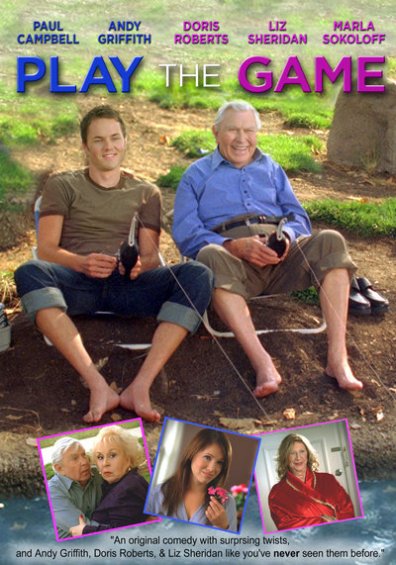
The movie’s title comes from the games played by the main characters in order to maintain control of their romantic relationships.
So I began my interview with writer-director Marc Fienberg by asking him about the worst game he ever played during his dating days.
It was a trick that appears in the movie, “planned spontaneity,” arranging a chance encounter, or what looks like a chance encounter, even though you planned it out meticulously.
I tried to seduce my wife for seven years. Some might call it stalking — any other woman would have called the police. I drove up to Madison after four years and told her I was in town for a consulting gig, even though I was there just to see her. It didn’t work. My friends who helped me develop these tricks of the trade, it worked like a charm for them. I wish I was as suave and debonair as the guy in the movie.
So, despite the “planned spontaneity” ploy, it is not autobiographical?
It is not so much autobiographical, as a reflection of my life. In my case, only three years later, I just put it on the line and told the truth. I took my own advice and it actually worked. Lying in general is not good.
So I’ve heard! It was nice to see Clint Howard in this film, and of course he has that connection to Andy Griffith going back to his guest appearances with his brother Ron Howard on the old “Andy Griffith Show.”
Clint Howard was the first actor to sign on board. I always wanted him for this part. We had actually gone out to Andy Griffith but he said no at first. We were on a short schedule and he worried that he didn’t have time to learn his lines. And he was concerned about the sex scenes. He is a religious man and he wanted to be consistent with his values. But he said he couldn’t stop thinking about it. The bedroom scene showed older people in a nice, honest, realistic light. And very important — he didn’t die in it. There are not a lot of parts for older characters that don’t have them dying at the end. This movie was all about passion and living life to the fullest and holding out hope that there’s love and companionship at all ages and he liked that.
Griffith and many of your other actors have a television background — Liz Sheridan on “Seinfeld,” Doris Roberts on “Everybody Loves Raymond,” Marla Sokoloff (“The Practice”). Was it an adjustment to work on a feature film?
TV and movies are similar enough from an actor’s standpoint. It’s always hard but the actors brought something even I didn’t see.
What’s next?
“The Machine,” more of a family comedy about a young goat herder who dreams of doing bigger things with his life. Then the internet comes to town and he is forced to save his village. I’m also working on another romantic comedy and doing commercials now, too.
How did your own family influence this story?
My grandfather started dating when he was 89 years old. The more time I spent with him, the more I appreciated different things in life and what was important. When you see these vibrant, passionate lives you more easily focus on what matters in the world.
My father was my first inspiration. He was a closet writer. And I had teachers and read authors who have inspired me to follow my passion. Giving up a safe, secure career, the hardest part was taking that leap to a career that had enjoyment and fulfillment and could make the world a better place. I studied business and started a million dollar e-commerce company that got sold. I wanted to make people laugh, affect people. One of the main things that gave me strength was my kids. It was important to have them see me doing something fulfilling, to set an example for them. We realized that our concern about the financial risk of trying to make a career in movies affected me and my wife much more than the kids.
In the movie, the father is the bad influence and grandfather is the good influence. It was when he started working for his father that he started being less honest. And it is when he starts trying to teach his grandfather not to be honest with women that he learns how important honesty — with himself and others — really is.

Related Tags:


Behind the Scenes Directors Interview Writers

Tribute: Teddy Kennedy

Posted on August 27, 2009 at 1:34 pm

The essence of Sen. Kennedy’s political power was crystallized by Sen. Lamar Alexander of Tennessee, one of many Republicans who worked with the late senator to forge compromises on bills. Alexander called Sen. Kennedy “at once the most partisan and the most constructive United States senator. He could preach the party line as well as bridge differences better than any Democrat.”

This quote in the Washington Post obituary for Teddy Kennedy seems to illuminate the essence of a man who was an idealist and a pragmatist, a man who battled enormous public and private challenges. His example will continue to inspire all who believe that the dream will never die.

Related Tags:


Tribute
Tribute: Dominick Dunne

Tribute: Dominick Dunne

Posted on August 27, 2009 at 12:57 pm

Fallen Hollywood luminary, name-dropper, world-class party-goer, best-selling author, and force for justice Dominick Dunne died of cancer yesterday at age 83. He was the brother of screenwriter John Gregory Dunne (the subject of The Year of Magical Thinking by his widow, Joan Didion). He was the father of actor/writer/director Griffin Dunne and Alex Dunne. And he was the father of Dominique Dunne, who played the oldest daughter in Poltergeist. She was murdered in 1982 by an ex-boyfriend whose inadequate sentence caused Dunne to devote the rest of his life to pursuing justice as a writer and activist.

Dunne was the best-selling author of novels based on real-life incidents of society scandal that were often adapted for glossy made-for-television productions like An Inconvenient Woman and The Two Mrs. Grenvilles. And he wrote non-fiction accounts of real-life scandal for Vanity Fair.

None of it was as entertaining as his own story, which he told in the books Fatal Charms and Other Tales of Today and The Mansions of Limbo and in a documentary called Dominick Dunne: After the Party.

I heard him speak once and he was filled with bubbly and sometimes wicked anecdotes about the rich and famous. But he was also an enormously appealing presence, completely sincere in his essential decency. That comes through in a wonderful story he told for The Moth called “My Bunkmate Was In For Murder.” It is the tale of his arrest for possession of marijuana, which, since it was found on him at the airport coming back from another country made it a very serious offence. His rescue by from a most unexpected friend for a most unexpected reason makes it a perfect way to remember him.

Related Tags:


Tribute

Wiseguy

Posted on August 27, 2009 at 8:00 am

“Wiseguy” was a tough, smart 1980’s television series about a cop (Ken Wahl) who goes deep undercover, starting with 18 months in prison to establish his criminal credentials. In this first season, just out on DVD, he infiltrates the organization of a volatile crime boss played by Ray Sharkey. The second season co-starred a very young Kevin Spacey. Warning: the producers of the DVD set did not secure the original music rights, so the soundtrack does not include “Knights in White Satin” and some of the other striking songs that gave extra power to the original broadcast. But it is still a sharp crime drama with excellent performances. I hope the second season is released. It featured a mesmerizing performance from a very young Kevin Spacey.

Related Tags:


Crime Drama Television
Angels in Movies and Television: Before 1970

Angels in Movies and Television: Before 1970

Posted on August 26, 2009 at 3:59 pm

Ellen Leventry’s list of post-1990 angels on movies and television got me thinking about some of my favorites from the old days. Hard to believe that performers from Jack Benny to Cary Grant to Donald Duck have taken on an angelic role. Angels have appeared in comedies, dramas, cartoons, television series, and even in musicals. They are usually in the story to guide the main character, but quite often they end up learning something, too.

1. Claude Rains and Edward Everett Horton in Here Comes Mr. Jordan. This was the first version of a story later remade with Warren Beatty in “Heaven Can Wait” and Chris Rock in “Down to Earth.” Robert Montgomery (father of “Bewitched’s” Elizabeth Montgomery) plays a boxer whose soul is prematurely taken by an apprentice angel (Horton). Mr. Jordan (Rains), the supervising angel, has to help find a new body for the boxer’s soul. This gentle comedy has a sweetness and kindness that makes it touching as well as entertaining.

2. Clifton Webb in “For Heaven’s Sake.” The impeccable (if slightly fussy) Webb plays an angel who is sent to earth on an important task. There is a special place in heaven for the souls of babies waiting to be born, and two of them are getting anxious. Their prospective parents are postponing parenthood because they are too wrapped up in themselves. Webb appears as a rancher and another kind of angel — a theatrical backer — to get them to change their minds. It is fun to see the ultra-urbane Webb trying to look like a cowpoke and the story is charming.

3. The invisible (except to a little girl) baseball players in Angels in the Outfield. The 1994 remake has its pleasures, but I still prefer the 1951 original with Paul Douglas as the temperamental manager of the Pittsburgh Pirates and Janet Leigh as the reporter who befriends him after a little girl from an orphanage announces that she sees angels on the baseball diamond. Douglas is wonderfully appealing as he tries to learn to control his temper and finds himself falling for Leigh.

4. Henry Travers in It’s a Wonderful Life. Probably the most-loved angel in the history of movies is Clarence, who has a very unconventional way of helping George Bailey (James Stewart) — by showing him what life would have been like if he had not been born. Travers has just the right warmth and twinkle to make us believe that every time a bell rings an angel gets its wings.

5. Cary Grant in The Bishop’s Wife. The handsomest angel in movie history is Grant’s Dudley, who arrives at Christmas to guide a clergyman (David Niven) who has neglected his family and his faith and become too caught up in the effort to build a cathedral. The most touching moments come from the look in Dudley’s eyes as he understands that even heaven does not match the pleasures of home and family.

6. Gordon MacRae in Carousel. A carnival barker who is desperate for money to care for his pregnant wife dies in a failed robbery attempt. He is sent back to earth to help his teenage daughter, now graduating from high school, to let her know she will never walk alone.

7. Henry Jones in “The Twilight Zone” episode “Mr. Bevis.” Even angels make mistakes. And in this charming episode of the Rod Serling classic television show, Orson Bean plays a lovable loser whose guardian angel (Jones) offers to turn him into a “normal” upright citizen with a responsible job and a solid credit rating. But once Bevis becomes “normal,” he isn’t Bevis anymore, and he and the angel learn that the only way to be happy is to be yourself.

8. Jack Benny in “The Horn Blows at Midnight.” Benny loved to make jokes about this film and considered it a low point of his career. But it is actually a lot of fun. Benny plays a trumpet-player who dreams that he is the angel Athanael, who has been ordered to blow his horn at midnight to signal the end of the earth. Two fallen angels try to steal it from him so they can continue to experience earthly pleasures. The story is softened a bit from the studio-added dream structure, but it still manages some sharp observations and endearing characters. The celestially beautiful Alexis Smith makes a fine angelic companion as well.

9. Donald Duck in “Donald’s Better Self.” Even the irascible Disney duck can be persuaded to listen to what Abraham Lincoln called “the better angels of our nature.” In this animated short Donald is a schoolboy who is tempted by the devil to skip school and try smoking but is rescued by the angel, who has not only a shining (and waterproof) halo but a righteous punch.

10. Conrad Veidt in “The Passing of the Third Floor Back.” Awkwardly filmed but still very moving, this film is based on the story by Jerome K. Jerome of a stranger who changes the lives of the residents of a boarding house. Veidt often played bad guys, but here he truly shines as a character whose quiet dignity and courteous kindness bring warmth, self-respect, and inspiration to the other tenants.

Related Tags:


For Your Netflix Queue Lists Movie Mom’s Top Picks for Families Neglected gem Spiritual films Television
THE MOVIE MOM® is a registered trademark of Nell Minow. Use of the mark without express consent from Nell Minow constitutes trademark infringement and unfair competition in violation of federal and state laws. All material © Nell Minow 1995-2026, all rights reserved, and no use or republication is permitted without explicit permission. This site hosts Nell Minow’s Movie Mom® archive, with material that originally appeared on Yahoo! Movies, Beliefnet, and other sources. Much of her new material can be found at Rogerebert.com, Huffington Post, and WheretoWatch. Her books include The Movie Mom’s Guide to Family Movies and 101 Must-See Movie Moments, and she can be heard each week on radio stations across the country.

Website Designed by Max LaZebnik