
Is ‘Coraline’ Too Scary for Kids?

Posted on February 7, 2009 at 4:16 pm

It is always a challenge to guide parents about how scary a movie is, but it is especially difficult with this week’s release of “Coraline,” the 3D stop-motion animated film based on a popular book for children by Neil Gaiman. By coincidence, Gaiman was just awarded this year’s top prize for children’s literature, the Newberry award, for The Graveyard Book, the story of a boy raised by ghosts.
SPOILER ALERT: There are ghosts in “Coraline,” too, plus a very scary insect-like predator who likes to replace children’s eyes with sewn-on black buttons and many other macabre and grotesque images. But is that scarier than “A Series of Unfortunate Events” or “The Wizard of Oz” or the Narnia movies? Is it scarier than Disney movies like “Bambi” or “The Lion King” (both feature the death of a parent) or fairy tales like “Hansel and Gretel” or “Snow White?”
Some of the commenters on this blog think so, and have noted sharply that they think this movie is too scary for younger children. The Motion Picture Association’s ratings board gave it a PG. I originally recommended it for 4th grade and up but on reflection have changed it to middle school and up, though when I saw the film again last night there were younger children in the audience who seemed to be doing fine with it.
There are many kinds of scary material and every kid reacts differently to every one of them. Some are disturbed by tension and peril but don’t mind battle scenes. Some get very upset when an animal is injured but don’t blink an eye when a human character is killed. Some kids react because they are sensitive about events going on in their own lives, loss of a grandparent or a pet, a move, or divorce.
In “Coraline,” some kids may be rattled by the images in this film like the skeletal designs of one (good) character’s helmet and gloves or the increasingly spidery appearance of the villain. Some may be upset by the themes of the film that includes the ghosts of three eyeless and devoured children. Some will be very reassured by the brave and resilient heroine, finding it exciting but not disturbing.
The New York Times’ A. O. Scott led off his review of “Coraline” with some thoughts on its capacity to scare its young audience:

There are many scenes and images in “Coraline” that are likely to scare children. This is not a warning but rather a recommendation, since the cultivation of fright can be one of the great pleasures of youthful moviegoing. As long as it doesn’t go too far toward violence or mortal dread, a film that elicits a tingle of unease or a tremor of spookiness can be a tonic to sensibilities dulled by wholesome, anodyne, school-approved entertainments.

This brings us back to the enduring appeal of scary stories. Children have read millions of scary books from R.L. Stine and Lemony Snicket and teenagers have bought millions of tickets to the “Halloween,” “Friday the 13th,” “Nightmare on Elm Street,” and “Saw” series. The top box office films of all time include scary stories like “Jaws,” “Pirates of the Caribbean,” and “Silence of the Lambs.” Even family-friendly G-rated films like “Finding Nemo,” “Babe,” and “The Sound of Music” have scary parts. That is because one of the reasons we tell and read and watch stories is because they give us a way to understand and conquer our fears. It will always be difficult for parents to determine what will be too scary for their children. I will do my best to describe what I see and provide some guidance but ultimately the decision can only be made by the ones who know the child best. And ultimately, parents must realize that sometimes a part of seeing a movie is being unsettled and learning to resolve those feelings.
P.S. “Coraline” also has a burlesque performance with two fat, elderly ladies in tiny little costumes that turn out to zip off, revealing younger, lither performers inside. How should a parent evaluate that on a scale of nudity or sexual material? Because it was comic and because it turned out not to be “real,” but a humorous fat suit, I described it as “brief comic nudity (skimpy costume).” I welcome other suggestions and reactions.

Related Tags:


Commentary Spoiler Alert Understanding Media and Pop Culture

Super Bowl Ads — Not Family Friendly?

Posted on January 31, 2009 at 8:00 am

Many families have Super Bowl traditions as the generations gather around the television to watch the biggest football game of the year. It gives families a wonderful opportunity to share their interests and histories and to talk about the skill, determination, teamwork, practice, and courage that go into competing at that level. super-bowl-2009.gif
Unfortunately, the ads, which have generated almost as much press as the game itself, can lead to a whole other kind of family conversation and not one many parents welcome. Every year, I hear complaints from parents who find themselves getting questions about ED or who find their children imitating the silly or hyper-sexed behavior from alcohol ads.
Common Sense Media has a new report based on a review of the ads in over 50 games with more than 160 hours and more than 5000 commercials.
They found:

  • 1 out of every 6 commercials shown contained messages and images that were inappropriate for young kids.
  • 40% of the games included advertisements for erectile-dysfunction drugs (Viagra® and Cialis®)
  • More than 500 of the ads involved significant levels of violence, including gun fights, explosions and murders.
  • 300 of the ads were for alcohol.
  • 80 of the ads included significant levels of sexuality, including scenes about prostitution and strippers.
  • Nearly half (44.7%) of the violent and sexual ads were promotions by the networks for their own programs.

94% of the mothers polled said that they were concerned about inappropriate television commercials during pro football games. And at least one father agrees:

“I wasn’t too happy with ads for erectile-dysfunction drugs popping up every 15 minutes whenever I watched a football game with my daughters in the room.”

President Barack Obama,
The Audacity of Hope, 2006

The report, called Broadcast Dysfunction: Sex, Violence, Alcohol, and the NFL is well worth reading. And Common Sense Media’s site has something even more important — a direct link to send the NFL a complaint using their draft text or your own words. If this is a concern for you and your family, I urge you to let Commissioner Roger Goodell know how you feel.

Related Tags:


Marketing to Kids Television Understanding Media and Pop Culture

Critics Critiquing Critics

Posted on January 28, 2009 at 4:00 pm

Critics complain about having to decide how many stars to give a movie. There are times when it does feel very arbitrary to try to assign stars or letter grades to a film. And sometimes I think it creates more confusion than it dispels. My view is that you can only grade a movie within the context of its own aspirations and its intended audience. Otherwise, every review is going to begin, “Well, it’s no Citizen Kane. I also rethink my grade when the movie comes out again on DVD.
Eric Childress of CriticWatch provides his annual dissection of the worst movie critics, those who can’t write, those who don’t know anything about movies or about reviewing them, and worst of all those who will say anything (and I mean anything) about any movie (and I mean any movie) in order to get their name in an ad. I breathed a sigh of relief when the only mention of my site was a positive one but nevertheless resolved to do my best to stay away from his list of overused adjectives. (Note: some strong language, understandable under the circumstances.)

Related Tags:


Understanding Media and Pop Culture

Blagojevich Compares Himself to Movie Heroes

Posted on January 28, 2009 at 9:34 am

Life imitates art, or tries to, as Illinois Governor Rod Blagojevich proclaims his innocence with examples from the movies. The governor is accused of trying to sell the Senate seat vacated by Barack Obama and is currently being impeached by the state legislature. As Bob Mondello of NPR explains with his usual erudition and wit, the always-colorful Blagojevich likes to compare himself to characters in movies to show that it is all just a political ploy and that he has not done anything wrong.

Related Tags:


Commentary Understanding Media and Pop Culture

The First Black Presidents — in the Movies

Posted on January 20, 2009 at 12:00 pm

There is a thoughtful article in the New York Times by film critics A.O. Scott and Manohla Dargis about the way that on-screen images of African-Americans in the last five decades have reflected and influenced the way race is understood in this country.
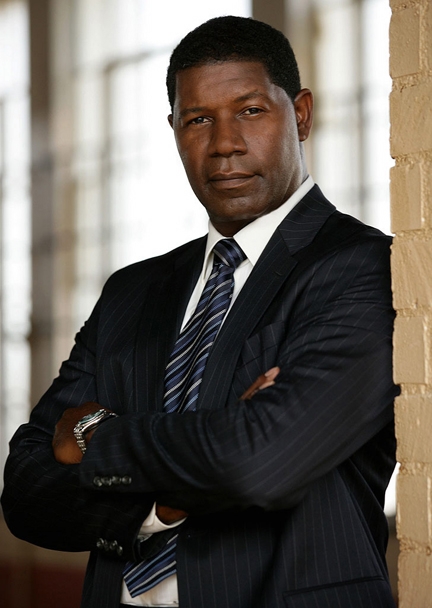
david-palmer-dennis-haysbert1.jpgMake no mistake: Hollywood’s historic refusal to embrace black artists and its insistence on racist caricatures and stereotypes linger to this day. Yet in the past 50 years — or, to be precise, in the 47 years since Mr. Obama was born — black men in the movies have traveled from the ghetto to the boardroom, from supporting roles in kitchens, liveries and social-problem movies to the rarefied summit of the Hollywood A-list. In those years the movies have helped images of black popular life emerge from behind what W. E. B. Du Bois called “a vast veil,” creating public spaces in which we could glimpse who we are and what we might become.
Filmmakers as diverse as Charles Burnett, Spike Lee and John Singleton have helped tear away that veil, as have performers who have fought and transcended stereotypes of savagery and servility to create new, richer, truer images of black life. Along the way an archetype has emerged, that of the black male hero, who, like Will Smith in “Independence Day,” rises from the ashes — in the case of that movie, the smoldering ashes of the White House — to save the day or just the family vacation. The movies of the past half-century hardly prophesy the present moment, but they offer intriguing premonitions, quick-sketch pictures and sometimes richly realized portraits of black men grappling with issues of identity and the possibilities of power. They have helped write the prehistory of the Obama presidency.
They go on to discuss archetypes ranging from Sidney Poitier’s roles as “a benign emblem of black power” to “not-so-benign emblem(s) of black power, erotic and otherwise, the hypersexualized black male (who) also became fodder for white exploitation” like Sweet Sweetback and Superfly all the way to the predatory cop played by Oscar-winner Denzel Washington in “Training Day.” They also identify the “Black Provocateur” played by Richard Pryor or Eddie Murphy and the “Black Father,” a kind of safe harbor for former provocateurs like Murphy, Ice Cube, and Bernie Mac.
Movie history is littered with the mangled (Joe Morton in “Terminator 2”), flayed (Mr. Freeman in “Unforgiven”) and even mauled (Harold Perrineau in “The Edge”) bodies of supporting black characters, some sacrificed on an altar of their relationships with the white headliners, others rendered into first prey for horror-movie monsters. There has often been a distinct messianic cast to this sacrifice, made explicit in films as different as the 1968 zombie flick “Night of the Living Dead” and the 1999 prison drama “The Green Mile.” In the second, Michael Clarke Duncan plays a death-row inmate who suggests a prison-house Jesus: “I’m tired of people being ugly to each other. I’m tired of all the pain I feel and hear in the world every day.” More recently, Will Smith picked up the mantle of the Black Messiah in four of his star turns: “The Pursuit of Happyness,” “I Am Legend,” “Hancock” and “Seven Pounds.”
Savior, counselor, patriarch, oracle, avenger, role model — compared with all this, being president looks like a pretty straightforward job.
James Earl Jones played the first black President in “The Man” in 1972, written by “The Twilight Zone’s” Rod Serling. Even in a fantasy, it was so unthinkable that he could be elected or supported by the American people that the film has him become President only because the President and Speaker of the House are killed in a building collapse, and the Vice-President is too ill to serve. And most of the movie is his struggle to be a leader for both black and white Americans.

More than 30 years later, Dennis Haysbert played a confident and commanding President on the television show “24.” Like the President played by Jones, he is targeted in an assassination attempt but it may be as much a function of his being a character in a television series about terrorism as it is related to race.
Gawker’s list of seven movies featuring black Presidents has films ranging from satire to sci-fi, played by actors from Terry Crews to Morgan Freeman. Now that it is no longer hypothetical or symbolic, it will be fascinating to see the way that this administration influences future Presidential portrayals. And what will future movie and television Presidents do to suggest the changes ahead? “24” now has Cherry Jones as a female President….

Related Tags:


Understanding Media and Pop Culture
THE MOVIE MOM® is a registered trademark of Nell Minow. Use of the mark without express consent from Nell Minow constitutes trademark infringement and unfair competition in violation of federal and state laws. All material © Nell Minow 1995-2026, all rights reserved, and no use or republication is permitted without explicit permission. This site hosts Nell Minow’s Movie Mom® archive, with material that originally appeared on Yahoo! Movies, Beliefnet, and other sources. Much of her new material can be found at Rogerebert.com, Huffington Post, and WheretoWatch. Her books include The Movie Mom’s Guide to Family Movies and 101 Must-See Movie Moments, and she can be heard each week on radio stations across the country.

Website Designed by Max LaZebnik