Why all the Vampires?

Posted on August 29, 2008 at 8:00 am

Vampires are really big this year. Breaking Dawn, the fourth volume in Stephanie Meyers’ Twilight series was the most eagerly anticipated book since Harry Potter and the Deathly Hallows. And one of the most popular events at Comic-Con was the panel for the upcoming movie with Kristen Stewart as Bella, the human girl who is in love with a vampire.

Also popular at Comic-Con was the appearance by Anna Paquin of the new HBO series True Blood, created by Alan Ball of “Six Feet Under” and “American Beauty.” In this series, the invention of a synthetic blood product has made it possible for vampires to “come out of the coffin” and join human society.

There are many reasons for the enduring appeal of the vampire myths, which date back thousands of years and recur in different forms in the folklore of many different cultures. The most popular modern conception is based in the Eastern European stories that inspired Bram Stoker’s Dracula. That has inspired classic movies from spooky classics (Dracula) to silly comedies (Dracula – Dead and Loving It, Once Bitten, and the unforgettably titled The Fearless Vampire Killers, or Pardon Me but Your Teeth Are in My Neck). Vampires have been played by everyone from Tom Cruise and Brad Pitt to Jim Carrey, Wesley Snipes, Catherine Deneuve, the Coreys (Haim and Feldman), Humphrey Bogart, and in an hilarious SNL skit, James Woods. And they have been fought by everyone from Hugh Jackman to Buffy. in Shadow of the Vampire, Willem Dafoe plays a vampire playing a vampire, based on the mystery behind the filming of “Nosferatu,” which basically stole its entire story from Dracula but changed the name so they would not have to pay royalties.

One aspect of the vampire myth that is especially alluring is the idea of being un-killable. The life they lead may be perverse and tortured, but it is eternal. Ann Rice, author of Interview with a Vampire and its sequels, has said that it was the death of her child that inspired her to write a series of books about creatures who do not die. Her books have sold over 100 million copies. Certainly, the mixture of death and life that a vampire represents is a part of what draws us to the stories, helping us to explore our fears and desires. In the case of the Twilight series, the vampire adds another dimension. These days, writers of romances complain, it is harder and harder to find reasons for the couple in the story not to get together so quickly there is no time for — a story. The traditional obstacles keeping couples apart, especially cultural norms against having sex with someone you don’t know very well, seem quaint and out of date. But if the guy you like is a vampire and you are not, that’s a darn good reason not to get close any way other than emotionally and psychically. These books explore the deep romanticism of that kind of relationship.

The Canadian series Blood Ties is now showing on Lifetime. It is the story of an investigator specializing in the supernatural and it features “the sexy 450-year-old vampire, Henry” as her adviser and possible love interest. And “Moonlight,” the story of a private investigator turned into a vampire on his wedding night and now interested in a human woman, has been canceled by CBS but may return on another station.

More classic vampires:
Related Tags:


Books Commentary Teenagers Television Understanding Media and Pop Culture

Hot Weekend — Cold Opens

Posted on August 28, 2008 at 8:00 am

When a studio is fairly certain it will not get a single good review it simply refuses to let the critics get a look before the release date. That’s called a “cold open.” Usually, movies that open cold are based on video games and/or very graphic horror films and/or directed by the legendary Uwe Boll (generally considered the worst director currently working in movies), and/or directed by Tyler Perry (no idea why this is because I really like his movies), and/or a very dumb generic gross-out comedy, especially of the “Scary Movie,” “Date Movie,” “Epic Movie,” etc. franchise.
And traditionally, Labor Day weekend is the worst weekend of the year for movies, when the studios release films that they have no expectations for whatsoever.
Thus, we have three cold opens this weekend. One is the action film “Babylon A.D.” with Vin Diesel. The last film by this director was “Gothika,” which gave rise to my well-known “Gothika rule” (if a movie has a mind-numbingly horrible ending I will give it away to anyone who sends me an email). Even he is telling people not to see this movie.

“I’m very unhappy with the film,” Mathieu Kassovitz tells amctv.com. “The script wasn’t respected. Bad producers, bad partners. It was a terrible experience…” hile he was attracted to the material’s dense geopolitical themes, Fox, the studio co-financing the movie, only wanted “pure violence and stupidity … Parts of the movie are like a bad episode of 24.” He tells the website that Fox “made everything difficult from A to Z.”

The other two movies opening this week are comedies. “Disaster Movie” is from the people who gave us “Date Movie” and “Epic Movie.” They have yet to give us “Good Movie.” I feel confident in saying that Josh Levin’s Slate review of a previous film in this tired franchise is vastly more entertaining than any of their movies. And then there’s “College.” Its poster features a kid throwing up in a toilet. Enough said.
Now would be a good time to enjoy those last summer swims and barbecues, do some back-to-school shopping, catch up on some of the big releases you might have missed or see your favorites a second time — and get ready for the fall. In September alone we have the new Tyler Perry, the new DeNiro/Pacino movie, “Igor” with John Cusack, and the new Coen brothers movie, starring George Clooney and Brad Pitt. I can’t wait!

Related Tags:


Commentary Understanding Media and Pop Culture

Sisterhoods and Bromances: Where Are the Love Stories?

Posted on August 19, 2008 at 10:00 am

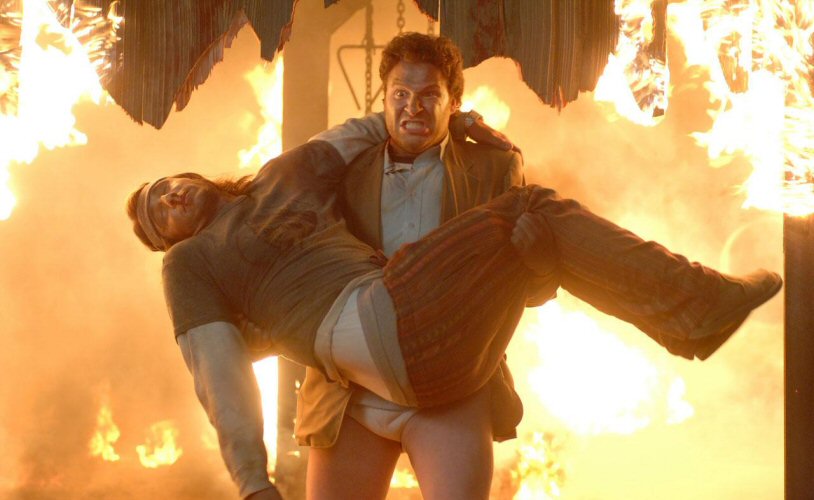
We have a lot of tender love stories in movies this year but they have mostly been about friendships. I can’t remember a time when there have been so few movies about falling in romantic love. What used to be the most reliable genre for movie success, the traditional “boy meets girl, boy loses girl, boy gets girl” (and variations thereon) has all but disappeared from the screen this year. pineapple-express-2.jpg
If you look at the top 20 box offices successes of the year so far and the current releases, you see movies about girlfriends (“Sex and the City,” “Sisterhood of the Traveling Pants”) and “bromances” (“Step Brothers,” “Pineapple Express”). We have some superheroes who long for romance but neither Batman, the Hulk, Hancock, nor Iron Man can be said to “get the girl.” The closest we have to a superhero love story is “Hellboy 2.” There is some incidental romance in the new “Indiana Jones” and “Mummy 3” but it is almost an afterthought at the edges of the action, just as in “Get Smart” and “Don’t Mess with the Zohan” it is at the edges of the comedy. But we’ve seen nothing along the lines of last year’s romance-centered movies like “Enchanted,” “Dan in Real Life,” or “Juno” and stories of falling in love seem relegated to television on the Lifetime channel.
sexandthecityred.jpgWe watch romantic movies for the same reason we watch action films — they are both about life’s great adventure, both ways for us to anticipate and relive our own choices and experiences.
More than halfway through 2008, the most romantic love story of the year so far at the movies has been this one:

(more…)

Related Tags:


Commentary Understanding Media and Pop Culture

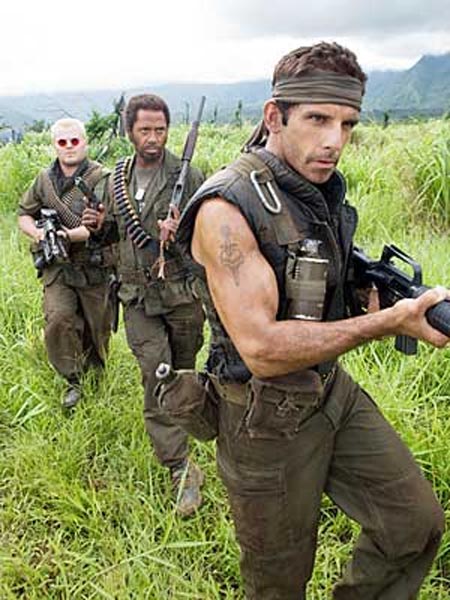
Who Should Be Offended by ‘Tropic Thunder?’

Posted on August 16, 2008 at 4:03 pm

A coalition of disability group has called for a boycott of the R-rated satire Tropic Thunder. They are asking people not to see the movie because they say ittropic-thunder-stiller-rdj-.jpg
demeans, insults, and harms individuals with intellectual disabilities by using the “R- word.” Furthermore, it perpetuates derogatory images and stereotypes of individuals with intellectual disabilities including mocking their physical appearance and speech, supports the continuation of inappropriate myths and misperceptions, and legitimizes painful discrimination, exclusion, and bullying.
Special Olympics Chair Timothy Shriver said
Some may think we ought to lighten up and not get so worked up because this is, after all, just a film. But films become part of pop culture and character lines are repeated in other settings time and time again. It’s clear to me that lines from this particular film will provide hurtful ammunition outside the movie theatre. While I realize that the film’s creators call this a parody and they never intended to hurt anyone, it doesn’t mean those words won’t.
I respect their concerns for the dignity of the disabled, but they are simply wrong and their comments reflect such a fundamental misunderstanding of the film that it is impossible to believe that anyone connected with these statements actually saw it. I side with the other movie critics who have said that this film is not disrespectful or inappropriate in the treatment of disabled people.
The movie in no way makes fun of developmentally disabled people. On the contrary. It makes fun of pretentious actors who think they can win awards by portraying developmentally disabled people.

(more…)

Related Tags:


Commentary Understanding Media and Pop Culture

Remembering the Hays Code — Movie Censorship from 1930-1968

Posted on August 14, 2008 at 8:00 am

NPR’s Bob Mondello has an excellent essay on the Hays Code, which governed Hollywood films from 1930-1968, when it was replaced by the MPAA rating system.
A reaction to some provocative films in the days of the early talkies, the code was named for the former Postmaster Will Hays, who created it at the request of the movie studios.

Among those considerations: that no picture should ever “lower the moral standards of those who see it” and that “the sympathy of the audience shall never be thrown to the side of crime, wrongdoing, evil or sin.” There was an updated, much-expanded list of “don’ts” and “be carefuls,” with bans on nudity, suggestive dancing and lustful kissing. The mocking of religion and the depiction of illegal drug use were prohibited, as were interracial romance, revenge plots and the showing of a crime method clearly enough that it might be imitated.

There was very little about violence in the Code but there were restrictions that seem quaint today in other areas — for example, it prohibited portrayals of clergy that made them appear corrupt or foolish. There are legendary stories of battles over whether Rhett Butler would be allowed to say “I don’t give a damn” in “Gone With the Wind” (he was) or whether Bette Davis could get away with murder in “The Letter” (she wasn’t). And writer-directors like Ernst Lubitsch and Preston Sturges prided themselves on getting past the censors with subtle double entendres.
The Code was abandoned 40 years ago in favor of the ratings system. While it is very far from perfect, it does have the advantage of making it possible for movies to cover a wider range of subjects and characters.

Related Tags:


Commentary Understanding Media and Pop Culture
THE MOVIE MOM® is a registered trademark of Nell Minow. Use of the mark without express consent from Nell Minow constitutes trademark infringement and unfair competition in violation of federal and state laws. All material © Nell Minow 1995-2026, all rights reserved, and no use or republication is permitted without explicit permission. This site hosts Nell Minow’s Movie Mom® archive, with material that originally appeared on Yahoo! Movies, Beliefnet, and other sources. Much of her new material can be found at Rogerebert.com, Huffington Post, and WheretoWatch. Her books include The Movie Mom’s Guide to Family Movies and 101 Must-See Movie Moments, and she can be heard each week on radio stations across the country.

Website Designed by Max LaZebnik