
Parents Should Not Worry About the Gay Character in “Beauty and the Beast”

Parents Should Not Worry About the Gay Character in “Beauty and the Beast”

Posted on March 13, 2017 at 3:08 pm

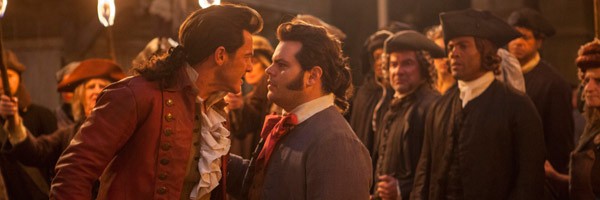
This week’s live action remake of “Beauty and the Beast” features a character who is gay, leading to some complaints, some controversy, and one theater refusing to show the film. I applaud Disney for the way they have created the character and think the film is entirely suitable for family viewing.
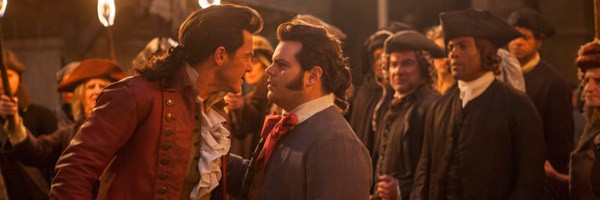
Copyright Disney 2017

In what way is the character gay? The character is LeFou, played by Josh Gad (Olaf from “Frozen”). He is a sort of sidekick/henchman to the film’s villain Gaston. Making him gay just means he has something of a gently suggested crush on Gaston, which makes his character more sympathetic and his loyalty more understandable.

At the end of the film, we see him dancing with a female character and then briefly with another male character. That male character seems happy when magically put in a dress — for just a second or two.

That’s it. There is nothing explicit or sexual about the portrayal.

Why is it important to have gay characters in movies for families? Families should see characters who reflect the diversity of the world around us. Children need to see the people they know portrayed in the media. Most kids will not even notice whether LeFou is gay or not, but kids who have gay friends or family members or whose classmates may have gay parents or siblings or who may think they may be gay themselves may find it reassuring to see a gay character appreciated and happy.

What should I say if my child asks about the character or the controversy? “Some boys like girls and some boys like boys.” “Some people are uncomfortable about others being gay because they don’t understand it, but fortunately, stories like this help us see how gay people are cherished members of our community in movies like they are in the world.” “There are other gay characters in stories, too, like Dumbledore.” And “I’m always happy to hear your thoughts and try to answer your questions.”

Related Tags:


GLBTQ and Diversity Understanding Media and Pop Culture

Four Very Different Movies Out Right Now Ask the Same Question

Posted on March 12, 2017 at 3:31 pm

SPOILER ALERT! This post discusses important plot surprises in four films.

They could not be more different in genre, budget, and intended audience, but four movies now in theaters have one important central theme in common: they are all about someone at the end of life, looking back and trying to see what it all meant. They all deal with meaning and purpose.

In The Sense of an Ending, Logan, Before I Fall, and “The Last Words” characters discover that their life is not what they thought and not what they wanted when it is almost too late to make a change. That’s one film based on a literary novel with top British actors, a complicated plot that goes back and forth in time and elegant, understated dialog, one conclusion to a comic book franchise with references to classic Westerns like “Shane,” one movie based on a YA novel that’s like a sad “Groundhog Day,” and one is a heartwarming story with a beloved Hollywood Oscar winner playing an irascible woman who wants to control her own obituary. Perhaps it is just a coincidence that these all come at the same time. But they seem to be in conversation with each other in a way that makes these existential conundrums even richer.

And they pretty much agree on the answer: loving and being loved, and doing good in the world.

Related Tags:


Commentary Understanding Media and Pop Culture

Tribute: TCM’s Robert Osborne

Posted on March 6, 2017 at 3:49 pm

We bid a sad farewell to Robert Osborne, the most gracious of gentlemen and the most devoted and erudite of movie fans.

Osborne’s love of old movies and the people who made them brought a new generation to movies made before their parents were born. His interviews were always fascinating and thoughtful and his books, including a history of the Oscars and a tribute to some of his most cherished favorites, are filled with illuminating insights and insider details.

Adam Bernstein’s touching tribute in the Washington Post noted:

As the suave, soothing public face of TCM, Mr. Osborne delivered revelatory tidbits before and after each screening, and he gently coaxed stars well past their prime (Patricia Neal, Tony Curtis, Betty Hutton) to speak tantalizingly of their career highs and lows.

Erudite without being snobbish, Mr. Osborne conveyed a seemingly limitless ardor for the job. He could enthuse about the 1940 Ann Sothern vehicle “Congo Maisie” as much as the Oscar-winning epic “Gone With the Wind” (1939).

The TCM host worked hard to intrigue first-time viewers, garnishing his segments with stories about backstage affairs and egos run amok amid filmmaking, and he tried to find new approaches to entice more-experienced viewers such as himself.

Like the movies he loved, he brought so much joy. May his memory be a blessing.

Related Tags:


Behind the Scenes Film History Movie History Tribute Understanding Media and Pop Culture

New Podcasts: Guilty Pleasure Movies, Why a Joke is Funny, and More

Posted on March 6, 2017 at 3:34 pm

I love podcasts so much I sometimes wish I had more places to drive to. Some I am especially enjoying right now:

Jesse David Fox hosts “Good One,” with each episode a discussion of one joke with the comic who wrote it. Guests include Jim Gaffigan, Kristen Schaal, and Neil Brennan.

Homecoming is an immersive audio mystery drama with sound effects, like in the old days of radio, starring Oscar Isaac, Catherine Keener, David Schwimmer, and David Cross.

Defend Your Movie allows its guest to argue in favor of a movie they think is unappreciated. Movies covered so far include “Speed,” “Cocktail,” and “Gotcha!”

Related Tags:


Podcasts Understanding Media and Pop Culture

What Will Win the Oscar in 2019?

Posted on March 5, 2017 at 3:19 pm

Filmonomics says they have a system for predicting what is going to win the Oscar — two years from now!

The likelihoods of a movie being Certified Fresh, financially successful and being nominated for Academy Awards, is knowable at the point of development.

It is based on their multi-point analysis of the script, even before the movie goes into production.

To be sure, correlation is not causation; there are many factors that go into making a movie successful at the box office and during awards season. Still, the implications for filmmakers here are obvious: If high Slated Script Scores are tied to both high financial returns and high probability of critical and award success, then making sure your script is as good as possible is the key to attracting top talent, smart money, and experienced distributors, all of which are essential to increase the likelihood of stronger outcomes and more accurate projections (as we painstakingly researched and wrote about in this prior post). That sounds like common sense, but one has only to look at a theater marquee to see how frequently this advice is ignored. And now that tools exists that can predict your project’s outcome, ignoring it is inexcusable. If a submitted screenplay fails to make the grade under this scoring system, then at least those involved have a benchmark from which to make adjustments and return with something more appealing.

It should be self-evident that you can make a bad movie with a good script but you cannot make a good movie with a bad script. And yet, given the economics of global distribution, the studios keep making the script a lower priority.

Related Tags:


Awards Understanding Media and Pop Culture
THE MOVIE MOM® is a registered trademark of Nell Minow. Use of the mark without express consent from Nell Minow constitutes trademark infringement and unfair competition in violation of federal and state laws. All material © Nell Minow 1995-2026, all rights reserved, and no use or republication is permitted without explicit permission. This site hosts Nell Minow’s Movie Mom® archive, with material that originally appeared on Yahoo! Movies, Beliefnet, and other sources. Much of her new material can be found at Rogerebert.com, Huffington Post, and WheretoWatch. Her books include The Movie Mom’s Guide to Family Movies and 101 Must-See Movie Moments, and she can be heard each week on radio stations across the country.

Website Designed by Max LaZebnik