
Werner Herzog and “Lo and Behold”

Posted on June 26, 2016 at 1:56 pm

Werner Herzog is not only one of the most brilliant directors in the history of world cinema; he is also unique in the span of his films, equally impressive in narrative features and documentaries. After a decade of pleading from the AFI Docs festival for the chance to recognize his work at their Charles Guggenheim Symposium, the busy director finally agreed to attend and permit a tribute to his work that included an interview on stage and a screening of his new film about the internet, “Lo And Behold: Reveries of the Connected World.”

Herzog was interviewed by another outstanding director, Ramin Bahrani (“Goodbye Solo,” “99 Homes”). Both were championed by Roger Ebert, who brought them together for a collaboration — the wonderful short film “Future States,” with Herzog providing the voice for the existentially troubled central character, a plastic bag.

Herzog’s documentary may cover some of the most advanced technology in the world, but he does not have a cell phone, he says, “for cultural reasons. Our examination of the world should not only be through applications.” When Bahrani complimented his “location-based” images, Herzog said, “I’m good with locations. I can direct landscapes.” Whether he is shooting burning oil fields in Kuwait (“Lessons of Darkness”), the face of a deaf/blind woman on her first airplane flight (“Land of Silence and Darkness”), or the soft-drink-machine size computer that sent the very first two-letter message over the internet (“Lo and Behold”), his camera movements and images are vital and engaging. He spoke of the importance of being on top of the mechanics of filming (“I am a very pragmatic filmmaker”) and of the poetry, a sort of choreography of the camera, as he conveys “the dance between the actors and the location.”

He distinguished his documentary films from the prevalent approach to non-fiction filmmaking, which he considers more like journalism, “belonging more to television than in a theater.” He is frank about his departure from the conventions of cinema verite; he has no hesitation in asking a subject to move or answer again, to “go beyond the mere facts” in search of “narrative power.” “Illumination is more important than facts….I’m looking for deeper poetry.” But that does not necessarily mean pretty pictures. He will avoid shooting a sunset, calling it “romanticized beauty.”

He says there are things you cannot learn in film school, like “know(ing) the heart of men.” What filmmakers should learn in film school are the tools it takes to get the film made: “lock picking and forging shooting permits.”

Herzog makes films when “there is a story so big I cannot resist.” And he does not stop. “I plow on.”
Related Tags:


Directors Film History Movie History Understanding Media and Pop Culture

Have Fans Gone Too Far?

Posted on June 5, 2016 at 3:55 pm

Devin Faraci writes that “Fandom is Broken.” He compares today’s tweet-storming fans to the crazed Annie Wilkes of “Misery,” Kathy Bates’ Oscar-winning role, now a Broadway play about a fan so deranged that she holds the author hostage and hobbles him. Faraci writes about the furious fan reaction to changes like portraying Captain America as an undercover Hydra operative and the all-female “Ghostbuster.” And the New York Times has an article about Harry Potter fans who are upset — not thrilled — that author J.K. Rowling is expanding the story with a London theatrical production called “Harry Potter and the Cursed Child” and the upcoming prequel film.

Yes, fans go too far. They could remake “Ghostbusters” with a terrible all-male cast (Adam Sandler? Carrot Top?) or with dancing animated asterisks in the lead roles and it would still not affect in any way the original film. Social media makes it easy for trolls (some using multiple accounts) to put a lot of negative commentary online. But “fan” comes from “fanatic.” People spent their food money to buy tickets to hear Jenny Lind and thousands showed up for Rudolph Valentino’s wake. Maybe there is a current trend toward ownership of the object of fandom, and certainly nerd-style fandom is not considered as, well, nerdy anymore, but mostly I think it’s just louder because people have so many ways to spout off publicly.

Related Tags:


Commentary Understanding Media and Pop Culture
Confused by the Cinematic X-Men Universe?  You’re Not Alone!

Confused by the Cinematic X-Men Universe? You’re Not Alone!

Posted on June 5, 2016 at 8:00 am

Copyright 20th Century Fox 2016
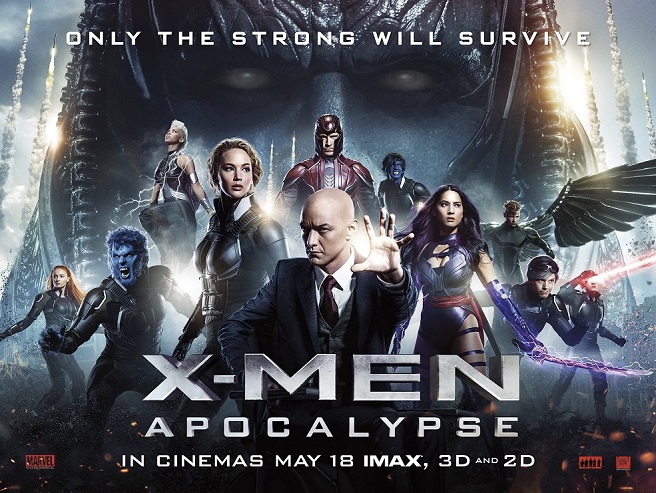
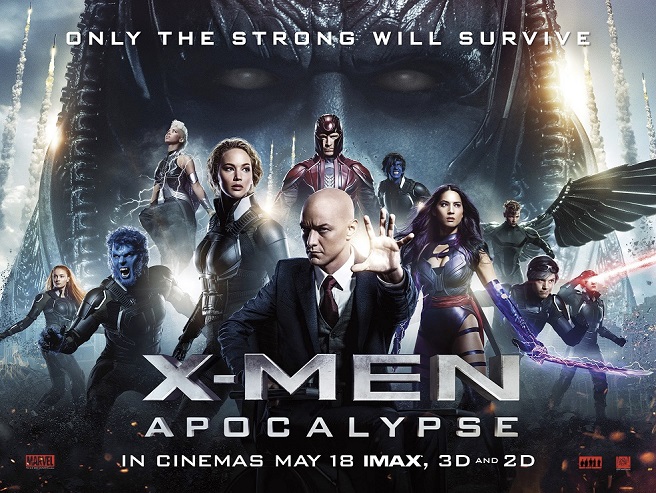
Matt Singer has words of comfort. His article is titled No, It’s Not Just You, the ‘X-Men: Apocalypse’ Timeline Makes No Sense. To be fair, part of the appeal of comics is that they track characters through complex stories in even more complex settings written and illustrated over decades by many different people. And even with categories like “imaginary stories” with no precedential value, comics have always had inconsistencies and mis-chronologies.

But the “X-Men” movie series, even within its own universe, has not really worried much about logic or consistency, and Matt Singer does a great job of laying it all out. For example, it’s 1983, and Magneto, who was a child during WWII, is in his 30’s. Unless his mutant powers include perpetual youth, that does not make sense. Same for Moira MacTaggert, and she isn’t even a mutant. And this is my favorite.

Speaking of Mystique: Wasn’t she kind of a villain in the last movie? She was trying to kill Boliver Trask. Now she’s leading the X-Men into battle? Does that even have any precedent in X-Men comics?

Jennifer Lawrence is really popular, guys. Like hugely popular. They’ve gotta keep her involved somehow.

Related Tags:


Understanding Media and Pop Culture

Do Babies Learn to Swipe Before They Learn to Talk?

Posted on June 2, 2016 at 3:14 pm

Personal cloud storage company MiMedia has released the results of a survey of parents.

76% of parents admit to running out of storage on their phones from taking too many photos/videos of their kids
71% think Moms take more photos of their kids than Dads
Nearly 3 out of 5 parents (58%) say their child (age 0-3) was able to operate a touchscreen digital device by swiping before they learned to speak
57% think Moms share too many baby photos on social media (Facebook, Instagram, etc.)
Almost half (47%) of parents say their child (age 0-3) likes taking selfies
47% of parents share at least 1 photo/video on average of their child (age 0-3) per day, whereas 34% don’t share any
1 out of 3 parents (34% ) takes 1 video on average of their child (age 0-3) per day, whereas 13% of parents take 5+ videos on average of their child (age 0-3) per day
28% take 2 photos on average of their child (age 0-3) per day
Almost 1 out of 3 parents (28%) admits to taking substantially more photos of their first born than other children
22% of parents take 5+ photos on average of their child (age 0-3) per day
13% of parents take 5+ videos on average of their child (age 0-3) per day

Parents should be careful to make sure they are spending more time interacting with their children than taking pictures and videos of them — and that children learn about how to behave with people before they learn about how to interact with machines.

Related Tags:


Commentary Parenting Preschoolers Understanding Media and Pop Culture
THE MOVIE MOM® is a registered trademark of Nell Minow. Use of the mark without express consent from Nell Minow constitutes trademark infringement and unfair competition in violation of federal and state laws. All material © Nell Minow 1995-2026, all rights reserved, and no use or republication is permitted without explicit permission. This site hosts Nell Minow’s Movie Mom® archive, with material that originally appeared on Yahoo! Movies, Beliefnet, and other sources. Much of her new material can be found at Rogerebert.com, Huffington Post, and WheretoWatch. Her books include The Movie Mom’s Guide to Family Movies and 101 Must-See Movie Moments, and she can be heard each week on radio stations across the country.

Website Designed by Max LaZebnik