
Interview: Kate Fowkes on Fantasy and Fairy Tales
Posted on January 20, 2015 at 3:56 pm
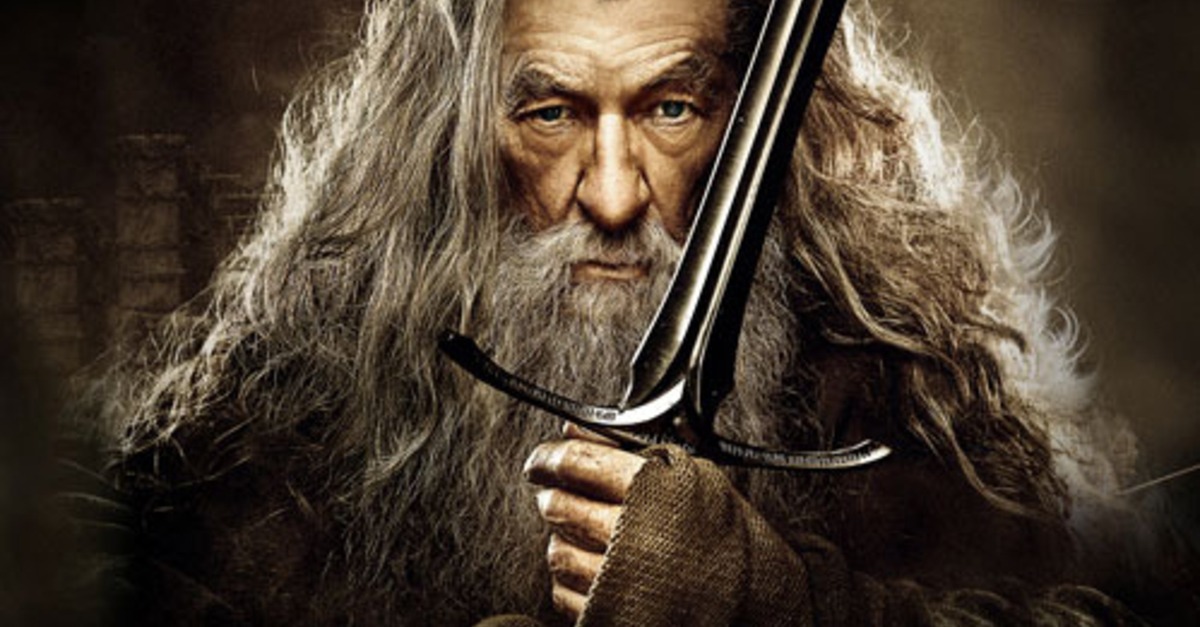
Ten years ago, would anyone have believed there would be popular fairy-tale-inspired television series both serious (Once Upon a Time, Grimm), and comic/musical (Galavant)? Why do fantasy and fairy tales mean so much to us? I asked one of my favorite people, a specialist in the role that fantasy plays in our lives, for her thoughts. Kate Fowkes is a Professor of Media and Popular Culture in the Nido R. Qubein School of Communication at High Point University. She holds an M.A. and a Ph.D. from the University of Texas at Austin, and a B.A. from Reed College. She is the author of The Fantasy Film
Of course fairy tales and fantasy have been around since stories began, but it seems we are in the midst of a revival of interest in very traditional stories about princesses and princes and quests and magic. What is it about the enduring themes of these stories that seems so timely now?
This is a tough question to answer. Part of it may be that with our increased instant access to both old and new media (including electronic versions of older print stories), it is simply easier to rely on these old stories and characters as fodder for new movies and remakes. Hollywood has always loved to draw on proven successes both in adapting movies from books and in re-visioning previous movie successes—so this trend is perhaps merely a more exaggerated version of business as usual.
It also doesn’t hurt that visual and special effects, and movie-making technology in general are all better than they’ve ever been. This obviously facilitates the portrayal of fantastical creatures and magical events and makes for a very satisfying and wondrous movie-going experience.
It must be said that the success of “Star Wars” was hugely helpful in showing that fantasy-themed films could work (granted it was also a sci-fi/Western, but its emphasis on the mystical Force, etc. was part of what made the movie popular). In an ironic kind of time-travel way, it was partly the popularity of the “Lord of the Rings” book trilogy (which was originally one book) that paved the way for “Star Wars.” Not only did “Star Wars” make mysticism popular (thus paving the way for LOR eventually—see what I mean about the time loop) but George Lucas drew on the works of Joseph Campbell

While there had been some successful fantasy and fairy tale movies prior to 2001 (including “The Princess Bride”), 2001 was nevertheless a watershed year for fantasy and fairy tale movies. With the huge success of both the first LOR movie and the first Harry Potter film, the floodgates were open for movies that adopted or adapted fairy-tale and fantasy elements.

(Also see my response to the question below.)
Do stories with fantasy and magic tend to be more popular in some eras more than others? Does it correlate with particular political or economic challenges?
Many scholars would agree that the rise in popularity of science fiction movies throughout the 50s was at least in part due to the historical moment. The bulk of the films were scary and featured hostile aliens. The films might be said to reflect or mediate anxiety about technology (nuclear bombs), the space age (if we go to outer space, what will we find there?), and the burgeoning Civil Rights movement combined with Cold War paranoia (the alien “others” could represent our fear of all kinds of real-world, human others—from Communists to illegal aliens, to non-white ethnicities.)
Perhaps the same could be said for the historical moment of 2001 which featured not just LOR and Harry Potter in the movies, but which saw the country (and the world) reeling (so to speak) from the 9/11 attacks. What strikes me about this confluence of events is, in part, the complete and utter incomprehensibility of the fall of the twin towers and how we watched the footage over and over again on T.V. Was it really real? Could it really have happened? Because at first, it sure looked like a Hollywood action/disaster movie to a lot of us.
One of the things that J.R.R. Tolkien said about the value of “faery” stories is their ability to provide escape, recovery, consolation and “eucatastrophe.”
According to Tolkien, escape might be seen as a bad thing, but if you’re escaping from something unthinkably bad, it might serve an important cathartic purpose (and to most of us, 9/11 was unthinkably bad). In addition whether or not escape is good or bad will depend very much on the quality of what you’re escaping into.
By recovery, he meant that faery stories help us to rediscover the miraculousness and wonder of the ordinary world. (—“Re-(dis)-covery?”) If we experienced 9/11 as a heretofore “impossible” scenario, there was also the feeling that maybe the world was not as we thought we knew it. This is precisely the story told by fairy tales and other fantasies. Nothing is what it seems and impossible things happen all the time (take nothing for granted!). Maybe this type of story serves as a kind of antidote to the horrific feeling of unreality experienced by many people after 9/11. (Just as Gothic horror might be seen as the counterpart or mirror image of upbeat fantasy.)
If 9/11 was a terrible catastrophe, then Tolkien’s consolation and eucatastrophe (catastrophe’s opposite) describe the notion that we can suffer the most terrible defeat and still come out the other side –we can find consolation and even joy because we have faced our worst nightmares and lived to tell the tale, as “Into the Woods” articulates in the final scene. (The forest or woods are here seen as a metaphor for our deepest fears or greatest challenges.) So I might be going out on a limb here (to extend the “woods” metaphor), but I absolutely think that some of these films might operate in the way Tolkien described. (Note: Tolkien had a very specific idea of what qualifies as a “faery” story and if he were here, would disqualify many of the movies discussed here. While I am aware of that, I still think his ideas can be applied to a wide variety of fantasy movies.)
What are some of the ways that our current versions of fairy tales employ twists on the traditions and conventions of fantasy to make them more contemporary?
One way is to call attention to the “unrealistic” nature of the tales, playing up the fact that these are indeed stories and not reality. But at the same time, while many of the new movies cleverly suggest that elements of classic fairy tales are unrealistic and unbelievable, they then go on to fulfill the magical happy endings anyway, albeit often through humorous, self-referential routes. (See, for example, discussion of “Shrek” and “The Princess Bride” below). The viewer thus gets to critique and examine the old story tropes, but also gets the fairy tale happy ending promised by classic fairy tales.
Another tactic is to examine classic fairy tale events and characters through a contemporary lens. In “Shrek” this happens by inverting gender stereotypes to highlight the disconnect between today’s smart, competent, athletic women and the classically sweet, passive and helpless princess. Other examples include imagining the magic mirror from Snow White as both the “reflection” of a foppish prince’s vanity (usually reserved for female characters), while also turning the mirror’s magical illusions into a parody of a modern dating-game T.V. show. Another humorous example is portraying the three blind mice employing contemporary aids for the blind as they sport dark glasses and find their way about with canes.
Finally, many of the newer fairy tales take advantage of the long format of feature length films (not to mention the long format of T.V. serials like “Once Upon a Time”) to explore and expand upon traditional two-dimensional characters. Much as the stage musical “Wicked” does, some of these newer movies provide satisfying backstories and motivations for otherwise simplistic characters, especially villains.
Do children today who see movies like “Tangled,” “Into the Woods,” “Shrek,” “The Princess Bride” and the new show “Galavant” understand fairy tales and Mother Goose well enough to appreciate the meta-humor?
Younger children probably don’t get much of the meta-humor but most of the “revisionist” fairy tales work on multiple levels so that all ages can find something to like. Just as the T.V. show, “The Simpsons” succeeded in part because of its dense layers of funny intertextual references, these films use their intertextuality so that viewers can access the story and its humor in many different ways.
In addition, many of the revisionist fairy tale movies also embed mention of fairy tale conventions into the story so that even if viewers didn’t know the conventions in advance, they could still appreciate the jokes. For example, in “Shrek”, the movie opens with a short story-book intro that summarizes the standard “rescue the princess” trope. Shrek reacts to this tradition by scoffing: “like that’s ever gonna happen!” And when Shrek does end up rescuing Fiona, she is indignant that he doesn’t fit the stereotypical prince or act out the usual “script.” This happens also in “The Princess Bride” where the little boy is read a story by his grandfather and is frequently indignant that the story is not going the way it’s supposed to. “Into the Woods” also features such moments and occasionally provides a fairy tale style of voice over narration to call attention to the relationship between character and events to classic fairy tales.. All of these movies use the “frame” of storytelling (“Once Upon a Time,” etc.). And “Into the Woods” ends with an emphasis on the importance of storytelling in general, thus completing the self-referential circle.
Is there a way to teach children about classic fairy tales without giving them messages we feel that we have outgrown about the roles of women? Are there other traditional themes that are hard for us to accept today?
I think that’s exactly what many of these new movies are trying to do, although sometimes with mixed success. Expanding the notion of “true love” beyond a romantic heterosexual idea (as in “Frozen” and “Malificent”) and providing strong, capable female characters is one way both to change the “script” in the real world as well as to make the stories more acceptable and relevant to today’s audience.
But I am still disappointed in some of the films. “Star Dust” does nothing to change the pernicious idea that older women are ugly, evil and jealous of younger women. “Enchanted” sends its heroine out on a shopping spree in a makeover reminiscent of “Pretty Woman” (which is itself a pernicious live-action, contemporary “Cinderella” story), and even “Into the Woods” kills a married female character for kissing a married prince while the prince gets off easy by quipping that, afterall, he’s “charming” not “sincere.” And in another “joke,” the Cinderella character (the prince’s newly estranged wife) opines that she actually enjoys housecleaning. !!! Really??? And then the movie has the gall to drive home the point that we should pay attention to the stories we tell. Can you say “irony??”
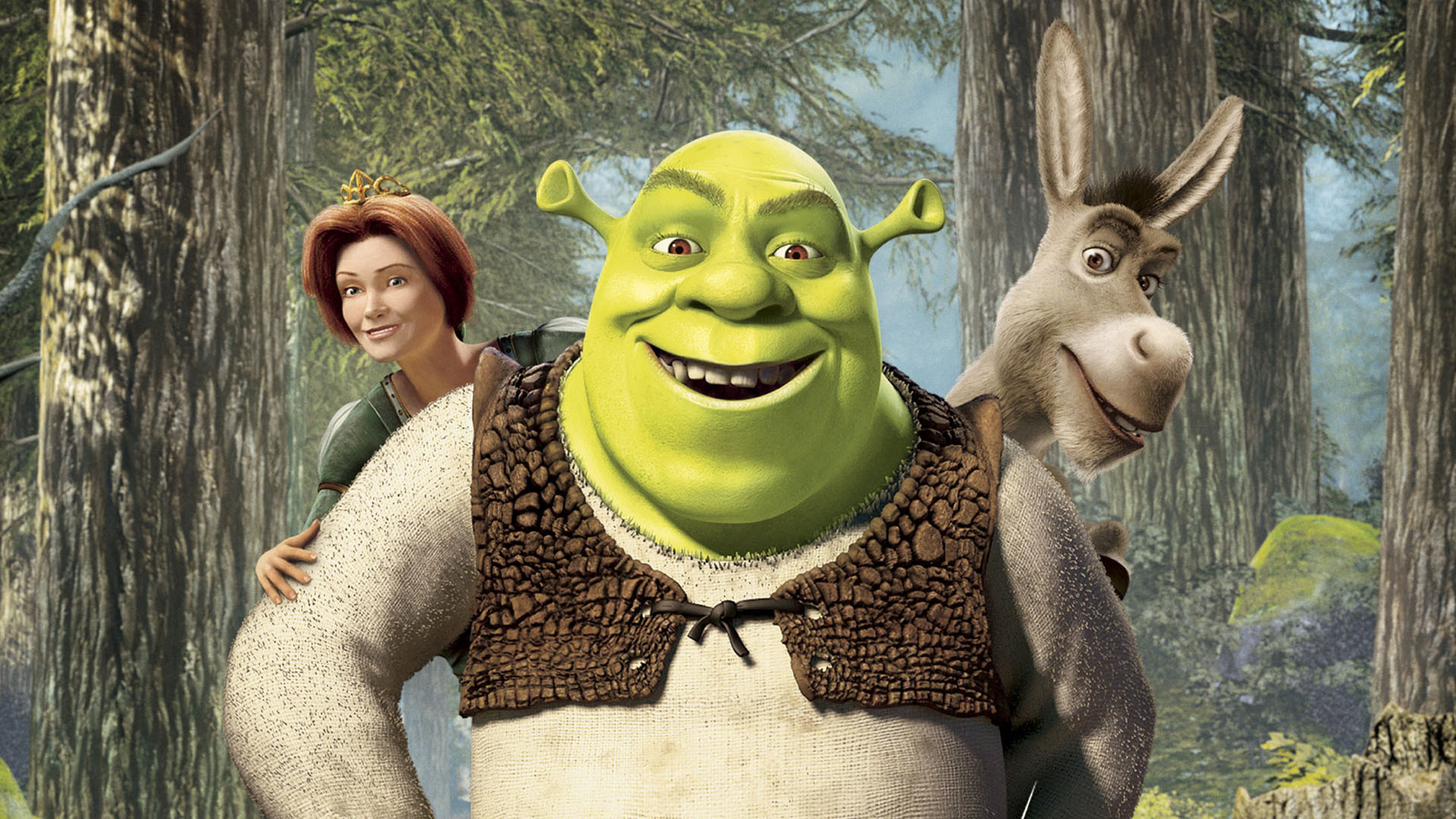
Even “Shrek” (delightfully funny as it is), doesn’t fully overcome gender and racial stereotypes. In her ogre state, Fiona is hardly hideous (I think she’s quite pleasant) and Donkey perpetuates a long line of comic, subservient black, male characters.
Many of the new versions of fantasy stories interweave characters from different fables into one narrative. What is the appeal and impact of that kind of story-telling?
Whereas a movie like “Enchanted” has fun combining the “real world” with the animated fairy tale world by imagining what would happen if these two worlds intersected, “Shrek” and “Into the Woods” belabor the fact that these characters from different tales actually do all belong to the same magical universe. What’s interesting is that some scholars see fairy tale characters less as characters or people and more as narrative functions. When you recognize that the characters all belong to same type of magical universe it can be a fun game to see how they might interact with each other if you mixed and matched them.
This type of story-telling also provides the possibility of many new-ish variations on well-loved, easily recognized ideas. And as said before, we know that Hollywood loves to capitalize on familiarity and built-in popularity.
If fairy tales are an attempt to explain the inexplicable and control what seems uncontrollable, does our modern understanding of science make us more or less interested in fantasy than people were centuries ago?
The short answer to that is ….we have a different relationship to fantasy today than people did before the Enlightenment, the Industrial Revolution, and now the computer age with more and more immersive technologies like 3-D. and virtual reality (For example, just try to imagine someone centuries ago being shown ANY movie much less a mind blower like “Inception.”) It would take me too long to tease out all these difference here, although I do discuss at least a piece of that puzzle in my book “The Fantasy Film.” Maybe this one will have to be a separate interview!
Do you have a favorite fairy tale and why?
I don’t have a favorite classic fairy tale unless you consider the movie, “The Wizard of Oz,” to be a classic fairy tale (Baum wrote the original book with the idea that it would be a modern-day fairy tale). It’s a nostalgic favorite but it holds up for me still. It’s got everything—scary suspense, whimsy and magic, humor, wonderful characters, great musical numbers, and lots of heartfelt sentiment. The Cowardly Lion still makes me laugh after all these years.
I also love “The Princess Bride.” It was one of the first successful revisionist fairy tales and it’s dramatic, sentimental, clever and funny. What more could you ask for? I regret I didn’t include it in my last book, but I didn’t have complete say over what went in there and I was horribly constrained by space issues.
If I were to include a more traditional fairy-tale movie here it would be Jean Cocteau’s “Beauty and the Beast” because it is so beautiful to look at. And the Beast is gorgeous (which gives you a hint about what’s going on in that story—we were never meant to find the beast to be completely hideous…)
And despite some minor misgivings, I’m a big fan of “Shrek” and “Shrek 2!”
