
Is This the End of Television?

Posted on October 22, 2014 at 3:24 pm

Last week both cable giant HBO and broadcast giant CBS made announcements that signal the end of television as we know it.  Both responded to the clear message of the market and said that they would make their content available in the form and via the delivery system consumers prefer — the internet.  For the first time, viewers will be able to watch HBO movies and series via their HBO Go platform with a separate subscription, even if they do not get HBO via cable.  And CBS will start showing its programs online in real time, as they are broadcast on television.  It is certain that the other networks, premium and basic cable, will follow suit.

We will look back on the 1950’s-2000’s as the last time people watched the same program via the same medium at the same time. Once television sets had only four or five channels.  Then, with cable, there were more than one hundred.  Online-only content from Netflix, Amazon Prime, Hulu, and YouTube and webseries on “stations” created by individuals and small groups will be at the same level as big-budget series like “Scandal” and “Game of Thrones.”  This is great news for creators and consumers, but the big businesses behind the large-scale productions will need to be nimble to maintain revenues.
Related Tags:


Commentary Internet, Gaming, Podcasts, and Apps Television Understanding Media and Pop Culture

What Do Critics Think About Watching Film That Is Not What the Makers Intended?

Posted on October 19, 2014 at 8:00 am

Thanks to Indiewire for including me in their survey of critics about how important it is to watch a movie as it was filmed. If it was made on film stock, is it unfair to the artists’ vision to watch a digital version?

Here was my answer:

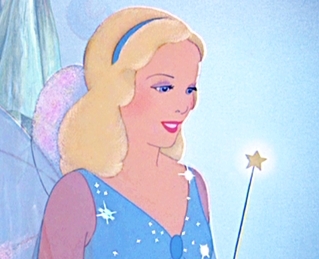
Copyright Walt Disney Studios

I remember hearing a Lionsgate executive explaining ruefully that they put so much effort and imagination into every inch of the screen for the “Lord of the Rings” movies only to find that people wanted to be able to watch them on their phones. “We’ll sell it to them, if that’s what they want,” he said, “but we are not happy about it.” If possible, it’s best to see films the way they were shot. But, just as we don’t view paintings in the studios where they were created, we have to recognize that some art will be viewed in a manner other than the way the filmmakers envisioned. And I have wonderful memories of digitally restored films. The first movie I watched on Blu-Ray was “Pinocchio,” which I thought I knew very well. But there were highlights in the Blue Fairy’s hair I had not seen before. I ran to my book of Disney animation art, and it was there. So, unlike watching LoTR on a Smartwatch, I felt I was seeing it the way the artists did.

Related Tags:


Critics Media Appearances Understanding Media and Pop Culture

Five Upcoming Movies Have Real-Life Actors Playing Themselves, Sort Of

Posted on October 12, 2014 at 8:00 am

It’s funny how every so often there are multiple movies about the same subject or idea.  I can understand when there were three movies about farm families at the time (“Country,” “The River,” “Places in the Heart”) when small farms were being battered by agribusiness.  But why all those body-switching movies in the late 80’s (“Big,” “Vice Versa,” “Like Father Like Son,” “18 Again”), or “Antz” and “A Bug’s Life” ten years later, or the two blow-up-the-White-House movies last year, or two movies this year about one-night stands that turn into awkwardly extended encounters?

Perhaps the most improbable collection of similar films ever are the upcoming FIVE movies with real-life successful actors playing somewhat less successful versions of themselves.  A fascinating discussion on Studio 360 explains it all, with descriptions of the films starring Michael Keaton, Al Pacino, Robin Wright, Julianne Moore, and Juliette Binoche.

Related Tags:


Understanding Media and Pop Culture

Telling Time in “All That Jazz”

Posted on September 29, 2014 at 3:19 pm

One of my favorite writers provides insights into one of my favorite (if flawed) movies — Matt Zoller Seitz created a beautiful video essay about Bob Fosse’s autobiographical “All That Jazz” for the Criterion Edition, and then they were unable to use it due to rights problems with the movie clips he wanted to include. Good news — that means you can read/watch it for free.

https://www.youtube.com/watch?v=lOS9GwHfHiU
Related Tags:


Understanding Media and Pop Culture

Second Global Symposium on Gender in Media

Posted on September 24, 2014 at 10:49 am

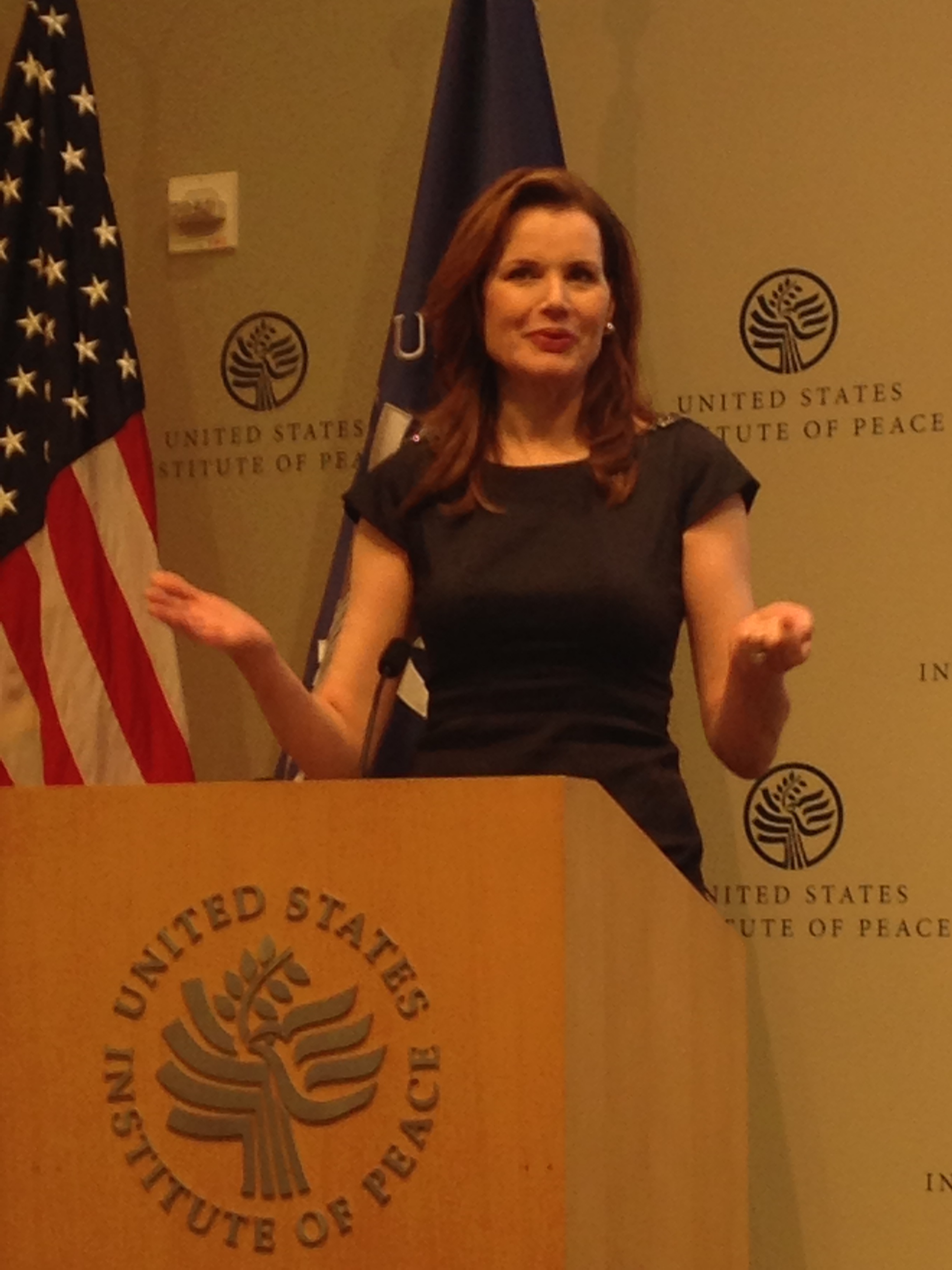
copyright Nell Minow 2014

Yesterday, I was honored to attend the Second Global Symposium on Gender in Media, held a the United States Institute of Peace in Washington, D.C.  The keynote was delivered by Oscar-winning actress Geena Davis, founder of the Geena Davis Institute on Gender in Media.  The highlight of the event was the presentation of new research by Dr. Stacy Smith, Ph.D. and her team at the USC Annenberg School for Communication & Journalism, looking at gender bias in films produced by the 11 countries with the most established film industries.  Films jointly produced by the US/UK and those from India had the poorest results in portraying women, whether the issue was number of speaking parts/named characters or number of women in professional roles.  Perhaps the most surprising result was that even in crowd scenes, women made up only about 17 percent of the roles.  Movies portray a world in which women are outnumbered by men five to one.  The study also found that women filmmakers — directors, producers, and writers — usually put more women on screen, except that as the budget increases, the number of female characters goes down.  “We are responsible for exporting negative images of women around the world,” Davis said.  Female characters are too often one-dimensional, skimpily clothed, sexualized, and portrayed as victims of violence.  “The more TV a girl watches, the fewer options she thinks she has.  The more TV a boy watches, the more sexist his views become.”  Her approach is “collegial, private” meetings with filmmakers, who all insist that “it’s been fixed,” but are responsive to the data she presents. “Gender inequality is rampant,” concluded Dr. Smith.  “Cinema turns a leering lens on females.”  One element of her study revealed only three female characters in positions of political power.  Two were portrayals of real-life leaders Margaret Thatcher and Angela Merkel.  The third was an animated elephant.  On screen, females hold only 22.5% of the jobs, as opposed to 40% in real life.  Davis called on filmmakers to go through scripts and assign female names to half of the characters and make sure crowd scenes had gender parity. “I’m not asking them to add a message, just to recognize the message already created.  Let’s not embed harmful and disempowering messages in media aimed at kids.”

Related Tags:


Gender and Diversity Understanding Media and Pop Culture
THE MOVIE MOM® is a registered trademark of Nell Minow. Use of the mark without express consent from Nell Minow constitutes trademark infringement and unfair competition in violation of federal and state laws. All material © Nell Minow 1995-2026, all rights reserved, and no use or republication is permitted without explicit permission. This site hosts Nell Minow’s Movie Mom® archive, with material that originally appeared on Yahoo! Movies, Beliefnet, and other sources. Much of her new material can be found at Rogerebert.com, Huffington Post, and WheretoWatch. Her books include The Movie Mom’s Guide to Family Movies and 101 Must-See Movie Moments, and she can be heard each week on radio stations across the country.

Website Designed by Max LaZebnik