
Christopher Orr on the Coen Brothers’ “Miller’s Crossing”

Posted on September 23, 2014 at 3:53 pm

One of my favorite critics writes about one of his favorite movies in The Atlantic: the highlight of Christopher Orr’s outstanding series on the Coen Brothers‘ films is his essay on Miller’s Crossing. Whether you’re a fan of the Coens or of this film or not, Orr’s essay is a pleasure to read for its deep engagement with the film and lucidity of prose.

Miller’s Crossing is an aesthetic pleasure of the highest order on nearly every level. Begin with its almost intolerably sumptuous cinematography, with reds and greens so deep one is in danger of falling into them. This was the last film that Barry Sonnenfeld shot for the Coens—and one for which he persuaded them to use long lenses instead of the wide-angle variety they had favored—and no one involved has mustered a better-looking work since. The production design by Dennis Gassner is comparably extraordinary: the long, long oak rooms with their endless oriental rugs and all the furniture seemingly tucked into one corner.

And did I mention the score? It is not only the best work Carter Burwell has done for the Coens (or anyone else), it set a model that he would later follow for his almost-as-good scores for Fargo and True Grit: taking a traditional piece of music with some culturally relevant connection and using it as the central motif of the broader arrangement. In this case, it was the Irish ballad “Limerick’s Lamentation.” (It’s usually played on a fiddle, I think, but here’s an interesting version on a hammered dulcimer.) Burwell’s score has lived on since: It was used for the trailer of the (astonishingly bad) Melanie Griffith vehicle Shining Through as well as that of at least one other 1990s movie I can’t quite recall at the moment. It also served, as I recently discovered, in an ad for Caffrey’s Irish Ale. It is one of the truly great film scores of the last 30 years.

Related Tags:


Critics Understanding Media and Pop Culture

Why Are We Getting So Many Split POV Stories About Couples?

Posted on September 10, 2014 at 3:27 pm

I wonder why there are three (so far) different stories coming out that tell us the same saga of an up-and-down romance from two different perspectives (POV, or point of view).

“The Disappearance of Eleanor Rigby,” starring James McAvoy and Jessica Chastain, is being released in three different versions, one called “The Disappearance of Eleanor Rigby: Them,” which alternates between her story and his, and then full-length feature films coming out later that each tell just one side of the story.

On “Showtime,” a new series called “The Affair” stars Dominic West and Ruth Wilson are the lovers who have a relationship we get to see from both points of view. The New York Times reports:

The affair begins after a happenstance meeting at a diner in Montauk, where Alison (Ms. Wilson) waits on Noah (Mr. West) and his family. Her recollection of the encounter differs from his on several crucial, often funny points, like her memory of wearing a knee-length waitress uniform: in his recollection, her skirt ends midthigh.

Anna Kendrick and Jeremy Jordan, both Broadway veterans, star in “The Last Five Years,” a film version of the popular musical that tells us both versions of the love story — with a twist. We see his story from the beginning to the end, but her version begins at the end and then goes back in time to the beginning.

It’s not unusual for a book to be told from the point of view of one character, whether narrated by an “I” in the first person or whether the narration just lets us hear the thoughts of one or more characters. In film, we often see what one character sees but it is rare to alternate points of view. One famous exception is the classic film Rashomon. A terrible, violent rape and murder is recounted by the man accused of the crime, the wife who was raped after her husband was killed, the ghost of the murdered man, and finally a witness. Many, many stories have been inspired or influenced by “Rashomon,” from a “Star Trek: TNG’s” episode “A Matter of Perspective” to “The Dick Van Dyke Show’s” hilarious “The Night the Roof Fell In.”

A far-from-classic example is a soapy pair of movies starring Elizabeth Taylor and Richard Burton called “Divorce: His” and “Divorce: Hers.” Yes, that twice-married/twice-divorced to each other (plus many others) pair should know. Mark Twain’s charming Diary of Eden gives us both Adam’s and Eve’s sides of the events of Genesis — witty and insightful, with the most deeply romantic ending of all his writing. Thanks to Kristie Miller for reminding me of Dave Berry’s classic piece about male/female thoughts about a relationship. I’m a huge fan of The Norman Conquests by the wildly talented Alan Ayckbourn. We don’t get the different perspectives of characters — we get three different plays that tell the same story from three different places, the living room, the dining room, and the garden. An exit in one play is an entrance in the other. The more you watch, the funnier it gets.

Is there a message in this new vogue for splintered storytelling? Are we in a moment of history when we are feeling a need to be more empathetic? Or are we less sure of what the truth is? Any answer I’d give, of course, would be from my own POV, so yours is just as valid. Isn’t it?

Related Tags:


Commentary Understanding Media and Pop Culture

Summer Summer-y: The Summer Movies of 2014

Posted on August 31, 2014 at 3:46 pm

fault-in-our-stars-poster-largeA few concluding thoughts on the summer movies of 2014:

A good summer for food movies: “The Chef,” “The 100-Foot Journey,” and “The Trip to Italy” had some big-time actors but the real stars were the luscious meals. Special mention of the delicious French comedy “Le Chef,” starring Jean Reno, and “The Lunchbox” as well.

A bad summer for comedies: “22 Jump Street” was uneven, but at least it had some laughs. Can’t say the same for “Neighbors,” “Blended,” “Tammy,” “The Other Woman,” “A Million Ways to Die in the West,” or “Let’s Be Cops,” excruciating and un-funny wastes of time and talent.

A good summer for super-heroes: “Captain America: The Winter Soldier,” “X-Men: Days of Future Past,” and “Guardians of the Galaxy” were all we hoped for in summer comic book blockbusters. “Spider-Man 2” was pretty good, primarily due to the sizzling chemistry between leads Andrew Garfield and Emma Stone.

A good summer for Scarlett Johansson: She followed up last year’s prestige hit, “Her,” with brilliant work in an astonishing range of films, from the spooky “Under the Skin” to her witty performance in “Captain America.” She was even good in Luc Besson’s second-rate “Lucy.”Guardians of the Galaxy

A good summer for YA adaptations: “The Fault in Our Stars” was skillfully brought to screen, with “If I Stay” and “The Giver” solid runners-up.

A good summer for CGI: “Dawn of the Planet of the Apes” was a new leap forward in the realism of the motion capture and special effects, especially the expressiveness of the characters. “Guardians of the Galaxy” had terrific CGI, especially Groot.

A bad summer for CGI: “Godzilla” was a disappointment.

I loved: “Boyhood” and “Life Itself”

I wanted to but did not love: “Jersey Boys,” “Magic in the Moonlight,” “Wish I Was Here”

I cried: “The Fault in Our Stars” and — yes — “How to Train Your Dragon 2”

Deserved better box office: “Edge of Tomorrow”

Got better box office than they deserved: “Teenage Mutant Ninja Turtles” and “Transformers”

SPOILER ALERT SPOILER ALERT SPOILER ALERT

We’ve had quite a string of what I call Pogo bad guys. Remember when the comic strip character Pogo looked sadly at a polluted river and said, “We have met the enemy and he is us?” I’m not sure whether it is a lack of imagination in screenwriters or a reflection of the zeitgeist mistrust of institutions, but in films like “Captain America: The Winter Soldier,” “The November Man,” and even “Let’s Be Cops,” the bad guys turned out to be inside the U.S. Government.

Related Tags:


Commentary Spoiler Alert Understanding Media and Pop Culture

The Last Leonard Maltin Movie Guide

Posted on August 31, 2014 at 8:00 am

Leonard Maltin was only 17 years old when he was offered the chance to create his guide to movies on television. For many years, I kept the latest copy on my desk and anyone who came into my office could pick a page number at random. If I had not seen any of the movies on that page, I had to buy them lunch. It never happened.

I love that guide, still the best and most comprehensive resource available. And I was very sorry to hear that the 2015 Movie Guide coming out next week will be his last.
Be sure to pick up a copy. And listen to his great interview with Marc Maron, where he tells the story of how it all began.

Related Tags:


Books Critics Movie Mom’s Top Picks for Families Understanding Media and Pop Culture Writers

“Let’s Be Cops” Could Have Been Not Terrible

Posted on August 30, 2014 at 11:35 am

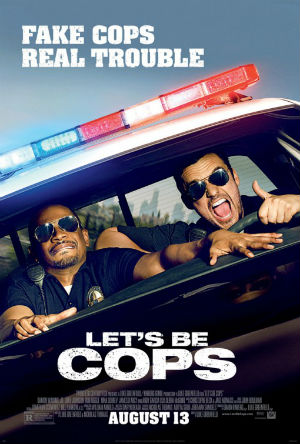
Let's_Be_Cops_posterLet’s Be Cops” is a dumb movie that wants to be like “Lethal Weapon” or “The Other Guys,” a comedy action film about buddies with badges. It’s moderate box office returns are possibly in part because the unrest in Ferguson and news stories about police brutality made the timing bad for a cop comedy. The terrific Aisha Harris had an excellent piece on Slate about the film and how it missed the chance to take advantage of its premise for some sharper — and funnier — moments.

it’s interesting that the friend who sees each moment in which he somehow gets away with his fraud as the gateway to even bigger, and more dangerous (but fun!) hijinks, is white. In his own delusional world, pretending to be a cop is his path toward doing something with his life—on more than one occasion, Ryan explains to his friend, desperately, that he’s actually found a purpose in being a fake cop. Meanwhile, the friend who clearly wishes he wasn’t wrapped up in this mess is black. For him, the advantages that accompany being a cop—like the hot girl who is instantly turned on by the sight of your badge—don’t outweigh the serious jail time that awaits them once they’re found out. While the movie doesn’t interrogate the idea at all, Ryan is acting on the luxury he has as white male not to fear consequences in the same way that Justin does. Forget just impersonating a police officer—were the two of them to commit any crime in real life, Ryan would likely face a lighter sentence than Justin.

I thought about this in a scene where Ryan plays a prank on Justin by pretending to be a cop calling him over, with no clue that this would be a different experience for Justin than if it had been the other way around. Damon Wayans, Jr. even has one understated line making that point, but it is just glossed over. There is a point where movies go past living in a pleasant fantasy world that takes us away from our daily cares to a point where the disregard for what goes on in the world becomes a distraction.

Related Tags:


Commentary Race and Diversity Understanding Media and Pop Culture
THE MOVIE MOM® is a registered trademark of Nell Minow. Use of the mark without express consent from Nell Minow constitutes trademark infringement and unfair competition in violation of federal and state laws. All material © Nell Minow 1995-2026, all rights reserved, and no use or republication is permitted without explicit permission. This site hosts Nell Minow’s Movie Mom® archive, with material that originally appeared on Yahoo! Movies, Beliefnet, and other sources. Much of her new material can be found at Rogerebert.com, Huffington Post, and WheretoWatch. Her books include The Movie Mom’s Guide to Family Movies and 101 Must-See Movie Moments, and she can be heard each week on radio stations across the country.

Website Designed by Max LaZebnik