
“Possession” and the Tradition of Jewish Horror Films
Posted on August 30, 2012 at 3:49 pm
 The new horror film “Possession” is a kind of Jewish version of “The Exorcist,” the story of a little girl who is possessed by an evil spirit. Like “The Exorcist,” it was inspired by a true story, and focuses on non-religious people who must bring in a member of the clergy to remove the evil spirit. “The Possession” includes a performance from reggae star and real-life Orthodox Jew Matisyahu.
The movie did not screen for critics and it is opening at the end of August, two reliable indicators that it is not very good. Tablet Magazine has a thoughtful article by J. Hoberman about how it fits into the genre of Jewish-themed horror films.
In The Possession, Matisyahu’s game performance does offer a measure of authenticity—less in Jewish than in film-historical terms. The representation of traditional Jews as exotic, uncanny others puts The Possession in the tradition of early German horror films like The Golem (1920), in which Rabbi Loew of Prague creates an ur-Frankenstein’s monster, andNosferatu (1922), in which a vampire emigrates from deepest Carpathia to Bremen, Germany. Of course, the vampire in Nosferatu isn’t explicitly Jewish, he’s more like an anti-Semitic nightmare—a lascivious, blood-sucking extravagantly hook-nosed Eastern foreigner who arrives in Germany with a plague of rats.
Indeed, 18 years later, the Nazis would characterize their anti-Semitic propaganda as something akin to horror films. In 1940, Fritz Hippler promoted his loathsome Der Ewige Jude, largely filmed in occupied Poland, as “an absolute symphony of horror and disgust,” including an “absolutely truthful” documentary of Jewish ritual slaughter “so awful” as to be inappropriate viewing for Aryan women and children. (Among other “Jewish performances,” the movie included a clip of Peter Lorre—a Jewish refugee—playing the child-murderer in Fritz Lang’s M.)
A few Jewish films produced at Universal (the Hollywood studio most identified with the horror genre) by Central European Jewish émigrés did attempt to answer the Nazi Jewish horror genre. Most notable among these was The Black Cat (1934), Edgar G. Ulmer’s supremely perverse vehicle for Universal’s top stars Bela Lugosi and Boris Karloff, released some 15 months after Hitler came to power in Germany. Taking only its title from Edgar Allen Poe, Ulmer’s movie marooned a naïve pair of American honeymooners in Europe’s heart of darkness, where they became unwitting pawns in the death struggle between a hysterical Hungarian psychiatrist (Lugosi) and a proto-Nazi, Satan-worshipping Austrian architect (Karloff) who has built his steel-and-glass deco castle on the site of World War I’s bloodiest battlefield. Despite trafficking in incest, necrophilia, human sacrifice, and sadism—not to mention a black mass with a stylized crooked cross—The Black Cat somehow got past the Production Code to become Universal’s highest-grossing release of 1934. (Then, in a career move without Hollywood precedent, Ulmer relocated to New York to make Yiddish and Ukrainian “ethnic” movies on budgets that sometimes failed to break five figures.)
In the Jewish Daily Forward, Hannah Brown writes about Jewish demons in movies.
Paddy Chayefsky used the dybbuk theme in his 1959 play, “The Tenth Man,” in which a young girl at a Long Island synagogue is possessed by the spirit of a woman wronged years earlier by a man in the minyan; the play was filmed for German television in 1965. The Coen brothers opened their 2009 film, “A Serious Man,” with a Yiddish prologue about a dybbuk that served as a metaphor for the moral dilemma faced by the beleaguered protagonist. And the dybbuk plot was certainly familiar to Yiddish theater- and movie-goers who saw S. Ansky’s play “The Dybbuk,” which was made into a movie in Poland in 1937. Ansky wrote his play between 1912 and 1917, after he took a journey through Eastern Europe to research local folklore and was inspired by tales of possession and exorcism.
Hoberman talks about the influence of Jews and anti-Semites in horror films from the Wolf Man to David Cronenberg. I think his most important point is that in “The Exorcist,” we are supposed to see the priests as flawed but heroic, while the Jewish clergy in “Possession” are portrayed as strange and foreign. That insight is more disturbing insight than any creepy special effects in the movie.
The Exorcist not only terrified the world at large but had a deep and sustained meaning for Catholics, observant or lapsed. A shock closer notwithstanding, Possession is highly unlikely to make a comparable impression on Jews. By objectifying Jews as exotic others rather than presenting them as subjects, the Raimi production eliminates the precise element that would have been most powerful for a Jewish audience: We are possessed by our dybbuk, however you want to allegorize it. Clyde’s anxiety and the tension within his broken home would have been immeasurably heightened if his family were confronted with a repressed aspect of their own past. The movie would have been stronger still if that were a shared heritage—Jews haunted by a lost tradition or the burden of Jewish history.
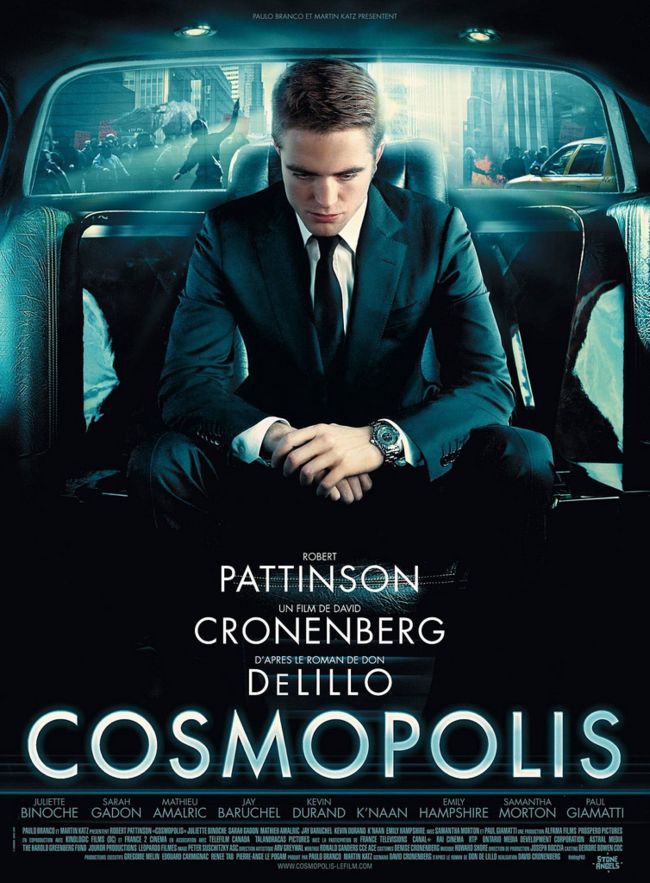
 . It is a story about Americans who work in the world of finance and takes place entirely in New York City. It stars British actor Robert Pattinson, best known for another American role, Edward in the “Twilight” series.