It seems fitting that two decades after Roger helped breathe commercial life into “Hoop Dreams,” James would return the favor by adapting Roger’s memoir “Life Itself,” and that it would premiere at Sundance, a festival that Roger’s attention helped legitimize.
In addition to telling the story of one man’s life and career, “Life Itself” recounts the decay of Roger’s body in the final months of his life, after the cancer he’d battled for years returned with a vengeance; it includes medical scenes of great frankness, filmed with the encouragement of Roger and his wife Chaz, this site’s publisher. The result is a testament to the fragility of flesh and the transformative effect of love. More than anything else, it’s a record of Roger’s generosity, the effects of which are still being felt.
The interview is a treat to read. My favorite part is when James, one of the people behind the extraordinary “Hoop Dreams,” talks about what he loves about documentaries.
art of the reason that I love doing documentaries is that you start with ideas—and you hope good ideas—about what it’s about and who you’re following and all of that, but if it’s a really great experience it always deviates and deepens as it comes, and is more interesting than anything you could imagine. Because if I could imagine that well, then I should be doing more fiction than docs.
As we celebrate the birthday of Martin Luther King, every family should take time to talk about this great American leader and hero of the Civil Rights Movement. There are outstanding films and other resources for all ages.
I highly recommend the magnificent movie Boycott, starring Jeffrey Wright as Dr. King. And every family should study the history of the Montgomery bus boycott that changed the world.
The Long Walk Home, starring Whoopi Goldberg and Sissy Spacek, makes clear that the boycott was a reminder to black and white women of their rights and opportunities — and risk of change.
Citizen King is a PBS documentary with archival footage of Dr. King and his colleagues. Martin Luther King Jr. I Have a Dream has his famous speech in full, still one of the most powerful moments in the history of oratory and one of the most meaningful moments in the history of freedom.
Ron Howard’s “Rush” was the story of the Formula One rivalry between the reckless and handsome James Hunt from Great Britain and the cool, hyper-rational Niki Lauda from Austria. In the extraordinary season of 1976, Lauda was in a terrible racing accident, with burns and injuries so severe he was read the last rites. But he was back on the racetrack 42 days later. The parts of that movie that were the hardest to believe were the parts that really happened. And now, a very fine documentary, 1976: Hunt vs Lauda, lets the people who were there tell the story.
Grittier than the Hollywood version but with the perspective of those who have had some time to think about what happened, this is a fascinating look at two men who had utterly different personalities but were alike in the single most important aspect of their characters — their love for going faster than anyone else was so profound that they were not only willing to risk death to win the race; they positively relished it. Just as interesting are the men who sponsored them. It is one thing to risk your own life. It is another to urge someone else to risk his. There is a chilling moment when the Ferrari team manager says crisply, “If Niki will not drive, Ferrari will not stop….A driver is very much replaceable.” The team managers are as important a part of the story as the drivers and the allegations of activities that may not constitute cheating but still qualify as unfair. Lauda, his face scarred and his head turned away to hide the damaged ear, is frank about the moment when even his nerves of steel wavered for a moment. He tells the story of a man who asked him for the last autograph he gave before his crash. But there was something unusual about the request — he wanted Lauda to add the date “because it could be the last one.” So, it is the audience as well as the managers and the advertisers and the drivers who are a part of this system.
Parents should know that this is the real-life story of one man who relished the excess of the 70’s, with lots of girls and substance abuse and another who survived a catastrophic racing accident. The film includes some graphic images of the crash and the driver’s injuries.
Family discussion: How does this version differ from the feature film? What makes someone want to race? Do you agree with Lauda’s decision? Should they change the rules to make racing safer?
If you like this, try: “Rush” and car racing films like “Le Mans” and “Heart Like a Wheel’
Daniel Ferguson told an audience that making his extraordinary 3D IMAX film about Jerusalem required four years and “thousands of cups of tea.” It took four years. But he was able to persuade Muslims, Christians, and Jews to allow him to film the most sacred places of the city. He attended seders and Shabbat dinners, Easter celebrations, and Iftar dinners. His goal was to challenge assumptions, and “overcome fatigue,” to show “the same spots with different narratives.” While it was daunting to try to fit 5000 years of history into 45 minutes, he knew that “the best IMAX films are poems in honor of their subject.”
He talked to me about making the film, choosing the music, finding the three girls to represent the three religions of Jerusalem, and working with narrator Benedict Cumberbatch.
Let’s start with the music.
Michael Brook is the composer. We did license some music, obviously, but I would say 85 percent of it is Michael’s. And Michael has done all kinds of different films. He had done music for “Into the Wild,” the Sean Penn film and “The Fighter,” “Heat,” “An Inconvenient Truth.” He did the film about Palestinian Statehood, State 194. He did “Perks of Being a Wallflower.” He’s incredible. Michael’s background is he worked with Real World, Peter Gabriel’s label, so he knows all kinds of musicians. We worked with Michael on “Journey to Mecca,” and what’s great about Michael is he didn’t do a sort of typical era pastiche thing. Obviously, we have some sort of typical belly dance tunes or whatever to kind of play to that and make it fun for kids but I think what’s great is that Michael was able to find a musical language that was actually culturally, religiously, and maybe even emotionally somewhat neutral. Because the hard thing about music, frankly the hard thing about the film in general, but the music is the ultimate microcosm for this is Jerusalem is never one thing.
It’s a total leap off a cliff because the music could be too spot-on. I think both Michael and I struggled with the music. He’d send me a cue and I would say, “It’s gorgeous but for another movie.” “It’s too exuberant,” you know? I need something that has a bit more darkness in it, that has something that’s unsettled that sort of searching. How do you compose for that? It’s a totally abstract concept and yet we went back and forth. We tried to have a unified theme as well, sort of a Jewish return theme. The notes were very subtle and in fact, they were largely in the same key and all kinds of layers to work on a sort of subliminal level to convey the synchronicity between traditions.
Your narrator, Benedict Cumberbatch, is excellent. He seems to be everywhere this year.
We had a lot of narrators thrown at us and we needed someone who was sort of neutral in a way. I didn’t really know his work that well. I started to watch “Sherlock,” and I really got into it. He’s young; he’s sort of up-and-coming so he was the first one we reached out to. We thought of a woman’s voice, that was our first choice and, in fact, we had a woman in our initial trailer. But the reality was we had three girls and Dr. Jodi Magness and so everyone said, “You need a male counterweight to this.” We heard Benedict sort of doing books on tape and we thought, “Wow! This guy could do something understated, wouldn’t be bombastic about it, he’s an actor, and he’s a voice actor. Because the images were so big. Benedict was able to play the mystery and be respectful, and it’s like the kind of nuance when we do a line like Prophet Mohammad’s travel on a miraculous journey. I mean you could do that line like he did a reading and said, “No, that sounded far too fairytale. Let me do that again,” and he knew the nuance. He would make little tweaks and changes. He came totally prepared. He had notes all over the script, he’d seen the cut so many times. And he said, “Oh yes, this is where Farah comes in. Let me do this. How about a bridge like this?” It was amazing. He gave me at least four takes for every line. They were all totally different.
It’s a little poignant in the end where the girls say “Maybe someday, we would meet.”
I think it’s very poignant. We filmed alternate endings just because as a filmmaker, you should have everything in your back pocket. We were worried about audiences would be very upset with that as an ending. And I’ll be honest. We actually let the shot play a little longer in the earlier cut and our test audiences absolutely hated it. Do you know what it was? It was the fact that they literally passed each other and the audience said, “Oh my God! You took me through this whole time and you went and punched me in the stomach.” And it wasn’t my intent. It was just that was for me was the reality. It was the tragedy of the city that these girls have similar interests, they look the same. They have the same food. Yeah, that’s the point. And so the casting was somewhat deliberate for that. And yet there is no natural opportunity for them more so between the Arab Christian and the Arab Moslem because similar language and they would live a bit closer to one another but nonetheless, not as much as you would think. I mean there are coexistence programs in Jerusalem that’s fantastic. A lot of them funded from outside.
Have the girls seen the movie?
Only one girl has seen the movie. The Moslem girl, Farah, saw it in Houston. She’s studying in Dallas. She’s studying Genetic Engineering. It’s amazing because I meet her when she was 15. And now she’s just turned 18. And she’s so mature. Anyhow, Farah loved the movie. So I was so nervous. She wrote me to say the ending is perfect because we filmed so many different versions of it like we had a scene where the girls talked and they had a conversation. And it was thrilling, and interesting, and they would say things like “I thought you had to always wear that headscarf?” “No. No. I only wear it when I go to the mall.” “Oh really?” “And I thought you were not allowed to wear jeans. Don’t all Jews have to be in black and white?” “No! Are you kidding?” “Are you Orthodox? What are you?” It was really interesting. “What kind of Christian are you?” “Well, it’s complicated. My father’s Greek Orthodox, my mother’s Catholic.” It was like, “What? How does that..?” So that was like another movie. It could have gone on and on and on.
The problem is it took like two minutes and the whole film is not like a talkie movie so you had to find the same way to do that in a way it was more poetic, more cinematic, and frankly more poignant because the girls were good sports and they did everything that I asked but sometimes they would be uncomfortable.” So I had to find like a neutral place where they can all be there and even then, we started filming early in the morning. So it was really tricky, I think, especially in the old city because I think a lot of Israelis are sort of ambivalent about the old city. They feel like it isn’t the safest place so they have to be careful. They stick within a quarter and I was forcing them. I’ve maintained such a careful line where I have not stepped in the political camp and I don’t feel comfortable to do that. All I hope is that a film like this could just reframe the dialogues so that one could say, “I didn’t know your narrative before.” And that was really it. And that was my way of doing without getting into checkpoints, suicide bombing, and the heaviness of all that which the great films have been made about it but that isn’t the market for this. I firmly believe that.
I’ve been in it but I don’t think I’ve seen it on film before.
No. Western crews’ generally not allowed. I mean look, they would say flat out, “How do we know this isn’t like some propaganda film?” And so we had done a film in Mecca which helped. We were very honest about our mandate, who we were. I was Canadian. I’m not Israeli, I’m not Palestinian. I don’t have any stakes other than my job is to entertain and educate National Geographic brand is tremendously helpful. The IMAX brand is tremendously helpful. We brought key stakeholders to Paris, to London to see other films we’ve done. And I think the museum is a place like Smithsonian that carries so much weight for these kinds of permissions. So people say, “Wow! This is not just a television documentary or one of. Let’s take a chance on this” so people really put their necks out like if this doesn’t work, I’m going to lose my job. There was risk and heaviness. People invite me to their families, their homes. And these countless cups of tea would be over meals and it would just be like there’s no contract. It’s just a handshake. Don’t screw this up.
It was the same way with every community; Ashkenazi, Sephardic, Mizrahi Jewish, Greek Orthodox, Catholic, Protestant, Mormon, I mean Evangelical, Sunni, Even Shia, I mean even if there’s no market, try and weave a line where you get what you’re looking for at a picture, so if you’re Christian, you get to walk in the footsteps of Jesus but then you get to learn something about another community that’s outside your comfort zone.
I think it was very wise to focus on the three girls because they’re young and they’re the future.
And each one of those girls is curious about the other. That was the key for me. Even if they said things about “I grew up… I hate the other” Honestly, there was some of that and I said, “Why?” “I’m not sure. I inherited this.” And they’re willing to have that and that was honest for me. I didn’t get kids who were so politically correct that they were involved in coexistence, whatever the new dramatic tension. Anyhow, that was important for me.
It must have been a challenge to use the IMAX equipment in these locations.
We shot with five different camera systems. The IMAX camera itself and three of the cameras like bigger than a washing machine. It sounds like a machine gun. The film magazines are just three minutes and take ten minutes to load. So if you’re doing the Via Dolores procession which is once a year, sometimes you need three cameras at once. We filmed in Digital 3D, we had lightweight system, we built new rigs to put it on the body and have the person walk with the camera attached to them on steady cam so we could do all the Western Wall stuff and in the streets. So it was a lot of problem-solving. And then there was, “Okay, we got to get underground” so we need a lightweight night kind of low light cameras so that would be another set of test: How little light can we go? Can we go candlelight? A lot of testing, a lot of research and development which is the cool part about making IMAX films which is like taking a camera to space, taking a camera underwater, taking a camera to Jerusalem.
What did you learn from living there that you didn’t learn from all your research trips?
Oh, goodness, just the daily rituals and the idea of the ritual of having the three Sabbaths for example. I love that. I actually really love that because I was always invited somewhere else. Friday, Shabbat dinner was fantastic or meals in the West Bank or in East Jerusalem or something. And always so welcoming, and that’s the thing. Obviously I had the unique vantage point. I’m a filmmaker but I was curious and people had stories to tell.
HBO’s new documentary is “Six by Sondheim,” the story of six songs from the remarkable lyricist of “West Side Story” and “Gypsy” and composer/lyricist of “A Little Night Music,” “Sweeny Todd,” “Company,” “Follies,” “Into the Woods,” and many, many more. It premieres tonight on at 9 Eastern. My friend Odie Henderson writes for Rogerebert.com:
Mixing interview footage with performances of the titular number of songs, “Six by Sondheim” is a love letter to the greatest living American composer, Stephen Sondheim. This is the man who gave Mama Rose her turn, Mrs. Lovett her pie filling, and every Jet on NYC’s West Side a mission statement. If you are familiar with these characters, and love them as I do, “Six by Sondheim” will play like a little slice of HBO broadcasting heaven. If not, this excellent documentary provides all the juicy details you’ll need to become a lifelong fan.


 is an excellent documentary from Sidney Lumet.
 , starring Jeffrey Wright as Dr. King. And every family should study the history of the Montgomery bus boycott that changed the world.
 . Paul Winfield has the lead in
  , a brilliant and meticulously researched NBC miniseries co-starring Cecily Tyson that covers Dr. King’s entire career.
 , starring Whoopi Goldberg and Sissy Spacek, makes clear that the boycott was a reminder to black and white women of their rights and opportunities — and risk of change.
 is a PBS documentary with archival footage of Dr. King and his colleagues. Martin Luther King Jr.
  has his famous speech in full, still one of the most powerful moments in the history of oratory and one of the most meaningful moments in the history of freedom.
 and
and  are a good introduction to Dr. King and the Civil Rights movement.
 , lets the people who were there tell the story.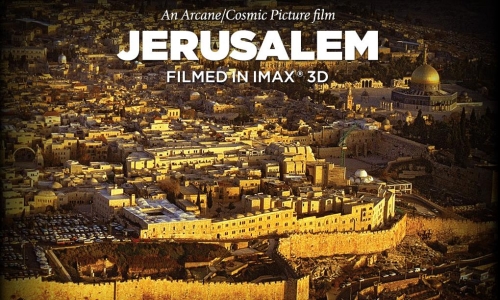
 . And the neglected gem,
  , co-written by Sondheim, a nasty little murder mystery with a great twist and a wickedly funny take on Hollywood egos. But most of all, I recommend the songs.