Sneak Peek: Pixar’s “Planes”
Posted on April 6, 2013 at 3:25 pm
Posted on April 6, 2013 at 3:25 pm
Posted on April 4, 2013 at 6:00 pm
The animated films from Japan’s Studio Ghibli are adored by many American families for their lush and intricate hand-drawn animation and imaginative story lines. But others, like me, find many of them uneven and inaccessible. The latest, from Goro Miyazaki, son of legendary writer/director/animator Hayao Miyazaki (“Spirited Away,” “My Neighbor Totoro,” “Princess Mononoke”), has the gorgeous settings we expect from Ghibli, inspired as much by European fairy tales as by the mid-century Japanese seaside town where the story takes place. But it also has the inexpressive faces and oddly un-family-friendly storyline of some of the studio’s other productions. It seems more than a little off that a large part of the plot concerns a disturbing issue of possible paternity, a questionable theme for a movie about and intended to be seen by children.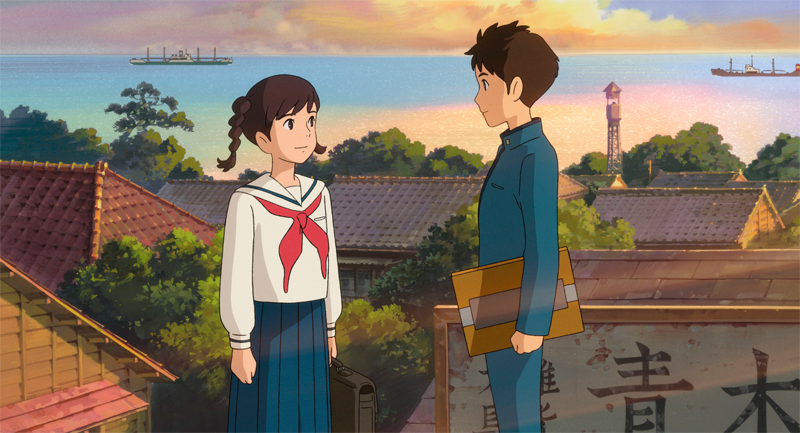
Hayao Miyazaki co-wrote the film, based on a popular manga comic. Like many of the Studio Ghibli films, it is the story of a young girl who has had to take on a lot of responsibility. It is set in the Umi (voice of Sarah Bolger of “In America”), a quiet, respectful girl. She lives with her grandmother, who runs a boarding house above in the port city of Yokohama. Umi’s father was lost at sea fighting in the Korean War. Her mother is studying in America. Every day, Umi hoists a “safe voyage” signal flag for all the boats. In her heart, it is also a message to the father she still dreams will someday come back to her.
One day, she meets the outgoing, impulsive Shun (Anton Yelchin). As she works with him to help restore a dilapidated house Shun and his friends are using for their club meetings. They hope to persuade local officials not to knock it down. They never speak about their feelings but it is delicately shown that they are drawn to one another. And then they discover >they may be siblings. “I guess we stop feeling how we feel,” Shun says, and they agree to stay friends. Fortunately, they find a kind and reassuring answer to their question.
It is strange to see so much focus on the details of the backgrounds, which are exquisitely rendered, when there is so little attention to the expressiveness of the characters. The fluttering of a signal flag conveys more emotion than the impassive faces and delivery of the characters. The resonance of the story’s context in the years between Japan’s defeat in WWII and its hosting of the 1964 Olympics 20 years later will be lost on today’s children, which leaves the thin storyline inadequate to sustain our interest to the end.
Parents should know that this movie includes references to sad parental losses and separation and war and a discussion about how the two young teens who have romantic feelings for each other might be siblings.
Family discussion: What did Umi and Shun like about each other? Why was the house important to the kids?
If you like this, try: “Spirited Away”
Posted on March 27, 2013 at 3:59 pm
I was utterly captivated from the first moment of these magical opening credits. This sequence welcomes us into the world of the man who will become the Wizard and the magic he will encounter.
Posted on March 21, 2013 at 6:00 pm
 I think we can all agree that at least in some respects all children are Neanderthals. It is the grand challenge of parenthood to civilize these sometimes savage little creatures by teaching them language, manners, and keeping safe. And some of the most difficult choices parents must make come when we try to encourage children to be strong, brave, independent, and adventuresome when it comes to accomplishing goals in school, sports, and chores while protecting them from mistakes that could be hurtful or even devastating.
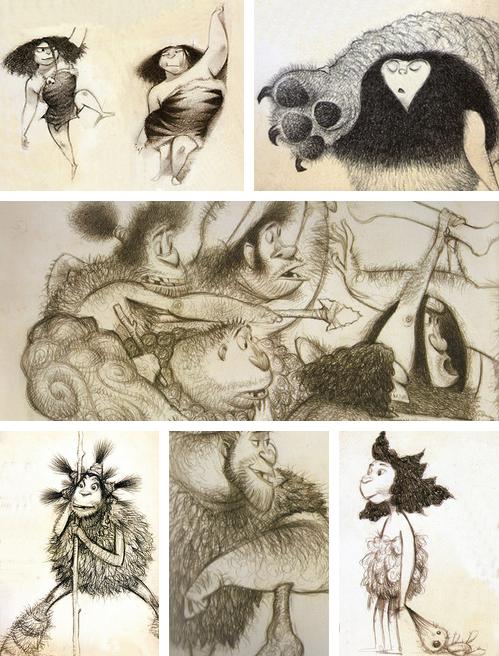
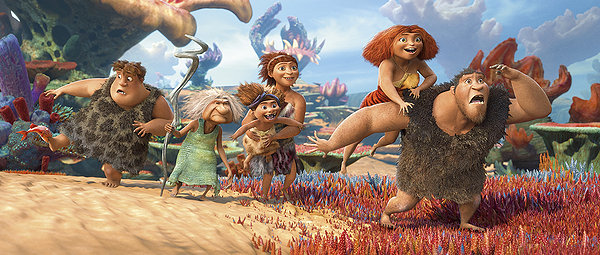
That’s the idea behind sweet new animated film about a prehistoric cave family. Familiar family dynamics are amusingly exaggerated in the Paleolithic setting, where the most basic necessities require everyone’s full-time attention. The heavy-boned characters designed by the brilliantly witty Carter Goodrich (“Despicable Me,” “Hotel Transylvania”) may argue with each other, but they demonstrate the strength of their bond on the hunting/gathering expedition. When this family goes out to get breakfast, they really go out to get breakfast. In a joyously-choreographed race to get food, parents Grug (Nicolas Cage) and Ugga (Catherine Keener), Ugga’s mother Gran (Cloris Leachman), and their three children work seamlessly together somewhere between extreme dodgeball, an obstacle course, and a rugby game. Even the happily feral baby joins in for a crucial maneuver.
Other than that, they stay inside the cold, dark, cave. None of the other families of their community have survived, and Grug is terrified of anything that he cannot control. So he tells his family that “curiosity is bad and anything that is new is bad” and insists that they all stay inside together. Keeping everyone alive is his full-time job. “Never not be afraid,” he warns them. “Fear keeps us alive.” “I will never do anything new or different,” promises his son Thunk (Clark Duke). But rebellious teenagers go back as far as protective fathers, and Eep wants to explore the world outside the cave. What Grug sees as safe and under control, Eep sees as boring and old-fashioned.
That bigger world Eep wants to see includes a stranger, a guy named Guy (Ryan Reynolds). He has a lot of new ideas like tools, shoes, a “belt” (a monkey with a theatrical flair for flourish), and “baby suns” — fire. Eep wants to learn more. And soon Grug has to make changes because the tectonic plates start to shift beneath him. Staying the same is no longer safe. The family must leave the cave to find a new place to live. Grug has to learn that sometimes new is not bad. And Eep has to learn the value of what she already has.
Kids will enjoy outsmarting the Neanderthals, whose experience of the world is so limited that they think fire can be extinguished by dry grass and they will marvel at the notion that there had to be a first-ever hug. They will get a kick out of Guy as a proto-MacGyver who shows his traveling companions how to use rocks, vines, leaves — and strategy — to trap food and protect themselves from predators. As Grug and his family leave their rocky home they find new environments that are increasingly dazzling, with spectacularly imagined vistas and gorgeous vegetation. Those images nicely parallel the opening minds and spirits of Grug and his family. Despite a few too many mother-in-law jokes, “The Croods” nicely makes it clear that even before they had fire, families understood how important it was to cherish and protect each other. And Eep reminds us that what may feel like teenage obstinacy and foolhardiness may just be the next step in our evolution.
Parents should know that this movie has some scary animals and children and adults in peril, with references to sad off-screen deaths. There is brief crude humor and there are repeated jokes about Grug wishing that his mother-in-law would die.
Family discussion: How can you tell when it is time to try new things and time to stick with what you know? What did Guy and Grug learn from each other?
If you like this, try: Visit a museum or do some research in books to look at prehistoric fossils and bones and watch “The Land Before Time,” the “Ice Age” series, and “The Flintstones”
Posted on March 19, 2013 at 8:00 am
I love the work of Carter Goodrich, an artist and illustrator who has worked on films like “Despicable Me” and “Hotel Transylvania.” I was delighted to see that he has made his sketches for this week’s release, “The Croods,” available online. Take a look! Even in the days of computer animation, it all begins with a drawing and some characters.