Based on Philip Roth’s novel, “Indignation” takes place in 1951, as Marcus Messner (Logan Lerman), a brilliant working class Jewish boy from Newark, New
Jersey, travels on scholarship to a small, conservative college in Ohio, thus exempting him from being drafted into the Korean War. But once there, Marcus’s growing infatuation with his beautiful classmate Olivia Hutton (Sarah Gadon), and his clashes with the college’s imposing Dean, Hawes Caudwell (Tracy Letts), put his and his family’s best laid plans to the ultimate test.
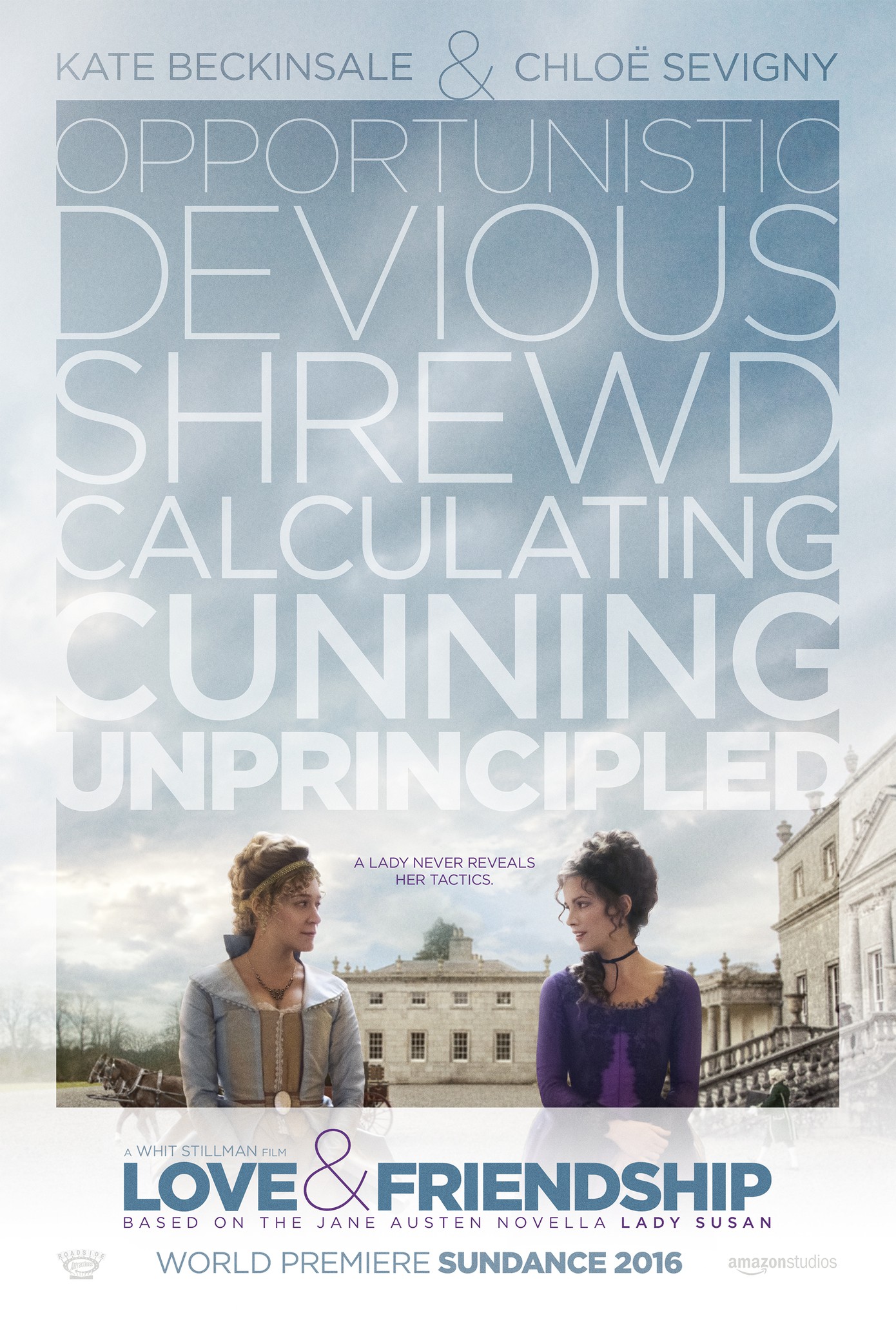
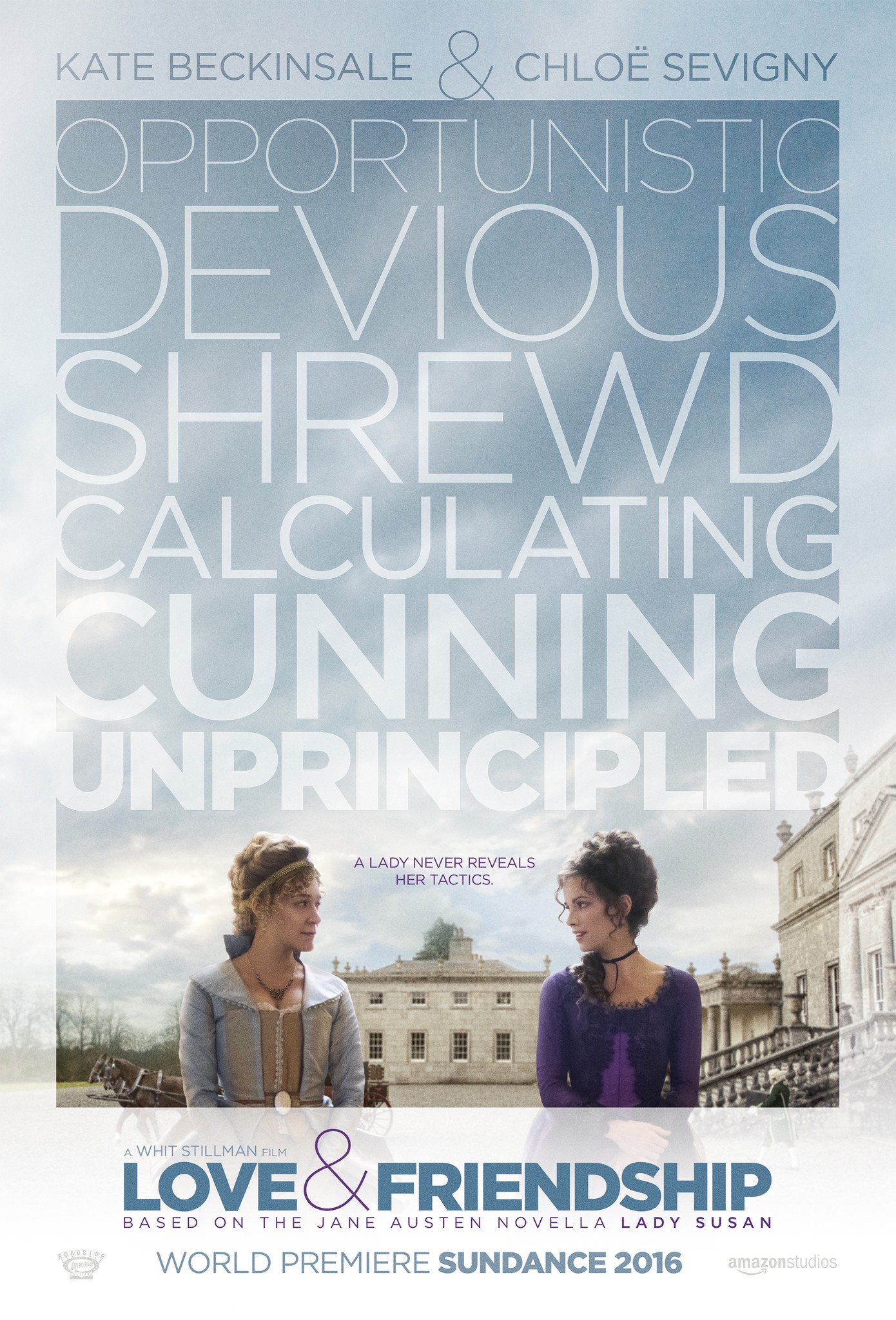
Copyright 2016 Westerly FilmsWho better to adapt Jane Austen’s epistolary novel, Lady Susan, for the screen than our finest contemporary observer of life among the “haute bourgeoisie,” Whit Stillman? A highlight of his first film was a conversation about Austen’s Mansfield Park, and his gift for epigrammatic dialog and understanding of class and money — and female protagonists — make it a natural fit. The result is a delightful confection about a woman described by Austen via one of the other characters as “the most accomplished coquette in England,” and one who “does not confine herself to that sort of honest flirtation which satisfies most people, but aspires to the more delicious gratification of making a whole family miserable.”
That assessment is not exactly accurate. Making a whole family miserable is somewhere between collateral damage and side benefit.
Lady Susan (fearless but effervescent Kate Beckinsale) is a recent widow with a teenaged daughter. In the manner of the era, when the gentry visited each other for months at a time, she has been staying with friends. First, she has no money and therefore her primary asset, aside from her guile and is her relationships with more comfortably settled members of her class. And second, the best chance for her to have a home of her own again is to marry her daughter off to a wealthy man. Stillman makes Lady Susan a more sympathetic character than Austen did, in part due to the vivacity of the actress who portrays her. It’s hard to have her believably portray such a captivating figure without our being captivated ourselves. But in addition, it is clear throughout that she may be ruthless and mercenary, but she has no other options. Her very status and gender constrain her from any other option, but she is undeterred. “In one’s plight is one’s opportunity,” she says. She has a gift for outrageous comments made with so much confidence they almost sound reasonable: About being sent away by her hostess: “If she were going to be jealous, she should not have married such a charming man.” About her daughter’s school: ““The fees are too high to even think of paying!” In the midst of an era of polite misdirection and euphemism, she is focused and direct, a hint of the coming modernity in the days of the harpsichord.
If she was around today, she’d be a CEO. Or a reality star.
Lady Susan has very little by way of education. She is not sure how many Commandments there are or what they contain. But she knows people, especially men. She knows her husband’s family has no socially acceptable vocabulary to tell her she can no longer stay with them. And when a handsome, eligible man warned about her skill with the opposite sex appears ready to resist her, she cleverly upends his expectations and before he knows it, he is captivated.
Stillman presents the story with wit and brio, introducing us to the characters with helpful on-screen descriptors: “his wealthy wife,” “a divinely attractive man.” The slight archness is his, or Austen’s, or Lady Susan’s; all are a bit reductionist when it comes to assessing everyone in the story according to his or her usefulness. He resists the usual musty respect for all classics, especially those featuring corsets, and presents the story with elegance and a refreshing briskness. Lady Susan would approve.
Parents should know that this film includes themes of deception and adultery.
Family discussion: Why did Lady Susan confide in Alicia? How did Lady Susan show her understanding of what it took to gain the affection of the different men around her?
If you like this, try: more Jane Austen films including “Sense and Sensibility” and “Pride and Prejudice,” as well as the books that inspired them
There was something special about the poor, uneducated Henrietta Lacks, something she could never have suspected. From the description of the book, by Rebecca Smoot:
She was a poor Southern tobacco farmer who worked the same land as her slave ancestors, yet her cells—taken without her knowledge—became one of the most important tools in medicine. The first “immortal” human cells grown in culture, they are still alive today, though she has been dead for more than sixty years. If you could pile all HeLa cells ever grown onto a scale, they’d weigh more than 50 million metric tons—as much as a hundred Empire State Buildings. HeLa cells were vital for developing the polio vaccine; uncovered secrets of cancer, viruses, and the atom bomb’s effects; helped lead to important advances like in vitro fertilization, cloning, and gene mapping; and have been bought and sold by the billions.
Yet Henrietta Lacks remains virtually unknown, buried in an unmarked grave.
Her family knew nothing about this and of course was not paid for the use of her cells. Winfrey’s casting as the daughter suggests the focus will be more on the family and the ethical questions than the science, but I hope both will be covered.
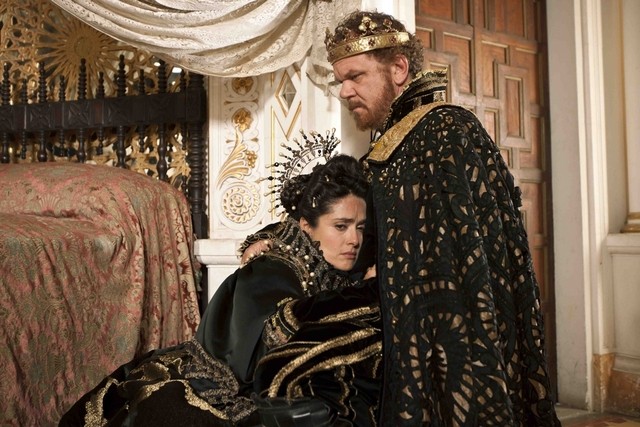
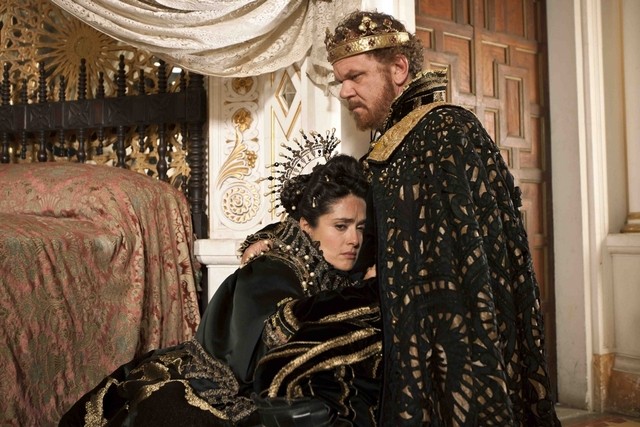
Copyright 2016 IFC FilmsWho ever said that fairy tales were for children?
The visually striking “Tale of Tales” is based on three stories from Giambattista Basile that go back a hundred years before the Brothers Grimm. Basile, whose book was subtitled “entertainment for little ones” was the first person to write down these folk tales, including early versions of Cinderella, Rapunzel, and other classic stories. The three tales here, inspired by Basile’s stories, have fairy tale elements — wishes, magic, monsters, a princess to be won by whoever gives the right answer, a queen who will do anything to have a child. And there are lush, gorgeous, and wildly imaginative images. But these are not for children. These are straight out of the primordial ooze of the collective unconscious. These are not so much stories about enchantment as they are about desire, hubris, terror, all of the the deepest and most untamed emotions. Don’t expect anyone to live happily ever after.
The Queen of Longtrellis (Salma Hayek) is inconsolable. She wants a child. A wizard offers her a solution. If she eats the heart of a sea monster, prepared for her by a virgin, she will become pregnant, but it will be at the cost of a life. She agrees. And her husband, the king (John C. Reilly) is killed capturing the monster. The virgin prepares the heart, and the queen devours it. She and the virgin both become pregnant and deliver identical sons.
The King of Strongcliff (Vincent Cassel) is a libertine. He hears the voice of an old woman singing (Hayley Carmichael) and, believing her to be young and beautiful, tries to get her to agree to sleep with him. She agrees, provided that they keep the lights off. But he peeks and horrified by her appearance, has her thrown out of the window.
And the King of Highhills (Toby Jones) has a beautiful and devoted daughter, Violet (Bebe Cave). She prepares a song to show her love for her father but as she performs, he is distracted by a flea on his hand, which fascinates him so much that he keeps it for a pet, feeding it and fattening it up until it is the size of a pig. When it dies, he has it skinned and offers Violet’s hand in marriage to the first one who can correctly identify the animal it came from. But the one who knows the answer is an ogre.
Each of these stories explores issues of pride, selfishness, and greed. The Queen wants more than a child; she wants all of his love. The old woman wants superficial beauty and the power it can bring and the lecherous king wants sex and a beautiful wife. A woman is consumed — literally — with jealousy. Another king can’t see the love of his daughter because he is preoccupied with his grotesque pet. Director Matteo Garrone, with his first English language film, gives the stories a hallucinatory quality with rapturous images on the brink between dream and nightmare.
Parents should know that this film includes nudity, sexual references and situations, monsters, fairy tale violence and explicit and disturbing images.
Family discussion: How do these fairy tales differ from the ones more familiar to modern audiences? How do each of these stories deal with the theme of pride?
If you like this, try: “The Brothers Grimm” and “Time Bandits”