Operation Finale

Operation Finale

Posted on August 29, 2018 at 5:49 pm

B +
Lowest Recommended Age: High School
MPAA Rating: Rated PG-13 for disturbing thematic content and related violent images, and for some language
Profanity: Some strong and hateful language
Alcohol/ Drugs: Drinking, smoking
Diversity Issues: A theme of the movie
Date Released to Theaters: August 31, 2018
Date Released to DVD: December 3, 2018
Copyright 2018 MGM

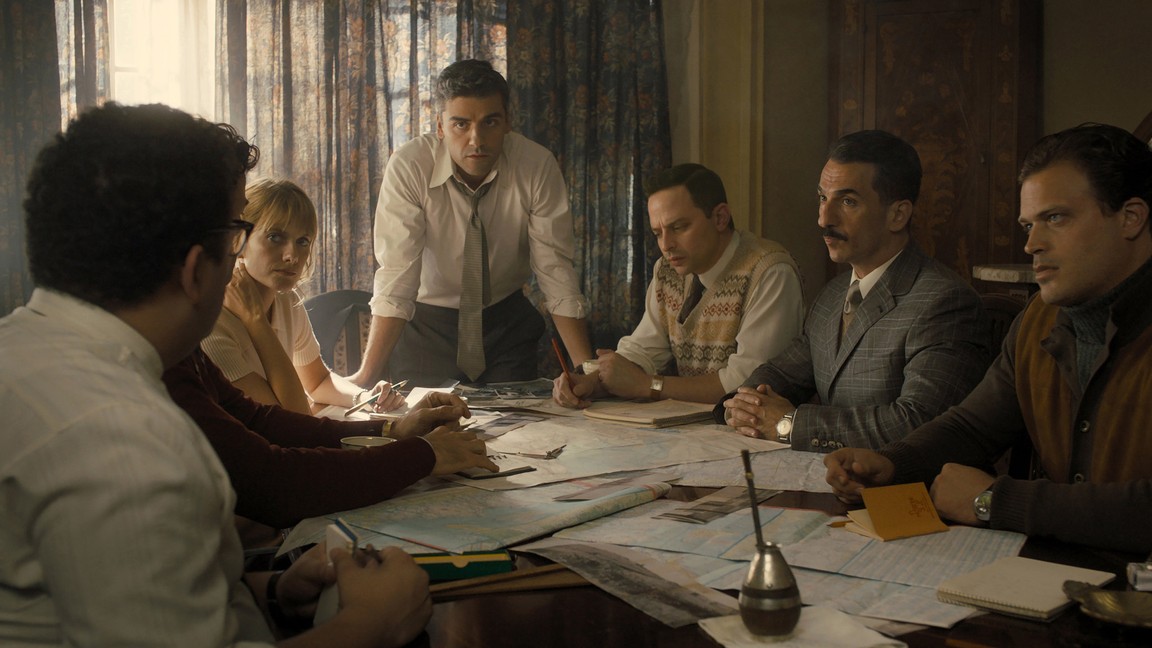
Operation Finale considers what is, perhaps, the ultimate conundrum, one that echoes throughout all of human history. How can good guys defeat the bad guys without becoming bad themselves? If the bad guys do not play by any rules at all, the good guys have two choices: to stay within the rules themselves, which can be high risk because it is like going into a fight with both arms tied behind your back, or decide that the ends justify the means and violate the rules to improve their chance of winning. Can it really be a win if you abandon your principles to get there?

Sometimes there is ambiguity about who exactly are the good guys and the bad guys. That is not the case with the Nazis in WWII. Among the worst of the worst, certainly the worst to survive the war, was Adolf Eichmann, the head of the “Department of Jewish Affairs” and the man responsible for creating the system that led to the murder of millions of people, including six million Jews. The other top Nazi leaders, Hitler, Himmler, and Goering, killed themselves at the end of the war. Then there were the Nuremberg trials for many others. But Eichmann and a few others escaped to Nazi-friendly Argentina. Fifteen years later, agents of Israel’s Mossad intelligence agency captured him and brought him back to Israel for a trial that was broadcast around the world. This is the story of how that happened, so tensely presented that we hold our breath even though we know that Eichmann made it to Israel, where his “man in a glass booth” (for security) trial was broadcast as it happened throughout the world, giving most people their first chance to hear testimony from Holocaust survivors.

Director Chris Weitz and screenwriter Matthew Orton skillfully portray the people of the young state of Israel, just 12 years old, still defining itself internally and still justifying its existence to the world. When someone approaches Mossad with evidence that Eichmann has been identified in Argentina, the first reaction is that the atrocities are old news, and they don’t have the resources to go after him because they are too busy fighting for the right to exist now. They ultimately decide to get him less from a sense of justice or even revenge than from the notion that at this stage, everything they do is definitional; every choice they make shows the world what it means to be a Jewish state after the Holocaust, an atrocity so unprecedented that the term was not even in widespread use for several more years.

We see what it is to have a country made up of displaced people, each of whom has suffered unthinkable trauma and grief. In one scene they almost start to have a grim “who lost the most” conversation before they stop. Their focus has to be on what happens next, and that is the risky, complicated plan to get Eichmann out of Argentina, even though there is no extradition and they don’t have access to military aircraft capable of transporting him.

Sir Ben Kingsley plays Eichmann, living under an assumed name, working at a Mercedes factory, living with his wife and sons, and speaking often to groups of other escaped Nazis about his wartime experiences. Oscar Isaac plays Peter Malkin, the Mossad agent who actually tackled Eichmann, and who, with his colleagues, had to keep him captive until he could be extracted and put on a commercial flight to Israel.

There is a wisp of a love story, and there is some exploration of the moral dilemmas. But it is the electrifying scenes between Kingsley and Isaac that are even more riveting than the “can they get him” and “will they be caught” moments of spycraft.

It was Eichmann himself who inspired Hannah Arendt’s term “the banality of evil,” and disconnect is jarring between Eichmann’s deeds in overseeing the mechanics of rounding up Jews and transporting them to their execution and torture and the bland, civilized factory foreman who loves his wife and children. Eichmann is not bothered by the slaughter of millions, even when a murdered baby’s brain was splattered over his coat. Malkin is still deeply wounded by the loss of one person, his adored sister, who was killed with her children. He is still anguished by a fatal mistake on a previous mission. We see that the very conscience that keeps Malkin from “putting a bullet between eyes,” as he said he would gladly do, can make it much harder to bring him to justice.

Eichmann, a master manipulator, tries to put them both in the same category of following orders to save their country. Malkin tries to manipulate Eichmann into signing the necessary consent form for leaving the country. Each tries to gain ground over the other, usually through appearing to be conciliatory, to find some point of vulnerability. The action scenes, especially toward the end, have a ramped-up “Argo” rhythm, but what is far more engrossing is when two people talk to each other.

The stakes are incalculable and inherently dramatic, but Kingsley and Issac take it to another level as characters and as actors, and it is fascinating to see them challenge each other. Two of the greatest actors alive, each with endless screen magnetism, superb control of acting technique, and the ability to tell a lifetime with an almost imperceptible shift of the eyes or slight additional huskiness in the voice, put all of that to show us a massive historical event can come down to two people in a room.

Parents should know that this film includes footage of Holocaust atrocities, including mass murder, with some graphic and very disturbing images, some peril and violence, drinking, smoking, and some strong language.

Family discussion: Why is it important to give someone a fair trial when the crime is unimaginably big and the evidence against him is overwhelming? Is it possible for a trial under those circumstances to be fair? Why did Eichmann sign the agreement?

If you like this, try: “Argo,” “Munich,” and “The Eichmann Show,” a film about the trial, and read Peter Malkin’s book, Eichmann in My Hands.

Related Tags:


Based on a true story Drama DVD/Blu-Ray movie review Movies -- format

Trailer: The Green Book

Posted on August 21, 2018 at 5:09 am

Viggo Mortensen and Oscar winner Mahershala Ali star in “The Green Book,” based on the true story of black musician Don Shirley and the white driver/bodyguard who took him on tour through the America South of the early Civil Rights era. Before Lyndon Johnson signed the Civil Rights Act, public accommodations like hotels and buses were allowed to discriminate on the basis of race. The Negro Motorist Green Book was a guide to the places that black people could stay in the South without problems. (About Comics has re-published the original 1954 edition.)  The movie is directed and co-written by actor Peter Farrelly (“Twilight,” “The Big Kahuna”), and it will be in theaters this November.

Related Tags:


Based on a true story Race and Diversity Trailers, Previews, and Clips
BlacKkKlansman

BlacKkKlansman

Posted on August 9, 2018 at 5:24 pm

A-
Lowest Recommended Age: High School
MPAA Rating: Not rated
Profanity: Very strong and racist language
Alcohol/ Drugs: Alcohol
Violence/ Scariness: Peril and violence
Diversity Issues: A theme of the movie
Date Released to Theaters: August 10, 2018
Date Released to DVD: November 5, 2018

Copyright 2018 Focus Features
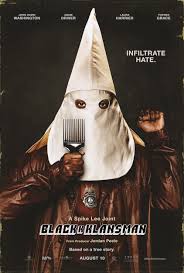
Ron Stallworth (John David Washington) is undercover through most of “BlacKkKlansman,” and not just on the job, but in the job and outside of it, too. The real-life Stallworth was the first black police officer, and later the first black detective in Colorado Springs, back in the 1970’s and he really did go undercover to infiltrate the Klu Klux Klan — over the phone. Spike Lee’s film, based on Stallworth’s book, tells how Stallworth saw a classified ad, called the Klan, and, with the help of a white partner who was “Stallworth” for the in-person meetings, ended up a member in good standing, having phone conversations with the head of the organization, Grand Wizard David Duke (Topher Grace). (All of this really happened.)

Stallworth also really went undercover at a lecture by black activist Stokely Charmichael, who had just changed his name to Kwame Ture, and who is played here by Corey Hawkins, conveying Ture’s magnetism and fiery brilliance and making an impression so strong in his brief scene that it resonates throughout the rest of the film. This rally is really the pivotal, as Washington shows us as close unguarded as Stallworth gets, which opens him up to pursuing Patrice (Laura Harrier), a pretty activist he meets there. But of course he has to stay undercover with her, too — personally, not professionally — because she has strong political feelings about working within the system in general and about the police in particular. (This character and their relationship are fictional.) Adam Driver, as Stallworth’s white partner, has his own double-undercover moments. He thinks it does not matter that he is Jewish, but as Stallworth tells him, he has skin in the game, too. Near the end of the film, Stallworth is undercover at least two levels when he is assigned to Duke’s security detail and must stand close to the man who does not know Stallworth is the man he spoke to in confidence over the phone.

Law enforcement might have been an unusual choice for a black man of that era, but in every other respect Stallworth seems born to be in law enforcement, happy to accept the offer, and clearly aware of the challenges he will face, from the superiors who assign him safe but boring jobs to racist comments from some of the other officers. Washington (a former pro football player and regular on “Ballers”) projects an easy physical confidence, nerves of steel, and a personal meticulousness, from his perfectly shaped Afro to his neatly ironed shirt and shined shoes. Lee, working with production designer Curt Beech, costume designer Marci Rodgers, and director of photography Chayse Irvin, bring a light touch to a 70’s vibe that owes as much to the movies and pop culture of the era as to what ordinary people and settings looked like. There’s a nice nod to 70’s movies as well in the graphics and sinuous, jazzy camerawork and the way the handsome, athletic Washington is lit like Shaft or Superfly.

There could be no better depiction of what Hannah Arendt called “the banality of evil” than the Klansmen and women in this film, who chat casually about hatred and terrorism the way other small groups of like-minded communities might talk about an upcoming bake sale. We can almost sympathize with a 1970’s wife who just wants a chance to do something important like the men do or the men who get a sense of fellowship in a shared interest. Topher Grace shows us Duke’s silky, ingratiating manner, and Lee shows us that complacent hatred may be the most insidious.

It may seem to some viewers that an opening montage of racist imagery, including D.W. Griffith’s “Birth of a Nation” and a scene of Alec Baldwin as a racist businessman are over the top, until we see the footage from 2017’s white supremacist rally Charlottesville one year before the release of this film. Lee is one of my favorite directors, but he sometimes has more ideas than story or characters in his films. Here, with Stallworth’s remarkable true and timely story, a star-making performance by Washington, whose resemblance to his double Oscar-winning father is more in his voice than his face, he has made one of his all-time best, most purely entertaining, and most important films.

Parents should know that this film includes depictions of terrorist activities with peril and violence and very strong and offensive language. Characters drink alcohol.

Family discussion: How did Ron and Patrice differ in their ideas about the best way to solve problems and make things better? What has changed and what has not since the 1970’s?

If you like this, try: the book by Ron Stallworth and Lee’s films “Inside Man,” “School Daze,” and “Chi-Raq”

Recommended reviews: Odie Henderson on rogerebert.com, Travis Hopson on Punch Drunk Critics

Related Tags:


Based on a true story Drama DVD/Blu-Ray movie review Movies -- format Race and Diversity
Adrift

Adrift

Posted on May 31, 2018 at 3:36 pm

C
Lowest Recommended Age: Mature High Schooler
MPAA Rating: Rated PG-13 for injury images, peril, language, brief drug use, partial nudity and thematic elements
Profanity: Some strong language
Alcohol/ Drugs: Alcohol, brief drug use
Diversity Issues: None
Date Released to Theaters: June 1, 2018
Date Released to DVD: September 3, 2018
Copyright 2018 STX Films

If I ever decide to pursue a PhD, I think I will go for a combined film/economics degree and study the correlation between the quality of a film and the star also being the producer. There will be plenty of data.

Shailene Woodley produces and stars in “Adrift,” based on the true story of a young couple sailing across the Pacific Ocean in the early 1980’s, who were caught in a deadly hurricane. There is obviously a lot of appeal for an actress in a story of the struggle to survive with the opportunity to show courage, resilience, and determination. But the back-and-forth flashbacks weaken the intensity of that struggle and a weak script with a Gothika Rule-worthy twist ending make even a story of survival more disappointing than inspiring.

Tami (Woodley) is a free spirit as we see when the immigration official in Tahiti asks her what her profession is and she replies, “Whatever job pays me enough to get me to the next place.” She has been traveling full-time since she graduated from high school five years earlier, most recently as chef on a schooner. She meets Richard (Sam Claflin), a British Naval Academy drop-out who worked in a boatyard so that he could build his own sailboat and has been on the water pretty much full-time ever since. Though he tells her that being at sea alone is mostly being “sunburnt, sleep-deprived, seasick, or all three at once. And after a few days, there’s the hallucinations.” But there is something both of them find irresistible in sailing into the horizon, and both have an unquenchable desire to see what the world has to offer. In one of the movie’s best scenes, she says a sunset at sea is red (as in “Red sky at night, sailor’s delight”), and he makes her see all the different shades and colors within the red. While she teases him about it later, she loves seeing the world through his eyes. And he loves her spirit of adventure.

When a wealthy friend offers Richard $10,000 and two first-class plane tickets to sail his yacht to San Diego, it seems like a perfect way for them to begin their life of adventure. But we know from the movie’s first shot that they are sailing into terrible trouble. We first see Tami submerged, and then we see her come to, disoriented, in the wrecked and waterlogged hull of the yacht, with Richard gone. Later we will see their tiny ship buffeted about by waves (the special effects are fine but nothing we didn’t see in “The Perfect Storm”) interspersed with scenes of their early romance and scenes of the 41 days adrift, with no way to get help or let anyone know where they were.

I don’t want to spoil the movie’s twist here, but per the Gothika Rule will be happy to share it to anyone who writes to me at moviemom@moviemom.com. I’ll just saw that while I am sure it was a deeply spiritual and sustaining experience for Tami, it comes across poorly on screen, leaving the audience, yes, adrift.

Parents should know that this film includes intense mortal peril with severe and graphic injuries, some strong language, sexual references, nudity, brief drug use, alcohol, reference to suicide and teen pregnancy, and a sad death.

Family discussion: How many ways can you think of to describe red? Why was the frangipani so meaningful? Why did Tami say she wouldn’t trade the experience for anything? What problem-solving skills helped her the most?

If you like this, try: “Touching the Void” and “The Life of Pi”

Related Tags:


“Gothika Rule” Action/Adventure Based on a book Based on a true story DVD/Blu-Ray movie review

Trailer: Kodachrome

Posted on April 9, 2018 at 8:04 am

Coming April 20, 2018 in theaters and on Netflix: “Kodachrome”

An estranged father and son make a pilgrimage to the last place that can develop rolls of Kodachrome film on this movie starring Ed Harris, Elizabeth Olson, and Jason Sudeikis, inspired by a true story.

Related Tags:


Based on a true story Trailers, Previews, and Clips
THE MOVIE MOM® is a registered trademark of Nell Minow. Use of the mark without express consent from Nell Minow constitutes trademark infringement and unfair competition in violation of federal and state laws. All material © Nell Minow 1995-2026, all rights reserved, and no use or republication is permitted without explicit permission. This site hosts Nell Minow’s Movie Mom® archive, with material that originally appeared on Yahoo! Movies, Beliefnet, and other sources. Much of her new material can be found at Rogerebert.com, Huffington Post, and WheretoWatch. Her books include The Movie Mom’s Guide to Family Movies and 101 Must-See Movie Moments, and she can be heard each week on radio stations across the country.

Website Designed by Max LaZebnik