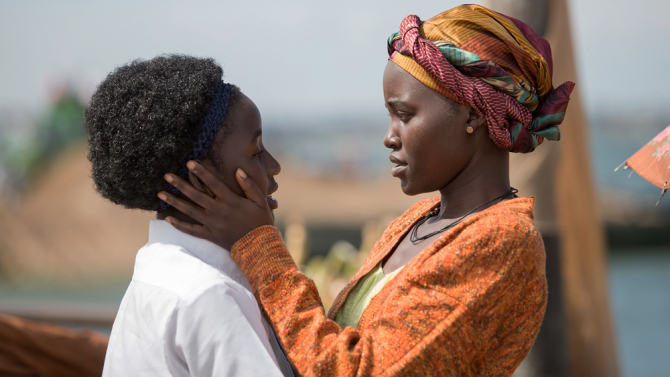
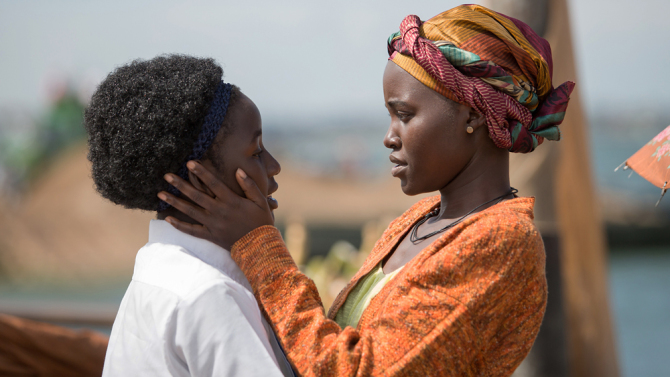
Copyright Disney 2016An illiterate girl from the slums of Uganda became an internationally ranked chess champion. So of course there is a Disney movie. But director Mira Nair has not made the usual feel-good underdog story. It is a wonderfully rich depiction of a family and a culture, as complex in its way as a master-level chess game with intricate moves by many pieces with different strengths and vulnerabilities.
At the center of the story is Harriet (Lupita Nyong’o of “12 Years a Slave”), a young widow with five children living in dire poverty. She cannot afford to send her children to school, and so they sell maize in the street and at an open market. Her oldest daughter, Night (Taryn Kyaze) is a young teenager already attracting the attention of a man. The youngest is a baby. When Harriet’s daughter Phiona (Madina Nalwanga) and her brother are lured into a chess class with cups of porridge, Harriet is scared and angry. She needs the children to bring in money, and she believes that the chess teacher, Robert Katende (David Oyelowo of “Selma”) is using them for some sort of gambling operation. But Katende, who is waiting for a job as an engineer, persuades her that he just wants her children to learn.
Nair (“Monsoon Wedding,” “The Namesake”) has a great eye, and a great gift for creating vibrant, layered, wonderfully inviting communities on screen. As Harriet tries to protect her family, despite eviction, a sexual predator, a terrible injury, she recognizes that she has to do more than keep her children safe. She has to open the world to them. Phiona cannot read or count, but somehow she can see eight moves ahead on a chess board as only a very few masters of the game can do. Robert knows that poverty is only the beginning of the problem the children face. The snobbery and bigotry of the middle class Ugandans is the real obstacle. They will not even allow the children from the slum to compete. Robert tricks the official into agreeing to let them in if they can raise the entry fee. And then he raises the money himself, by playing soccer.
Newcomer Nalwanga, from a community much like Phiona’s, has a winning screen presence, and we can see that she has inherited her ability to think through chess problems from her mother’s canny navigation of the challenges to the family’s most basic survival. Nyong’o shows a grace and courage, even in the direst moments, that echo Phiona’s resilience.
Parents should know that this movie includes themes of poverty and deprivation, child is hurt in an accident with scenes of painful medical treatment, there are also some references to sexual predators and there is an out of wedlock teen pregnancy.
Family discussion: Why did Robert change his mind? Why did Phiona get cranky after she returned home?
If you like this, try: “Searching for Bobby Fischer,” “Brooklyn Castle,” and “Endgame”
Natalie Portman Plays Jacqueline Kennedy in “Jackie”
Posted on September 22, 2016 at 3:29 pm
Oscar-winner Natalie Portman plays Jacqueline Kennedy in “Jackie,” which was featured at the Toronto Film Festival and has been picked up for theatrical release. Director Pablo Larraín retells this story of the young First Lady, only 34 when she entered the White House. Her grace and poise and elegance made her an instant icon. Structuring his film around Theodore H. White’s LIFE magazine interview with the First Lady, just a week after the assassination of her husband, it covers her return to the White House, arrangements for the President’s funeral, and accompanying her husband’s coffin to Arlington Cemetery. The Chilean filmmaker told Vanity Fair he would not have considered making the film without Portman.
“All the films I made before, like Neruda, are movies about male characters,” explains the filmmaker. “So I had to connect with things I never connected before and I did it in a very personal way. . .I talked to my mother , and, from the international worldwide aspect, Kennedy was like the one and only queen that lived in this country. . .a queen without a throne.”
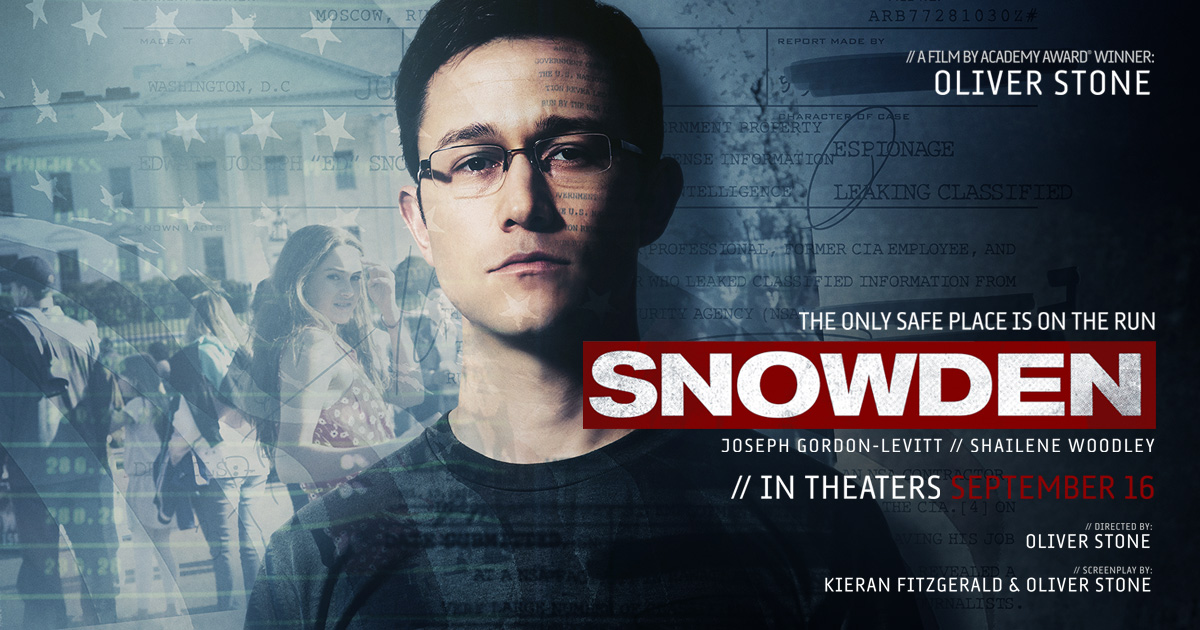
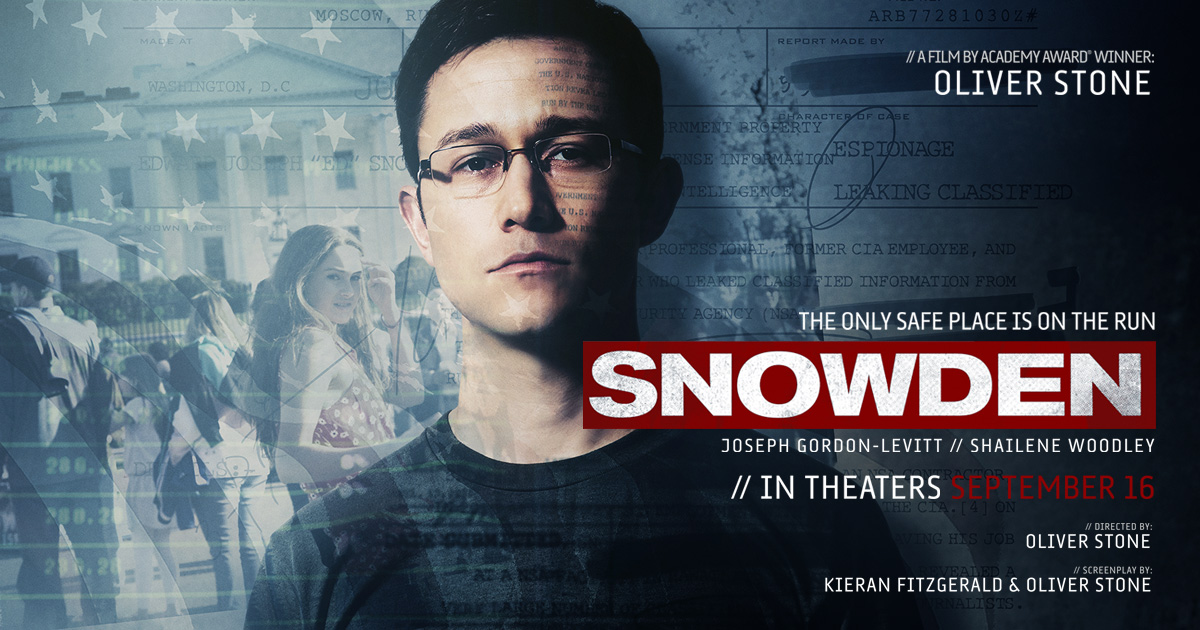
Copyright Endgame Entertainment 2016Who better to take on the story of Edward Snowden than cinema-of-paranoia director Oliver Stone? Well, Laura Poitras, who directed the documentary about Snowden, “Citizenfour,” and who is portrayed in this film by Melissa Leo. As is usually the case, the documentary is the better film. But Stone’s narrative version, “Snowden,” is an absorbing version of the story, presenting vitally important issues in an arresting, provocative manner, with some superb moments. It is flawed, as Stone’s “historical” films tend to be, by unnecessary stacking of the deck that detracts from the credibility of the film. Stone does not trust the government, which is fine, but he doesn’t trust his audience, which is distracting. If you are going to make your hero a seeker of Truth, then Hollywood-izing the story is counter-productive.
The movie takes on three big questions, answers one, partially answers another, and turns the third over to us. The first question is: what happened? How did a 29-year-old computer guy get access to what appears to be the entire scope of US intelligence, copy it, and turn it over to reporters? Second, why did he do it? And third, is he a hero or a traitor?
Snowden was an enormously gifted, deeply patriotic young man who was in training for military special forces when an injury forced his return to civilian life. “There are other ways to serve your country,” the doctor crisply advises him. Naming Ayn Rand as one of his influences does not raise any concerns in his battery of entry tests and interviews, including lie detector tests. And so he goes to work for the CIA, NSA, and private contractors for both agencies, gaining access to the information and intrusions into personal data that are being constantly combed and mined for possible terrorist activity. Think of it as the government having Google that searches not just all public material but everything we think of as private: every email, every phone call, every bank account and credit card transaction, even invading your non-digital, analog world, including your home. According to this film, the government can spy on you Big Brother style via your webcam, even if the indicator light is off. I will wait here while you go get a Band-Aid to cover it up right now.
A combination of consciousness-raising from his left-leaning girlfriend (Shailene Woodley), horrifying discoveries of 4th Amendment violations, disturbing revelations about the military-industrial complex (from Nicolas Cage!), and disappointment in President Obama’s failure to curb these abuses leads Snowden to decide to go public. Briefly touched on are some other possible factors: the abuse of Tom Drake, who tried to raise these questions through official channels, and, possibly, some psychological or cognitive disturbance resulting from the onset of epilepsy and the drug used to treat it, or from the level of work-related stress that may have triggered the seizures. There is one “Beautiful Mind”-style scene where Snowden’s CIA boss (Rhys Ifans) speaks to him via a Skype-ish video conference, with a looming, room-size head along the lines of the Wizard of Oz. It is not clear whether this is Snowden’s subjective viewpoint or intended to be a realistic portrayal, but the conversation is, even within the framework of this film about massive intrusions into private lives of citizens with no suggestion of any inappropriate activity, preposterously paranoic.
All of this would be so much easier to take if Snowden was not heroic and brilliant every single moment. Given 5-8 hours to complete a programming test at the beginning of his tenure at the CIA, he finishes in under 40 minutes (38, he corrects his instructor), and everywhere he goes, he blows everyone away with his mad skills. As he zippily downloads the files he plans to turn over to the press (in real life it took months, not minutes), colleagues knowingly nod their approval, hard to understand given his insistence that he was careful to make it clear that he alone was responsible for the breach. Gordon-Levitt is, as ever, an enormously talented actor, but he is playing something of a cipher, a person with low affect. The endlessly skilled Melissa Leo is playing a tough and savvy journalist but as written she has little to do but gaze adoringly as she points her camera. The standouts in the cast are two of the most versatile and talented young actors working on film today: Ben Schnetzer and Lakeith Lee Stanfield as two of Snowden’s colleagues. In their brief screen time, each of them creates vivid, three-dimensional characters we instantly connect to more than we do to any of the main characters.
No matter where we place the balancing point between national security and individual freedom, we can all agree that the decisions should not be made unilaterally by individuals in their 20’s like Edward Snowden and Chelsea Manning. Snowden says he is hoping to start a conversation. I hope that the conversations about this film will be less about its failings and more about what we should do to make sure the next Snowden does not decide to take this step.
Parents should know that this film has very strong language, sexual references and situations and some nudity, tense and perilous situations, and issues of betrayal.
Family discussion: Is Snowden a hero or a traitor? What would you have done if you discovered the level of government surveillance? Who should decide and how much should be disclosed?
If you like this, try: “Zero Days” and “Citizenfour”
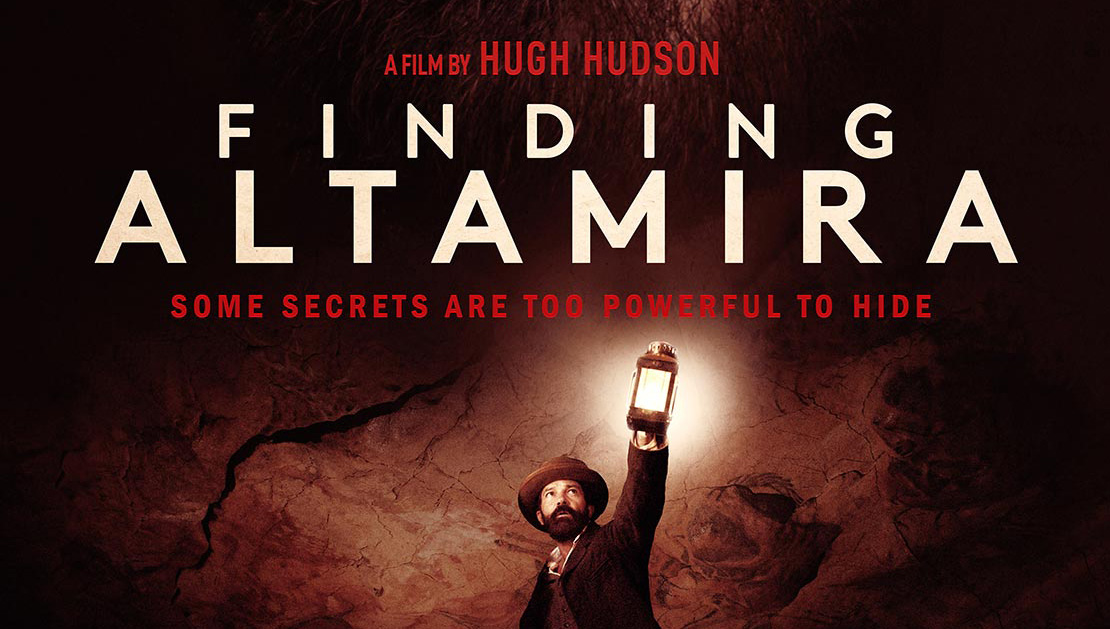
Copyright 2016 Mare Nostrum ProductionsOne of the most deeply moving, inspiring, and just plain thrilling experiences of my life was visiting the legendary Altamira cave, where the earliest humans created art that is stunningly beautiful. It is the earliest work we have that tells us something about the spirit, sophistication, understanding, and aesthetics of our ancestors who lived four or five times as long before ancient Egypt as ancient Egypt is from us. The paintings are every bit as beautiful and sophisticated as Michelangelo’s Sistine Chapel or Rembrandt’s Last Supper.
Imagine being the first modern person to see them, to wander into a cave and find perfectly preserved paintings of animals extinct for thousands of years. This is the story of Marcelino Sanz de Sautola (Antonio Banderas), a nobleman scholar who first identified the cave paintings prehistoric in the 1870’s. The focus of the film is the rejection of his conclusions by the church, which considered them heretical and a threat to their power, and by the scientists of the time, who considered them a secular form of heresy as well. Like the cinematic portrayals of Darwin (“Creation”) and Stephen Hawking (“The Theory of Everything”), it is also the story of a scientist married to a woman of faith, and the conflicts that creates for their relationship.
Director Hugh Hudson (“Chariots of Fire”) has a feel for period drama, but some striking shots cannot make up for static storytelling and a clunky script. There is too much focus on Marcelino’s relationship with his science-minded young daughter (one scene of her gazing at the paintings as they come to life would be more than enough) and the conflicts with his wife. The dialogue is clunky and over-explanatory, more suitable for an educational film to be shown in middle school than a theatrical release. Frustratingly, the movie never really conveys the astonishing splendor and the vibrant colors of the paintings themselves, the way the artists used the surface of the cave for perspective and shaping of the images. For that see Werner Herzog’s “Cave of Forgotten Dreams,” about the cave paintings at Chauvet, a movie that comes much closer to living up to the art to which it pays tribute.
Parents should know that this film has some peril and confrontations and a clash between religion and science.
Family discussion: Why do some people see a conflict between religion and science? Who is most like Marcelino today?
Rated PG-13 for some peril and brief strong language
Profanity:
Brief strong language
Alcohol/ Drugs:
Acohol
Violence/ Scariness:
Intense peril, dire and tense real-life situation, airplane near-crash
Diversity Issues:
None
Date Released to Theaters:
September 9, 2016
Date Released to DVD:
December 19, 2016
Amazon.com ASIN:
B01LBWHQRA
Copyright 2016 Warner Brothers
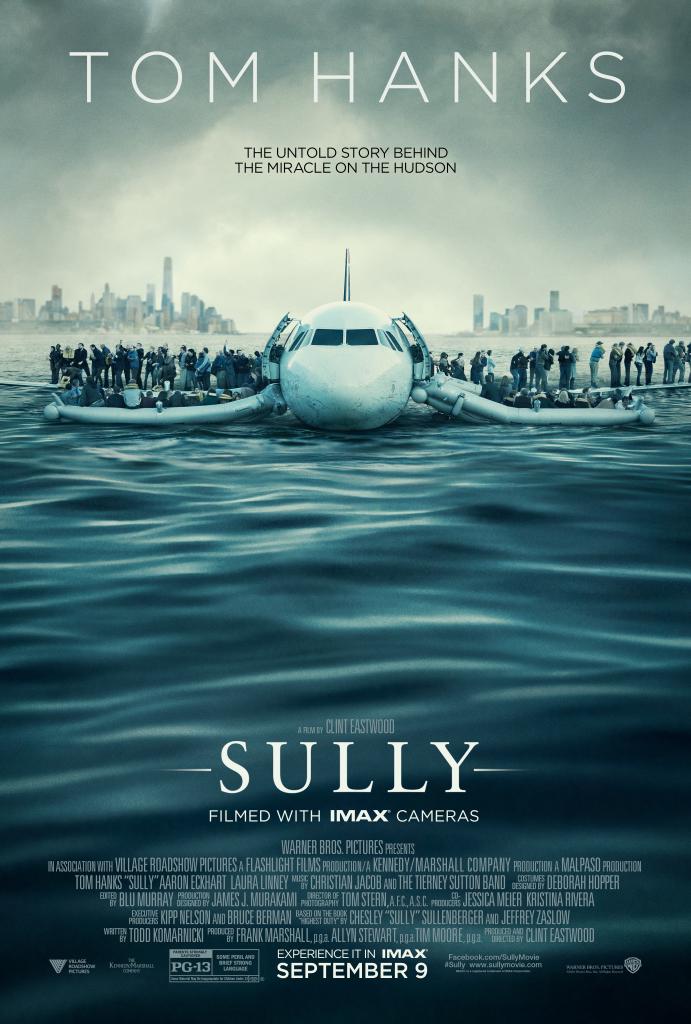
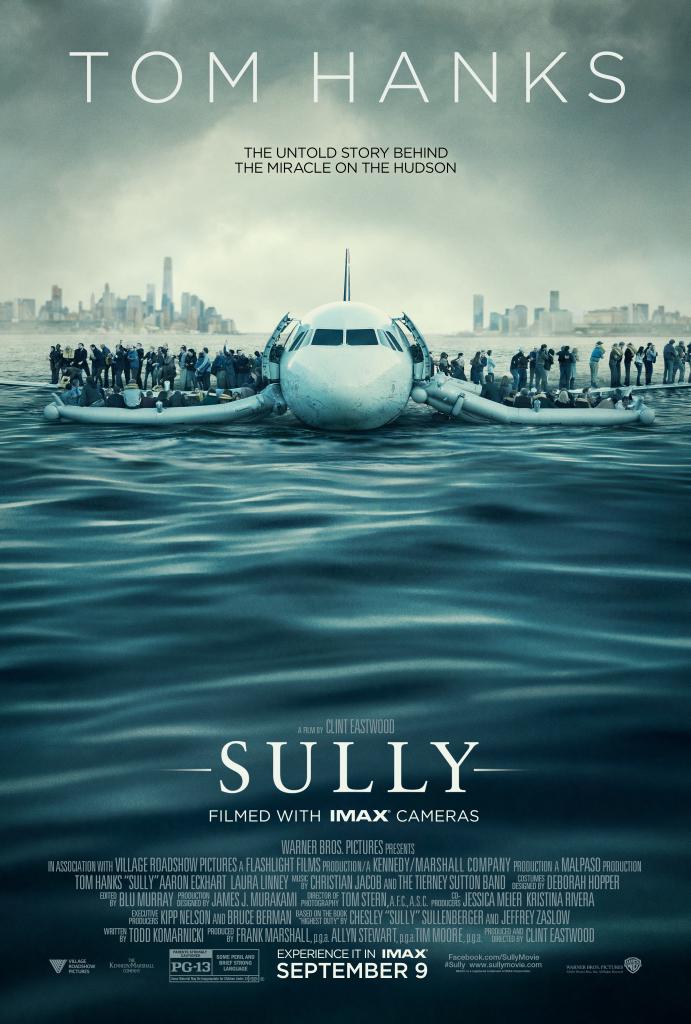
Pay attention to the numbers in “Sully,” the new movie from director Clint Eastwood, with Tom Hanks as “Sully” Sullenberger, the pilot who lost both engines and landed his plane safely on the Hudson River on January 15, 2009. 208 is the number of seconds that Sully and his co-pilot, Jeff Skiles (Aaron Eckhart) had from the time two “bird strikes” took out both of the plane’s engines. 1549 was the number of the United flight, an Airbus A320-214 flying from New York’s LaGuardia Airport to a stopover at Charlotte Douglas International Airport. 155 is the number of people whose lives were saved by Sully’s quick thinking. And 17 — I will let you find out for yourself why that number matters in one of the film’s key turning points.
We know what happened. No one can forget those images of the passengers standing on the wings of the plane on the river in freezing weather. And 208 seconds, no matter how tense and exciting, is not enough for a film. Screenwriter Todd Komarnicki sets the film in the days after the “controlled ditching” (that is the technical term), as Sully and Skiles are lauded as heroes by the media and cross-examined with skepticism by the investigating authorities, overseen by the National Transportation Safety Board. The facts were improbable, even unimaginable. The panel chair (“Glee’s” Mike O’Malley) notes dryly that they have never before listened to the “black box” recording in the presence of the people on the tape. Everyone in the room knows that is because they were all dead. When asked about “the crash,” Skiles interrupts to correct the choice of words: “It was not a crash. It was a ditching, a forced water landing.”
Even Sully, following the intensity of the emergency landing and his concern for what he refers to as the “155 souls” on board, including the crew, is in something of a daze. He is peppered with questions: “When did you last have a drink? Are you having trouble at home?” He is interviewed by Katie Couric and appears with the crew on David Letterman’s show. And yet, he is facing a challenge every bit as daunting and far more complex than losing two engines at a low altitude. There is the relentless, often hostile, dissection of every one of those 208 seconds through an extensive government investigation and the media spotlight, reviewing every decision, every risk assessment, every protocol. Was that second engine really out? Could they have made it to a runway in New Jersey? The only questions tougher and more suspicious than those of the investigators are those Sully asks himself. He is numb from the trauma of the forced landing and especially from the excruciation hours until he was told that all 155 souls were safe.
The script from screenwriter Todd Komarnicki, based in part on Sullenberger’s book, is one of the most well-crafted, tightly constructed screenplays of the year, efficient in providing us the information we need without getting us lost in technical jargon, and making each return to the seconds of crucial decision-making more revealing and more compelling. Hanks, as always, is superb in conveying the ultimate of decency and integrity. And I promise, after this, when they recite the safety details at the beginning of your flight, you will listen.
Parents should know that this movie has extreme, intense peril with some disturbing images. Characters drink and use some strong language.
Family discussion: What experience and character qualities made it possible for Sully to think through his options so quickly and figure out a way to save everyone on board? Were any of the questions they were asked unfair?
If you like this, try: “Apollo 13” and “Captain Phillips,” two other fact-based films with Tom Hanks in charge of a vessel in trouble.