
Trailer: Hugh Jackman in the Ski-Jumper Story “Eddie the Eagle”
Posted on January 20, 2016 at 8:00 am
And here’s the real-life Eddie the Eagle in the 1988 Olympics.
Posted on January 20, 2016 at 8:00 am
And here’s the real-life Eddie the Eagle in the 1988 Olympics.
Posted on January 18, 2016 at 8:00 am
It really happened. There’s a picture to prove it. And this is the story.
Posted on January 7, 2016 at 5:35 pm
B+| Lowest Recommended Age: | Mature High Schooler |
| MPAA Rating: | Rated R for strong frontier combat and violence including gory images, a sexual assault, language and brief nudity |
| Profanity: | Some strong and racist language |
| Alcohol/ Drugs: | Drinking |
| Violence/ Scariness: | Intense, graphic, and disturbing violence including arrows, knives, guns, sexual assault and prolonged animal attack |
| Diversity Issues: | A theme of the movie |
| Date Released to Theaters: | January 8, 2016 |
| Date Released to DVD: | April 18, 2016 |
| Amazon.com ASIN: | B01AB0DX2K |
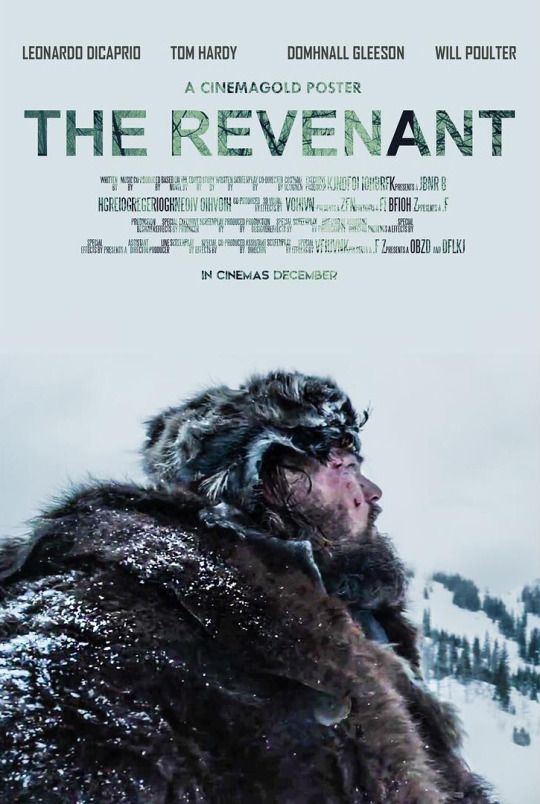
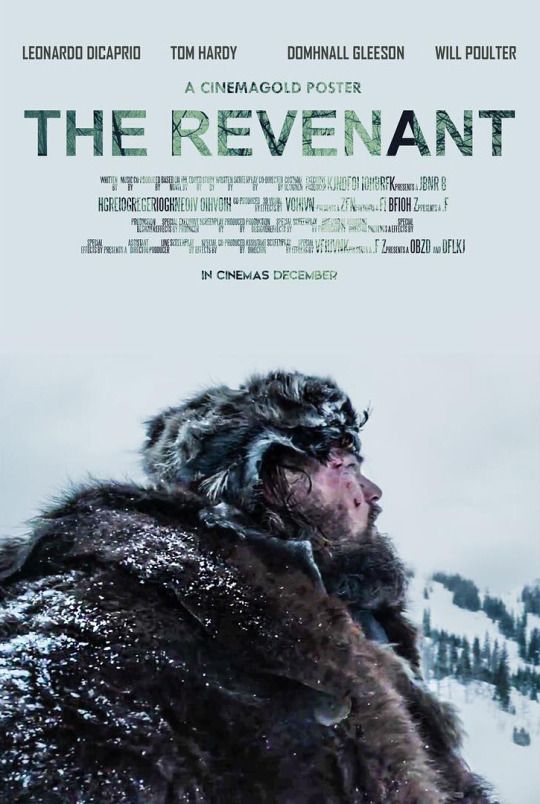
In the 1820’s, ladies of fashion liked fur trim. And, true then as now, men like money. So frontiersmen went on trapping expeditions into the wilderness of the young country of the United States of America (played here by British Columbia and Alberta, Canada). The rewards for bringing back fur pelts are significant. The risks, including attack by the Arikara Indians, are dire.
A frontiersman named Hugh Glass was the guide for one of these expeditions. According to lore, he was savagely attacked by a bear and left to die by his companions, but survived and made it back over 250 miles to the nearest fort, intent on revenge. The story has been told — and embroidered and adapted — over the years, reflecting each era’s perspective and concerns. This version is based on the novel by US Trade Michael Punke (who, as Deputy US Trade representative and Ambassador to the World Trade Organization is restricted from promoting the film). As co-written and directed by “Birdman’s” Alejandro González Iñárritu it is a story of resolve. As often with Westerns, it is a way to explore the fundamental contradictions of the American spirit: determination, vision, courage, but sometimes without any regard for the damage they can cause.
Both Iñárritu and his Director of Photography Emmanuel Lubezki won Oscars for this film. They filmed only in available light, meaning they had to limit themselves to just moments of filming each day. As the director told Deadline, they created “little-by-little jewel moments; that’s the way I designed the production…But those locations are so gorgeous and so powerful, they look like they have never been touched by a human being, and that’s what I needed.” They filmed under conditions so arduous that Will Poulter, who plays real-life frontiersman/trapper Jim Bridger, told me that no acting was necessary to show that they were freezing and exhausted. The bear is CGI (and the bear attack is truly horrifying), but almost everything else was really there and really happening, including diCaprio’s hacking coughs (he had the flu).
The cinematography is the most stunning I have ever seen, perfectly focussed throughout the depth of field, even across endless vistas. Second only to the visuals is the movie’s real theme, not revenge or even will, but law.
When there is no structure, no church, no police, courts, or jail, no lawmakers, no appeals, how do you decide who is in charge and what to do? The film’s most fascinating moments are the ones where we see characters across the continuum on those questions, with one in particular who is still deciding where he fits in, decide what they should do, what they must do. In an early scene, the Indians attack and the frontiersmen’s response is: pelts payload first, and every man for himself second. Wounded men are left behind without a second’s hesitation.
But when Glass (Oscar-winner Leonardo DiCaprio) is critically wounded in the middle of nowhere, Captain Henry, the leader of the expedition (Domhnall Gleeson) is certain what he is owed. Because he has been an essential and honorable part of their expedition (and, unstated but evident, because no one is shooting arrows at them at the moment), he decides two men will be left behind to care for him until he dies and then give him some semblance of a Christian burial. They are John Fitzgerald (Tom Hardy) and Bridger (17 years old at the time). Glass has a teenage son (Forrest Goodluck), from his marriage to a Native American woman who was killed, and he stays with his father as well.
But Fitzgerald becomes impatient and commits a terrible act of cruelty while Bridger is away from the campsite, then lies to him about what happened. Glass is left for dead. As Glass, Fitzgerald, Henry, and Bridger deal with the consequences of these actions, we see the beginnings of a society and culture. Some day, the pristine landscapes explored by Glass and Bridger would be covered with roads and cities and we will try to re-create them by filming in other countries to show us what we were. But the story of the struggle for justice, always the great work of this country, is a story we will keep telling forever.
Parents should know that this film includes extremely graphic and disturbing human and animal violence with many explicit and disturbing images of dead bodies and wounds, murder of family members, sexual assault, brief nudity, some strong language, and racism.
Family discussion: How many different views about law and morality do you see among the characters? What should the group have done with a severely injured member?
If you like this, try: “Touching the Void,” a documentary about an extraordinary story of survival in the wilderness
Posted on December 24, 2015 at 5:38 pm
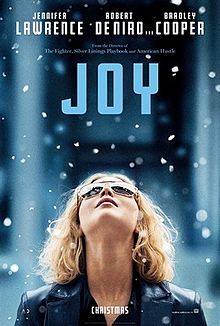
Jennifer Lawrence is “Joy,” reuniting with her “American Hustle” and “Silver Linings Playbook” #squad, director David O. Russell and co-stars Robert De Niro and Bradley Cooper. She plays real-life consumer products inventor and television sales mogul Joy Mangano, who lived something of a Cinderella story — if the fairy godmother was the QVC shopping channel.
The film is something of a mess. It never quite comes together, but some of the individual pieces are marvelous, especially the performances by Lawrence, radiant in her first adult lead (though she still seems too young to have those children), Virginia Madsen as Joy’s dotty mother, De Niro as her father, and Isabella Rossellini as his wealthy new girlfriend. Cooper has so much magnetism as a QVC executive that his tour of the network’s revolving studio provides one of the best moments. He is so good it misdirects us about where the movie is going and leaves us feeling vaguely cheated.
Russell, who so savagely took out after both consumer culture and at those who attack it for the most superficial reasons in the underrated “I Heart Huckabees,” cannot seem to settle into a point of view beyond the idea that the woman with the almost-too-on-the-nose name has the ingenuity and what used to be called moxie to overcome obstacles that include massive family dysfunction and business partners who bully and defraud her. It emphasizes her ability as an inventor and her determination but loses track of the storyline with confusing sequencing and superfluous narration. When a prospective funder asks her if she would be willing to pick up a (possibly metaphorical) gun to protect her invention, she says she would. And when she is turned down, she keeps coming back. But the primary factors in the success of her product are a chance connection and a much-too-convenient discovery of incriminating evidence. The most interesting elements of the story are abruptly glossed over (What? Who sued her?). And lovingly staged episodes from Joy’s mother’s favorite soap opera (starring real-life soap stars including Susan Lucci) are not nearly as entertaining or illuminating as they are intended to be.
Joy has monumental obstacles to overcome and Russell clearly considers her heroic, but there is a heightened gloss on the story that keeps us at a remove. A moment of particular triumph is truncated and artificial and the narration is clumsy and intrusive. “In America,” Cooper’s character tells us, “the ordinary meets the extraordinary every day.” But in this movie, that meeting is awkward, and the result is buyer’s remorse.
Parents should know that this movie includes themes of family conflict and dysfunction, corrupt, thuggish, and fraudulent behavior, some sexual references, and some strong language.
Family discussion: Why did Joy keep taking care of everyone in her family? What did Neil mean about staying friends? What invention would you like to create?
If you like this, try: “Erin Brockovich”
Posted on December 10, 2015 at 6:16 pm
A| Lowest Recommended Age: | High School |
| MPAA Rating: | Rated R for pervasive language and some sexuality/nudity |
| Profanity: | Constant very strong and crude language |
| Alcohol/ Drugs: | Drinking, smoking |
| Violence/ Scariness: | Fraud, corruption, economic upheavals |
| Diversity Issues: | None |
| Date Released to Theaters: | December 11, 2015 |
| Date Released to DVD: | March 15, 2016 |
| Amazon.com ASIN: | B0177ZM3LO |
Director Adam McKay is so obsessed with the 2008 financial meltdown that he inserted a series of charts and graphs and statistics about it over the closing credits of the silly buddy-cop comedy, The Other Guys. Yes, there was a villain played by Steve Coogan who was up to some financial jiggery pokery, but only the most careful viewers of that film could have deduced that what McKay, best known for raunchy Will Ferrell slob comedies, secretly yearned for, as Michael Caine might say, was to blow the bloody doors off the Wall Street bankers who treated the American economy like a bull treats a china shop.
We’ve had sober documentaries like The Flaw and Oscar-winner Inside Job
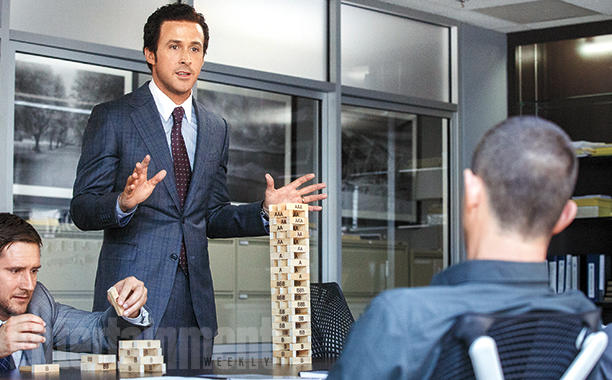
I’ll add a footnote below to give my own very short explanation of what happened.* (And one thing they got wrong.** Pretty much everything else is literally right on the money.) Or, you could listen to Margot Robbie talk you through it, as she sips champagne in a bubble bath. Yes, McKay knows what gets people’s attention and he uses Robbie and other celebrities to come in and explain the parts that the bankers intentionally did their best to obfuscate, using words guaranteed to put everyone to sleep so they could pick our pockets a little while longer. Ryan Gosling also serves as a guide, playing a real-life insider who saw that the mortgage-backed securities were going to tumble down like a Jenga tower.
The real-life acronym used by the bankers during this period was IBGYBG, which stood for “I’ll be gone; you’ll be gone,” meaning that if they could just keep passing the hot potato of economic Armageddon going around the circle a couple more times to collect the fees, they could get out before it all came tumbling down. And many of them did. As Michael Lewis notes in the the book that inspired this film (subtitled The Doomsday Machine)
As noted, Lewis’ book and McKay’s movie (the Oscar-winning script is co-written with Charles Randolph of the underrated “Love and Other Drugs”) wisely allow us to enter the story via the scrappy little group of misfit toys who figure out that the game is cooked, that it can’t stay that way, and that there has to be a way to bet against the other side. This grown-up Bad News Bears bunch (two of them barely qualifying as grown-ups) have a couple of things going for them. First, they are skeptics. Actually, they are cynics. They assume everyone is lying to them and just about everyone is cheating them. Michael Burry (Christian Bale), who insists on being called Dr. Michael Burry (he’s a neurologist-turned investment manager) and Mark Baum (Steve Carell) are both men who were already inclined to be skeptics and then faced terrible pain and loss that disabused them of the sense that life was fair. Jamie Shipley (Finn Wittrock) and Charlie Geller (John Magaro), two young partners literally running an investment firm out of a garage, had made almost $30 million finding unseen risks but were so naive about Wall Street that they did not know what the requirements were for being able to trade as an institution and not as an individual. These guys were all outsiders. (All names are fictional except for Burry.)
The second thing they had going for them was that they were not just willing to do their homework; they insisted on it. While the money gusher was going, no one else wanted to check the math (and no one was getting paid to do so). But, in some of the most entertaining moments of this riotously entertaining film, these guys who did not believe what they were told, went to check it out. Burry unpacked the securities to examine each of the hundreds of mortgages they contained to see if they were as secure as promised. They were not. Baum’s colleagues (Rafe Spall and Hamish Linklater) went to Florida to see the homes that were mortgaged. They were abandoned. Baum’s guys spoke to the mortgage brokers who happily explained that they preferred to give mortgages to people who had no possible means of paying them. (Max Greenfield is superbly sleazy in this role.) “They’re not confessing,” one of Baum’s partners says in amazement. “They’re bragging.”
By the time a stripper explains to Baum that she has mortgages on five houses and a condo and has been assured she can refinance when her adjustable rate jumps up, he begins to see the potential in betting that these securities will fall as people like this cannot pay the mortgages. When he goes to a convention of financial types working in this field (Byron Mann is almost deliciously corrupt as the arrogant and ethically vacant Mr. Chau), he knows he is right.
At the same convention, Shipley and Geller are jubilant when they are able to make a big bet against the bankers. And then they get a reality reminder from their their mentor, played by co-producer Brad Pitt. He could not take the corruption of Wall Street any more and left for a life somewhere between disaster prepper and artisanal farmer, wearing a face mask when he goes to town and urging everyone to get colonics. He met the young investor when they were walking their dogs. He reminds Shipley and Geller not to be so happy. When they win big, it will be because the economy is collapsing, causing real, devastating pain.
This is an outstanding film, with sensational performances by a brilliant ensemble cast. It is one of the best of the year and the most important as well.
Parents should know that this film includes constant very strong and crude language, vulgar sexual references, strippers, nudity, and extreme widespread fraud and corruption.
Family discussion: What made just these men able to see what so many other people did not? How did they verify their analysis? Will it happen again?
If you like this, try: the book by Michael Lewis and documentaries about the financial meltdown including “The Flaw” and “Inside Job” as well as feature films “99 Homes” and “Margin Call”
*Here’s what happened, without the jargon or the bubble bath. As you see at the beginning of the movie, Lewis Ranieri, now one of the wealthiest people in the world, came up with the idea of essentially crowd-funding mortgages. He took lots and lots of mortgages, bundled them into bonds, and let big institutional investors, like pension funds, buy them. It was a great investment for them because pension funds need a safe and secure source of income to pay retirees and these were safe and secure — much more than stocks — because people almost never defaulted on their mortgages and because so many mortgages were bundled up together that even if some did default it would have almost no impact. These bundles of mortgages were so popular that the banks ran out of safe and secure mortgages to put into bonds. And so, they started pushing mortgage brokers to issue more mortgages, and that meant giving mortgages to people who would not otherwise have qualified. (Some people will tell you that the government was at fault for pushing home ownership on people who could not afford it. They are wrong. Most of the pressure was coming from people who wanted to buy mortgages, not people who wanted to buy houses.) So, the formerly safe and secure bonds started filling up with less and less safe and secure mortgages. And the people responsible for differentiating the risk of the bonds, including the rating agencies, decided to just keep rating and selling the new, less secure securities as though they were exactly the same as the earlier ones. All of the “formulas” (sometimes called “algorithms” or “models”) used to justify this were bunk. Imagine it this way: there’s a vineyard that makes superior wine that everyone wants to buy and there are strong legal and economic incentives to buy it. But you only have so many grapes, so you start watering it down, still selling it at the same price, and getting the people who rate wine to continue to give it the same rating. Then you run out of water so you start blending it with turpentine, and all of your projections show that it is just as good and will still sell just as well so you price it that way and assume there is no risk.
Here’s the important part: everyone at every part of this conveyer belt of increasingly risky securities all being treated as though they were not risky was being paid based on the number of transactions, not the quality of the transactions, a sort of very big, very expensive game of tag, where there was never any “it” until finally “it” was everyone.
**Actually, because of the immense lobbying power of the bankers (see 13 Bankers: The Wall Street Takeover and the Next Financial Meltdown