
Interview: Director Morgan Matthews on “A Brilliant Young Mind”
Posted on September 8, 2015 at 3:54 pm
Morgan Matthews made a documentary about brilliant teenagers competing in the Math Olympiad, many of whom were on the autism spectrum, and that inspired his feature film, “A Brilliant Young Mind,” with “Ender’s Game” and “Hugo” star Asa Butterfield. Sally Hawkins plays his mother and Rafe Spall plays his teacher, once a brilliant young mind himself but now bitter over his struggle with multiple sclerosis. I spoke to Matthews about the film.
https://www.youtube.com/watch?v=GlEnQFbcH_I“I was making a series of films about unusual competitions and I had made one film about the world’s taxidermy championships for the BBC which has gone down quite well. I followed people from around the world who were entering their mounted animals into this competition. And so that had picked up some awards and got some attention so BBC and I got together and decided to make a series of films and so I ended up making documentaries about a million-dollar pigeon race, the world hairdressing championships and the world Elvis impersonating championships. They are all quite fun and very good characters but we felt that one of them might go wrong or fall done for whatever reason and so we were looking for a kind of backup subject. The producer I was working with at the time came across the International Mathematical Olympiad and it was really interesting. And I went to meet the wider pool of students who were all competing for a place on the team and their tutors and was just so taken with these wonderful characters and this world that they inhabited which was one that was largely alien to me. Here we had children and young people aged between 13 and 17 who were doing the most extraordinary things. They were all really unique characters in their own right and everyone of them very interesting to talk to. And they were going on this incredible journey. And so I instantly felt there was another film here and I went back to the BBC and showed them some of the footage and they agreed and commissioned it as a separate film actually from the series which became a standalone 90 minute feature-length documentary.”
One of the key moments in the film is when a character says that if you are not gifted then you’re just weird. Matthews says that applies to any teenager — or anyone looking to find their niche. “It doesn’t just apply to the world I experienced during making the documentary with those gifted teenagers. In any kind of discipline or subject whether it’s sport or an academic subject and particularly with young people, they can be the best in their class, they can be the best in their school and then when they get together in these hothouse environments with other children who are sometimes more gifted than them, it can be quite a difficult experience. On one level it can be incredibly enriching for them and actually liberating in the case of the kids on the math squad because for years they have been at school and they might be going to quite high achieving schools but the people around them are operating at a much slower level and even their teachers so it can be quite frustrating for them and then they get together with Olympiad students and all they want to do is math and math at the level that they can operate at. And so it can be a very exciting time for them but it can also be disconcerting because sometimes they are not the best anymore and if you’re not the best then where does that leave you? And I think there were a couple of students who experienced that having been the very best in their class, the very best in their school to suddenly be challenged by the fact that they weren’t the best in that group of students and sometimes even make the team became quite difficult for them. But on the whole I think it’s very enriching experience for those students who went through the competition. There are also clearly especially the time I was making the documentary, a significant number of those students who were on the autistic spectrum and in that environment that was okay. They didn’t experience negative reactions from their peers within the Olympiad environment because they were kind of with kindred spirits with people like them not necessarily the same as them; everyone on the spectrum is very different as well but people who accepted differences on the whole. Although there was one student who was more I suppose noticeably on the spectrum. He was sometimes quite abrasive and rubbed some of the other students up the wrong way and they ended up ostracizing him really and for me that was quite sad to see that a group of students many of whom had experienced bullying themselves and had been ostracized themselves in their normal everyday environments were suddenly doing that one of their own.”
He spoke about making the mathematics in the film real — and expressing the beauty of math — to audiences who would never be able to grasp what the students were doing. “It was very important that the math in the film was correct and because I knew it was being scrutinized by mathematicians,people who know. And there are many examples of films that have a mathematical theme or context where maths is represented in very complex looking equations on blackboards that are actually either gobbledygook or just not relevant to the type of mathematics that those students or those people would be studying and mathematicians pick up on that all the time and get frustrated by it and it kind of blows the illusion of the film, the suspension of disbelief. So it is important for me to have correct math in the film and we involved a mathematics consultant who was one of the original Olympiad students in the documentary. He made sure that everything was correct and came up with interesting problems. But he and I had a bit of a battle sometimes because he had a not so hidden agenda which was to make math in the film accessible to a wider audience. And for me when I experienced the Olympiad, what was amazing about it was here is all of this math which just appeared completely inaccessible and extraordinarily complicated and yet there was these children who were able to do it and that to me was what was so extraordinary. So we had to find a balance of not completely alienating people from the mathematics but also being truthful to the level of mathematics that was being done by these kids and sometimes that was just around language for the kinds of problems that we used. Instead of the necessarily mathematical symbols, they use words to express problems. It is very important to be able to represent this world efficiently, a world which most of us cannot see and that Nathan sees all around him. mathematics is all around him in engineering and everything and in nature. And so he sees this but it also empathizes through his condition, synesthesia where he sees colors in pattern, especially patterns which involve light. And so that beauty is enhanced in points in the film where we see through Nathan’s eyes, the beauty around him and that he’s quite an introverted boy. He is often in this other world looking around him absorbing all of the mathematical patterns around him and I just wanted to be able to represent that so we used color and pattern to give the viewer a sense of that.”
Butterfield’s character is based on a real competitor in the Olympiad. “Asa was able to meet Daniel and Daniel was able to articulate. He is an interesting boy, Daniel, well, a young man now. He doesn’t think he is a very good communicator and that makes him very shy but actually if you spend time with him in a room and sit down for a few hours he’s able to articulate his experience brilliantly and what goes on inside his head. He will explain that he doesn’t know what to do with his face and he doesn’t know how to read the facial expressions of other people and the stress of trying to work that out becomes so overwhelming that he will avoid communication altogether. And so he was able to explain things like that to Asa which helped him form Asa’s performance. So even though Asa doesn’t say very much as Nathan he knows what’s going on inside of his head and I think that’s really helpful but he does have those wonderfully expressive eyes as well and that was also really I think central to his performance, that he was able to convey so much through them and that he is just so endearing in that way.”
Matthews used music very effectively to help tell the story, too. “It’s cathartic and it draws out the emotion. There were characters in the film who aren’t necessarily able to tell you how they feel. I think the music helps us with that.” Especially meaningful was the use of music by Keaton Henson, who “has terrible stage fright and he is unable to perform in public most of the times so he rarely ever does very small shows. And I met him and there was something about him being quite an introvert and shy person that just was in keeping with Nathan’s character. But when he sings, when he plays, these beautiful and very emotional songs come out and that just seems very appropriate to me.”
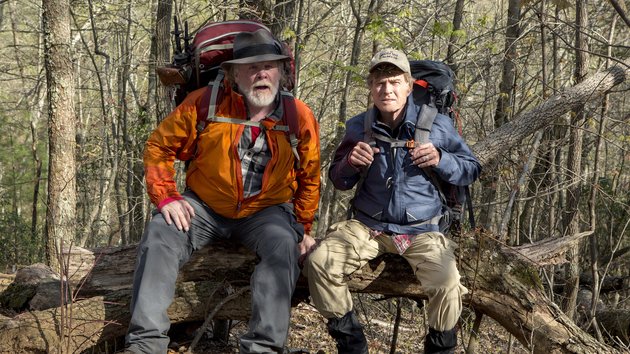
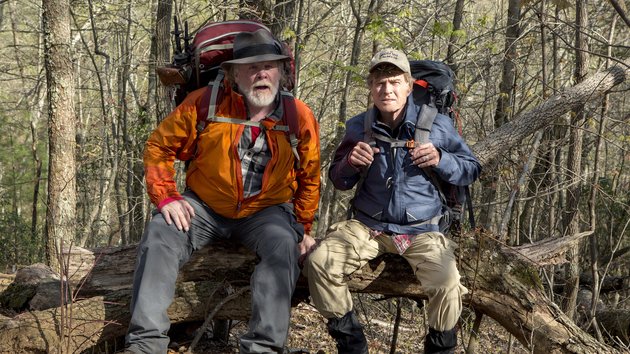
 , vastly overshadows the clutter from the superficial other issues raised by the script, often half-heartedly. Will Bryson write again? Will he re-adjust to living in the US after years abroad? Will he recover his mojo? Where is he from? Will he make it to the end of the trail alive and without inflicting some serious and possibly lethal damage on his traveling companion?