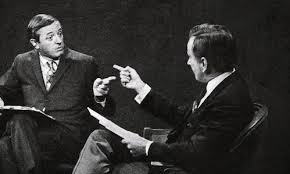
Once upon a time, network television news was dignified, objective, and delivered in stentorian, voice-of-God tones by white, vaguely Protestant men, in half-hour increments at the dinner hour. And then, in 1968, third-ranked network ABC, unable to compete with CBS and NBC in gavel-to-gavel coverage of the political conventions delivered by universally respected news teams, decided to try something new. For $10,000 each, they hired extreme right-wing author/journalist William F. Buckley and extreme left-wing novelist/journalist Gore Vidal to discuss and debate each day’s events at the conventions which would end up nominating Richard Nixon and Hubert Humphrey.
Buckley and Vidal had a great deal in common. They were both combative, rapier-witted, hyper-verbal men from upper-class families, probably the last generation to be able to refer to themselves as “one” unironically. Both ran for office, perhaps more as theater than as real-life politics. When asked what his first act would be if he was elected mayor of New York City, Buckley famously quipped, “Demand a recount.”
And both men had in common a deep, visceral, loathing for one another that even exceeded their disdain of each other’s politics. Buckley was Catholic and a social as well as political conservative. Vidal was a proud libertine, whose most recent book at the time, Myra Breckinridge, was about a transgender woman, played by Raquel Welch in the movie version.
Their debates were unprecedented in the staid world of television news. So were their ratings. “Best of Enemies” is a new documentary about the Buckley-Vidal convention commentary. It is fascinating as theater to see two classically educated, combative, passionately partisan, men who so seldom met their matches square off against one another. Mere mortals who suffer from l’esprit d’escalier (the spirit of the staircase — the witty riposte not thought of until leaving the party on the stairs) can only envy these rapier-witted combatants try to use the upheavals of one of the most tumultuous and politically charged years in American history to score personal and political points. By the end, they were more interested in hurting each other than helping their causes. Buckley famously lost his temper and used a homophobic slur that was shocking in those days when everything on television was bland and family-friendly.
It is more than entertaining. It illuminates a significant moment in a time of enormous change. And the filmmakers are persuasive that it was a turning point that led directly to contemporary “news” that, as anchorman Howard K. Smith said to Buckley and Vidal at the end of their final segment, shed more heat than light.
Interview: Joshua Oppenheimer of “The Look of Silence”
Posted on July 30, 2015 at 11:40 am
Copyright Drafthouse Films 2015
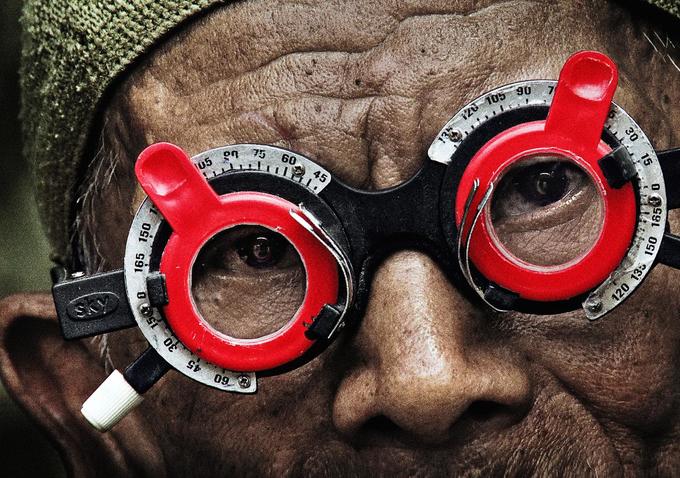
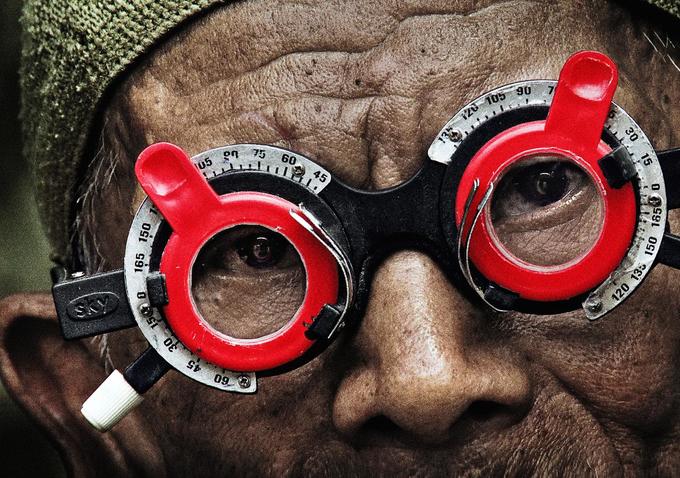
Joshua Oppenheimer has made “a companion piece” to his stunning documentary about government-sanctioned gangster killings of more than a million Indonesians in the mid-1960’s, “The Act of Killing.” In “The Look of Silence,” we see Adi, the brother of one of the men who was killed sit with the people who participated in the genocide and ask them about what they did. It was a pleasure to speak with him again, and I look forward to our Q&A tomorrow at the E Street Theater in Washington, D.C.
Your images are so gorgeous and so striking; they could be in a very different kind of film, like a lyrical romance. Why is it so important that your visuals be so beautiful?
There are two things that those kind of images do in the film. I think first of all I am trying to create the sense of the hauntedness of the space in which Adi’s family, his mother, his father have to live, the presence of ghosts. And I don’t think the images are beautiful in a postcard way. I think they are haunting, and I think that’s achieved through a certain kind of enchantment, there’s a sense of something beyond just a picture but a swarming, a presence of ghosts that have never been properly buried, the dead that have never been properly buried, that has never even been properly mourned.
I hope the tender way in which I tried to film the family and the precision with which I tried to look for the traces of fear and decades and decades of living with fear on their faces, in their bodies and also created a space for the grace and the love that they have managed to find and to live despite having to leave in fear, surrounded by the perpetrators who killed their loved ones. In general I felt that my task with this film was to create a kind of backward-looking poem in memoriam for all that’s been destroyed, not just the dead who obviously can never be wakened, those who were killed but also the lives that have been broken by a half a century of fear that can never be made whole again because in some way whatever justice, truth and reconciliation, whatever form of justice might in the future occur in part perhaps as a result of these two films, it will never make whole what’s been broken.
The film tries to honor and do justice for all that’s been destroyed, and for all that’s been destroyed not just during the genocide but in the years after. It doesn’t end with the killings if the perpetrators remain in power because people’s life continue to damaged, wrecked by fear and trauma that they can’t work through.
I thought it was very meaningful that in this case your lead character wasn’t even born when his brother was killed and that shows how the trauma goes on to the next and the next and the next generation.
That’s right and it also is a source of hope in the sense that first of all he has the courage to confront the perpetrators. That is in part because unlike the rest of his family he’s not traumatized by the actual events of the killing itself, yet he is trying to understand what happened to his parents, to his family, to his village, to his country to make them the way they are and in a sense make him who he is. He is born into a situation that didn’t know and understand and that is what gives him the courage to do what he does. He finds this one person who was able to give him what he is hoping for, which is an acknowledgment that what happened was wrong and an apology. It’s also someone born too young to remember the killings or born after the killings, the daughter of one of the perpetrators who hears for the first time the details of what her father did. And we see her realize that he is not the hero she hoped he was and we see her face collapse in that moment and realize that she’ll have to spend the rest of his life caring for a man who is in some terrible way a stranger now. And yet instead of doing what any guy would do in that moment which is panicking and kicking the film crew out of the house and needing to collect herself she becomes very quiet and listens to herself and her conscience and takes the extraordinary step of apologizing on her father’s behalf and saying to Adi, “Let’s be family,” trying to reach across this abyss of fear and guilt that divides everybody in Indonesia.
Sadly, throughout the world we have seen many genocides there have been many many different ways of responding and moving forward from it. We’ve seen the Truth and Reconciliation Commission model and the Nuremberg and Rwanda models. I guess you could even include the Indians and the United States. What do you think is the best way for a community to respond and to find some kind of meaning and healing from an experience like that?
You need an acknowledgment of what happened in the past. You need a thorough recognition that this is a wrong. I think although we the efforts in postwar Germany were incomplete I think the effort by the next generation, the generation born by the end of the war in the late 60’s to actually demand a kind of honesty from their parents, the reconciliation of the past in the late 60’s and 70’s going forward is the best human beings have come, the closest human beings have come to acknowledging their past. All the examples you gave with the exception of the Native American genocide ended with the perpetrators being removed from power and whether it’s the Truth and Reconciliation Commission process in South Africa or Nuremberg trials or a tribunal in Rwanda, these steps happen after perpetrators were removed from power. The Americans genocide of the Native Americans is surely the closest and we can see how the effects of that linger today.
People sometimes saw “The Act of Killing” and would say, “Isn’t it tasteless that someone wants to produce West cowboy scenes essentially in a desperate and ultimately doomed attempt to glorify what he’s done?” And my feeling when I would hear that question is “No, I feels it’s absolutely appropriate because after all the whole genre of the cowboy movies, the Western from its outset was to glorify genocide, the native American genocide.” Native Americans families experience living surrounded, living in increasingly small reservations surrounded by the society that destroyed their civilization and are still stigmatized. For decades and decades for hundreds of years except in Indian schools they weren’t allowed to speak their language. That stigma takes a terrible toll. It lasts frpm generation from generation to generation until a society has the courage to acknowledge the past. You see, we can never run away from our past, the past will catch up to us because it is us, it is a part of us, it’s what makes us we are, it’s what delineates the borders of our societies. It’s what gives us here in United State a common language, English. It’s who we are. And so all we can do is find the courage to stand still and to look backwards. Despite our politicians endlessly saying we need to look to the future, actually we need to look backwards and we need to accept our past not in the sense of making excuses for it but truly accepting it and taking responsibility for it, so that we can then turn around again and move forward into the future but knowing ourselves honestly really for the first time.
Are you writing history or are you changing history with these films?
I was asked from the very beginning to do this work by survivors. It was Adi who first encouraged me. When I was first filming the survivors back in 2003, he then encouraged me to film the perpetrators. When the survivors were not allowed to make the film with me, he then watched as much as he could of what I was shooting with the perpetrators. It was Adi who then insisted that he could meet the perpetrators in 2012 when I returned to make “The Look of Silence.” It was the survivors, Adi’s family, the survivors community more broadly, the Indonesian human rights community as a whole, who encouraged me to do this work. I always felt in a funny way that I was not a foreign filmmaker coming in to expose a terrible political situation for the outside world. I felt that I was being entrusted to do a work that they couldn’t in order to intervene in the mechanisms of fear inside Indonesia. I’m humbled by the impact that the two films have made.
“The Act of Killing” has fundamentally transformed the way of Indonesia talking about its past with the mainstream media now talking about the genocide as a genocide and talking honestly about the regime of fear and corruption that the perpetrators have built into that space. There is a sense that the film has come to Indonesia, the second film as well, Like the child in “The Emperor’s New Clothes,” saying look how torn our society is, look at the prison of fear in which we are being asked to raise our children and we can no longer ignore this.
We have to support truth and reconciliation and some form of justice. And with justice, with truth comes a revision of the nation’s history curriculum, so a part of that movement is demanding a change of the national history curriculum which is still being taught in the way that we see in the film. So the teachers around the country until the government changes the curriculum can say, “This is what we’re supposed to teach you and now this movie is the truth.”
New from PBS: Tales From the Royal Wardrobe. Historian Dr. Lucy Worsley, Chief Curator at Historic Royal Palaces, explains that the fascination with the clothes worn by the royals is not a recent development. And the monarchs have used and encouraged this fascination as a carefully orchestrated piece of theater managed by the royals themselves to control the right image and project the right message to their subjects. Royal fashion is, and always has been, as much about politics as it is about the cut. This documentary explores the history and style of the royal wardrobe and how the clothes each of the royals chooses reflects and affects — for better or worse — not just their personalities but their relationship to their subjects. From the formal gowns and robes and jewels to the iconic wedding dresses and the clothes worn by the royal children, Dr. Worsley shows us how they shape history.
Children with cancer learn two things, we hear in this documentary about a boy who is being treated for leukemia. They learn how to fight. And, because they are surrounded by caregivers, they learn compassion.
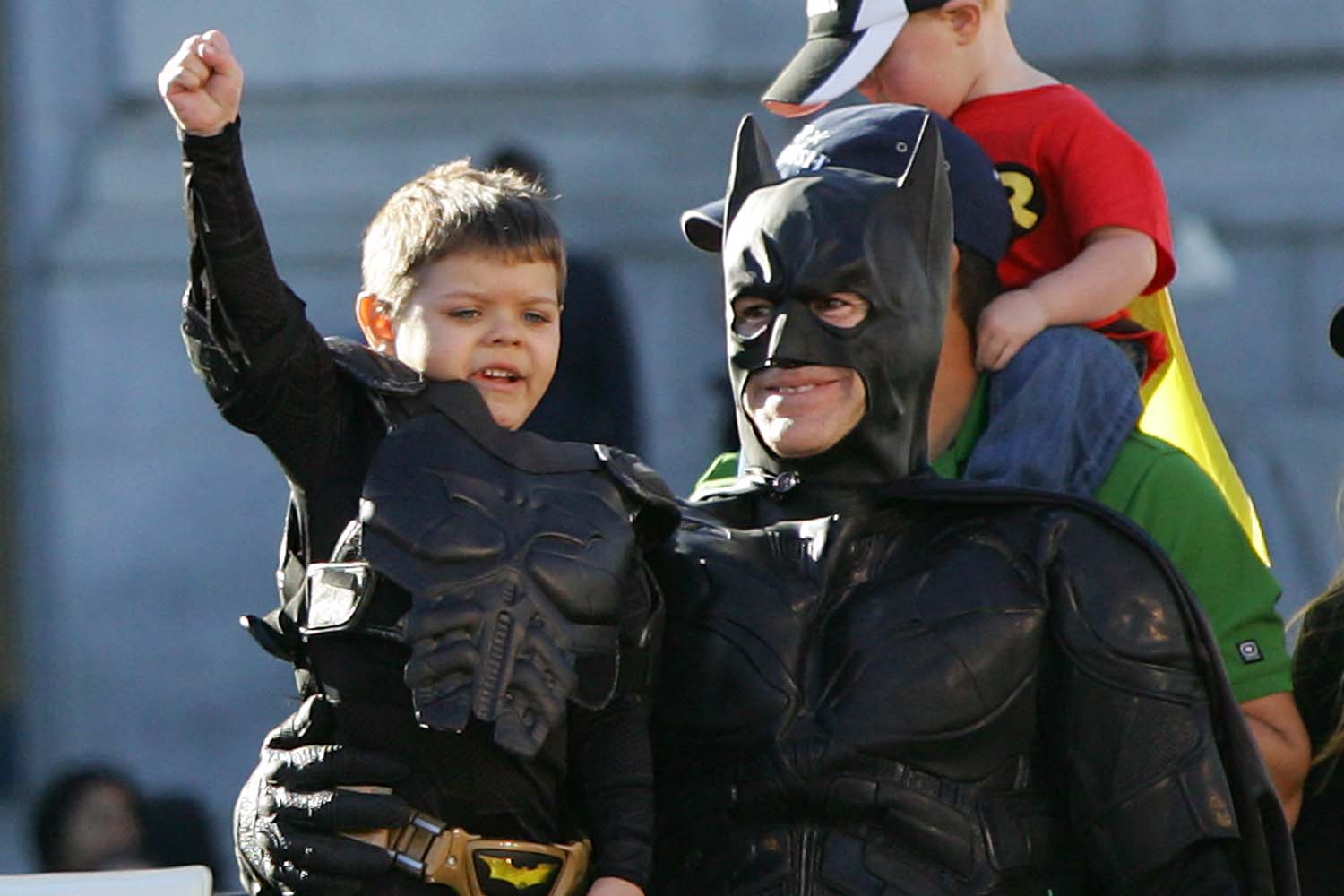
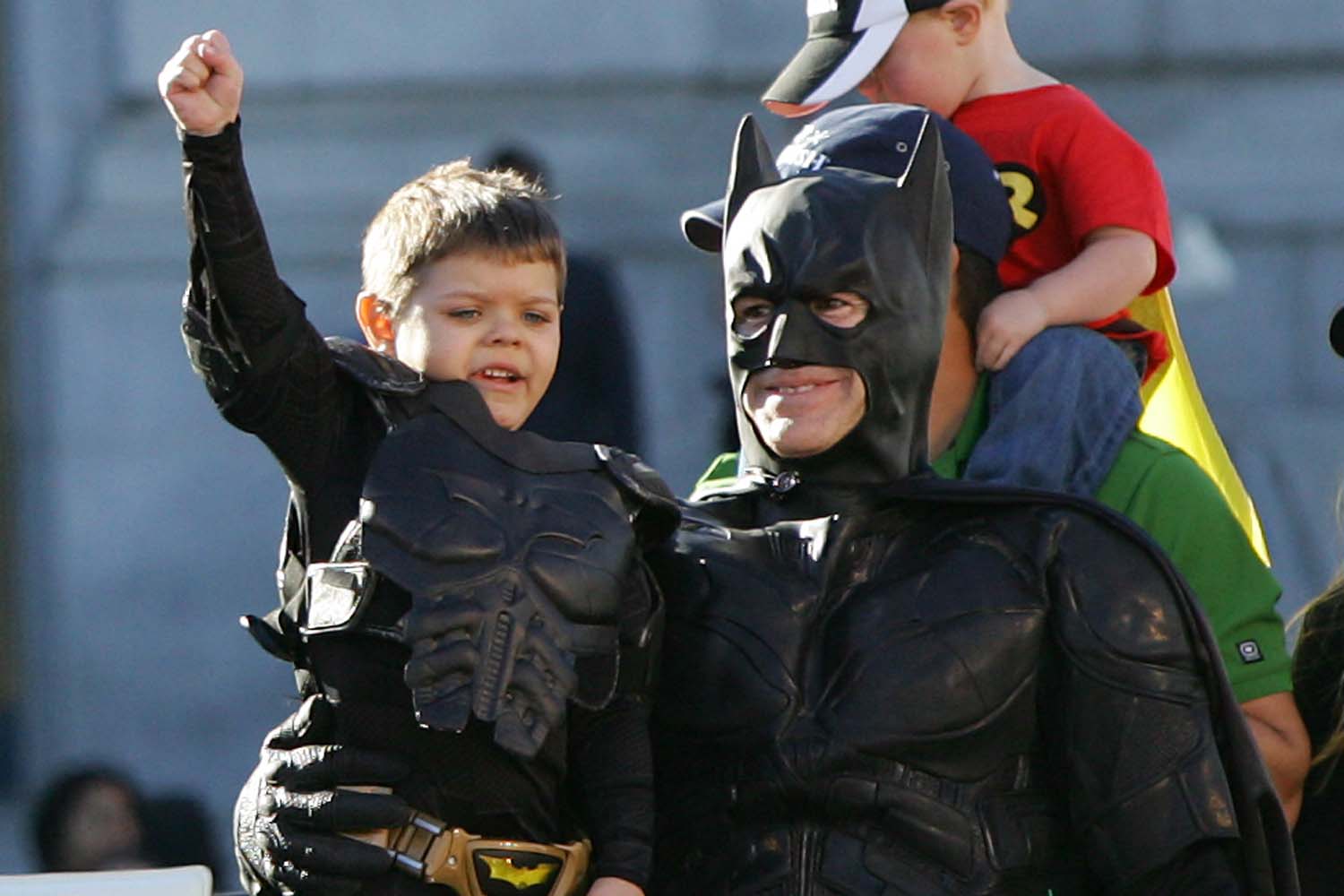
When he was two, Miles crawled into bed with his parents, and they felt a lump under his jaw. It was cancer. As he endured treatment, he became fascinated with the old Adam West “Batman” series. He loved seeing Batman and Robin fight for justice. He loved the way they helped people in need. And he loved their costumes. Miles was a kid who really loved to dress up, especially in clothes that made him feel strong and powerful. And so, when he was five and feeling better, it was time for him to get a special treat from the Make-a-Wish people in San Francisco, the city closest to his home. Their goal was to do something that would “give him a bit of his childhood back.” Kids who have seen more pain, danger, fear, and loss than most adults can handle are given a chance to have a dream come true. Some want to meet a celebrity or go to Disney World. Miles wanted to be Batman. And San Francisco Make-A-Wish chapter head Patricia Wilson was determined to make that happen.
We get to see a glimpse of a girl whose wish was to be a pop star. Wilson arranged for about 200 people to be there to cheer her on. She figured the same size crowd for Miles. But something about the story caught on. It captured the attention of the city and then the world. They turned San Francisco into Gotham. The real-life mayor and police chief taped messages ahead of time that would explain what kind of help they needed from Miles. People flew in to cheer Miles on in person. “Batman Begins” composer Hans Zimmer wrote him a special theme. President Obama sent a Vine with his thanks. Two billion people tuned in to be a part of it. The idea of a simple act of kindness for a kid who wanted to be a superhero made a lot of people feel good about the world for a little while. Everybody got a bit of childhood back, not because of what they got but because of what they gave.
Filmmaker Dana Nachman, who made the documentary after the story was over, shows us how it all came together. Wilson called Eric Johnston, who is in real life pretty close to Batman without the anguish or the Wayne millions. He is a stuntman and an inventor. One of the sweetest parts of the film is the way he adores his wife, who gallantly volunteered to be the damsel in distress whose rescue would be the first of three deeds for Johnston as Batman and Miles as Batkid. Then they would capture the Riddler in the midst of a bank robbery and rescue San Francisco Giants mascot Lou Seal, who had been taken hostage by The Penguin (Mike Jutan). Creating each of these adventures, from the casting to the costumes, introduces us to some wonderful characters. I especially loved the opera’s costume department, who pitched in on their own time to make sure the characters would look real. Miles’ Batkid costume was donated by another child, whose father had created the costume for him. Johnston took Miles to a rehearsal space for acrobats to get him comfortable with some simple stunts. The manager had the brilliant idea of having all the regulars show up in superhero costumes. Why wouldn’t Wonder Woman and The Flash come to the same place to work out and perfect their skills when they were not fighting crime?
She also shows us how the day unfolded, the plans that worked and the ones that didn’t. Lou Seal almost didn’t make it because the crowds had become so massive he couldn’t get through. And of course all day there were adjustments based on how Miles was doing. At the beginning and end of the film we see an interview with Miles and his family. Was it what they expected? Miles’ parents both say, reasonably, that they were stunned and overwhelmed by how gigantic it all became. But Miles, taking it all in stride, just says, yep. And there it is. What gives him a piece of his childhood back is having something come together just the way he thought it should. Making that happen, being a part of it, even seeing it in the film and cheering him on, is a reminder of how much magic we can create, and how important it is that we try.
Parents should know that this is a documentary about a child who is being treated for cancer and a program that provides services and special treats for critically ill children and their families.
Family discussion: What wish would you like to help come true? Why do sick kids learn more about compassion than kids who are not sick?
If you like this, try: the Adam West “Batman” series and the PBS documentary about cancer, “The Emperor of all Maladies”
Dana Nachman is the director of the heartwarming documentary “Batkid Begins.” She talked to me about how one five-year-old cancer survivor’s Make a Wish story captivated the entire world.
At the screening I attended there was audible weeping.
I also hear there is a lot of laughter also and cheering sometimes when people see the film. So I hope that was all there too.
It definitely was, especially when the family is asked if this is what they expected and the parents are stunned and the kid casually says yes.
I love that.
Me, too. So tell me how you got involved.
I had heard about it actually after the fact and I was lucky enough to get a meeting with the Make A Wish Foundation and we actually meet for two and a half hours. We totally hit it off. But my main question I had for them was what they intended to happen.
They said they wanted about 200 people to show up. I thought that that was such an amazing thing that like something could balloon really out of nowhere. They wanted 200 people to come support a child and then 25,000 people showed up and 2 billion people followed it online. So I really wanted to tell that story of how that happened, basically a memento forever for San Francisco and everybody else.
Do you think that this story is very specific to San Francisco?
Certainly I consider San Francisco one of the main characters of the movie because I think there is something about the whimsicality of San Francisco that enables this to happen. But I think it’s a very human story that any community can relate to. I think there is something a little different about San Francisco, but I think it’s a universal story for sure.
San Francisco does seem to be the kind of city where if you need a superhero costume it would be easy to find.
The people I interviewed from the San Francisco Chronicles said Halloween is kind of a city-wide holiday. So if you ask people to dress up in costume, they’re there.
Those thousands of people — were they showing up for Miles or for themselves?
I’m speaking from my own personal perspective. Whether I work at a food bank and whatever else we do and you think you’re going into benefit others but really when you leave there usually you feel better about yourself you know. And so I think that this day was very emblematic of that concept of that volunteerism and community service really does end up helping you as much as if not more than the person you’re trying to help. There are many people that said it was the best day of their lives, like bar none the best day of their lives. I think just the concept of going out there for no other reason than just trying to cheer a little boy on was enough for people to just feel good.
What is the fascination with superheroes?
The concept of a superhero is something that everybody relates to. Most of us wanted to be some kind of superhero when we were little. At some point you lose track of those fantasies that you had as a young person. This enabled adults to come out and experience that childlike wonder and excitement for Miles but then also for themselves.
How is Miles doing?
He’s great. He’s in remission. He just got through with Little League and he’s a great kid. He’s home for the summer. He’s going to have a nice relaxing summer. His family just bought their first house. He’s awesome.
You had some amazing characters in this movie and I wanted to ask you about Eric, who plays Batman and organized the feats. He is really extraordinary.
You know I had a list of people to call to see if they wanted to participate in the film and I actually called him last because I was a little intimidated by him which is funny because he is actually the most amazing person and you never should be intimidated by him. But he does do everything. You know my son was talking to him about trying to invent a hovercraft or something and he was like you can invent anything you want, anytime you want you just have to say you want to do it. And that’s I think the way that he goes about the world. He’s this magnetic personality that just wants to do good, live life to the fullest. He an amazing person, really. I think you could relate to Nick, Miles’ dad as a father what he went through and Natalie as a mother and what she went through. And then you can relate to Eric, who is like an older brother to Miles now. And I think it’s probably his human connections we can make as the audience that draws us into the story more. And he’s so infatuated with his wife. It’s so cute.
How do you as a filmmaker tell the story in a way that is going to still surprise people and not repeat what they already know?
I definitely thought about that. But I also realized that what people had in terms of information on the day was really like 140 characters on Twitter or a Facebook post or a photo here and there. Or you know something on the news that was probably 90 seconds. As I came to it I realized that not one of the people that participated in the day of knew everything else that was happening at the same time they were so busy making this happen. For instance nobody had ever met the couple that flew from Akron Ohio or LA for the day. Nobody met them, nobody had, we unearthed the Uber driver that saved Lou Seal before he even got kidnapped by the Penguin. The circus center scene which I think is one of the funniest scenes of the film — there were no cameras there except for the family shot home video of it and that was when he trained to become a superhero. I think also the 25,000 people who were there was such a mob scene. Most people only went to one or maybe two of the capers. So nobody really saw the whole thing. So you have to realize and kind of put it together what exactly happened on that day. I realized that there wasn’t anybody except EJ and Miles who had been at everything. So I thought that it actually is good whenever the people in the film watch and say oh I didn’t know that person, I didn’t know that happened. I’m really like pleased about that.
How did the Make a Wish people feel when it got world attention?
Their goal is just to make the wish the best it could possibly be. So all the hoopla that was around that kid that day wasn’t what they were intending. They just wanted to make sure it was a good day for Miles. They kind of figured that 200 people really was the same in terms of Miles’ eyes and his perspective. So they just wanted it to be a great day for Miles. You know I’ve heard a lot of Interviewers ask Patricia at Make A Wish if this has changed what kids want. And she said not really because most of the kids, a vast majority of the wishers are private wishes. They don’t ask for things that are public at all. They do more than 370 wishes a year. So I think when there is one that kind of lends itself to creativity they kind of jump on it because they are just those kind of people who make it cooler. They have these amazing volunteers just like EJ and all the rest of them who go in there just wanting you know literally to be the wish of a lifetime for every kid.
Why did it go viral?
My opinion on it is there was kind of this perfect storm and the main element of it was that it was so authentic. They weren’t trying to make it go viral. I think so many people try to make things go viral and that doesn’t really work. It has to hit a nerve and that’s what really happened with this. They weren’t asking for donations. They weren’t really asking for anything other than come cheer on this little boy either virtually or in person, and just experience the wonder of his wish.



 . Historian Dr. Lucy Worsley, Chief Curator at Historic Royal Palaces, explains that the fascination with the clothes worn by the royals is not a recent development. And the monarchs have used and encouraged this fascination as a carefully orchestrated piece of theater managed by the royals themselves to control the right image and project the right message to their subjects. Royal fashion is, and always has been, as much about politics as it is about the cut. This documentary explores the history and style of the royal wardrobe and how the clothes each of the royals chooses reflects and affects — for better or worse — not just their personalities but their relationship to their subjects. From the formal gowns and robes and jewels to the iconic wedding dresses and the clothes worn by the royal children, Dr. Worsley shows us how they shape history.