
Kevin Hart: Let Me Explain

Posted on July 6, 2013 at 3:28 pm

hart_kevin-movie-explain-625xKevin Hart’s new stand-up movie is short (about 75 minutes).  And, as he will repeatedly remind you, so is he.

There’s a brief prologue where guests at a rooftop party accuse him of not being in touch with his father, having sex only with light-skinned women, and both being only locally famous and being so successful that he is no longer real.  Furious, he tells his manager to get him to the Garden immediately.  “The Olive Garden?” the man responds.  No, Madison Square Garden!  Kevin Hart has some things he wants to get off his chest.  Let him explain!

Like all great stand-up comics, Hart is a master of timing and can make all of the roles in a story with a slight but astonishingly vivid shift in his face, voice, and posture.  Like Dane Cook and Tyler Perry, Hart is a master of viral marketing and branding.  Under the radar of the Hollywood machine, he has become the top touring stand-up, as he takes pains to show us with a global montage of venues, many enormous and all sold out.  He may be able to stand on a street corner and plaintively explain that no one there seems to know who he is.  But his millions of YouTube followers are devoted fans, and when he shows up, whether it’s London, Amsterdam, or Oslo, they are there.Kevin-Hart-Let-Me-Explain

And then it’s New York, and the Garden.  He is excited to be there, and he brings the fire.  Literally.  He thought it was cool when Jay-Z and Kanye had fire on stage, so he gets some big fire and has it flame on every now and then to punctuate a punch-line — or just to be a punch-line, as we enjoy his enjoyment of the pretentiousness and pointlessness (but coolness) of fire on stage.

Stand-up is the toughest job in the performing arts. It’s you and the microphone.  No script, no other performer to cue or toss to, no hit song to get the audience applauding after just one chord.  It’s 30,000 people and you and your stories.

In this case, the stories are mainly in the “b****es be crazy” category.  He begins by telling us he is happily divorced, which is great because he can do things like feed the pigeons without anyone suspecting he is a liar.  Then he tells us he is a liar, but seems to think it is irrational for a woman to find that upsetting.  Women, on the other hand, are not under any circumstances allowed to cheat.  And friends — they are there to back you up, and when you begin the phone call with “Don’t lie,” that means, well: “LIE.”

Unlike the all-time greats, Chris Rock, George Carlin, and even Bill Cosby, Hart never goes past the “funny thing happened to me” line of comedy, which is entertaining enough, in large part because he sees his flaws.  But you get the sense, especially in story about his son and a final comment about how much it means to him to be there, that there’s more to him.  Now that he’s explained, maybe the next tour can be, “No Longer Safe.”

Parents should know that this movie is filled with profanity, n-words, and crude sexual references.

Family discussion: How do Hart’s expectations for the women in his life differ from what he expects from himself? Did he make the right decision in the story about his son? What do we learn about him from the opening scene?

If you like this, try: Hart’s “Laugh at My Pain” and the stand-up comedy of Chris Rock and Richard Pryor
Related Tags:


Comedy Documentary

Two Great Documentaries Take You Behind the Scenes of Classic Rock, Pop, and Soul

Posted on June 30, 2013 at 8:00 am

Summer is a time of raunchy comedies, superheroes, and explosions, but you can find movies for grown-ups, too.  I highly recommend two outstanding documentaries that take the audience behind the scenes of some of the greatest music ever recorded.

20 Feet from Stardom is the story of the back-up singers, the ones who sing “da doo ron ron” and “toot toot beep beep” and all those extras that make the songs so rich and powerful.  This is the story of the singers, mostly women, with powerhouse voices, who appear over and over on hit after hit.  The stories are fascinating, like the late-night call that had Merry Clayton racing to the studio with curlers in her hair and a mink coat over her pajamas to sing “Rape, murder, it’s just a shot away” on the Rolling Stones’ “Gimme Shelter,” and Darlene Love working as a house cleaner and hearing her own voice on the radio.  It kicks up a gear into existential  consideration of the way all of us find ourselves in one way or another supporting players.

Here is Lisa Fischer, also featured in the film, performing “Gimme Shelter” with the Rolling Stones in concert.

Muscle Shoals, directed by Greg “Freddy” Camalier, is the equally enthralling story of a small Alabama town with two recording studios that produced some of the greatest music of all time from performers like Wilson Pickett, Percy Sledge, Aretha Franklin, the Rolling Stones, Lynyrd Skynyrd, and the Allman Brothers.  Intimate archival footage and present-day recollections from the performers and the studio musicians and engineer/producer Rick Hall are fascinating and the music can’t be beat.  “I’ll Take You There”, “Brown Sugar”, “When a Man Loves a Woman”, “I Never Loved A Man the Way That I Loved You”, “Mustang Sally”, “Tell Mama”, “Kodachrome”, and “Freebird” are just a few of the tens of thousands of tracks created there.

Related Tags:


After the kids go to bed Documentary Music

New Documentary About the Mysterious, Fascinating J.D. Salinger

Posted on June 14, 2013 at 8:00 am

The author of Catcher in the Rye, one of the most popular and influential books of the 20th century, made no public appearances and published no new writing for the last forty years of his life.  A new documentary reveals extensive new information about his life and, most intriguingly, the prospect that there are files of writing he did over the decades that may be published.  Deadline Hollywood has the first look at the trailer, featuring some of the other top literary figures of the era and writer Joyce Maynard, who lived with Salinger for a short while after he wrote a fan letter about her New York Times article that became the book Looking Back: Growing Up Old in the Sixties.

Related Tags:


Documentary Trailers, Previews, and Clips Writers

Beyond Belief: SundanceNOW Doc Club Series on Faith

Posted on May 31, 2013 at 3:59 pm

Starting tomorrow, SundanceNOW Doc Club will premiere its “Beyond Belief” series of documentaries that provide an intimate look at what motivates and affirms belief, examining and challenging the limits of religious conviction.  Highlights of the series include: “Raw Faith, an intimate look at Unitarian Minister Marilyn Sewell’s exploration of faith; “Living Goddess,” a powerful portrait of a young girl venerated as a goddess growing up in Nepal on the brink of war; “So Help Me God,” the warmly funny story of documentarian Simon Cole as he traverses America in search of the Almighty; and “American Mystic,” a lyrical film that celebrates the separatist spirit of early America by following three young Americans on the fringes of alternative religion. Watch these films to be informed, inspired, and moved.

http://www.youtube.com/watch?v=OXAS8ezUIaY http://www.youtube.com/watch?v=5qhIWz4Lp-E

SundanceNOW’s Doc Club, which is curated by renowned film festival programmer Thom Powers, offers subscribers streaming access to a monthly-themed selection of documentaries, along with the entire archive of previous months. For of $4.99/month, $19.99/six months or $29.99/year, doc lovers have access to many of the most acclaimed documentaries in recent years as well as many classics from filmmakers like Joe Berlinger, Errol Morris, Alain Berliner and many, many others

Related Tags:


Documentary Spiritual films

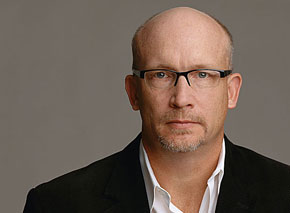
Interview: Alex Gibney of “We Steal Secrets: The Wikileaks Story”

Posted on May 31, 2013 at 11:13 am

I spoke to Alex Gibney, one of my favorite filmmakers, about his brilliant documentary on Wikileaks.

The most interesting character in the movie is Bradley Manning.  Where is he now?

He’s in prison, finally Leavenworth, after eight months in solitary confinement and being kept in a cage in Kuwait.  While he was in solitary confinement, he was stripped naked, they took his glasses, they kept the lights on, sleep deprivation, no blanket.  It was abusive treatment that rose to the level of torture.  It’s really a shocking episode which I think was trying to send a message in the most brutal way possible.  Like the British navy used to hoist the wretch on the yardarm of the ship.  “Pay attention, if you’re thinking about leaking stuff.  This could happen to you.”  I made a film about the poor kid, Steve Bartman, the Cubs fan, and I think he’s a scapegoat. Governments and organizations go after someone who’s weak because they can.  And Manning was weak — in some ways.  In some ways he was very strong.  That’s what makes him such an interesting character.  He’s what Phil Zimbardo calls “an everyday hero.”  He’s not a Daniel Ellsberg type.  He doesn’t stand up there with his hands on his lapels and proclaim.  He has a lot of problems, a lot of issues, a lot of emotional turbulence in his life.  But he was determined to do something.  And so he is important to all of us because we are all weak, flawed individuals who can occasionally do something big.Alex-gibney

Why would the US military give a troubled, unstable person at a very low rank access to almost unlimited highly sensitive material? 

They are desperate for bodies, especially smart people.  He was in a discharge unit.  A guy who was in it with him says in the movie, “This is the most unlikely military man you could possibly imagine.”  But he’s in there because he wants to get a college education.  This is the route for poor kids who want to go to college.  The army doesn’t want to let him go because he is super-smart.  But he has a lot of emotional baggage.  He’s gay at a time of Don’t Ask, Don’t Tell.  He thinks he might want a sex-change operation.

The music choices in the movie were excellent.

I worked very closely with a guy named Will Bates, from a group called Fall on Your Sword.  He created these wonderful themes for each of the characters in an environment where you feel the space of the internet.  And all of these people live out worlds in their imagination, and there’s no place to do that better than rock and roll.  So you have Midnight Oil, which is a favorite group of Julian Assange.  You  have Radiohead for James Ball.  And for Bradley Manning — he himself says he was listening to Lady Gaga singing “Telephone” while he was downloading the documents.  It’s perfect in terms of what she’s concerned about — gender identity, bullying.  And then at the end, the Ink Spots, “If I Didn’t Care.”  There’s a ghostly quality to that moment, like “The Shining.”  It takes you into the past, like an artifact in space that seemed to be mythic in some way.

What did you have to cut out of the movie that we may see on the DVD?

I wish we could have kept more on Julian’s childhood on Magnetic Island off the coast of Queensland.  It got its name when Captain Cook sailed by there and said their compasses were “fouled.”  What a perfect metaphor for Julian Assange, messing with military compasses.  There was a big section we had on Tunisia, and a much longer section on Iceland.  That’s when the goal was at its purest and they were operating on this barren rock.  It was tough to let it go.  This version is a haiku — we had a three hour and thirty minute cut.  There are some interesting characters on the DVD extras.

Do we have too many secrets?

Maybe we don’t have enough.  You have to assume once you go online, anything you put there can be made public.  Yet while you’re online you feel like it’s a private, sacred space.  But you’re really broadcasting to the world.  When it comes to governments and corporations, we should demand that less is secret.  That’s where corruption flowers.  When two Reuters journalists are killed and they won’t give the video to Reuters, what’s that about?  What about when the images of Abu Gharib were made public?  Their concerns were not about what happened, but that when we released the photos we gave comfort to the enemy.

The New York Times and The Guardian play a crucial role in your film in acting as a filter for processing and providing context for the documents Manning provided, and making sure that what was made public was not detrimental to the safety of our troops.  What will happen to that function as traditional journalism is in collapse?

JulianAssangeThere’s a part of this film that argues for renegade organizations like Wikileaks, but there’s a part that argues very strongly for traditional journalism and the kind of decisions you have to make about what should and should not be secret and how stories should be properly contextualized.  When I began this movie, I was interested in the leaking machine, the technical challenge and the technical solution, which we may have to continue to pursue as the Obama administration makes journalism more of a crime.  But what Manning needed was a journalist, someone in whom he could confide and trust.  That relationship turns out to be terribly important.

Instead, he had a relationship — online only — with a man who had the wrenching moral challenge of protecting Manning or telling the police what he knew.

The biggest problem for him is that he lied to Manning.  He squeezed him like a lemon.  He said, “Your secrets are safe with me.”  Maybe he meant it at the time or maybe he had decided to keep probing so he could get more secrets.  He’s a complicated character.  If you’re a journalist, you have a bigger conundrum.  You have to examine whether this information is in the public interest, whether people will be hurt.  But Assange would say journalists are too subject to political pressure.

If everything becomes secret and leaking becomes a capital offense – which is what Bradley Manning is facing — where are we at now?  You’d think the law would provide us that easy guidance, but it’s much more of a gray area.  The job of a journalist is to find out stuff.  The job of the government — sometimes — is to keep stuff secret.  There’s a natural tension there.  But now they want to make finding out stuff a crime.

Who should decide what is private?

It can’t just be corporations or government.  It has to be all of us.

Related Tags:


Directors Documentary Interview
THE MOVIE MOM® is a registered trademark of Nell Minow. Use of the mark without express consent from Nell Minow constitutes trademark infringement and unfair competition in violation of federal and state laws. All material © Nell Minow 1995-2026, all rights reserved, and no use or republication is permitted without explicit permission. This site hosts Nell Minow’s Movie Mom® archive, with material that originally appeared on Yahoo! Movies, Beliefnet, and other sources. Much of her new material can be found at Rogerebert.com, Huffington Post, and WheretoWatch. Her books include The Movie Mom’s Guide to Family Movies and 101 Must-See Movie Moments, and she can be heard each week on radio stations across the country.

Website Designed by Max LaZebnik