Justin Bieber: Never Say Never

Posted on May 10, 2011 at 3:42 pm

Things for the young fans of Justin Beiber to think about as they watch this film: He is cuuuuute! Hair! Smile! Voice! Dancing!I  am so lucky to have a talented, unassuming, nonthreatening, hard-working, scandal-free performer to test my still-developing sense of what love is all about.

Things for parents to think about as they watch this film: It is wonderful to see my Beiber fan so happy and it brings back memories of my love for (fill in the blank). He’s actually pretty talented!  And very cute. His mother seems to have a head on her shoulders and has made sure he has surrounded himself with people who genuinely want what is best for him.  It was good to hear his tour manager say that he saw his goal not as making him the biggest star he can be but teaching him to be the best man he can be.   Nice to see that he still has good friends — and that he still has to clean up his room. I am so lucky that my child has a talented, unassuming, nonthreatening, hard-working, scandal-free performer to test her still-developing sense of what love is all about.

It really is an astonishing story. As awwwwww-inspiring home movie footage shows, Justin Beiber, the son of a single teenage mother in a small town in Canada, loved music and loved to perform even as a toddler. He came in second in a local talent competition and performed on a street corner. When his mother posted some videos of him singing on YouTube, a young promoter from Atlanta saw them — and saw the astronomical numbers of viewers who were watching them. He flew Justin (then age 14) and his mother to Atlanta, introduced them to Usher, and 17 months later Bieber sold out Madison Square Garden in 22 minutes. And all of that despite the predictions of those who said it could not happen without a machine like Disney or Nickelodeon behind him. This is a typical but still-entertaining concert tour film, with shots of Bieber backstage and in front of the audience, goofing around, getting sick, tweeting, and performing alone and with guest stars Usher, Miley Cyrus, Jaden Smith, and Boyz II Men. Bieber and his entourage come across as sincere, kind-hearted (watch him talk to a young violinist who now performs on his old street corner), and considerate. The 3D effects are excellent, especially when he reaches out, when the audience waves their glow sticks, and when he shakes that trademark hairdo. (more…)

Related Tags:


3D Documentary Musical
Interview: Carl Christman of ‘Selling God’

Interview: Carl Christman of ‘Selling God’

Posted on April 27, 2011 at 3:59 pm

Carl Christman, writer/director of the documentary Selling God, answered my questions about his film, an exploration of the way that fundamentalists market their religion.

How did you come to this project?

My films are a form of catharsis. I have many opinions about the major issues in life and feel the overwhelming desire to share my ideas. In past films I have dealt with War and Patriotism (Freedom Fries) as well as Terrorism and Fear (Culture of Fear.) The topic of religion seemed to be worthy of discussion.

How do evangelicals differ from other religious groups in spreading their religion?

Most religions movements work to spread their message. What sets the evangelical movement apart, and prompted me to focus on it in this film, is the skill with which they do it. They have very effectively used all forms of media and marketing to get their message out.

Are evangelicals successful in converting outsiders? In retaining those who grew up in the faith?

Judging by the continued growth and increased power of the evangelical movement I would say they are very effective at converting outsiders.

What do they consider the biggest threat to their way of belief?

There seems to be a feeling among many evangelicals that they are under attack from secularism. Since secularism is basically defined as being non-religious this means that religion is under attack from non-religion. Since three quarters of Americans identify themselves as Christian, however, I do not see Christianity as being in any danger.

Are they a political force?

The evangelical movement is definitely a political force. Evangelicals make up roughly a quarter of all Americans. This is a highly prized demographic for politicians and has tipped the balance in many elections.

How are some evangelicals like people who market books or music or other consumer goods?

My point in this film is to show how the marketing of religion is very similar to the marketing of anything else. The same techniques are used whether one is selling clothing or cars, soda or salvation.

Who do you think is the audience for this film?

Selling God has different audiences that watch the film for different reasons. Those that are not religious are likely to view it from the outside as a critique on the evangelical movement. Evangelicals are likely to watch the film and relate to the examples I offer, often on a personal level. In talking to people that grew up in the various denominations I dealt with in the film I found that they were amused by my unique take on the religious customs they had often taken for granted.

Did the evangelical community respond?

Most of my evangelical friends thought this was a thought-provoking critique. They did not necessarily agree with all of my conclusions, but they certainly enjoyed the process of exploration.

Do you see hypocrisy in the way that Christianity is marketed?

I do not see the marketing of Christianity as hypocritical. There is nothing that I am aware of in the tenets of Christianity that opposes marketing. Many people will not like talking about Christianity in terms of marketing, because they view it as being above such earthly techniques. I, however, have enjoyed applying the well-known consumer paradigm to the world’s largest religion. Hopefully this film offers a unique perspective on religion.

What good works do the members of this community support (other than trying to make converts)?

The Christian community has established many important institutions that improve all of our lives. I went to Christian schools from pre-school through college and I now teach at a Christian university.

What was the biggest challenge you faced in making the movie? What surprised you?

The biggest challenge in making this movie was trying to get access. Much of the footage I wanted to use was not easily available and many of the people I wanted to interview were not willing to speak with me. When I did have people welcome me with open arms it really stood out. I remember being outside the local Unitarian Church getting some shots from the street. When some of the parishioners saw my camera operator and myself outside, they invited us into their church, allowed us to film inside and spoke with us about their faith. I found their openness very refreshing.

Related Tags:


Directors Documentary Interview
Dumbstruck

Dumbstruck

Posted on April 21, 2011 at 6:00 pm

B+
Lowest Recommended Age: 4th - 6th Grades
MPAA Rating: Rated PG for brief suggestive humor
Profanity: None
Alcohol/ Drugs: References to substance abuse

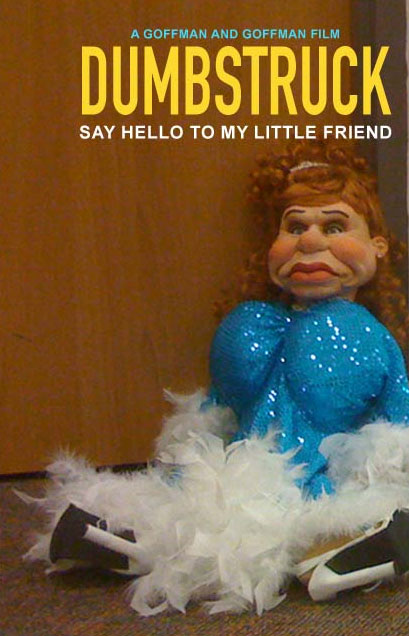
Once a year, there is a gathering in Kentucky for people who “talk to themselves and play with dolls for a living” — ventriloquists.  “Dumbstruck” is a documentary from Lindsay and Mark Goffman that follows five of them for the year between two of these Vent Haven ConVENTions in what turned out to be the biggest year in history for the tiny little community.   One of its members unexpectedly hit the biggest of the big time when Terry Fator went from performing at county fairs to a $100 million headliner contract in Las Vegas after he won “America’s Got Talent.”

For an enduringly popular style of performance, there’s a lot of hating on ventriloquists.  Many people think of them as corny or annoying, just above mimes or strange, like the murderous ventriloquist characters played by Anthony Hopkins in “Magic” or Michael Redgrave in “Dead of Night.” When Fator walked on stage for the first time in “America’s Got Talent,” judge David Hasselhoff said, “Oh, no, a ventriloquist.”

But it is impossible not to fall in love with the characters in this film — the human ones, anyway — because it is more than an act from someone who might have just as easily chosen juggling.  It is clear that these people become ventriloquists because they have things to say that they just do not feel comfortable saying any other way.  I used to think that the reason ventriloquists argued with their characters was to enhance the audience’s perception that the puppet was a real character.  But this movie makes it clear that the relationship — and that is truly the word that applies — between the person and the puppet is far deeper and more complex and intriguing, and the passion it requires is profoundly moving. All of us adopt personas for different situations; they just make it more explicit.  The art is less about whether the lips move or the voice sounds different than it is about the ability to take a portion of what is inside them and create a complete character from it.  After all, the most successful American ventriloquist of the 20th century, Edgar Bergen, performed on the radio.

This film has a former beauty queen, Kim Yeager, whose mother wistfully dreams that her daughter will give up ventriloquism and live a normal life.  But Yeager is wholeheartedly committed, performing more than 400 shows in a year, many of them safety demonstrations for schoolchildren.  In one of the movie’s most intriguing scenes, she gets some advice from a consultant on her act and ends up completely re-thinking her main character.  Then there’s Dan Horn, who was at what used to be considered the height of success for a ventriloquist.  He spends most of his time on the lucrative cruise ship bookings.  But the long separations are very hard on him and his family.  We learn about Wilma Swartz from her nephew, who tells us that the rest of the family has abandoned her but that he is loyal to her because of her kindness to him when he had no one else.  She is 6 feet 5 inches tall and one of her puppets is a life-size ostrich.  And when she needs help, she finds that the ventriloquist community stands by her.   Dylan Burdette is a white middle-schooler from rural Kentucky whose mystified parents are trying to understand why he wants to be a ventriloquist and why he insists on a dummy who is a black “pimp.”  And there is Terry Fator, who as this movie was being filmed, became a superstar.  He returns to Vent Haven as a homecoming hero, and the Goffmans show great sensitivity and understanding in portraying the mingled emotions of his fellow puppeteers as they share his triumph and wish some of it would rub off on them.

The Goffmans have a lot of affection for their characters, and by the end of the film, you will, too.

(more…)

Related Tags:


Documentary Movies -- format
List: Earth Day Movies

List: Earth Day Movies

Posted on April 21, 2011 at 2:00 pm

In addition to previously recommended Earth Day movies, take a look at these gorgeous documentaries about the creatures with whom we share this great planet:

1. March of the Penguins This worldwide sensation takes us to Antarctica, where these elegant birds triumph over brutal cold to protect their fragile eggs and tender chicks.

2. Meerkat Manor The ultimate reality show, this meerkat community has avid followers who mourned the passing of matriarch Flower.

3. Winged Migration Soar with the birds in this breathtaking film.

4. Microcosmos The tiny creatures of the insect world are explored in mesmerizing close-up.

5. Growing Up Wild, Vol. 1: Amazing Baby Animals Even the littlest children will be captivated by these adorable baby animals.

Jennifer Merin has a great list of Earth Day documentaries, too.

Related Tags:


Documentary Environment/Green Lists
Interview: Morgan Spurlock of POM Wonderful Presents: The Greatest Movie Ever Sold

Interview: Morgan Spurlock of POM Wonderful Presents: The Greatest Movie Ever Sold

Posted on April 21, 2011 at 8:00 am

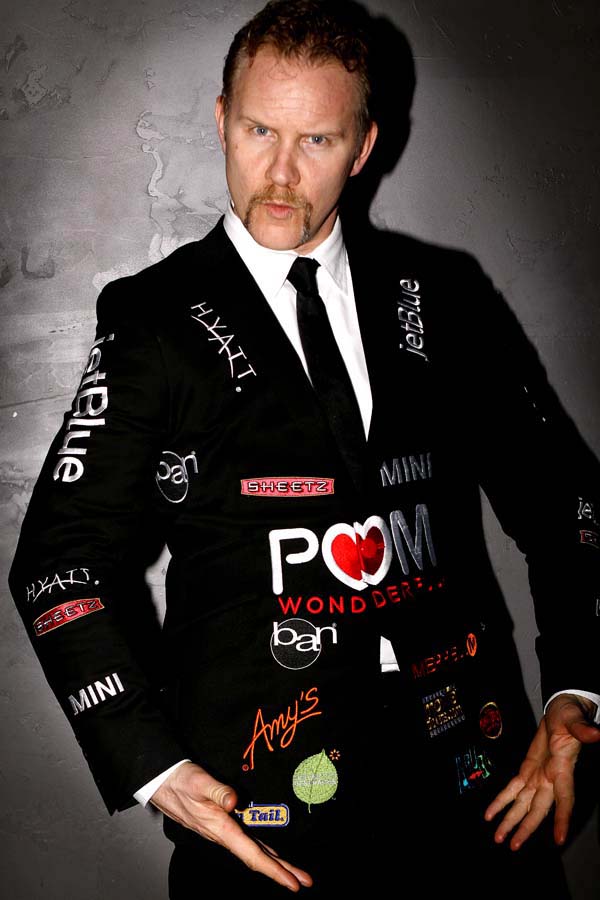
Morgan Spurlock took on fast food in “Super Size Me.”  He was funny, direct, and at times outraged as he tried to live for a month on McDonald’s “supersize” portions, and I liked his even-handedness in taking on the consumers as well as the providers, calling on us to take responsibility for ourselves.  His television series, “30 Days,” had people (including Spurlock himself) immersing themselves for a month in a culture outside their comfort zones.  Again, despite tone that seemed highly satiric at times, the show was about the middle, the gray areas, the nuances.  His new film is called “POM Wonderful Presents: The Greatest Movie Ever Sold.”  Yes, he made a movie about product placement that is entirely financed by product placement.

Spurlock spoke to me about the movie.

You were right!  At the screening you said that everyone there would never look at the world the same way again.  We walked out of the theater and the first thing I saw was a banner on a building I had never noticed before.

And it’s going to get worse — and better at the same time!

Advertising is everywhere.  Amazon has just discounted the Kindle for customers who are willing to look at ads.

And it’s such a small discount!  Shouldn’t it be free if they’re going to send you ads?

I think the most disturbing thing in the movie is the school selling advertising to raise money.  It’s especially sad that it is such a small amount of money and yet they can’t get it any other way.

It’s incredible. School districts are getting literally five to seven thousand dollars a year and in exchange they are letting all this advertising in.

What kind of impact does that have on kids? Does it desensitize them or do they stay susceptible to being drawn into the brands that are put in front of them?

That’s what the jury’s out on. There’s multiple layers to that one. You start to believe that these products and these brands are the ones that make things happen. They’re the ones you should trust, the ones that have solutions. That’s the question I have all the time, do we really want to live in a world where everything’s brought to you by some sponsor? That’s the way it seems to be going.

That’s right. Even at the Smithsonian, the flag that inspired “The Star Spangled Banner” is now brought to you by Ralph Lauren. Is POM happy with the results from paying to have their name in the title of the film?

Everybody seems to be. It’s gotten a great response. I think it makes all the sponsors who paid to be in the film look incredibly smart. I called 600 brands but only these 20 were brave enough to be a part of the film and want to pull back the curtain and have a real honest conversation about transparency. It’s very telling.

For me what was telling was that they basically say, “We don’t care what you say about us as long as you get our name out there.”

That’s part of what I love about it. Who was it who said, “I don’t care what you say about me as long as you spell my name right?”

Will you have product placement in your future films?

I think it really works for this one because the satire makes the whole thing work. I can’t imagine shooting an interview for another movie about Darfur or something where suddenly someone is drinking Coke in the middle of an interview. But one of the things I love is what J.J. Abrams says in the film: “I’m about story-telling, not story-selling.” We live in a world where people use products. They drive Cameros. They drink Coke. They wear Nikes. So it’s not like I think we should try to eliminate this stuff from entertainment. It would create a very unreal scenario. But what I don’t want is Ford in the writer’s room, “I want to start with a wide shot of the car and when the guy gets out of the car it would be great if he could say how well the car handled.”

You want the product to tell you something about the character.

Yes, if he drives a Mustang, he drives a Mustang.  If he drives a Volvo, he drives a Volvo.  But don’t make them show an extreme close-up of the logo just because they gave them a car to be in the movie.

You kept Mane and Tail shampoo in the film even though they didn’t pay.

They were the only ones where we were contractually obligated to say that they did not pay.  But there were others in the film who did not pay.  But what they brought to the table was not hard cash but soft money in terms of promotions.  Big brands do that all the time with studios so they can have Iron Man in the store or Tony Stark wearing sunglasses in their ads.  Characters appear on cereal and candy bars and potato chips and then there are lunchboxes, t-shirts, hats, and all that other stuff.  I tried to get McDonald’s to be a partner on this film.  I really wanted those documentary action figures.  Those would have sold like hotcakes!

Many of the companies that were willing to work with you were family-owned, like POM, Sheetz, and Hyatt.   They were very big, but they didn’t have the kind of bureaucracy of publicly-traded companies and were more inclined to do something off-beat.

Some of them make more than Fortune 500 companies.  And MiniCooper is part of a giant corporation.  Old Navy is owned by a gigantic conglomerate.  But they didn’t come on until they saw the film at Sundance.  Eight partners came on after Sundance.  That happens all the time with big Hollywood movies, too.  They wait to see how the film comes out and how audiences react and then say, “I want to be a part of this.”

What do you advocate?  Better disclosure?

It’s already at the end of a movie, where it says, “promotional consideration by…” but by then you’ve stopped watching.  The BBC has just started to allow product placement.  Like we have TV-MA, they have P for product placement before the show.

Do you advocate different rules for children’s programming and programming intended for adults?

You have to look at them different.  They’re two entirely different audiences.  They consume media in very different ways.  Kids recognize brands at a very young age, as young as four years old.  I don’t think you should have placement in kids’ shows but it goes beyond that.  The character becomes the toy, the lunchbox.  The argument for that is, “I can’t have free enterprise?”  The problem I have is the targeted advertising around programming.  My own son said, “I want to get that wrestler set!  But the pieces are sold separately.” I said, “Time to turn off the TV.  We’re done.”

 

Related Tags:


Directors Documentary Interview Understanding Media and Pop Culture
THE MOVIE MOM® is a registered trademark of Nell Minow. Use of the mark without express consent from Nell Minow constitutes trademark infringement and unfair competition in violation of federal and state laws. All material © Nell Minow 1995-2026, all rights reserved, and no use or republication is permitted without explicit permission. This site hosts Nell Minow’s Movie Mom® archive, with material that originally appeared on Yahoo! Movies, Beliefnet, and other sources. Much of her new material can be found at Rogerebert.com, Huffington Post, and WheretoWatch. Her books include The Movie Mom’s Guide to Family Movies and 101 Must-See Movie Moments, and she can be heard each week on radio stations across the country.

Website Designed by Max LaZebnik