The Descendants

The Descendants

Posted on November 17, 2011 at 6:08 pm

B+
Lowest Recommended Age: Mature High Schooler
MPAA Rating: Rated R for language including some sexual references
Profanity: Constant very strong and crude language from adult, teens, and child
Alcohol/ Drugs: Drinking, teen gets drunk, references to teen drug abuse
Violence/ Scariness: Tragic fatal accident (no graphic images), grief and loss, discussion of taking someone off of life support, sad parental death
Diversity Issues: Diverse characters, homophobic insult as evidence of crass, bullying behavior
Date Released to Theaters: November 16, 2011
Date Released to DVD: March 13, 2012
Amazon.com ASIN: B004UXUX4Q

Just because he lives in Hawaii, don’t think he’s in paradise, Matt King (George Clooney) warns us.  No one is immune to life.  The first Alexander Payne film since “Sideways” gives us another damaged hero at a crossroads and as the King whose crown lies very uneasily on his head Clooney gives his most vulnerable and sensitive performance.

Matt’s wife Elizabeth, glimpsed briefly but vibrantly as she is out boating, is in a coma following an accident on the water.  “If you’re doing this to get my attention,” he says to himself as much as to her, “it’s working.”  All of a sudden he has to pay attention to a lot of things.  He’s the one who gets called in to school when his 10-year-old daughter Scottie (Amara Miller) brings in photographs of her mother in a coma for show and tell and the one who has to drive her to apologize after she insults a classmate via text.  “I’m the back-up parent,” he tells us, “the understudy.”  He was.  Now he’s first-string and the game is on the line.

Matt and his family live on his income as a lawyer but everyone knows that he has inherited land of almost unimaginable value and that he is about to decide whether he will sell it for a lot of money or for you-can’t-count-that-high money.  The land is owned equally by Matt and his many cousins, all descendants (hence the title) of Hawaiian royalty and the son of missionaries.  For legal reasons they cannot continue to hold it indefinitely.  For financial reasons, the poorer relatives are pressing to make a deal.  But Matt is the sole trustee.  He has the authority to decide, and is trying to do what is best for everyone.

He impulsively takes Scottie to pick up his older daughter, Alexandra (Shailene Woodley), who has been away at boarding school because of problems with drugs and overall bad behavior.  When they arrive, she is out after curfew, drunk, and hostile.  At home, she tells him why she was so angry at her mother — Elizabeth was having an affair.  And the doctor tells Matt that Elizabeth is deteriorating and there is no hope.

Matt begins to understand how little he knew and how little he has control over.  He is clear, methodical, and deliberate on removing Elizabeth from life support, informing her brusque father (an excellent Robert Forster), her mother with dementia (Barbara L. Southern), and their friends and family about what is going on and urging them to visit her to say goodbye.  He brings depositions to Elizabeth’s bedside so he can keep working.  But in other areas he goes on instinct and impulse, taking Scottie, Alex, and Alex’s dim-witted, awkward boyfriend Sid (Nick Krause) to track down Elizabeth’s lover, all of them more sure that they need to do it than they are sure what they will do when they find him.

Alexander Payne (“Election” and “Sideways”) has a gift for life’s messiness, the mash-ups of pain, humor, anger, terror, and longing that collide in the midst of big moments and domestic dailiness.  A man wants to get somewhere urgently so finds himself running in shoes that slip and with lungs that no longer let him forget he is getting older.  A thoughtless teenager says the wrong thing to a tough old man and gets popped in the eye.  There is an awkward encounter with the man who drove the boat in the accident (played by an actor who looks like he has lived his whole life on the beach because it is surfing champion Laird Hamilton).

But moments of grace that come from the wrong people and at the wrong time can still brighten spirits.  Payne is also an actor’s director who has consistently given underrated performers a chance to show greater depth and breadth.  This film is filled with beautiful performances from Clooney, Woodley, Forster, Matthew Lillard, Beau Bridges, and, as a character who does not even appear until about 3/4 of the way into the movie, the always-wonderful Judy Greer.  Too often relegated to best-friend roles for whatever Jennifer and Jessica are in the latest forgettable romantic comedy, Greer is an actress of impeccable honesty and timing.  At first her character seems like a nice person who has never needed or wanted to be anything else.  But then Greer brings to the small but essential role a dignity and resolve that are unexpectedly touching.

There is a lot of crying in this movie, and not movie crying with one perfect sparkling tear welling up in the corner of one perfect eye.  There is some messy, ugly crying.  And there is messy, ugly behavior.  This is a terrible, painful situation and people are fraught and scared and angry.  Matt tells Elizabeth that even in a coma she can still be difficult.  But he finds his way to some clarity about some of the problems that were making him feel powerless.  And we recognize that acknowledging the messiness may be the closest to clarity anyone can get.
(more…)

Related Tags:


Based on a book Drama DVD/Blu-Ray Pick of the Week Family Issues
West Side Story

West Side Story

Posted on November 15, 2011 at 8:00 am

A+
Lowest Recommended Age: Preschool
Profanity: Mild language
Alcohol/ Drugs: Reference to drugs, smoking
Violence/ Scariness: Gang violence, characters killed
Diversity Issues: A theme of the movie
Date Released to Theaters: January 1, 1970
Date Released to DVD: November 15, 2011
Amazon.com ASIN: B005BDZN62
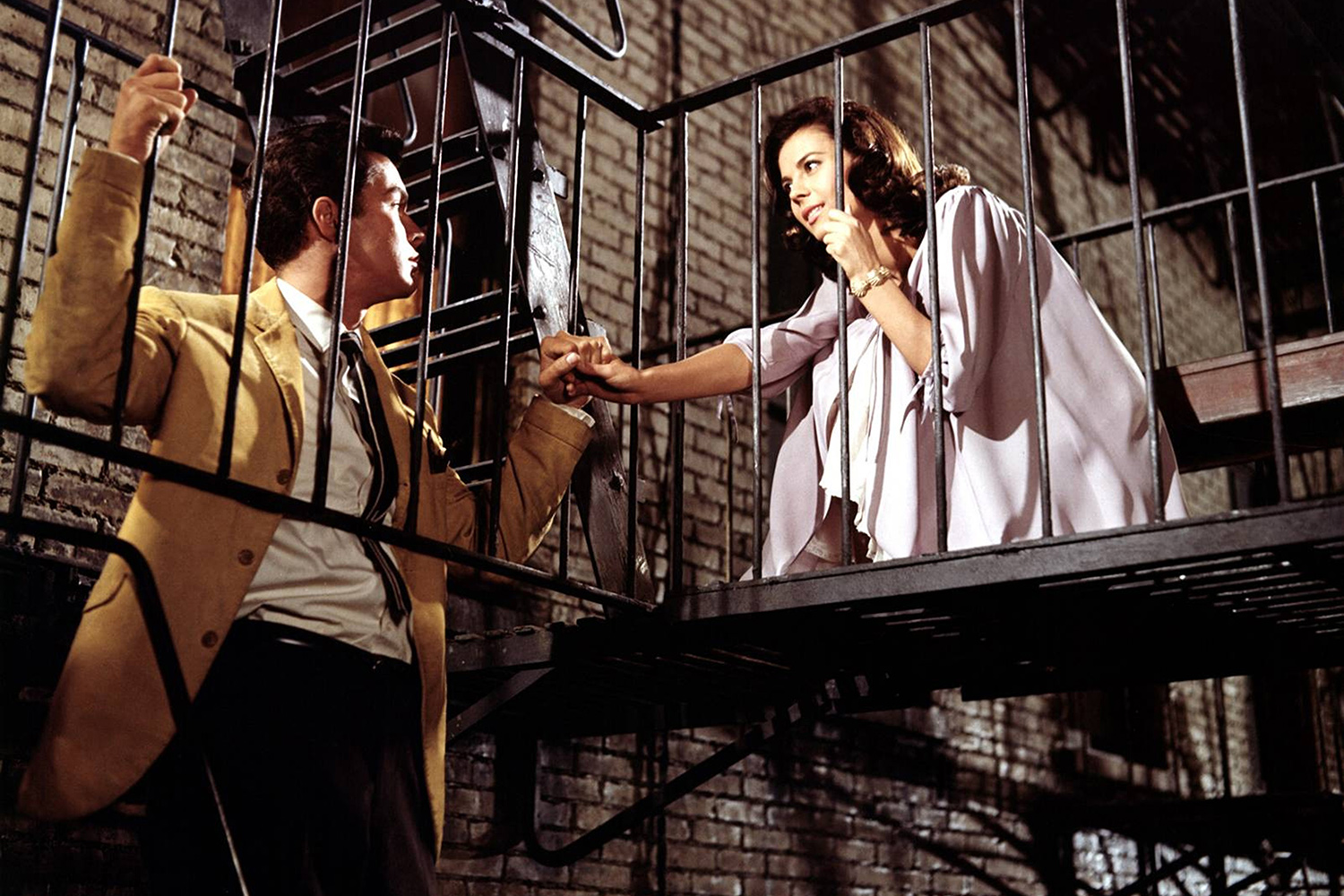
Actress Natalie Wood and Richard Beymer in a scene from the movie “West Side Story” (Photo by Donaldson Collection/Getty Images)

In honor of the 50th anniversary of this American classic there is a new Blu-Ray release of West Side Story: 50th Anniversary Edition.  Modeled on “Romeo and Juliet,” this movie puts the star-crossed lovers in two warring gangs in the slums of New York.  The opening dance number brings us up to date. The Sharks (Puerto Ricans) and and the Jets (Anglos) have blown up a series of petty insults and turf disputes into a war over who will rule the territory.   The leader of the Jets, Riff (Russ Tamblyn), goes to see his best friend Tony (Richard Beymer), the former leader of the gang.  Riff asks Tony to come to the dance that night to support him as he negotiates fight terms with Bernardo (George Chakiris), the leader of the Jets.  Tony has outgrown the gang, and wants more from life, but he and Riff are friends “womb to tomb,” so he agrees to go.  Moreno and Chakiris both won Oscars for their performances, two of the ten won by this movie, including Best Picture.  The brilliant music and lyrics are by Leonard Bernstein and Stephen Sondheim.

Bernardo’s sister Maria, just arrived in the US, is getting ready for the dance, begging to have her dress cut just a little lower.  Bernardo’s girlfriend, Anita (Rita Moreno), watches over her protectively.  At the dance, well-meaning Mr. Hand tries to get the teenagers to mix with each other, but tensions are high.  As each side dances furiously, everything seems to stop for Tony and Maria, who see each other and are transformed.

Bernardo is furious when he sees them together, and he takes Maria home.  But that night, Tony visits her, and they declare their love for each other.  She asks him to make sure there is no fighting, and he agrees.  At the “war council” he persuades them to make it a fist fight only, and he feels successful.  But Maria wants him to make sure there is no fighting of any kind, so he agrees to try to stop them.  Things get out of control, and Bernardo kills Riff with a knife.  Tony, overcome with grief and guilt, grabs the knife and kills Bernardo.

Running from the police and the Jets, Tony finds Maria.  They dream of a place where they could always be safe and together.  Anita agrees to take a message to Tony, but when she is harassed by the Jets, she angrily tells them that Maria is dead.  Blinded by grief, he stumbles out into the night, and is shot by one of the Sharks.  Maria holds him as he dies, and together, the Sharks and Jets carry him away.

The story retains its power, but the gangs are endearingly tame to us now.  Can it be that once there were gangs who fought with fists and knives?  This is a good opportunity to explore the reasons that people fight.  Anita says that the boys fight like they dance, “Like they have to get rid of something, quick.”  According to her, they are getting rid of “too much feeling.”  Kids understand that idea and may like to talk about what “too much feeling” feels like to them.  The music and dances in this movie do as much to tell the story as the dialogue and plot, and they illustrate this idea especially well.

One important difference between this movie and “Romeo and Juliet,” is that in Shakespeare’s play, the older generation plays an important role.  In “West Side Story,” the few adults who appear are ineffectual and tangential, like Mr. Hand (John Astin), who thinks he can get the kids to be friends by having them dance together.  Listen to the lopsided music-box song he plays for them, and see what a good job it does of expressing both what he is trying to accomplish and how hopeless it is.

            And, of course, this is an important movie to use in talking about prejudice.  See if you can get kids to watch carefully enough to figure out why the Sharks and Jets resent and mistrust each other.

Family discussion: If you were going to adapt the story of “Romeo and Juliet” today, what groups would the boy and girl come from? Where do you see the most prejudice today?  Listen to the song about “America,” with the Sharks and their girlfriends disagreeing about whether America has been good or bad to them. Which side do you agree with?  Are they both right?  Why? In the song “Tonight,” both sides sing, “Well they began it!”  Have you ever seen people act that way? One of the boys tells Doc “You was never my age.”  What does he mean?  Do all teenagers feel like that at times?  Have you ever dreamed of a special place where you could always be safe?  What would it be like? Tony has to decide how he can be loyal to his friend and loyal to Maria.  Why is that hard?  Who else in the movie has to make a decision about loyalty? If you could talk to Tony and Maria, what would you tell them to do?

Connections:  This is a great double-feature with “Romeo and Juliet” or the 1997 version, “William Shakespeare’s Romeo + Juliet.”  It is fun to see how much of the movie’s structure is taken from the play.  In both, the lovers see each other at a party, and are immediately overcome.  In both, the boy comes to see the girl later that night.  Juliet speaks to Romeo from a balcony.  Maria speaks to Tony from a fire escape.  Romeo and Tony are both pulled back into the fight due to the deaths of their friends.  In both movies, tragedy results from missed messages.  There are some important differences, too.  Juliet dies, but Maria does not.


Related Tags:


Based on a play Classic Drama DVD/Blu-Ray Pick of the Week Musical Romance Tragedy

Christmas with a Capital C

Posted on November 1, 2011 at 9:05 am

B
Lowest Recommended Age: Kindergarten - 3rd Grade
MPAA Rating: Not Rated
Profanity: None
Alcohol/ Drugs: None
Violence/ Scariness: None
Diversity Issues: A theme of the movie
Date Released to Theaters: 2011
Date Released to DVD: November 1, 2011
Amazon.com ASIN: B005BRFN8Q

This Dove-approved family film stars Ted McGinley and Daniel Baldwin as one-time high school rivals who find themselves on opposite sides again when they battle over Christmas decorations in a small Alaska town and learn that Christmas is not about what is displayed but what is felt and shared.


http://www.youtube.com/watch?v=MkK30YFv9u0
Related Tags:


Drama DVD/Blu-Ray Pick of the Week Holidays
The Rum Diary

The Rum Diary

Posted on October 27, 2011 at 6:15 pm

22-year-old Hunter S. Thompson wrote a novel about men in their 30’s working for a Puerto Rican newspaper, equally soaked in the title libation and the brinier flavors of cynicism and failure, but it was not published until more than 30 years later.

Now, it is a movie starring Thompson fan Johnny Depp (who played Thompson in Terry Gilliam’s “Fear and Loathing in Las Vegas”).  He plays Paul Kemp, a would-be novelist and near-alcoholic who extends his fiction-writing skills to his resume to apply for a job working for a near-broke newspaper in Puerto Rico.  He needn’t have amplified his credentials; no one else applied for the job.  The exhausted editor (Richard Jenkins) knows he lied but has no other choice and his expectations are even lower than his alternatives.  He says all he wants is a writer who won’t drink all the time.

No such luck.

Kemp is most interesting as the reflection of the real-life 22-year-old who was already worried about becoming dissipated, ineffectual, and hopeless.  His passionate love of language is palpable.  He spins out an elaborate sentence with the exuberance of youthful excess but lands it with breathtaking precision that demonstrates he is already a master.  The plot is simple.  Kemp is frustrated that the paper will only publish pieces that make the advertisers happy, which means nothing critical of anyone or anything in Puerto Rico.  He briefly agrees to moonlight as a writer for a shady real estate development coordinated by Sanderson (Aaron Eckhart), who has a beautiful home and a beautiful girlfriend (the very lovely Amber Heard).  And he briefly stops drinking.

There’s an endearing sweetness to the film.  The unabashed affection Depp and writer/director Bruce Robinson have for Thompson is contagious as we see Kemp begin to find himself as a writer even as he perhaps begins to lose himself in the gorgeous excess of his appetites.  The book is a novel, but the movie concludes by merging the fictional Kemp with the real-life Thompson with a buoyant couple of lines about what happens next.

In one scene Sanderson’s girlfriend and Kemp are driving in a borrowed convertible and she dares him to drive faster: “I’ll bet you scream before I do.”  He floors it and they surge ahead, both reckless, ravenous for adventure, seeking the ultimate, no matter the cost.  They both scream, and screech to a halt inches from the end of a pier.  Knowing what lay ahead for Thompson, it feels good to see a moment when he knew where to stop.

(more…)

Related Tags:


Based on a book Comedy Drama
Margin Call

Margin Call

Posted on October 20, 2011 at 6:50 pm

A
Lowest Recommended Age: High School
MPAA Rating: Rated R for language
Profanity: Constant profanity and bad language
Alcohol/ Drugs: Drinking, smoking
Violence/ Scariness: Tense confrontations, job loss, betrayal
Diversity Issues: None
Date Released to Theaters: October 21, 2011
Date Released to DVD: May 1, 2011
Amazon.com ASIN: B005FITIGO
Copyright Roadside Attractions 2011

Investors can make bets by promising to buy stock at a higher or lower price than the current day’s valuation.  If all goes well, they never actually have to buy the stock.  They can keep buying and selling the bets with borrowed money without ever having to buy the underlying securities.  But if it does not go well, the investor gets what is known as a margin call and has to come up with the cash.

The financial meltdown of 2008 was like a margin call for America, and we will be paying off that debt for a long time.  This movie, as tightly wound as a thriller, takes us through a fictionalized version of the night when it all tipped over from going well to not going well at an enormous Wall Street company, and it was time to pay the piper and a lot of others as well.

“You guys ever been through this before?” asks Will (Paul Bettany), as some serious looking people in suits start tapping people on the shoulder and saying, “I’m afraid we have to speak with you” to the people in cubicles  “Best to ignore it, keep your head down, go back to work.  Don’t watch.”

“The majority of this floor is being let go today,” says the serious woman in a suit.  She speaks of “certain precautions that may seem punitive.”  She glances down at the paperwork when she speaks of “your — 19 — years” with the (never-named) company.  And then we see people carrying cardboard boxes of belongings out the front door of a shiny skyscraper, their eyes blinking in the unaccustomed sunlight.

This is nothing new, as Will’s comment informs us.  It is a routine, if brutal pruning of the staff.  This is a cutthroat business and periodically some throats get cut.  And periodically Will has to speak to those left behind: “These were good people and they were good at their jobs, but you are better.  We will not think of them again.”  Back to work watching all those screens with all those numbers.

But one of the departed has left something behind.  There is evident irony in the name of the division that has been gutted.  It is the Risk Management group.  And the 19-year veteran who has been shown the door has been working on a new analysis of the firm’s position.  He turns his thumb drive over to the young colleague who has been kept on, Peter Sullivan (Zachary Quinto), a literal rocket scientist with “a PhD in propulsion,” who plugs a few holes in the formula that reveal that the firm is in their terms, “projected losses are greater than the current value of the company.”  In other words, on the verge of collapse.  That is when it gets interesting.  Sullivan has proven that there are going to be some devastating losses.  The question is who will pay for them.

The rest of the long night will be devoted to answering that question.  It is like a long game of musical chairs, except that these people get to decide when to stop the music so they can get to the chairs before everyone else.

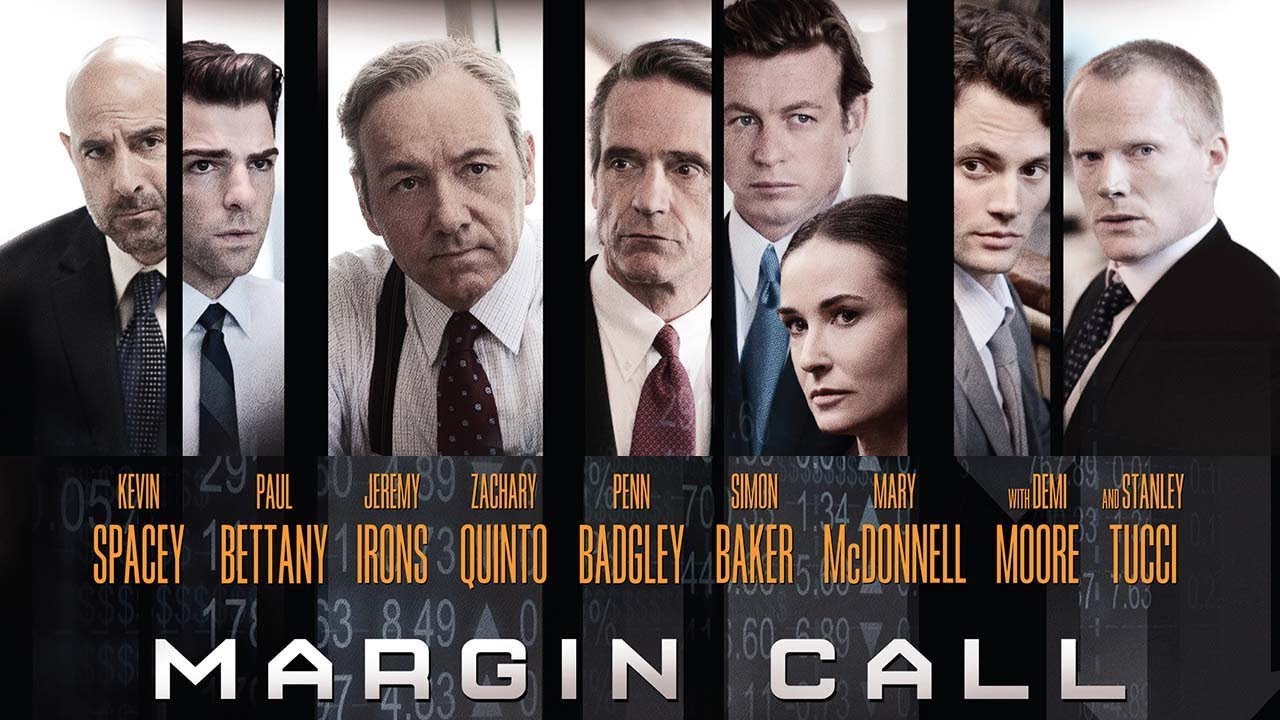
The guy at the top is John Tuld (Jeremy Irons).  Given a choice between reputation and money, he has no hesitation in choosing money.  He tells the head of sales, Sam Rogers (Kevin Spacey) to sell the ticking time bomb securities by assuring their clients that they are solid investments, even though Rogers points out that no one will ever trust them again.  “You’re selling something you know has no value.”  “We’re selling to willing buyers at fair market value so that we can survive.”

Rogers is not the only one who raises concerns, moral and financial.  But writer-director J.C. Chandor lets us see when and how each of them topple, and what makes them topple, which turns out to be money.  Dale repeatedly says there is nothing that can get him to go back inside the building and yet there he is, back in the building.  Rogers says he will not sell these risky securities to clients because “you don’t sell anything to anybody unless they’ll come back to you for more.”  But he does.

This could just as easily be set in the scuzzy world of the real-estate salesmen of “Glengarry Glen Ross” or the “leave the gun, take the cannoli” world of “The Godfather.”  Chandor keeps enough of the real story to keep things vivid and meaningful but does not get mired in jargon.  Crisp performances by everyone keep things taut until a surprising detour at the end.  For the first time we leave the world of glass and concrete for an intensely personal moment of loss and grief.  “Our talents have been used for the greater good,” one character says, reminding us that the very selection process that takes people who are capable of more tangible contributions are unable to resist the big money that pays them a many-times multiple for financial engineering over mechanical engineering.  And reminding us, too, that if we let people who care only about money make the decisions they will make decisions that are only about money for them.


(more…)

Related Tags:


Drama DVD/Blu-Ray Inspired by a true story Movies -- format Thriller
THE MOVIE MOM® is a registered trademark of Nell Minow. Use of the mark without express consent from Nell Minow constitutes trademark infringement and unfair competition in violation of federal and state laws. All material © Nell Minow 1995-2026, all rights reserved, and no use or republication is permitted without explicit permission. This site hosts Nell Minow’s Movie Mom® archive, with material that originally appeared on Yahoo! Movies, Beliefnet, and other sources. Much of her new material can be found at Rogerebert.com, Huffington Post, and WheretoWatch. Her books include The Movie Mom’s Guide to Family Movies and 101 Must-See Movie Moments, and she can be heard each week on radio stations across the country.

Website Designed by Max LaZebnik