Max Rose

Max Rose

Posted on September 1, 2016 at 5:51 pm

B
Lowest Recommended Age: High School
MPAA Rating: Not rated
Profanity: Some strong language
Alcohol/ Drugs: Drinking, prescription drugs
Violence/ Scariness: Sad death
Diversity Issues: None
Date Released to Theaters: September 2, 2016
Copyright 2016 Paladin

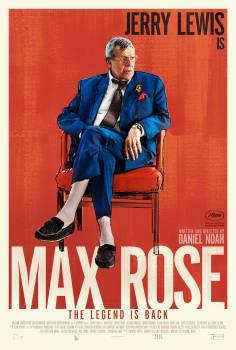
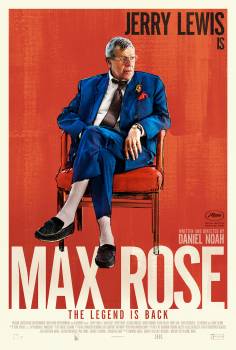
Jerry Lewis is back, playing the title character in “Max Rose,” a longtime jazz musician rocked to discover that his late wife might have been unfaithful. This 2013 film arrives in theaters in 2016, with Lewis giving a performance that is best described with a word not usually thought of for him: subdued. Lewis, then age 86, has learned to trust himself and the audience. He does not have to be big, loud, and needy. He can be quiet, subtle, and patient. The script is under-written, but it is a pleasure to watch Lewis in this mode, along with a bunch of other familiar octogenarian co-stars who bring their decades of experience to the under-written script.

Writer/director Daniel Noah locates us very quickly: some hospital paperwork, a clock ticking, a sympathetic voice asking, “Grandpa, can I get you anything?”

Max was married to Eva (Claire Bloom, lovely and warm in flashbacks), and he believed they were the great loves of each other’s lives. After a lifetime together, he does not know how to begin to live without her. Max has a tense relationship with his son, Christopher (Kevin Pollak). But he is very close to his granddaughter Annie (Kerry Bishé), who is spending much of her time with him, making sure that he eats and trying to make sure he takes his medicine. We see Max outsmarting her on that one. Max hands Annie Eva’s compact, and she smiles in recognition of one of her grandmother’s favorite treasures. But then Max shows Annie the inscription, and while she tries to reassure him that it might not be evidence that she had another relationship, they both know that is its implication.

Max is badly shaken. He questions everything he thought he knew about Eva, their relationship, and the choices he made. How can he reconcile the relationship he thought he had with the idea that Eva’s favorite compact reminded her of someone else every time she looked in the mirror to check her make-up? “I failed my wife, I failed my family, I failed myself.” And yet, he cannot forgive Christopher, now in the midst of his second divorce, for what Max considers Christopher’s own failures as a husband and father.

The story is thin and unconvincing, but it is a pleasure to see Lewis in the role. And in brief appearances, veterans Rance Howard, Dean Stockwell, and Fred Willard make us wish the whole movie was these guys sitting around talking.

Parents should know that the movie has mature material including strong language and sexual references.

Family discussion: What did Max want from his confrontation with the man who gave Eva the compact? Why was he so hard on Christopher?

If you like this, try: “The King of Comedy” and “45 Years”

Related Tags:


Drama Family Issues Movies -- format
Ben-Hur

Ben-Hur

Posted on August 18, 2016 at 5:25 pm

B
Lowest Recommended Age: High School
MPAA Rating: Rated PG-13 for sequences of violence and disturbing images
Profanity: None
Alcohol/ Drugs: Some social drinking
Violence/ Scariness: Intense and sometimes graphic peril and violence including battle scenes, crucifixions, abuse, and accidents, characters injured and killed
Diversity Issues: A theme of the movie
Date Released to Theaters: August 19, 2016

Copyright 2016 Paramount
Lew Wallace’s 1880 book, Ben-Hur: A Tale of the Christ, had a revolutionary idea in a spiritual setting. The story of a minor, fictional character at the time of the crucifixion was the first to try to illuminate epic themes through the depiction of a character who was not a participant. Indeed, the title character was hardly aware of the monumental events going on around him. He was too busy dealing with his own personal crises like being enslaved and having his mother and sister contract leprosy. Wallace’s book became the top seller of the century. And then it became a play, two silent films, a Best Picture Oscar winner tied for first place for the most Academy Awards, plus two animated versions and a television miniseries.

Now Roma Downey and Mark Burnett, following the enormous success of their “Bible,” “A.D” and “Son of God” know the genre well and have remade the grand but dated three hour and thirty-seven minute epic. Their version is brisker, not just in the overall running time of just over two hours but in the more contemporary quick cuts and trimmed storyline. It is also more explicitly religious. While earlier versions suggested the presence of Jesus but did not include his face or voice, he is more explicitly involved in the storyline here, portrayed by Brazilian actor Rodrigo Santoro.

As in all of the earlier versions, it is the story of Judah Ben-Hur (Jack Huston), a Jewish prince who is wrongly accused of a hostile act against the Roman invaders and sold into slavery. In this version the Roman Messala (Toby Kebbell) is more than a close friend; he is Judah’s adopted brother. They are devoted to one another but also deeply competitive.

Messala, in love with Judah’s sister, joins the Roman army in hopes of achieving enough wealth and status to be considered worthy of her. When he returns to Jerusalem, Judah is married to Esther (Nazanin Boniadi). Messala and Judah agree to find a way for the local population to live peacefully under Roman occupation. But a rebel hiding in Judah’s house kills one of the Roman officers and Judah is blamed. Messala refuses to protect him or his family. Judah becomes a galley slave, spending five years chained to an oar on a Roman naval ship.

When the ship is sunk, he escapes. An African named Ilderim (Morgan Freeman) gives him a chance to win back his freedom by competing in a chariot race. And that, after all, is what everyone remembers about “Ben-Hur.” Director Timur Bekmambetov is known for action scenes with tremendous vitality and he more than delivers with the chariot race, which is thrillingly dynamic. The naval battle scenes are also exciting. The screenplay has some clunky dialog and awkward transitions, but Huston is always engaged and engaging and balances the intensity of the action scenes with an inspiring message of forgiveness. The movie is true to the story that has endured in its various versions for more than a century.

Parents should know that this film includes intense and sometimes graphic peril and violence with many characters injured and killed, battle scenes, whipping, abuse, crucifixions, some disturbing images, brief non-explicit sexual situation and mild sexual references.

Family discussion: What changed Ben-Hur’s mind about Messala? Was Ben-Hur right to try to make peace with the Romans? What did Pilate mean when he said, “They’re Romans now?”

If you like this, try; “Risen” and the 1959 version of “Ben-Hur”

Related Tags:


3D Action/Adventure Based on a book Drama Epic/Historical Movies -- format Spiritual films
Little Men

Little Men

Posted on August 13, 2016 at 5:35 pm

Copyright 2016 Magnolia
Writer/director Ira Sachs makes small, exquisitely observed, films that are cinematic chamber music. He does not follow the reliable movie formulas about how many minutes into the running time you introduce characters, the challenges those characters face, the small conflict, the big conflict, and the resolution. He does not exaggerate to let us know whose side we are on or even what we are hoping for. He just allows us for a little while to be a part of the lives of basically good-hearted people who, like good-hearted people in real life, mean well but cannot help hurting each other. At first, the stories may seem slight. Sometimes the most important developments happen off screen. But with increasing confidence and understanding, Sachs has provided us with some of the most reliably worthy movies for grown-ups, including “Love is Strange,” and now “Little Men.”

“Little Men,” perhaps a reference to the Louisa May Alcott book of the same name, is an inherent contradiction. In this film, at least two of the characters it refers to are at that moment of inherent contradiction, middle school. As it begins, Jake Jardine (Theo Taplitz) is home alone when he gets a phone call. His grandfather has died. Soon, Jake and his parents, an actor named Brian (Greg Kinnear) and a psychiatrist named Kathy (Jennifer Ehle) move to his grandfather’s Brooklyn brownstone, an apartment over a dress shop owned by Leonor (Paulina García), an immigrant from Chile, who lives nearby with her son, Tony (Michael Barbieri), who is Jake’s age. Leonor greats Jake and his family warmly, if a little warily. And the two boys hit it off immediately and quickly become good friends. All three parents (Tony’s parents are separated) support this friendship, even as their own relationship starts to fray. Jake’s father had not raised Leonor’s rent in many years, even though rates had gone up as the area gentrified. Brian, currently rehearsing Chekhov’s “The Seagull,” does not make much money as an actor, and he is painfully aware that the family depends on Kathy to pay the bills. So is she. Brian’s sister is also pushing him to raise the rent because she is co-owner of the property.

The Jardines’ relationship with Leonor is not quite businesses and not quite friendship. In a way, Brian is a “little man” himself. He knows Leonor cannot afford to pay more and has nowhere else to go. He wants to be a good guy and fair to everyone, and that makes him feel ineffectual.

Sachs and his co-writer, Mauricio Zacharias understand the intensity of middle-school friendships, even when the people involved have little in common beyond being the same age and not quite fitting in anywhere else. Jake is quiet, a loner, happy to stay in his room and draw all day. Tony is outgoing, confident, and ambitious. He wants to be an actor, not because it would be fun to be on television and be famous but because he is serious about acting. In the film’s most uninhibited and joyous scene (filmed in Barbieri’s real-life acting class), Tony and his acting teacher do an improvisation exercise that has them shouting and mirroring one another. And we also see the boys gliding together through Brooklyn on roller blades and scooter, the exhilaration of being young and finding your first real adventure.

And we see Leonor, Brian, and Kathy trying to find some common ground with increasing frustration and impatience. Each scene is a small gem, a particularly apt metaphor because each shows us a different facet, a different face. If at first it seems discursive because it does not follow the traditional beats of cinematic storytelling, we see as it unfolds that Sachs is very much in control. His films reward us with patient, layered storytelling that reveal how large, and large-hearted, a small story can be.

Parents should know that this film has a sad (offscreen) death, family stress, drinking, smoking, some strong language, and issues of income inequality.

Family discussion: Should the boys’ friendship be affected by their parents’ dispute? Who was right and why?

If you like this, try: “Love is Strange”

Related Tags:


Drama Family Issues Stories about Teens
Hell or High Water

Hell or High Water

Posted on August 11, 2016 at 5:40 pm

Copyright Film 44 2016
“Hell or High Water” is a modern western that reminds us why spare, dry landscapes have so often been the settings for grand American epics. Like frontier stories of ranchers, farmers, cowboys, Indians, masculinity, and bank robbers, this film has a gripping story that touches on the most profound American struggles — from guns to real estate, race, and income inequality — specific in detail but universal in scope.

One of the film’s wisest choices is in keeping important information from us until just the right moment, so I will be especially scrupulous about spoilers and keep the description of the plot to a minimum. There are four main characters, two bank robbers and two Texas Rangers. The bank robbers are Tanner (Ben Foster) and Toby (Chris Pine), and we can tell immediately that they seem less experienced than the staff at the small Texas Midland bank branch they are robbing, just before it opens on a dusty morning. Both bad news and good manners are so deeply ingrained in the bank manager that he courteously wishes them a good morning before turning over the small unmarked bills.

The Texas Rangers are about-to-retire Marcus (Jeff Bridges) and Alberto (Gil Birmingham), who is of both Native American and Mexican heritage, as Marcus constantly reminds him with a stream of amiably delivered insults. As Tanner and Toby continue to rob banks, always Texas Midland branches, Marcus begins to discover a pattern that begins to reveal a plan.

The characters are skillfully drawn and performed with a deep and understanding humanity, not just by the four lead actors but by everyone in the cast. Every performance in even the smallest role conveys an arid and dusty world, physically, financially, and emotionally. Standouts include Katy Mixon as a waitress, Richard Christie as a bank loan officer, and Dale Dickey as the woman who opens the bank in the morning.

The outstanding screenplay is written by Texan Taylor Sheridan (“Sicario,” “Guns of Anarchy”), who knows these people and these places. He has a gift for finding the poetry in dialog as dry and spare as the setting. And he has the confidence in himself, his characters, and his audience to let the story unfold without telling us too much at first, and to present complex issues without feeling that he has to provide simple answers. Sheridan also has a gift for the small, telling details, the bank manager who courteously wishes the bank robbers good morning, the Indian casino, the ex-wife, the way some men say more in the pauses than the words. His deep appreciation for people overlooked by just about everyone makes this cops and robbers story into something real and meaningful.

Parents should know that this film has extended crime and law enforcement-related violence, with characters injured and killed, themes of moral and legal crimes, drinking, smoking, sexual references, prostitute, and a brief explicit sexual situation.

Family discussion: Why does the movie keep some of the details of the plan secret for so long? Why does Marcus insult Alberto? Why does Tanner say he is a Comanche?

If you like this, try: “99 Homes” and “The Newton Boys”

Related Tags:


Crime Drama Western
Equity

Equity

Posted on August 11, 2016 at 5:37 pm

Copyright Sony Pictures Classics 2016
“Equity” is a razor-sharp financial thriller about people who are themselves razor sharp. Their battlefields are boardrooms and trading floors but the stakes are high and the rules are just a starting point. There has been some understandable buzz about the background of the film, the first major national release to be entirely made by and about women. But this is in no way a stunt. It is a way to explore the way that the movie’s characters experience the ultra-testosteronic world of Wall Street, and, as we watch them, to explore our own assumptions and biases as well.

Anna Gunn (“Breaking Bad”) plays Naomi Bishop, an ambitious, even ruthless investment banker who knows she has to be twice as smart and work twice as hard in the ultra-competitive world of high finance. Her job is to persuade highly successful privately held firms to let her take them public by being listed on the stock exchange, which means huge fees for her company. That involves a lot of tricky arithmetic to come up with a valuation on the stock they will be selling that is high enough to entice the owners of the private company to agree to the deal, but low enough that the stock will gain in value as soon as the deal goes through. It also involves a lot of tricky diplomacy, stroking and soothing the egos of the clients, who are being courted by every firm on Wall Street.

Naomi appears on a panel before a group of young woman and is very frank about her priorities. When she is asked, “What’s that thing that makes you want to get up in the morning?” she says, “I like money.” She also says that she thinks the time has finally come when it is permissible to say so. On that, she could be wrong, especially from a woman.

Naomi wants and believes she deserves a promotion. But she has just made the first mistake of her career, mismanaging an important deal. It may be that a it would not be as serious a setback for a male in her position. Or it could be that her anxiety about the mistake has clouded her judgment about the best time to push for the promotion. But she needs a win badly. She has an equally ambitious deputy named Erin (producer and co-story writer Sarah Megan Thomas), who is pregnant. This triggers in Naomi, who is unmarried and childless, all of the conflicts we can imagine, though the screenplay is too smart to spell it out too explicitly. Can Erin make the kind of commitment the job needs and, just as important, how can she persuade the client that she will? Both Naomi and Erin know they have to come across to their colleagues, bosses, and clients as confident but not arrogant, dedicated but not reckless.

There is another ambitious woman, Samantha (producer and co-story writer Alysia Reiner), a classmate of Naomi’s, now a prosecutor who is looking for her own big win. At big financial companies, there is a “Chinese Wall” division between the investment bankers like Naomi and people who buy and sell stock, like hedge fund managers. It is illegal and absolutely forbidden for them to exchange “insider” information about deals and there are many rules and structures to make sure that they do not. Could that be why one of those hedge fund managers is romancing Naomi?

The story is taut and engrossing, fraught with moral hazard that would be just as compelling outside of high finance, in a factory or a university, but benefits from the high stakes and provocative details — and from a fresh perspective that adds dramatic heft and makes it clear how much we can learn from letting women tell their own stories.

Parents should know that this film includes very strong language, some sexual references, drinking, smoking, and criminal behavior.

Family discussion: What gets you out of bed in the morning? Would you want to work with Naomi? How would the character’s situation be different if she was a man?

If you like this, try: “Margin Call”

Related Tags:


Drama Gender and Diversity
THE MOVIE MOM® is a registered trademark of Nell Minow. Use of the mark without express consent from Nell Minow constitutes trademark infringement and unfair competition in violation of federal and state laws. All material © Nell Minow 1995-2026, all rights reserved, and no use or republication is permitted without explicit permission. This site hosts Nell Minow’s Movie Mom® archive, with material that originally appeared on Yahoo! Movies, Beliefnet, and other sources. Much of her new material can be found at Rogerebert.com, Huffington Post, and WheretoWatch. Her books include The Movie Mom’s Guide to Family Movies and 101 Must-See Movie Moments, and she can be heard each week on radio stations across the country.

Website Designed by Max LaZebnik