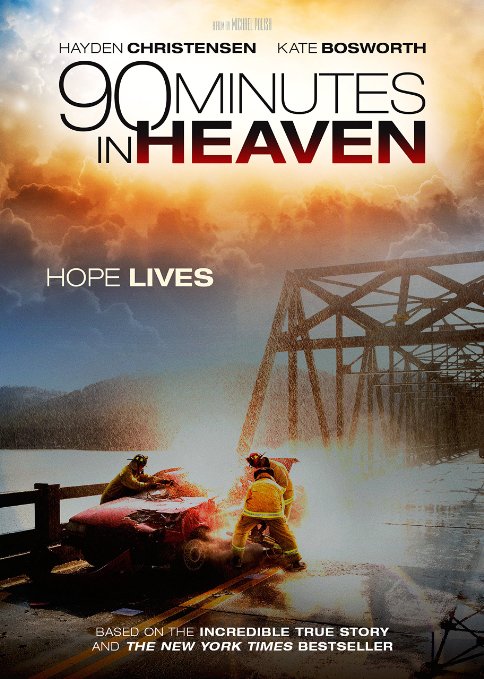
We are pleased to present an exclusive clip from “90 Minutes in Heaven,” starring Hayden Christensen and Kate Bosworth and based on the real-life story of Baptist Minister Don Piper, who says he experienced heaven when he was declared clinically dead after a car accident.
I have 10 copies to give away! Send me an email at moviemom@moviemom.com with 90 in the subject line and tell me what you are most looking forward to over the holiday season. Don’t forget your address!! (US addresses only) I’ll pick winners at random on December 12, 2015. Good luck!
Today and every day we pay tribute to one of the greatest heroes of the 20th century, Rosa Parks, who would not give up her seat on the bus and fought all her life for equal rights. “Some people say I was tired” when she refused the bus driver’s order to move to the back of the bus, but as she explained in her autobiography, “The only tired I was was tired of giving.”
The African Children’s Choir is more than a performing group. It is a chance. Children from the direst poverty who tour with the group get to see the world. They go to school. And when they grow up, their education is paid for through college. A touching and inspiring new documentary about the group is called “Imba Means Sing,” available December 4, 2015 on VOD. In an interview producer Erin Bernhardt explained how she became involved with the group and what the children taught her.
Copyright 2015 Imba Film
How did you meet the choir?
I met the African Children’s Choir the summer after I graduated from the University of Virginia. I had already committed to the Peace Corps but I wasn’t going to move to Madagascar until September. So I had that summer off and number one selling indie rock band of all time, Dispatch brought me on to be their outreach coordinator for a big benefit concert they had, a three night event at Madison Square Garden for Africa. And that’s how I met the choir. We had the kids come perform with the guys at the Garden and meeting those kids just totally changed my life. The children were from Uganda, Rwanda and Kenya and they were all orphans and they had nothing back home. They had no running water, no electricity, no parents, no toys, no education and thanks to being in the African Children’s Choir their education was now going to be funded through college. So they would be able to go on to achieve their dreams. They were the happiest, most joyful kids that I had ever met in my entire life, actually the most joyful people I had ever met, and it really changed my perspective on what mattered in life.
So for eight and a half years I’ve been wanting to tell their story and it’s really exciting that it’s finally happening. After the concert, I left them, moved to Madagascar, lost touch with them. I came home and worked at CNN for three years as a writer and producer mostly covering politics and then four and a half years ago I went with one of my best friends to Uganda to do a story for CNN about her social enterprise, the Akola Project. I ran into the choir my first day in Uganda, the same kids. I had gotten Croc, the plastic shoe company, to donate shoes for the kids in New York in 2007 and then in 2010 I saw those kids wearing those shoes and they were just doing really, really well. So I made a documentary about them for CNN and then I left to make this feature film because I wanted to reach younger audiences and be able to get the film in schools, and have it really make a difference.
The children in the film really are always joyful. And yet they have so little and as they travel through the United States they can see how much others have that they do not. What keeps them so cheerful?
When you ask them why they’re so happy, they say God. So if you talk to them about why you’re so happy, why are you so well behaved, why do you always have a good attitude, why are you so thoughtful? Their answer to all of those question is God.
For the kids in Uganda and a lot of developing countries spirituality is a lot more alive. It’s not just like an intellectual thing in their head and it’s not just something that is in your heart that you talk about. These kids come from communities where anything good that happens they think it’s happening because of God. That’s just how their life is in their villages and even in their slums. They just have so much faith. They talk about it and they live it and they wear it on their sleeves. So that’s really how they live. They realize how lucky they are that they have this opportunity and they totally give that credit to God for picking them and letting them have this opportunity to change their life and their families’ lives.
The film has a very intimate feel. And the performances are filmed very dynamically. What kind of crew did you have? And how big?
To me it was big, it was bigger than the crews that we use on CNN. I had a director of photography who was always using one or two cameras and a director who was doing the second or third camera and then we always had a field audio mixer because the audio was really, really important for the film because it was about music so we always had that. And then we had a production assistant who would be helping with writing and making sure everyone in the other rooms nearby were quiet and all that stuff and then me, the producer. For performances, we had two or three cameras at the time and always an audio person and sometimes you have to bring in extra audio people or extra photographers.”
The choir performed in a wide variety of venues. What were the ones that they enjoyed the most?
They loved singing at the Atlanta Braves baseball games. I think that was really fun for them to have such a huge audience. At that point they had been at only one baseball game before and that was a minor-league with a really small stadium and a really small crowd. So I think that this was beyond their wildest expectations and they loved that. They really liked performing at the Grand Canyon because it was just really fun. They weren’t as into the vast landscape of the Grand Canyon as they were into the snow there. They stayed and made snowmen and had snowball fights and then they sang. So they definitely loved it.
How did you make the children comfortable with you so that they were so unselfconscious in the film?
What makes me be able to tell really intimate character-driven stories is that I’m just really honest with all of the people I work with and it allows me to tell stories about people that I really love. And so they can tell that I genuinely love them and care about them and the kids, you know kids can see through anything so the kids really knew that I had their best interest in mind and the second they were selected for the choir I was there. So they didn’t know life in the choir without me around and without all the cameras around. So really their new life as members of the choir started with us there, too. So I think it would have been harder if they had been on tour for a while and then we came into the picture but it was really natural.
At first we were using a big camera and I had a different crew and that didn’t work so I ended up hiring a crew that worked better with the kids. They used smaller cameras. The kids never paid attention to us when we were rolling but when we weren’t rolling they would play with us, and they hung out with us and we would all be really mindful of spending time with the other 17 kids who weren’t the main characters of the film, too. We ate tons of meals with them and had tons of fun with them and everything off-camera. And they are singing professionally to make money and they are the news a lot so they know what’s going on; they are very smart and very wise.
What did they find most memorable in the US?
They volunteered at a few homeless shelters and Boys and Girls Clubs and I think they really liked that. They like seeing what Americans do for the less fortunate because in Uganda it’s mostly Westerners helping the less fortunate but in America they saw black Americans helping black Americans and I think that they definitely took that with them. But Anthony , who hadn’t been to America since he was eight, when he started touring, he as an adult was really bothered by the fact that we have homeless people in America. He was like “I don’t understand how that’s possible. Everything that you guys have, like we stay on tour in these mansions with pools and slides and families where each kid has their own bathroom and bedroom.” So he is was like, “I just don’t understand how you have homeless people, it just doesn’t make any sense.” So it’s interesting what the perspective of an eight-year-old is versus a 28-year-old. Of course, they are both right. For my grandmother’s birthday my cousin and I made a donation to the Survivor Initiative, which helps Holocaust survivors who are living in poverty.
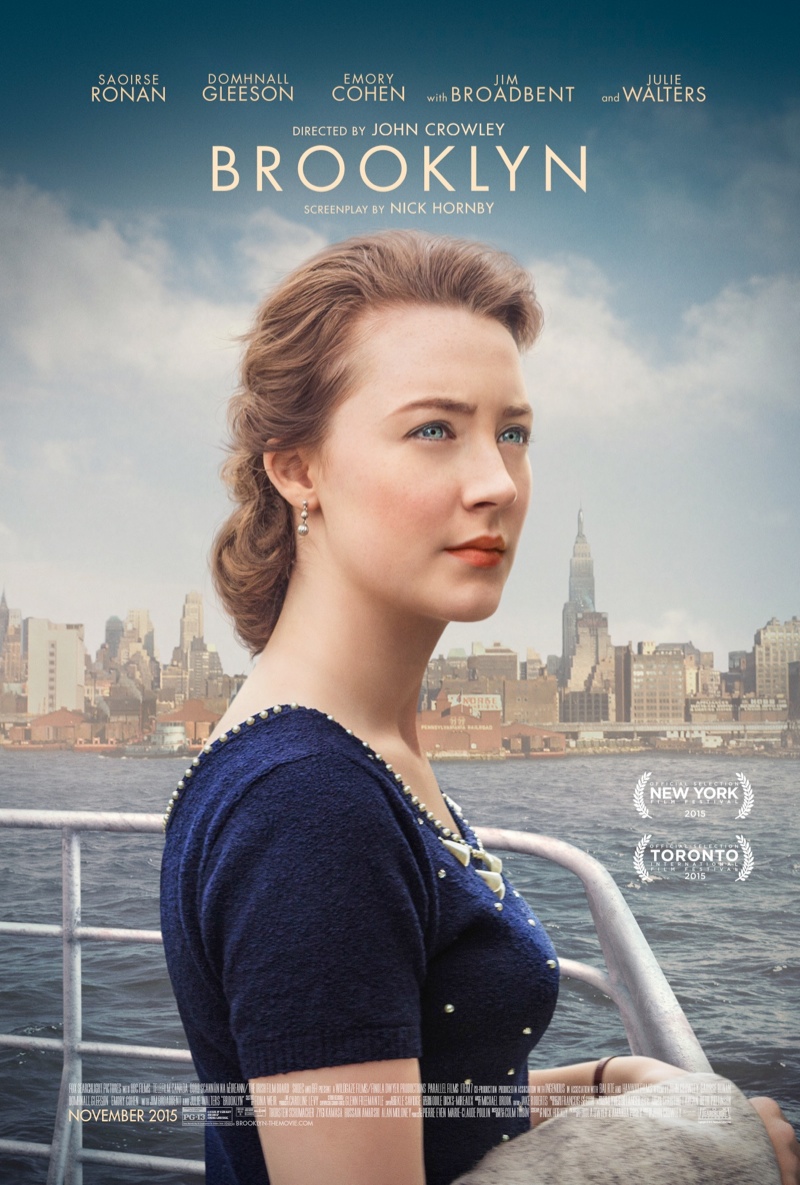
“Brooklyn,” based on the book by Colm Tóibín, is exquisitely lyrical, the story of a young woman who immigrates from Ireland to New York in 1952. She is sad, homesick, and lonely at first, then just as she begins to feel at home she is called back to Ireland.
Movies can show us monsters and aliens and explosions but none of that will ever have the quiet power of Saoirse Ronan in close-up. The breathtaking intimacy of being so close to her face, her sky-blue eyes, the lift of her chin, is a story in itself. For once, the Irish-raised actress is using her own accent, and the lilt of it is pure and poetic.
She plays Eilis (pronounced EYE-lish), who lives with her mother and sister Rose in a small town. Rose has helped her make arrangements with a priest in New York (Jim Broadbent) for an apartment and a job. Eilis loves her family. But she is stuck in a part-time job working for a shrew in a grocery store. Ireland in the post-WWII years has little to offer her by way of love or work. And so she takes a voyage. The reason she is the only one at dinner the first night out is revealed when she gets very, very sick. But a sympathetic roommate helps her through and advises her about how to pass muster at Ellis Island — to act like an American, which means looking confident.
Eilis moves into an all-Irish boarding house, owned by the formidable Mrs. Keough (Julie Walters), a sharp-eyed but not unkind woman who can tell the difference between the simpering giggles of the other girls and the shy but steady Eilis. Soon Eilis is working at a department store, where the complexities of the transactions (payment sent to a central location via vacuum tube) and inventory are not as challenging as learning to chat pleasantly with the customers. It is an amusing change from the store in Ireland, where the owner barked at someone for wanting shoe polish on a Sunday, and “Mad Men’s” Jessica Paré is excellent as the manager.
Eilis slowly begins to feel at home. Ronan’s performance is precise and sensitive. She shows, not tells us how Eilis begins to bloom through taking some bookkeeping classes and meeting a nice guy, an Italian boy named Tony (the piercingly sweet Emory Cohen). There is believable magic in their sweetly developing relationship.
And then, there is a tragedy at home and Eilis has to go back to Ireland. But is that her home anymore? Can she fit into her old place? Does she want to?
Director John Crowley is a careful observer, and every moment rewards careful observation from us. A yawn in church. The faces of the people at the dock saying goodbye to their emigrating family members. The look on Eilis’ face as she struggles to tell Tony how she feels — it is a wonder, and one of the year’s best films.
Parents should know that this film includes a non-explicit sexual situation, sexual references, some strong language, and a sad death.
Family discussion: Did Eilis make the right choice? Why or why not? Who was most helpful to her?
If you like this, try: “In America,” another story of Irish immigrants in New York