Trailer: Oscar Winner Eddie Redmayne in “The Danish Girl”
Posted on September 1, 2015 at 11:05 am
Eddie Redmayne and Alicia Vikander star in “The Danish Girl,” directed by Tom Hooper (“The King’s Speech”). It is the true story of transgender pioneer Lili Elbe and the artist Gerda Wegener who was first his wife and then her partner and advocate.
Opening this Week: A Walk in the Woods and Learning to Drive
Posted on August 31, 2015 at 3:15 pm
Copyright 2015 Broad Green Pictures
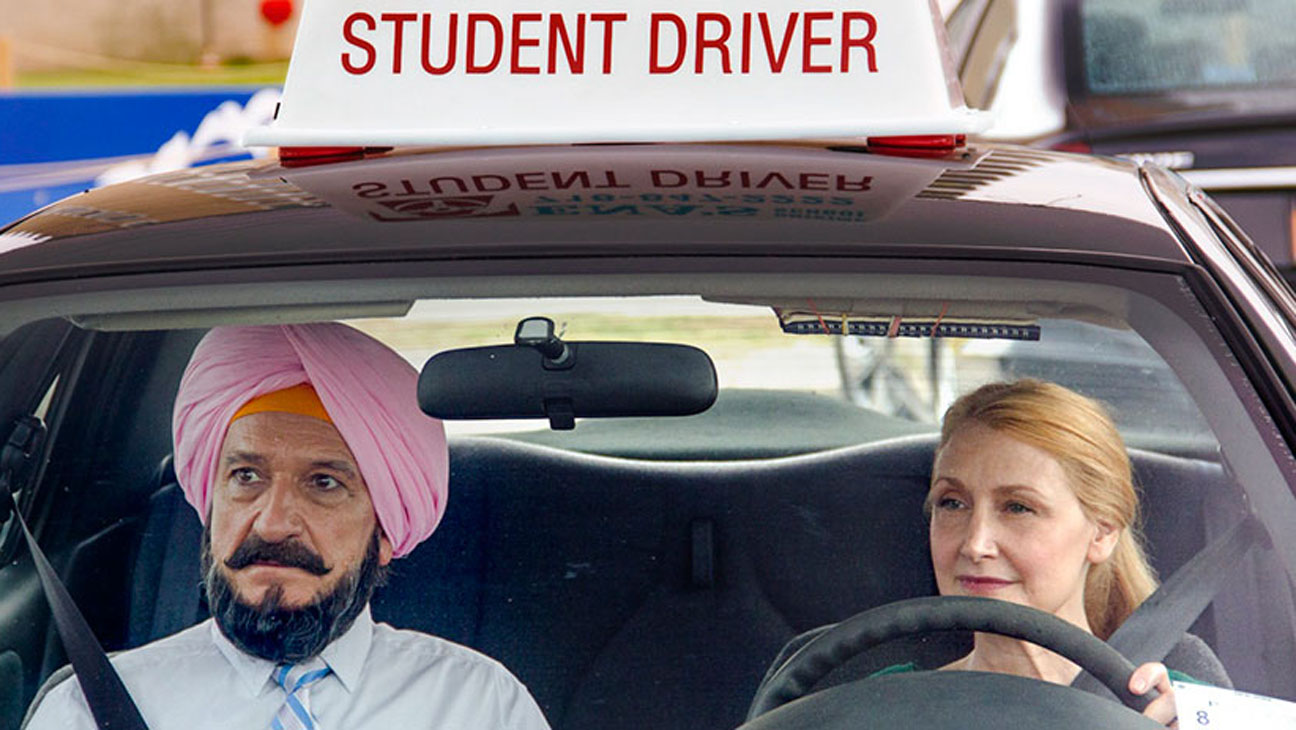
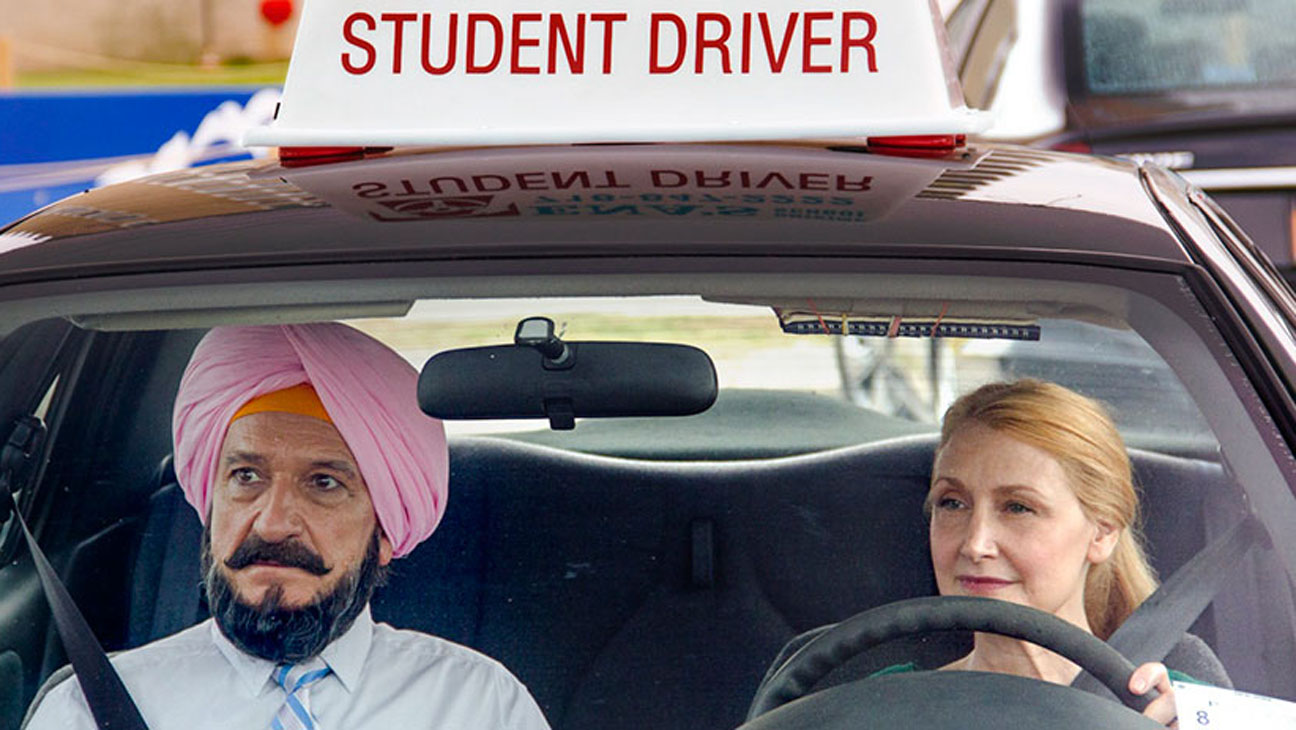
This week, two movies are based on first-person accounts by writers telling their own real-life stories. In The New Yorker, Katha Pollitt wrote about getting her first driver’s license in her 50’s, after her partner of seven years left her for another woman. When her driving instructor tried to teach her to pay attention to what was going on around her, it felt like a metaphor for the warning signs she had missed about her relationship. The film is “Learning to Drive,” starring Patricia Clarkson and Sir Ben Kingsley. Some of the details were changed, including the ethnicity of the instructor and the duration of the relationship.
Copyright 2015 Route One Films
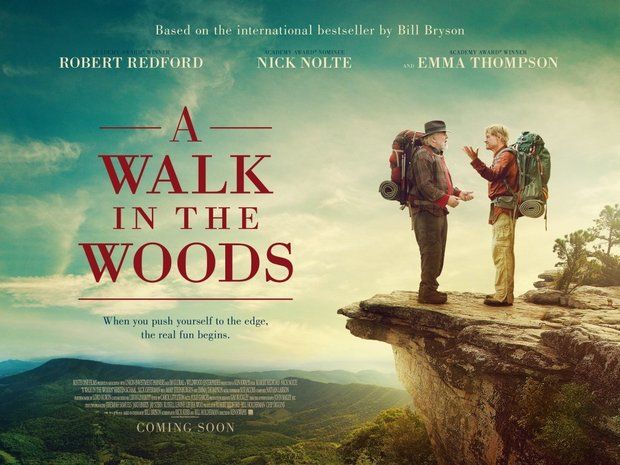
One detail that was changed in “A Walk in the Woods” was the age of the protagonists. When Bill Bryson and his irascible childhood friend Katz hiked the Appalachian Trail in the 1990’s, they were 44 years old. In the movie, Bryson is played by Robert Redford, who will be 80 next year, and Katz is played by Nick Nolte, who is 74. Bryson’s wife is played by 56-year-old Emma Thompson, who is supposed to be his contemporary. While some of the characters and incidents are lifted straight from the book, especially the very funny character played by Kristen Schaal, there are also some important changes. But the biggest is the “this is our last chance at a grand adventure” theme, just because the characters are played by septuagenarians.
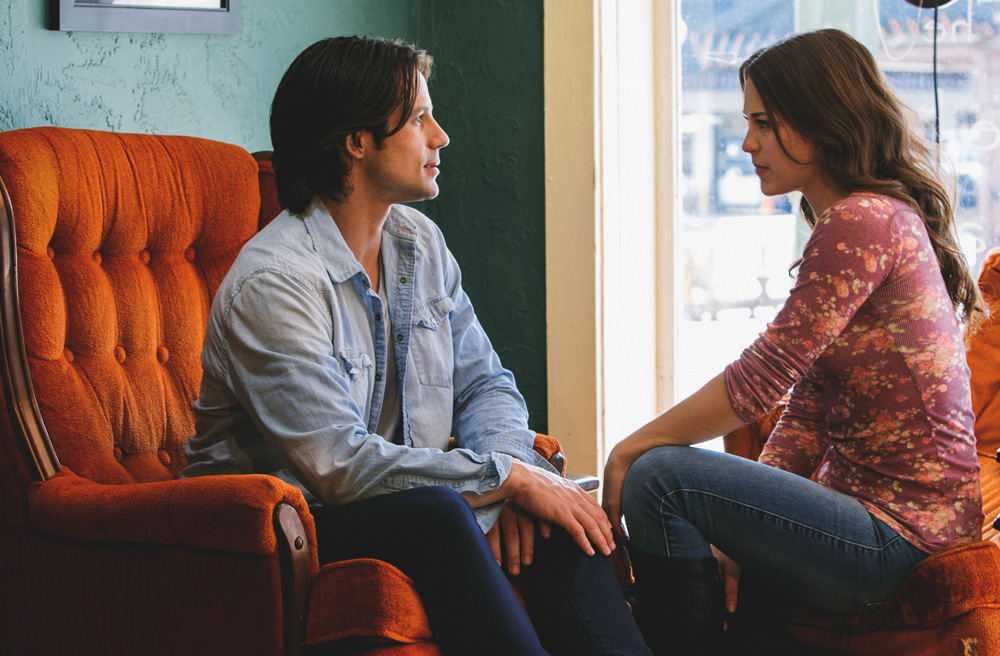
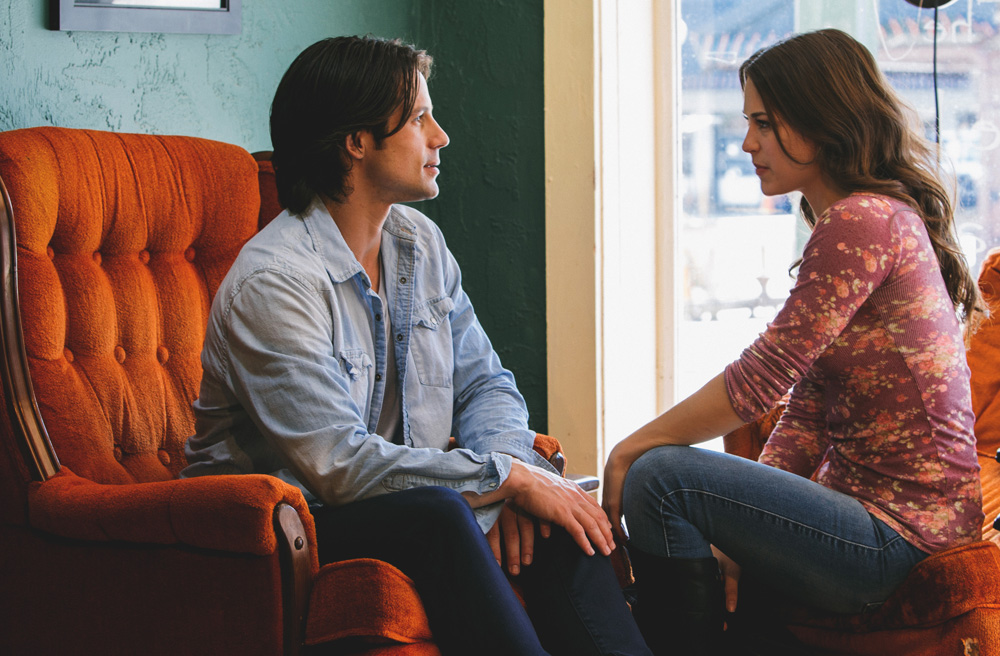
Rachel Hendrix plays Mac in the faith-based romantic film “77 Chances.” It’s a “Groundhog Day”-style story about a young man who feels lost after the death of his mother. He meets a pretty girl and they have a wonderful evening together until a tragic accident. He keeps repeating the same day, 77 times, until he can figure out a way to keep her safe.
I can’t think of a bigger challenge for an actor than essentially doing the same scene so many different ways. Tell me a little bit about how you kept that straight.
They paid somebody to keep that straight so I don’t have to worry about it. The writer Tracy Trost, who also directed, did a good job of showing how every day can be different if you make different choices. And so it was really fun to see how he examined that and how no matter what, never do you more than once have the same day which was interesting. It kind of makes you think about how you live your life and the little nuanced things that we do to affect the people we encounter. It was challenging because you are in the same clothes and you don’t really get a lot of exploration with your character as things happen over time, but you do get to explore your character in different scenarios and that was different. I’ve never done anything like that before.
In the scene where you have your first conversation while you are standing in line to get lunch, your character reacted very differently to different overtures that he tried each day.
I think in the beginning she’s curious about this guy. She wants to know who he is and what he is doing and what his story is and so she is kind of initiating a conversation. I guess you would call that a move. And you see him respond to that in very kind of awkward he doesn’t know what to do with it kind of way. But I feel like it was a realistic depiction of what a first conversation might look like in a scenario like that and it was neat to let that be warm and friendly and natural and organic and see how we messed it up so often when he tried to repeat it. And I think that’s a big statement on humanity in general when we try to force something or we try to be artificial or re-create something that’s already been created, it often times surprises us how far away we are from that, how it’s not really possible to re-create it. So that was fun to kind of jump into that first. We shot all of those pieces all on the same night so that was a really repetitive night but a whole lot of fun and we did that scene first before all of the other ones in sequential order which you typically don’t do on film. It was fun. It was kind of fun to be thrust into – hey this is what the relationship could be like if you didn’t keep messing it up.
One of the scenes that is very affecting in the film is when your character talks about the broach. Do you have a memento like that that’s very meaningful to you?
If I had to grab one thing because my house was burning down, it would be my journal for sure. I don’t think I’ve got a memento or like an actual physical object that was given to me. Other than right now, I am wearing a necklace that somebody gave to me that says “brave” on it and I love it. It’s probably one of the only things that I have that is like a tangible object that I have held on to. But in terms of the value of the written word and the recording of history or recording of stories, experiences, that’s something I would always go back to as a memento for life, my life. So I created them myself, they haven’t been given to me. All the stories were given to me by other people and all my experiences were given to me by other people so I guess that kind of counts.
How did you come to this movie?
I was reading over the script and it looked like a really great story. And I think what attracted me the most to the opportunity was that this is would be like a student film shooting at a university. The the students were all part of a program where they were required to jump right in and crew a professional movie with little to no experience. Really the only experience they have is what they are learning in their classrooms. So it was an opportunity to come in and offer up whatever I could in terms of my experience or my education in acting, which is limited, but to really just like reach out and teach which is something I don’t do very often but I enjoy. So we worked it out and I flew out.
Did you enjoy having a part that was lighter in tone than your previous work?
I enjoyed that and I think I told someone soon after I finished shooting that that was the most natural casting to who I really am of anything that I have done and it was easy because of that. And I enjoyed it just kind of playing myself, not afraid to be vulnerable but kind of hesitant with a new person, somebody with a story, somebody with a painful back history. And it was really enjoyable to explore that with the character that is opposite that. And Andrew Cheney did a fantastic job. He was really magnetic and just easy to spend time with on screen. I so appreciated his energy and his work. I enjoyed working with him and I hope he took away something as well from just hanging out with me and how much I was like that character. And I think the students being on set every day, being sponges and willing to go the extra mile to serve and do great work because their degree depended on it. It was quite surprising how much I enjoyed that, that whole thing just felt really like home and it just continued affirming for me that this is what I want to do and every film I have done since then has just reiterated that.
What is it that really captured you about acting?
I think it boils down to the possibility of when you are an actor, you’re trying to tell a powerful story. You have an opportunity to reach a broad audience, to touch a broad audience, to inspire a broad audience, to have an audience empathize with what you are feeling. That is one thing that cinema does which is so beautiful, is the human experience that happens when a person is sitting in a chair watching another person on screen in empathy. It can invoke empathy and I can’t think of a lot of tools of the pillars of our country, the pillars, the things that this world stands on other than art media, film being in that category that really move people to empathy. If you want to have influence that make people feel, you get involved in the arts. A
You studied photography in college. What did that teach you about being on the other side of the camera?
Being on the other side of camera has taught me a lot. It has taught me a lot about lights and not just the technical aspect of the camera but what ultimately the camera is used for; to frame something, to tell a story or to capture a beautiful image or to paint something with light. I really think that the two inform each other and by having had so much experience behind the camera, that might be why it was easy for me in my first short film to just stand there and be myself and not act, not do anything, just be. Hopefully that is what acting is, it’s just being and listening and responding. So it’s been very helpful and I continue to learn photography. I think I always will. And I will always have my camera with me, I will always bring it with me. It’s just a part of what I do, it’s part of my process and I have enjoyed the freedom to return to it in between when the acting jobs that are coming and going but it’s always a part of seeing it. I do feel like they inform each other in a way that grows me wherever I am behind or in front.
Do you have a favorite Bible verse?
I have so many. This is not my favorite but it is one that I really like. “Do not forget to entertain strangers for by doing so you may have entertained angels without knowing it.”
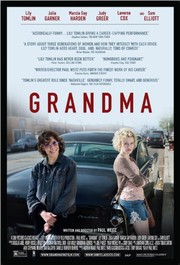
Lily Tomlin is cranky, feisty, tough, and utterly irresistible in this story of a grandmother who has to visit past decisions about her own life in order to help her teenage granddaughter. Tomlin plays the aptly named Elle (French for “she”), a feminist poet. Her work is respected and influential but that has not translated into financial stability. She has recently cut up her credit cards and made a wind chime out of them.
As we first see her, she is dumping her much younger girlfriend, Olivia (Judy Greer). No “it’s not you; it’s me.” No, “I’ll always remember the good times.” No lyrical meditations on love and loss. Not even any arguments or accusations. Just “It’s over. Leave.”
And then Elle’s granddaughter arrives. Her name is Sage (Julia Garner), and she has a head of fuzzy, soft curls that make her look like a dandelion. She is young and vulnerable but determined. She needs help, and it is clear that she would not be there if she had any other option. She is scheduled to have an abortion that afternoon, but she needs $630. And so Grandma and Sage set off in Elle’s clunker of a car, making desperate visits to people who might be able to help them. So we see a series of encounters, sad, angry, poignant, romantic, score-settling, each impeccably performed by an outstanding cast of actors in small scenes with deepening impact. We learn more about Elle’s life, the wrenching loss she is still mourning, the kindness and unkindness she has shown, and the way she has and has not dealt with the consequences. Standouts include Nat Wolff (“Paper Towns”) as the father, Laverne Cox as a sympathetic tattoo artist, Marcia Gay Harden as Elle’s brisk businesswoman daughter, and Sam Elliott as Elle’s ex.
Writer/director Paul Weitz (“About a Boy”) has taken a story that could be a parody of the worst nightmares of Fox News fans and made it into a very human story of love, loss, and overcoming the fear of intimacy. It is about the families we create and the perfect love we must feel for imperfect people.
Parents should know that this film has very strong and crude language, drinking, drugs, teen pregnancy, and extended discussion of abortion.
Family discussion: Why does Elle break up with Olivia? Why don’t Elle and her daughter get along? Why is the film called “Grandma” and not “Elle” or “Elle and Sage?”
Copyright Warner Brothers 2015
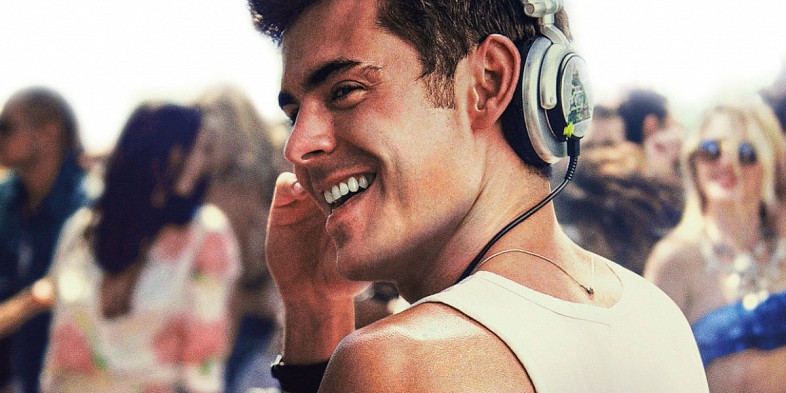
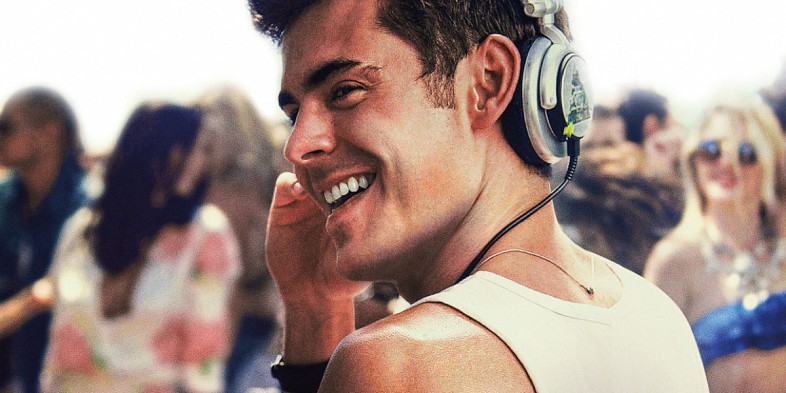
Director Max Joseph brings some of the “Catfish” sensibility to “We Are Your Friends,” with an intimate, documentary feel and a storyline about people in their 20’s who have big dreams but not much understanding about how to achieve them or even about the nature of their relationships. Joseph is the quieter co-host of “Catfish,” the MTV series sequel to the film that added its name to the lexicon, meaning an online relationship with someone who is not as described or presented. In “We Are Your Friends” (named for the Justice vs. Simian song) four bros hang out together, trashing each other and everyone else, promoting parties, enjoying easy access to drugs and girls, and reassuring each other that fame and fortune lies ahead. They feel like besties, but it’s just inertia and a shared fear of moving forward. In reality, they are very different.
Cole (Zac Efron) is a talented DJ who knows how to combine “the rhythm of a caveman” with a kickin’ bass line to “get the crowd out of their heads and into their bodies.” His pals are hot-tempered Mason (Jonny Weston), low-key drug dealer and aspiring actor Ollie (Shiloh Fernandez) and quiet but thoughtful Squirrel (Alex Shaffer of “Win Win”). They get jobs facilitating real estate deals (calling people in foreclosure) for a wealthy businessman (Jon Bernthal, all rough charm and menace in an excellent performance). And Cole meets James (Wes Bentley with Wolverine-style facial hair), a big shot DJ who has performed all over the world and who has a girlfriend/assistant named Sophie who looks like a Sports Illustrated swimsuit model, because she is played by Emily Ratajkowski, who is one. Ratajkowski was better in “Gone Girl.” Here she does more posing than acting.
There’s nothing wrong with a coming of age story about a young person with a strong creative drive who needs to learn to develop a singular voice, and Efron is, as always, an appealing actor. But too much of it seems borrowed from other films and the situations and settings (San Fernando Valley, aimless young men who party too much and wear their pants too low, the empty and foreclosed houses and predators who flip them) are washed out and played out. The big lesson for Cole is learning to develop a distinctive sound. But the scene where the scales fall from his eyes — or ears — so that he begins incorporating the sounds around him like that wacky carriage ride scene in “The Great Waltz” is just silly. It never persuades us that EDM is anything but derivative, mostly because the movie is, too.
Parents should know that this film has a lot of adult material including very strong language, crude sexual references and situations, nudity, drinking, smoking, extended drug use and drug dealing including marijuana, PCP, ecstasy, and cocaine, a fatal overdose, and a painful scene of foreclosure.
Family discussion: Why did Squirrel say the best part was before the evening began? What did James mean about the meaning of the word “irreparable?”
If you like this, try: “Magic Mike” and “Echo Park”