
Trailer — The Hobbit: The Desolation of Smaug
Posted on October 3, 2013 at 1:27 pm
Posted on October 3, 2013 at 1:27 pm
Posted on October 2, 2013 at 8:00 am
I’m in Love With a Church Girl is inspired by the true story of writer/director Galley Molina. It stars Ja Rule, Stephen Baldwin, T-Bone, and Michael Madsen, and will be in theaters on October 18. I enjoyed speaking to Galley about what inspired him to make this film.
You wrote this story while you were in prison, I understand?
I had started writing mostly as an escape so it was unintended. I would write so much, kind of like a release. When I was writing, I could feel the leather in your car and smell your food, your favorite food, so I just started writing these stories. And as I started writing and it started coming together, I realized I had a lot of friends who would read them inside. They’d be like “hey man, this is really cool, man” and it got to the point where a lot of the inmates were like, “Hey you gotta go read these stories, man, they’re cool.” When the Church Girl story was done I had some real good friends ‘cause I I was serving while serving time so to speak while I was in the chapel – and a lot of the guys would say, “I want to meet a church girl,” or “Is this really true?” So it just became one of those things where you got to minister, you got to share, you got to inspire, you got to release at the same time. So that’s kinda how it started. My intent was just to possibly publish some books when I got home, but it turned into obviously more than that – it turned into a movie and the rest as they say is history.
How do you bring your faith onto a movie set and keep everybody on the same message?
I believe that you can’t just talk about it; you got to be about it. We had a really blessed set I will say, most of the time, I hear stories now ‘cause I talk to a lot of producers and filmmakers now and there’re like, “Ah man I had this story and I had that story” and they were all these nightmares. If you watch the youtube videos, or if you go to the website and you watch some of the behind the scenes videos, you’ll see our first day on the set. And I opened up in prayer. And obviously, we can’t assume that everybody’s a Christian or that everyone believes in God or that there’s not any other type of faiths on the set. So I prefaced by saying, “Hey this is a faith based film, we’re honoring God, we’re going to pray to God, I don’t want to offend anybody but this is what it is.” And so, aside from that, it’s no different than your daily walk. I don’t want anybody to see me saying this and doing that or think I fear who’s watching me. Or who I don’t think is watching me. It’s the same way on set. The spirit was definitely present on the set because we didn’t really have any situations through the whole thing so I guess to answer your question; it’s just that we’re not any different on set than we are at church.
Even though this is a fictional story, some elements of it are based on your life right?
I had to be careful how I said those things, moving forward as my lawyer was telling me, “Hey, you can’t say this is based on your life but you can say loosely based.” There are a lot of similarities – a lot of the story is true – some of it’s not true. The things that I felt needed to be changed in the story — we just got our rating yesterday for the film and it’s a PG, not PG 13. I think we didn’t need to show certain things. There’s no cursing in this film. There’s no violence, not any heavy violence, no sex scenes – nothing like that. I didn’t need to tell a lot of those things or show a lot of those things, you could just kinda say things without having to say them. When you see these people on the screen, you’ll be like, ‘oh these are some very serious individuals’ or you assume that what they are doing is wrong. But yes, for the most part, this is based on my life and the love story part and the tainted past and going to church, so yeah I’d say it’s very loosely based on my life.
So how do you go about casting somebody who will essentially to play you?
Good question, you know it’s funny when we were casting this film, I went out to Hollywood actors, like real legitimate actors, went through the real agencies with real offers, we spent a lot of money on this film, we spent millions of dollars on this film. We didn’t go out like a lot of films, and even a lot of films in our genre with very limited resources and limited budgets and try to create something that we didn’t have the resources or budget to do. So when I went after real Hollywood talent, I shone the light I guess you can say, they didn’t take it seriously or when they saw the word “church” in the title they were not going to stereotype or type cast an actor into a church film. So that was hard. They didn’t even want to read the script. So we re-grouped and God – there’s a story in the Bible that says go to your cupboard and bring me your jars, and basically what it means is everything you need is inside your house right now. My relationships over the years have been embedded in the media industry and a lot of it was in music, so if you notice, a lot of the cast, they’re musicians, they’re rappers, they’re singers, T-bone, and Ja Rule and AJ and so it just ended up being that way. And then to try to find a pool of talent that can really act, there’s not this huge Christian pool of talent out there, or at least that are admint, “Yes I’m a Christian actor” or “I’m an actor and I’m Christian,” so I couldn’t put a Yankee hat on Kirk Cameron and say, “Hey man I need you to play Miles Montego,” that just isn’t gonna work. And they all did such an amazing job and we’re really excited to see peoples’ reaction when they see Ja Rule act in this film.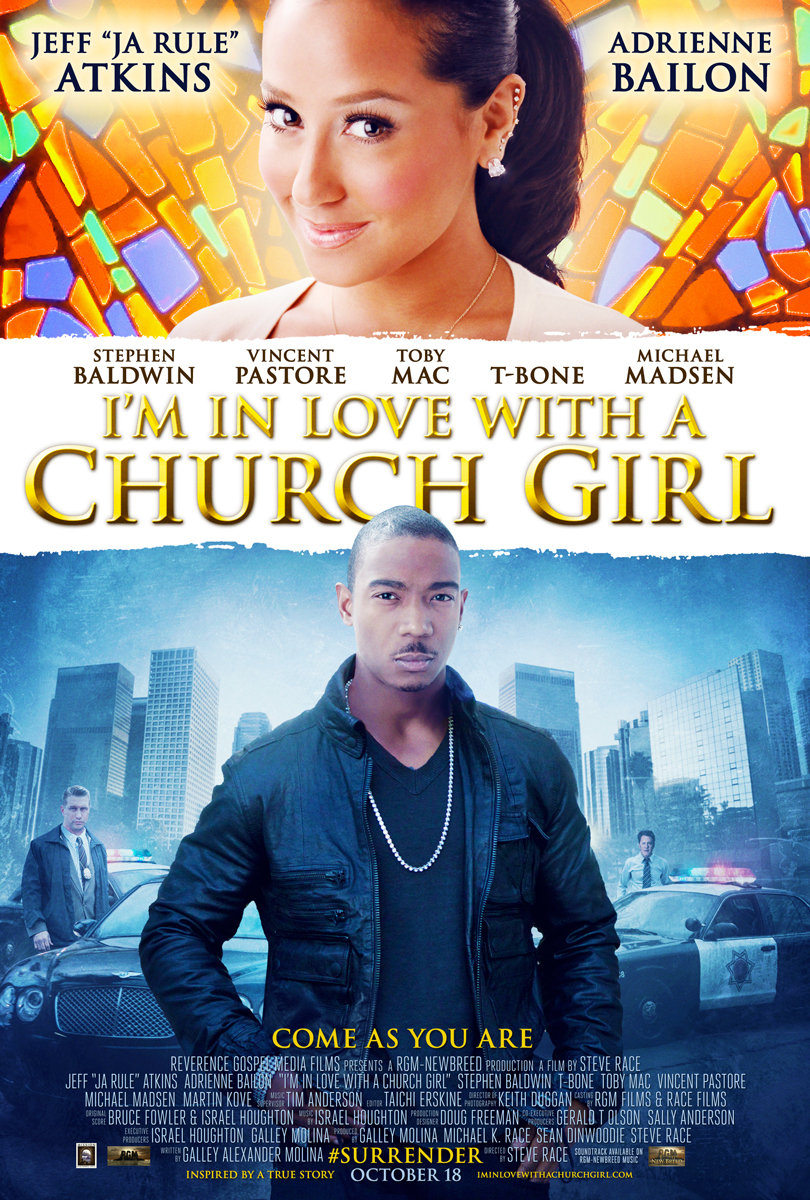
I have a theory that musicians in general can do very well in acting because you’re telling a story with a song. And also a lot of acting has to do with sense of rhythm and timing and I think that is something they understand.
You’re 100 percent right. I never really heard it put that way. I’ve always looked at it as for example, rappers, why do rappers get on the road? They are very passionate people. They are really passionate people and acting is passion. And like you say, they know how to memorize lines because they memorize songs and to hear it that way is great. It’s telling a story in a different way so that I totally agree with you.
What is it about movies and music that communicates so powerfully with people?
I think first of all, they are the biggest platforms in the world; television, film and music. It’s global; I mean it’s even bigger than a book. Obviously a full feature film – everybody goes to a movie or ends up seeing a movie on television, everybody can hear a record on the internet or their iPod or on the radio. I think that’s how we communicate these days – that’s how trends are set – that’s how news is relayed from one side of the world to the other, so at the end of the day, it comes down to it is the biggest platform in the world – is the media – and second of all, that’s why I think – and to answer your question- we have to be very responsible in how we use it. Now can you say… imagine if the apostles had jets or internet. How fast would the Word have spread?
Can you imagine that because –think about it- these guys with Jesus – Jesus only walked a certain portion of the earth – he didn’t walk the around the world, he didn’t walk on all the continents so if they had been able to get on a jet or send a text over to the next country – the Word would have spread that much faster. So, us as musicians as filmmakers, as producers and directors, labels, CEO’s – we need to make sure that when we’re using these platforms that we are being responsible. As Christians we need to make sure we’re Christ honoring and not pound people over the head with it. But just be responsible with it and try to entertain at the same time. And so I think everyone is always going to be drawn to the movies. Like Israel Houghton said, you may not be able to get someone to go to church with you, but you can definitely get them to go to the movies with you.
I think that’s it right there. And what are you going to do next?
We’re gearing up for the next two films – we’re gearing up for one that’s called the The Promise, and it’s based on a song Shout to the Lord by Darling Chet and next will be a couple of scripts which I co-wrote which has been really fun. We’re doing the story of Job – a modern day man but we’re calling it Boj- we’re spelling it backwards – which is really cool. That story wrote itself in today’s time. It wasn’t a hard reach for that script. But I will say that these next couple of films will be very epic. We’re bringing in the same director who did Church Girl, a lot of the same team. These movies are going to be very epic in the sense there’s nothing really urban about these films as it was on Church Girl. A-list actors. Faith-based films have never been done like what we’re planning. I believe we raised the bar with Church Girl, as far as production level. You can see just by the trailers the quality of this film. Not talking about the content, just the production of the film could be put up against any Universal Lionsgate film. We use the same cameras, the same crews, the same lighting and all that type of stuff same as Union films, WGA, SAG but these two films man are gonna be real epic, meaning proportion, twice the budget. And we can spend 10 million dollars like Hollywood spends 25 million, the same way we did Church Girl. It’s about being good stewards with it and so we’re excited. Those are the next two films, Israel and I are partners now, everything that we do – we merge our companies together. We did this last record together, the G Step 7 record which is an amazing record. I think it will be a staple in the church for a long time to come. We won a Grammy on that record this year. We’re gearing up for a couple of more records, we released that “Darling Chet” record, we’re doing Bible study curriculums. RGM stands for Reverence God and Media, which means that any form of media that we can put our hands, our thoughts and our hearts to – to spread the Gospel – that’s what we’re gonna do. So definitely in the next two films, we start pre-production real soon here – and the next couple of months will be the next couple of more records and one of the things that I think I’m really excited about to be honest, is a television show that we’re developing as a sitcom. It’s a faith based sitcom, it won’t feel so faith based, but it is from front to back. We’re in the mists of developing that now for network. So that’s going to be one of our fun baby projects ‘cause it’s coming together.
Posted on October 1, 2013 at 3:59 pm
Remember Harold the Merman? No, you don’t, because he was dropped from “The Little Mermaid.” But you can see why writer/directors Ron Clements and John Musker were so devoted to him in one of the delicious extras on this week’s Pick of the Week, The Little Mermaid
Posted on October 1, 2013 at 8:00 am
DreamWorks Pictures’ “Need for Speed” is a return to the great car culture films of the 1960’s and 70’s, when the authenticity of the world brought a new level of intensity to the action on-screen. Tapping into what makes the American myth of the open road so appealing, the story chronicles a near-impossible cross-country journey for our heroes — one which begins as a mission for revenge, but proves to be one of redemption. Based on the most successful racing video game franchise ever with over 140 million copies sold, “Need for Speed” captures the freedom and excitement of the game in a real-world setting, while bringing to life the passion for the road that has made our love of cars so timeless.
The film centers around Tobey Marshall (Aaron Paul), a blue-collar mechanic who races muscle-cars on the side in an unsanctioned street-racing circuit. Struggling to keep his family-owned garage afloat, he reluctantly partners with the wealthy and arrogant ex-NASCAR driver Dino Brewster (Dominic Cooper). But just as a major sale to car broker Julia Bonet (Imogen Poots) looks like it will save Tobey’s shop, a disastrous race allows Dino to frame Tobey for a crime he didn’t commit, sending Tobey to prison while Dino expands his business out west.
Posted on September 30, 2013 at 3:59 pm
After Walt Disney died, the studio he founded faltered, especially Disney animation. Following the powerhouse classics like “Peter Pan,” “Dumbo,” and “The Jungle Book” (the last animated film Walt Disney supervised personally), the animation division became mired in struggles that produced disappointments like “The Black Cauldron.” The documentary Waking Sleeping Beauty
Tell me how you first started working on this movie, because this was a big transitional moment for Disney animation.
RC: Well, I actually pitched the movie. This was around I think 1985. \I’m bad with dates but this was period of shortly after those kind of a big transition at Disney. Mike Eisner and Roy Disney and Jeffrey Katzenberg came. Roy Disney came back to Disney. He had left for a while. Michael had this thing called “Gong Show.” He’d come over from Paramount Studios. I guess they had that there. It was a way for generating new ideas for animated films or for any films. But in this case, animated films. So he got a group of story people and the directors together in a room. The idea was that everyone was supposed to go out and find five new ideas for animated features. Then, we would meet again in 2 weeks and pitch the ideas. They called it the “Gong Show” because if your idea was not good, it got a gong. So I took that very seriously and I looked for ideas. That same night I went into a bookstore in North Hollywood. I picked up a book of fairy tales, just kind of looking for ideas. I came across The Little Mermaid. I don’t know if I had ever read the story before so I was reading it on the bookstore. As I was reading it, I got really excited because Hans Christian Andersen writes very visually and very cinematically. The images just kind of leap off the page. I thought, “This could really make a great movie. I wonder why they’ve never done this.” Then, as I got through the story I realized maybe part of the reason is that it’s a very, very sad story. It kind of starts sad and then it gets sadder. Then she dies in the end.
So I was thinking about trying to come up with a way to put a little difference in the story so then it would have a little happier ending. I wanted to make the witch more of a villain than she was in the story and turn it into a little bit of more into a fairy tale. So I wrote up a two-page treatment with the basic idea. There’s only one character name in the treatment and that’s Ariel. I called her “Ariel” in the treatment. I’m not sure why but I sort of liked that name. Probably a good name for a mermaid. I also looked for four more ideas because they wanted five ideas. There were other ideas that I came with that I wrote two-page treatments for. But when we reconvened, he said, “Just pitch your best idea.” When they got to me, I said “The Little Mermaid.”
It was gonged.
Partly because Disney had “Splash.” They were working on a sequel to “Splash” which they never actually made. So they gonged it. But I gave them the treatment anyway and the other treatments. A couple days later, I got a call from Jeffrey Katzenberg. He went through the different treatments. Then, he said, “Michael and I looked at this ‘Little Mermaid’ thing and we think it’s really good. We want to do it. We want to put it into development,” which I was very excited about because I was really depressed when it got gonged.
One reason I love this movie is the traditional, hand-drawn animation.
JM: Growing up, I was always a fan of this animation. I drew my stuff. In college, I was a cartoonist at The Daily Northwestern. So I draw myself. I was an animator. But basically, I went to Northwestern to major in English, wound up in college for two years. Studied animation there. Came to Disney. My first week at Disney was the week that “Star Wars” came out. But anyway, I got to learn from Eric Larson, who’s one of the “Nine Old Men.” He was sort of the mentor for the younger animators. Literally, you would take your animation to him and he would take a piece of paper and draw, show you how you could improve the acting and the timing and the phrasing and staging and all that sort of stuff. It was really a craft that was passed on from one to the other. But as a kid, certainly, the Disney animated films seemed more vivid to me than a live action film.
There was something about the caricature element, I think not only are things sort of bigger and broader but you can get to the essence of things. So it really had a very strong appeal. I saw “Sleeping Beauty” when I was like 6 years old at the Mercury Theatre.
Then when I came to Disney I was in the company of these wonderful artists. People like Glen Keane, like Mark Henn, who were brilliant animators who could really bring these things to life. Watching it, it was a magical moment always when you see the first animation come to life, like when I saw the first animation on Ariel or on Sebastian or the Genie when we did Aladdin. It isn’t a drawing anymore. It’s a real character. You started treating them that way. Even the animators get protective with their characters. “My character wouldn’t do that.” “Sebastian wouldn’t do that.” They’re all grounded on recognizable human behavior identified through your reliability.
The medium with which you tell the story has evolved over the years. I love 3D animation. I love hand drawn animation. Certainly, the big compelling emotionally evolving stories, wonderfully done in 3D. I like Brad Bird and John Lasseter. But I still draw myself since I am fond of this kind of magic trick, where you can take all this expressiveness and power of drawing and add the element of performance and time. I do feel like animated films really combine a lot of different of art forms, film-making and writing and drawing and painting, to a certain extent even sculpting. It’s a wonderful medium to work with as a craftsman because it’s such so rich and so varied and so expressive.
One of my all-time favorite Disney villains is Ursula the sea-witch. So tell me about developing that character.
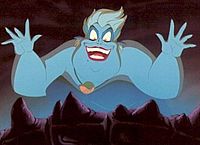 RC: She was really a fun character to develop. I think John and I had a lot of fun with her. We had met with Howard Ashman fairly early on. We talked about the songs. Mostly, about where they might go. We talked about the witch’s song. Howard always saw the witch as Joan Collins, the “Dynasty” villain. When we wrote the script, we actually were thinking Beatrice Arthur a little bit. Then, when we went to casting, we wanted to try to cast Beatrice Arthur. Actually, I don’t think we ever got past her agent. They were insulted that we were thinking of her as a witch. I don’t think that they liked the idea. Pat Carroll then actually auditioned for the role. She did a great job. She really was just right. So that all worked out really well. Also, the other thing about the character is we developed her. She didn’t start out being part squid or part octopus. Before that, we explored her as part manta ray and part fish. Then we saw a pretty simple drawing, putting Ursula on an octopus body with tentacles. That was like “Yeah, that’s it.” That’s right. We studied octopus footage just to see how they move. There was a very kind of seductive and yet scary aspect. It’s just the sinuous way they move. So it all kind of came together. John and I, we like villains. She was certainly fun to do.
And this movie also has one of my favorite Disney princes.
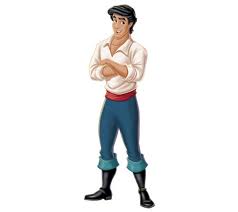 RC: I’m glad to hear you say that. I mean, because princes are tough. They are always tough. The toughest character to animate. That’s why in Snow White, you only see the prince at the very beginning of the movie and at the end of the movie. They’ve always kept the princes to a minimum. Same with Cinderella. Cinderella has a little better prince. But still, they’re hard to draw. They’re hard to animate. The acting is tough. A realistic girl is hard but guys are harder to do. Girls are more fun to draw. Guys are tough to draw. So it’s got to be a really good animator. Only the best animators really can do the prince. But it’s not the most fun character to animate. We really wanted him to be more of a character, more likeable and to get more of him. Even though, it’s a little bit of a kind of a thankless job. Even for the actors and the animators. It’s like it’s a tough job but somebody’s got to do it.
Tell me a little bit about the challenge of underwater scenes and what that’s like for animators.
RC: When we first proposed it, we knew that it was going to be really, really challenging. I mean, for a lot of reasons. But one of the big reasons is two-thirds of the movie takes place underwater. All that requires a lot of 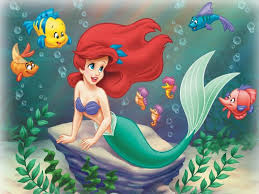 effects animation. We have two kinds of animation in these animated films. We have character animation, the artists who animate the characters. They’re kind of like actors. We always feel they are actors with a pencil. Glen Keane and Mark Henn did Ariel. That’s what they do. Then, we have effects animators. Effects animators do the non-character stuff that moves which is like water, waves, or bubbles. Or fire or smoke or light effects, anything that moves that isn’t the character. This probably had more character animation than any Disney movie project since “Fantasia.” And it really had a lot of effects, even with the character stuff — like whenever Ariel is underwater, her hair has to move all the time. Hair moving underwater is tricky. We had a lot of meetings about hair. One of the extras in the video is some of the live action footage that we shot for reference to see the hair floating.
JM: You need people who have to do all the bubbles and all the underwater patterns and all that. We had a budget and the schedule and everything so we really did have to pick our spots. Like “Here’s where the water is got to be, so it’s got to be the A level in this scene. In this other one, the water is not quite as important. This one is quick scene, we can kind of punch this one a little bit. But this one is got to be really the top of the line.”
The crazy thing is even to get the production level we want on the original film, we want some hand inking. They’ve gotten away from hand inking in fact, certainly. So we sent some of the bubbles in the movie actually to mainland China. They were inked in China.
Why does this story have such enduring appeal?
JM: You see at the heart of it, “The Little Mermaid” is the father-daughter story. It’s an overprotective father. There’s a daughter who is kind of adventurous and rebellious and wanting to see a new world. How do they resolve that? That story is still in place today.