Interview: Mike Disa of ‘Hoodwinked Too! Hood Vs. Evil’

Posted on April 27, 2011 at 12:43 pm

Director Mike Disa has a terrific piece in the Huffington Post about his new film, “Hoodwinked Too! Hood Vs. Evil,” with not one but two heroines who are strong, smart, brave, and compassionate.

Look at any recent animated movie. Despite sometimes clever plot devices, each of the main female characters’ primary concerns are always love, marriage and family issues. Overused and limiting themes for a modern heroine.  And that’s when the female characters are even focused upon at all. How many animated films have you seen where the female lead is little more than a cliché object for the hero to impress in the last reel? Face it, if you want to be a strong female character in animation you are better off as a mouse.

I had a wonderful talk with Disa about making the film.

Why, all these decades later, do animated girls seem stuck back in the days of Snow White singing “Someday my prince will come?”

Isn’t that amazing?  It’s been basically the same story model now for 90 years.  It’s flabbergasting to me.  I used to get in conversations about this when I worked at the big studios.  They’d say, “Well, it’s a fairy tale and that’s what fairy tales are about.”  I’d say, “Go read the original fairy tales!  There’s a lot of other stuff going on.  And we’re choosing to change this and that — why aren’t we choosing to change this part of it?”  The only honest answer I have for that question is that the people making the films are unwilling to look at women in a different light.  You can go on about fairy tales and animation and the patriarchal system that creates princesses and all that but I think it comes down to the people in films want to portray women like that.

Powerful women in films tend to be the bad guys — Ursula, Cruella DeVil, Maleficent.

There are powerful female heroes in animated films; they just aren’t human.  Did you ever see “The Rescuers?”  If you’re a mouse, you’ve got the potential to be a great character?  You’re likely to get pigeonholed into being about family or sexual identity or role — if you’re an attractive human female or anything female in a Pixar movie, with the possible exception of Jessie in the “Toy Story” movies.  And even she is played off as Woody’s counterpart.  It’s odd because a lot of these studios are so interested in pushing the boundary technically.  Why aren’t they so interested in telling more than the same old story over and over?

What is even more revolutionary in your film is that not only is the girl a heroine, but so is the grandmother!  And not only is she tough, but compassionate and forgiving as well.

I’m really glad you liked that because that was a part of the film I was pushing hard for as well.  Comments I have had about the Huffington Post article are like, “You don’t want to make love stories anymore?”  Of course I want to make love stories!  This is a love story.  It is about the love between dear old friends who have lost each other along the way because of the choices they have made, about the love of a grandmother and granddaughter.  It’s very much a classic love story.  Love is about more than dating.

http://www.youtube.com/watch?v=azVIjdXOsQc

I was so glad Patrick Warburton returned as Wolf.  No one can nail dry, understated wit the way he does.

He is amazing.  He was an absolute superstar.  He would show up after a day of shooting his live-action series, exhausted after a 15-hour day on the set.  (I can’t believe I just said “live-action.”  It shows I live in he animation world.  I’m like — “live action, it’s a little niche thing, don’t know if you’ve heard of it.”)

Not only would Patrick give an incredible performance but he would try alternatives, a different word choice or , he never quit.  You don’t need to direct him.  He’s got a fantastic ear.  You play it back and he’ll hear the same thing I hear, and say, “Let’s do it again.”  He’s a marvel to work with.  It’s such a joy to have people come in and not treat it differently because it is animation.  Every word he wants to be perfect, to work for the character, to fit the lip-synch, to reflect the subtext of the relationships and the rhythms of the other characters.

I’ve seen animation directors who are just: “Go faster.  Go slower.  Be angry.”  That’s such a waste if you have an actor like Patrick who plays subtext and comedy and rhythm.  If it’s appropriate, he’ll give you the funny line reading.  But then he will give you such true heart and emotion, until you get these great little moments.  There are some great moments where Wolf gets very introspective.  A lesser actor would have gone for the laugh.  You see that in animated films all the time.  We got some real emotion — he’s an incredibly talented guy.  I’m gushing, but he was just a revelation.  And he and Wayne Newton are two of the nicest people I’ve ever met in show business.

I wanted to ask you about the Wayne Newton character!  Is his singing harp inspired by “Mickey and the Beanstalk?”

He was influenced by it.  I grew up with that movie.  It’s spectacular.  But that comes to a larger point.  Everything in this movie is working on two different levels, and that is one of the things I like about it.  The movie respects its audience enough that it knows you’ve seen other versions of these fairy tales.  What we can do is subtly play with your expectations.  What was a huge part of the film was knowing that everyone would immediately think of the most popular version of the story.  So our beanstalk was made of cast iron and aluminum because I wanted something reminiscent of that wonderful organic Disney beanstalk but I wanted something completely different.  The same with the singing harp.  We need to nod to the classics but we need to twist it. The nightclub is based on the classic old Hollywood place where the great singers and performers played in the 1940’s before Las Vegas got big.  If you’ve seen any of the movies or places we refer to, it adds another layer.  But if you haven’t, it still works.


Related Tags:


3D Animation Directors Interview
Tikki-Tikki-Tembo…

Tikki-Tikki-Tembo…

Posted on April 25, 2011 at 8:00 am

A
Lowest Recommended Age: All Ages
MPAA Rating: Not Rated
Profanity: None
Alcohol/ Drugs: None
Violence/ Scariness: Mild peril
Diversity Issues: A theme of the DVD
Date Released to Theaters: NA
Date Released to DVD: April 26, 2011
Amazon.com ASIN: B004HJ0ZM8

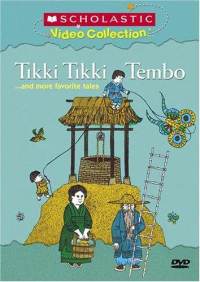
The DVD pick of the week is Tikki-Tikki-Tembo and More Stories of Asian Heritage, another from my very favorite series for young children and their families. This one arrives in time for May’s celebration of Asian Heritage Month in May, with some of the all-time greatest children’s classics, gorgeously illustrated and gently animated to encourage young readers. The title story is about a boy with a very, very long name — quite a problem when he falls down a well and someone has to get him some help.


The Tale of the Mandarin Ducks (Written by Katherine Paterson, illustrated by Leo & Diane Dillon, narrated by B. D. Wong) A compassionate couple risks their lives to reunite a pair of Mandarin ducks.

Grandfather’s Journey (Written and illustrated by Allen Say, narrated by B. D. Wong) A touching story about Grandfather’s travels from Japan to the United States and back again.

The Stonecutter (Written and illustrated by Gerald McDermott) Tasaku is a lowly stonecutter who longs for more power in this Japanese folk tale.

Lon Po Po: A Red-Riding Hood Story from China (Written and illustrated by Ed Young, narrated by B. D. Wong) This Asian version of the classic fairytale brings lessons about strangers, trust, and courage.

Sam and the Lucky Money (Written by Karen Chinn, illustrated by Cornelius Van Wright and Ying-Hwa Hu, narrated by Ming-Na Wen) On Chinese New Year Sam meets a stranger who helps him make the perfect decision on how to spend his lucky money.

Related Tags:


Animation Based on a book DVD/Blu-Ray Pick of the Week Early Readers Elementary School Movie Mom’s Top Picks for Families Preschoolers

Happy Birthday, William Shakespeare!

Posted on April 23, 2011 at 12:29 pm

Don’t start with me about who wrote Shakespeare.  Shakespeare wrote Shakespeare and today is his birthday.  Celebrate with some of the many, many movie versions of, about, or inspired by his plays.  Here are some of my favorites:

1. The Taming of the Shrew Elizabeth Taylor and Richard Burton bring their legendary combustible chemistry to this rambunctious version of Shakespeare’s most famous battle of the sexes.  For an extra treat, pair it with the Cole Porter musical it inspired, Kiss Me Kate.

http://www.youtube.com/watch?v=c9Cm6CU5Kc4

2. Romeo + Juliet Baz Lurhmann’s dazzling version of one of the world’s great tragic love stories is a treat for the eyes, ears, and soul.  For an extra treat, pair it with the more traditional version directed by Franco Zeffirelli.

3.  Shakespeare In Love This best-picture and best-actress Oscar winner is a highly fictionalized account of the writing of “Romeo and Juliet,” with the magnificent Judi Dench as Queen Elizabeth and a brilliantly witty script by Marc Norman and Tom Stoppard.  For an extra treat, try to catch a performance of  A Cry of Players, a play about the young Shakespeare by the author of “The Miracle Worker.”

http://www.youtube.com/watch?v=IUIemfeB_uI

4. Henry V There is the thrill of the St. Crispian’s Day speech.  There is the heart-wrenching parting with the old friends who cannot be a part of the young king’s new life.  But for me, the greatness of this play is that in the midst of all of the drama, Shakespeare inserts a scene of a young French princess trying to learn English so she can understand the man who is walloping her countrymen — and makes it work.  For an extra treat, compare it to the Laurence Olivier version, very much the product of its WWII era.

5. The Tempest My own favorite of Shakespeare’s plays is thrilling with Helen Mirren as Prospera, a wizard who calls on all her powers of enchantment to provide a happy ending for her daughter and justice for herself.  For an extra treat, try the space-age adaptation,  Forbidden Planet.

Related Tags:


Based on a play Classic For Your Netflix Queue Lists Movie Mom’s Top Picks for Families

Water For Elephants

Posted on April 22, 2011 at 10:02 am

B
Lowest Recommended Age: High School
MPAA Rating: Rated PG-13 for moments of intense violence and sexual content
Profanity: Some strong language
Alcohol/ Drugs: Drinking, smoking
Violence/ Scariness: Some peril and violence, sad deaths
Diversity Issues: Diverse characters
Date Released to Theaters: April 22, 2011
Date Released to DVD: 2011
Amazon.com ASIN: B0041KKYHE

According to the ringmaster of the Benzini Brothers Traveling Circus, “a circus survives on blood, sweat, pain and .”  In “Water for Elephants” we experience all of these, along with romance, danger, laughter and even a little bit of poetry.  This ambitious, colorful story of the travels of a second rate depression era circus is filled with metaphors about life and love—some more successful than others—but it is consistently engaging and a treat for the eyes.

Jacob Jankowski (“Twilight” idol Robert Pattinson) is a young veterinary student on the verge of graduating from Cornell when his world is suddenly turned upside down.  Jacob was never wildly enthusiastic about his plans to join his father’s small town veterinary practice but when his parents are killed in a car crash and all of their material possessions are seized by the bank, Jacob ends up with no money, no job, no food, and no place to live, so he sets off on foot down the road.

Tired of walking one night, he abandons his suitcase containing his last few possessions from his old life and jumps a passing freight train.   What seems like an anonymous gray train in the dark turns out to be a tumble through the looking glass.  As Jacob makes his way through the length of the train, we encounter the different surrealistic worlds of the circus.  There is the noisy clown car with its jostling, slap-happy world, the car carrying all the coochie dancers reaches out to him like the sirens reached out to Odysseus (As he makes his way through their car, one of them envelops him in her arms, cooing “I saw you during my act.  Want a ride?”).  The roustabouts live a grim, desperate life in sparse cars with none of the glamor and glitter of the other cars. Before Jacob joins the roustabouts, one grizzled old timer warns him, “If you have any kind of life to go back to, that’s what you should do.” At the end of the journey is the jewel in the crown, the luxurious train car reserved for ringmaster August Rosenblum (Christoph Waltz of “Inglourious Basterds“) and his beautiful wife (and star attraction) Marlena (Reese Witherspoon).

The Benzini Brothers circus is always on the verge of bankruptcy and as they make their way from town to town they encounter the remains of other small circuses who have died by the side of the road, and whose carcasses are being scavenged for props and talents by the survivors. From one of these failed circuses August purchases a beautiful speckled elephant named Rosie.  He acknowledges he won’t be able to pay the men for two weeks but he hopes that Rosie will bring in enough “rubes” so that the circus will be able to survive a while longer.

The care, feeding and training of Rosie becomes a battle of wills between the cruel, pragmatic August and the idealistic, empathetic Jacob.  The battle expands to include a struggle for the affections of the beautiful Marlena and the treatment of the roustabouts, climaxing in “The Great Circus Disaster of 1931.”

This film has some visually gorgeous moments, such as the scene with Jacob and August sitting on top of the moving train under the starlit sky talking about life as the beautiful countryside winds by, or the scene with the beautiful and petite Marlena tending to the immense Rosie by lantern light.  Like the circus itself, these moments illuminate the poetic grace around us.

(more…)

Related Tags:


Based on a book Drama Movies -- format Romance
Dumbstruck

Dumbstruck

Posted on April 21, 2011 at 6:00 pm

B+
Lowest Recommended Age: 4th - 6th Grades
MPAA Rating: Rated PG for brief suggestive humor
Profanity: None
Alcohol/ Drugs: References to substance abuse

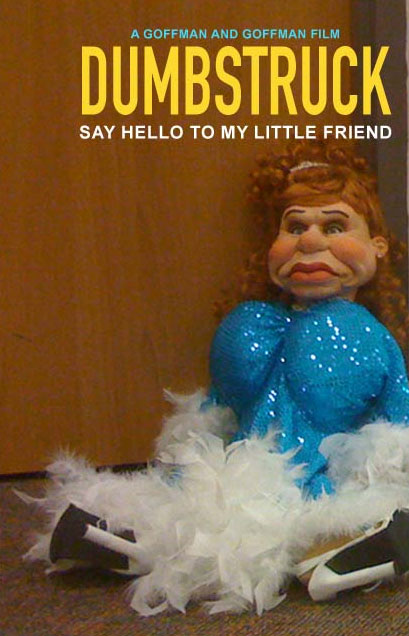
Once a year, there is a gathering in Kentucky for people who “talk to themselves and play with dolls for a living” — ventriloquists.  “Dumbstruck” is a documentary from Lindsay and Mark Goffman that follows five of them for the year between two of these Vent Haven ConVENTions in what turned out to be the biggest year in history for the tiny little community.   One of its members unexpectedly hit the biggest of the big time when Terry Fator went from performing at county fairs to a $100 million headliner contract in Las Vegas after he won “America’s Got Talent.”

For an enduringly popular style of performance, there’s a lot of hating on ventriloquists.  Many people think of them as corny or annoying, just above mimes or strange, like the murderous ventriloquist characters played by Anthony Hopkins in “Magic” or Michael Redgrave in “Dead of Night.” When Fator walked on stage for the first time in “America’s Got Talent,” judge David Hasselhoff said, “Oh, no, a ventriloquist.”

But it is impossible not to fall in love with the characters in this film — the human ones, anyway — because it is more than an act from someone who might have just as easily chosen juggling.  It is clear that these people become ventriloquists because they have things to say that they just do not feel comfortable saying any other way.  I used to think that the reason ventriloquists argued with their characters was to enhance the audience’s perception that the puppet was a real character.  But this movie makes it clear that the relationship — and that is truly the word that applies — between the person and the puppet is far deeper and more complex and intriguing, and the passion it requires is profoundly moving. All of us adopt personas for different situations; they just make it more explicit.  The art is less about whether the lips move or the voice sounds different than it is about the ability to take a portion of what is inside them and create a complete character from it.  After all, the most successful American ventriloquist of the 20th century, Edgar Bergen, performed on the radio.

This film has a former beauty queen, Kim Yeager, whose mother wistfully dreams that her daughter will give up ventriloquism and live a normal life.  But Yeager is wholeheartedly committed, performing more than 400 shows in a year, many of them safety demonstrations for schoolchildren.  In one of the movie’s most intriguing scenes, she gets some advice from a consultant on her act and ends up completely re-thinking her main character.  Then there’s Dan Horn, who was at what used to be considered the height of success for a ventriloquist.  He spends most of his time on the lucrative cruise ship bookings.  But the long separations are very hard on him and his family.  We learn about Wilma Swartz from her nephew, who tells us that the rest of the family has abandoned her but that he is loyal to her because of her kindness to him when he had no one else.  She is 6 feet 5 inches tall and one of her puppets is a life-size ostrich.  And when she needs help, she finds that the ventriloquist community stands by her.   Dylan Burdette is a white middle-schooler from rural Kentucky whose mystified parents are trying to understand why he wants to be a ventriloquist and why he insists on a dummy who is a black “pimp.”  And there is Terry Fator, who as this movie was being filmed, became a superstar.  He returns to Vent Haven as a homecoming hero, and the Goffmans show great sensitivity and understanding in portraying the mingled emotions of his fellow puppeteers as they share his triumph and wish some of it would rub off on them.

The Goffmans have a lot of affection for their characters, and by the end of the film, you will, too.

(more…)

Related Tags:


Documentary Movies -- format
THE MOVIE MOM® is a registered trademark of Nell Minow. Use of the mark without express consent from Nell Minow constitutes trademark infringement and unfair competition in violation of federal and state laws. All material © Nell Minow 1995-2026, all rights reserved, and no use or republication is permitted without explicit permission. This site hosts Nell Minow’s Movie Mom® archive, with material that originally appeared on Yahoo! Movies, Beliefnet, and other sources. Much of her new material can be found at Rogerebert.com, Huffington Post, and WheretoWatch. Her books include The Movie Mom’s Guide to Family Movies and 101 Must-See Movie Moments, and she can be heard each week on radio stations across the country.

Website Designed by Max LaZebnik