Same “stick it to the man” story. Same stoic, emotionally damaged but still a fighting machine (mean, yes; lean, not so much) who can take on a hundred guys with guns because he is so well trained and so pure of heart.
Also because he wrote and directed it.
Yes, Rambo is back. We first met him in 1982’s First Blood (The Man = abusive cops), followed by Rambo – First Blood Part II (The Man = Viet Cong and corrupt politicians) and Rambo III (The Man = Soviets in Afghanistan). Twenty years later, there are still bad guys that only the last true morally righteous person on earth — or an aging movie star looking for an audience — can take on. For tonight’s performance, the part of The Man will be played by the military junta that controls Burma.
Documentary Therapy: Families Use Cameras to Create Conversations (and Confrontations)
Posted on May 26, 2008 at 6:00 pm
Last week I saw a documentary called Bigger Stronger Faster* (The Side Effects of Being an American). The film, produced by some of the people behind Fahrenheit 9/11 and Bowling for Columbine, ties the use of steroids and other performance-enhancing drugs in sports to larger issues of American ambition to be the best and newest and American optimism about the power of innovation and technology, as indicated by the second part of the title. But for me, the film was most engaging for the scenes that put it in an emerging category of documentaries, film as family therapy. Director/co-writer Chris Bell may not think of it this way, but it seemed clear that his primary motivation behind the film was less as a cautionary tale or assessment of the American character than an opportunity — perhaps an excuse — to confront his brothers on-screen about their use of steroids.
Bell and his brothers grew up idolizing the champions of World Wrestling Entertainment and believing its superstars when they said that they achieved their bulging biceps solely through exercise and good nutrition. But revelations of steroid use by Hulk Hogan, Arnold Schwarzenegger and others made them think that they too should use steroids for both offensive and defensive reasons. Steroids would not only make them stronger; they were the only way to compete in a world where “everyone does it.” Sadly, even stronger than their dependence on steroids is Chris Bell’s brothers’ conviction that their lives can only be meaningful if they prove themselves through competition (they do not think it is cheating to use performance-enhancing substances because it is the only way to win) and through being “famous.”
The film brings in other categories of artificial performance enhancement, from Tiger Woods’ Lasik eye surgery (which gave him better than perfect vision) to a cyclist who sleeps in a high-altitude chamber to raise his blood-oxygen level. But this is really the story of the Bell family.
Chris Bell says, “Turning the camera on my own family was a lot harder than I thought it would be. I don’t think we’ll ever be the same, but I also don’t think we’ve ever been closer. This film forced us all to discuss an issue that nobody in America wants to talk honestly about. Many families struggle with issues like alcoholism, drug abuse, depression…My family’s battle just happens to be with steroids.”
Also opening soon is Surfwise, a documentary about the Paskowitz family, whose nine children lived with their parents in a 25-foot camper, home-schooled, eating only natural, low-fat food and running a surfing camp. The father, “Doc” Dorian Paskowitz who decided to drop out of society and, according to the New York Times, “dedicated himself to uncompromised, uncompromising freedom.”
According to the Washington Post,
Dorian, now 86, is portrayed in the film as a combination Lear, Mao and Baba Ram Dass, but there’s affection as well. Time, after all, heals most, if not all, wounds.
“One of the things it’s allowed us to have,” Joshua says of the film, “is some perspective. When we were raised in the camper, Dorian had these theories of how to be the perfect man, have the perfect wife, be in an environment of loving and caring and compassion for one another.” That worked swell until the sibs hit their teen years. “As soon as the individual identity started to come into play,” says Joshua, “that was against everything we were taught.”
So there were fights. Resistance. Territorial disputes. Some of which weren’t resolved until the film, which opens in Washington on Friday, was being made….
“What it gave us a chance to do was talk to each other, even if it was coarse or caustic,” Jonathan said. “It gave us a chance to pull together. Israel said, ‘I always wanted to make up and get together.’ So we’re in different fights now. But they’re not as bad as the old fights.”
How bad were they?
Jonathan: “Two huge grizzlies fighting for the same salmon fishing ground. . . .”
Salvador: “Grizzly bears trained by the gnarliest, ultimate one-eyed Yukon Jack who ever lived, who taught every one of his students to never back down.”
It is worth talking about about what kind of documentary your own family would want to make and perhaps experiment with a home video camera by doing interviews and telling family stories.
Dedicated to “Mr. Laurel and Mr. Hardy,” this movie is both a spoof and a loving tribute to the silent classics, with good guys, bad guys, romance, adventure, slapstick, music, wonderful antique cars, and the biggest pie fight in history. The opening credits are on a series of slides like those in the earliest movies, complete with cheers for the hero and boos for the villain, and a flickering old-fashioned projector that at one point appears to break down. Always dressed in impeccable white, the Great Leslie (Tony Curtis) is a good guy so good that his eyes and teeth literally twinkle. His capable mechanic and assistant is Hezekiah (Keenan Wynn). The bad guy is Professor Fate (Jack Lemmon), assisted by Max (Peter Falk). Like Wile E. Coyote, Fate’s cartoonishly hilarious stunts to stop Leslie inevitably backfire.
After a brief prologue, in which Fate tries to beat Leslie in breaking various speed records, literally trying to torpedo him at one point, they both enter an automobile race from New York to Paris. So does a beautiful reporter (Natalie Wood as Maggie DuBois) trying to prove she can get the story — dressed in an endless series of exquisite ensembles designed by Hollywood legend Edith Head.
The race takes them across America, through the Wild West, to a rapidly melting ice floe in the Pacific, and into a European setting that is a cross between a Victor Herbert operetta and “The Prisoner of Zenda,” where a spoiled prince happens to look exactly like Professor Fate and it takes all of the stars to foil an evil Baron (Ross Martin) who wants to use Fate to take over the throne.
This is a perfect family movie, just plain fun from beginning to end. It may also provide an opportunity for a discussion of competition and sportsmanship. At the end, Leslie deliberately loses as a gesture of devotion to Maggie DuBois. Professor Fate, after all, shows some sense of honor — apparently it is all right for him to cheat to win, but not all right to win by having Leslie refuse to compete. “You cheated — I refuse to accept!” Modern adults may wince a bit at Dubois’ notion of how to attain equal opportunity — she ultimately succeeds by showing her leg to the editor, who becomes too dazed to argue further. But like “Mary Poppins,” it provides a chance to remind children that when their great-grandparents were children, women did not even have the right to vote.
Questions for Kids:
Should Leslie have let Fate win?
Why wasn’t Fate happy when he beat Leslie?
Why was Fate so jealous of Leslie?
Why did DuBois want to be a reporter so badly?
Connections: Curtis and Lemmon also appeared together in one of the greatest comedies of all time, “Some Like it Hot.” Children who enjoy this movie might like to see some of the silent classics it saluted, like “Two Tars,” in which Laurel and Hardy create chaos in the middle of an enormous traffic jam. They might also enjoy “Those Magnificent Men in Their Flying Machines” or “Those Daring Young Men in Their Jaunty Jalopies.” Children who have enjoyed Ed Wynn as Uncle Albert (who “loves to laugh”) in “Mary Poppins” may like to know that his son, Keenan Wynn, plays Leslie’s assistant Hezekiah.
The first movie ended with historian/treasure-hunter Benjamin Franklin Gates (Nicolas Cage) triumphant, with riches, a dream house, and a dream girl, historian/knockout (and conveniently named) Abigail Chase (“Troy’s” Helen Diane Kruger). He has pretty much lost all of that as this movie begins. Meanwhile, sidekick Riley (Justin Bartha) can’t get anyone to buy his book and has learned that “the tax on $5 million in income is $6 million) as his fancy car is towed away by the IRS. It’s time to break out the treasure maps and cypher-decoders.
In this impressionistic, rose-and honey-toned memory piece, young Jacob hides from the Nazis in 1941 Poland but his parents are killed and his sister is captured. The terrified boy is discovered by a Greek archaeologist, who takes him in and becomes a gentle, devoted surrogate father. Over the years, Jacob (played as an adult by Stephen Dillane) tries to make sense of his past and his present.
He becomes a writer and marries the warm-hearted Alex (Rosamund Pike). But he continues to carry the ghosts of his past and she realizes that limits his ability to be close to her. “To live with ghosts requires solitude,†she tells him.
Jacob will have to endure additional losses to put his past in context and to find a way to make a deeper, more trusting connection. While it does not have the lyricism of the book’s limpid prose, it is a moving story, gently and sincerely told.

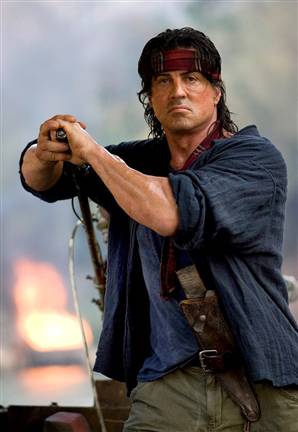 Same “stick it to the man” story. Same stoic, emotionally damaged but still a fighting machine (mean, yes; lean, not so much) who can take on a hundred guys with guns because he is so well trained and so pure of heart.


 ,
,  ,
,  , and
, and  .
. 
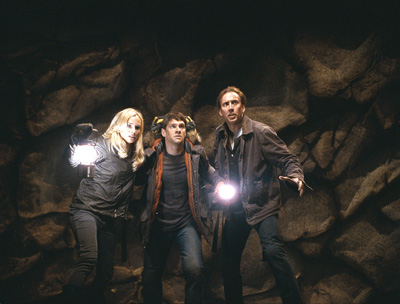 The first movie ended with historian/treasure-hunter Benjamin Franklin Gates (Nicolas Cage) triumphant, with riches, a dream house, and a dream girl, historian/knockout (and conveniently named) Abigail Chase (“Troy’s” Helen Diane Kruger). He has pretty much lost all of that as this movie begins. Meanwhile, sidekick Riley (Justin Bartha) can’t get anyone to buy his book and has learned that “the tax on $5 million in income is $6 million) as his fancy car is towed away by the IRS. It’s time to break out the treasure maps and cypher-decoders.
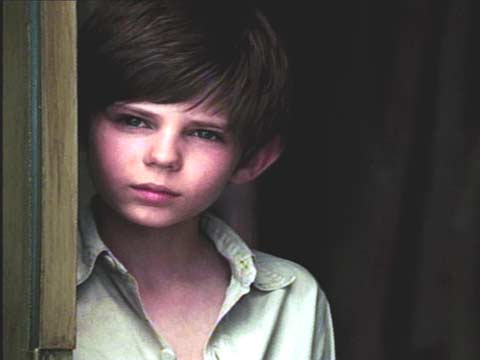 In this impressionistic, rose-and honey-toned memory piece, young Jacob hides from the Nazis in 1941 Poland but his parents are killed and his sister is captured. The terrified boy is discovered by a Greek archaeologist, who takes him in and becomes a gentle, devoted surrogate father. Over the years, Jacob (played as an adult by Stephen Dillane) tries to make sense of his past and his present.