La La Land

La La Land

Posted on December 15, 2016 at 5:52 pm

A
Lowest Recommended Age: Middle School
MPAA Rating: Rated PG-13 for some language
Profanity: Some strong language
Alcohol/ Drugs: Social drinking
Violence/ Scariness: None
Diversity Issues: None
Date Released to Theaters: December 9, 2016
Date Released to DVD: April 24, 2017
Amazon.com ASIN: B01LTI1WAI

lalalandThe nickname for the California town whose literal translation is “City of Angels” comes from its initials: LA for Los Angeles. But “La La Land” also refers to the culture of its most notable industry, whether the reference is to the magic of its images of pretty people doing pretty things or to the instability of the various deals, relationships, and people behind them. The title of this exquisite film from writer/director Damien Chazelle refers to all of that and to the “la la” of music as well. Its bravura, breathtaking opening scene introduces us to the world of the story, with one of LA’s defining experiences — being stuck in traffic on a sunny day — transforming into a stunning, joyous, candy-colored musical number, with the camera swooping along as a part of the choreography in, apparently, one long shot.

Among the Angelenos on the 105 Freeway are barrista and aspiring actress Mia (Best Actress Oscar winner Emma Stone), rehearsing some dialog for an upcoming audition, and Sebastian (Ryan Gosling), a jazz musician with retro taste, as we can see from his watch, ring, and car. He honks the horn. She flips him the finger. They go their separate ways and we follow her to work at a coffee shop on a movie studio lot, near the window where Humphrey Bogart and Ingrid Bergman looked out as the Germans marched into Paris in “Casablanca.” The magic of movies — both the way they move and inspire us and the gulf between illusion and reality — shimmer throughout the film.

Mia and Sebastian bump into each other (once literally) a few more times, as we see each of them struggle. He wants to own a jazz club, but his business partner has betrayed him and he has had to take a job playing bland Christmas tunes in a restaurant for a demanding boss (played by J.K. Simmons, who won an Oscar for Chazelle’s first film, “Whiplash”). He can’t help himself, and seques into jazz, just as Mia wanders in and hears him. She is transfixed. He is fired.

They meet up again when he is playing another demeaning gig — an 80’s cover band performing at a party. And then, after another party, he chivalrously walks her to her car, and they begin to like each other — so much that they swing into a cheeky song and dance about how much they don’t. The song is “A Lovely Night,” and in the classic tradition of Fred Astaire and Ginger Rogers tunes like “A Fine Romance.” The lyrics may suggest they have no interest in each other, but we and they know from the way their dance seems so effortless, that it is very much the contrary.

The story moves through the seasons (though of course the weather never changes) and soon Mia and Sebastian are happily living together and encouraging each other. But he feels pressure to take a job with an old friend (John Legend) that means good money but constant travel. And good intentions and true affection are sometimes not enough.

Chazelle’s deep and spacious romanticism includes the city and its dreamers and music and movies and love itself. There are dozens of sure-handed, thoughtful touches, from the imperfect perfection of the singing and dancing, which lends an intimate, accessible quality, to the telling glimpses of life in Hollywood — the brief glimpse of a big star or a scene being filmed, the humiliation of auditions, the people who get halfway through a pastry and then demand their money back because it is not gluten-free, the endless wait for the valet parking after a party, the way Mia’s clothes go from bright primary colors to patterns, subdued hues, and then black and white. The songs, with music by Justin Hurwitz and lyrics by Benj Pasek and Justin Paul are captivating and evocative. Sebastian walks along the pier, whistling and then singing about whether he dares to hope. Mia and her roommates wear bright, primary-colored dresses and sing about going out to a party. And in one gorgeous number, the exhilaration of love is made literal as the couple dance up into the stars of the Griffith Observatory.

There are tributes/references to classic films like “Singin’ in the Rain,” “Rebel Without a Cause,” and “The Umbrellas of Cherbourg,” but this movie is not derivative. The storyline is deceptively simple, but the specificity of the detail, depth of understanding, and beautiful performances create true movie magic. “La La Land” is narratively ambitious and emotionally resonant, with a final ten minutes that are pure, wistful poetry. Chazelle and Hurwitz understand that some feelings are just so big they have to be sung and danced. And this movie made me so happy I wanted to create a musical number of my own. But I settled for watching this more two more times instead.

Parents should know that this film includes brief strong language and some emotional confrontations.

Family discussion: What did Mia and Sebastian learn from each other? How did their support for each other’s dreams change their careers? How did the music help tell the story?

If you like this, try: “Singin’ in the Rain” and “The Umbrellas of Cherbourg” — both inspirations for this film
Related Tags:


DVD/Blu-Ray Pick of the Week Musical Romance
The Edge of Seventeen

The Edge of Seventeen

Posted on November 17, 2016 at 5:42 pm

Copyright 2016 STX
Copyright 2016 STX
A psychiatrist once told me that just as an infant can have fevers that would be lethal in an adult, a teenager can have symptoms that would be evidence of psychosis at any other stage of life. Mood swings, the feeling that everyone is looking at you, disordered thinking, bizarre appearance: you might be having some sort of breakdown, or you just might be an adolescent. Stories about that intensely traumatic age connect to those of us who have been through it and those who are in the midst of it with a visceral sense of recognition, and, if we’re lucky, a bittersweet humor.

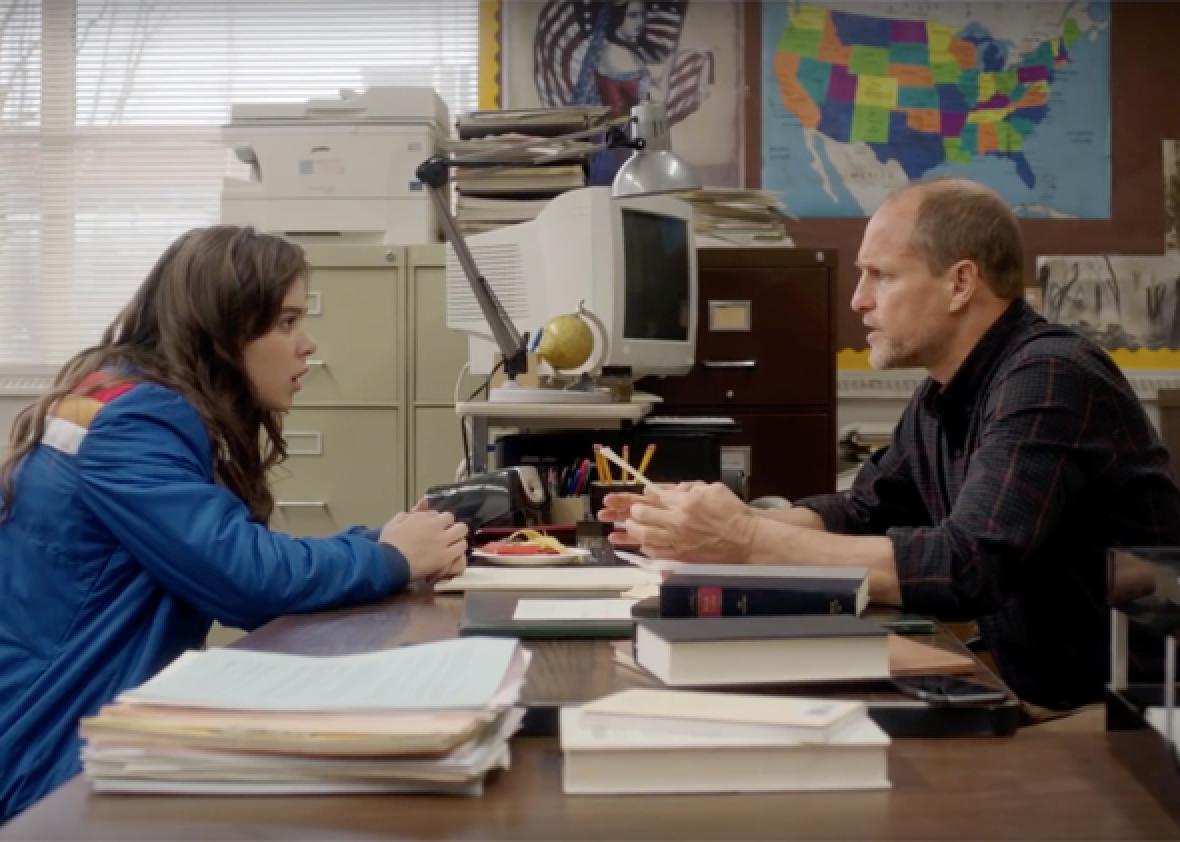
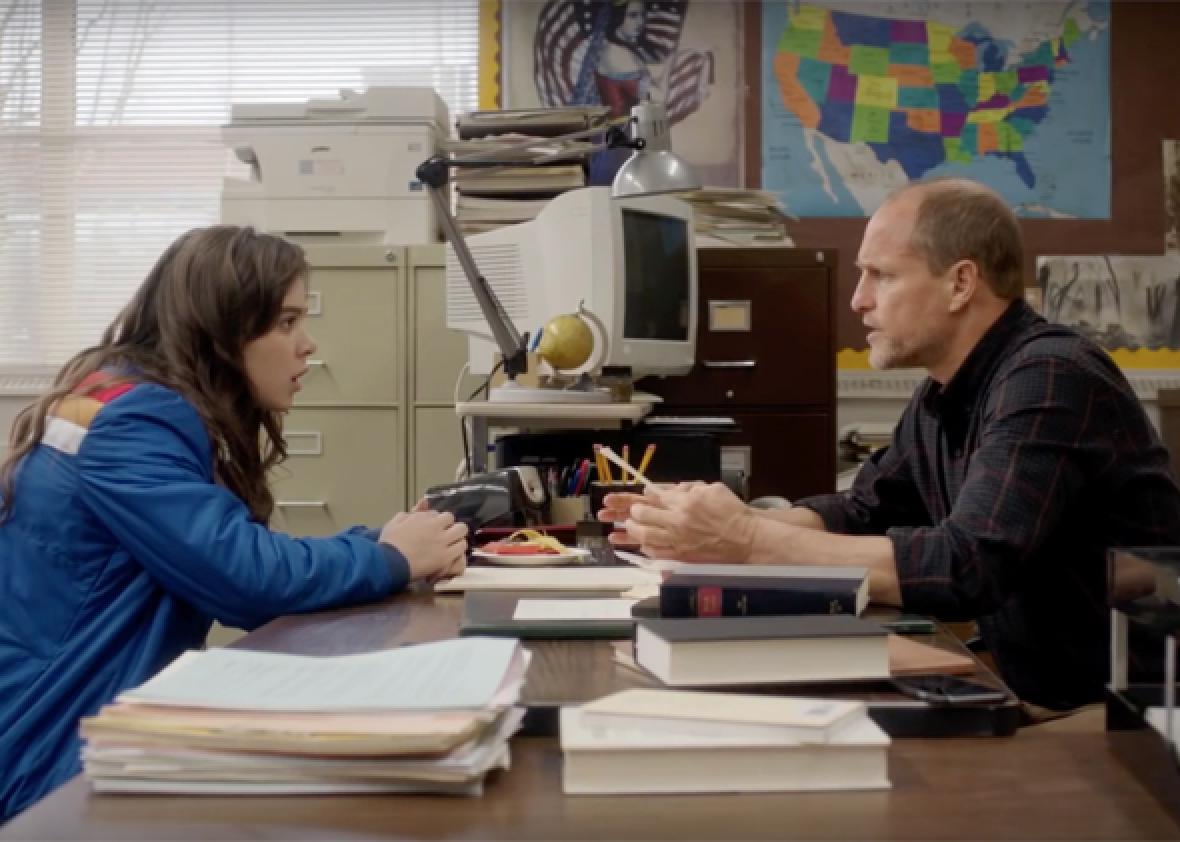
“Edge of Seventeen,” written and directed by Kelly Fremon Craig, captures the intensity and chaos and drama drama drama of this age. Hailee Steinfeld plays Nadine, who, like many 17-year-olds, is certain that she is the only person on earth who truly understands what it is to suffer. She actually has experienced a terrible loss, the death of her father, which has left her remaining family fragile. Her older brother Darian (Blake Jenner of “Everybody Wants Some!!”) compensates by being perfect in every disgusting way possible, from Nadine’s perspective. He is handsome, talented, athletic, and popular. That leaves nothing left for her but to be awkward and miserable.

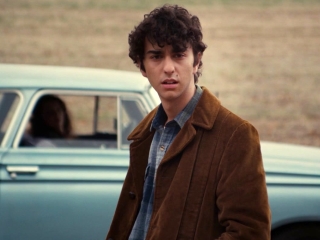
The only thing good in her life, she thinks, is her endlessly supportive and understanding BFF Krista (Haley Lu Richardson), who sympathizes with Nadine about the misery of having no father, a perfect brother, and a crush on an unattainable boy who works at Petland in the mall (Alexander Calvert as Nick). She also has a teacher named Mr. Bruner, played with perfectly dry, understated wit by Woody Harrelson, who knows teenagers well enough to understand that the best way to reassure Nadine is not to try to comfort her. When she trounces into the classroom where he is eating lunch alone to tell him she has to kill herself, he responds by noting mildly that in fact she has just interrupted his own creation of a suicide note. “As some of you know, I have 32 fleeting minutes of happiness per school day during lunch which has been eaten up again and again by the same especially badly dressed student and I finally thought, you know what, I would rather have the dark, empty nothingness.” She thinks she wants everyone to be as fraught as she is. He knows how to strike just the right balance of detachment and sympathy.

So when she tries to cancel a sexually explicit invitation to Nick but accidentally sends it instead, Mr. Bruner is there to take a look and point out that she should be more careful about run-on sentences. The reason she is talking to him about it instead of Krista is that Krista, the single good thing in her life, has committed the ultimate betrayal. She and Darien are in a relationship. Nadine is in such a severe state of collapse that she does not notice that there is a smart, handsome, very nice boy interested in her (Hayden Szeto in a star-making performance as Erwin).

The film itself has that same perceptive sympathy for the agonies of adulthood, allowing us to laugh at Nadine only because we know she’ll be fine — she’s going to grow up and make this movie.

Parents should know that this movie has very explicit and crude language, sexual references, and non-explicit sexual situations, a car accident with a sad (offscreen) death of a parent), and teen drinking.

Family discussion: How did Nadine, Darien, and their mother express their grief differently? Is it easier being the perfect one? What do you do to feel better?

If you like this, try: “Rocket Science,” “Thumbsucker,” and “The Duff”

Related Tags:


Comedy Coming of age Drama Romance School Stories about Teens
Loving

Loving

Posted on November 10, 2016 at 5:21 pm

A-
Lowest Recommended Age: Middle School
MPAA Rating: Rated PG-13 for thematic elements
Profanity: Racist epithets
Alcohol/ Drugs: Some alchohol
Violence/ Scariness: Racism, some shoving, child hurt in accident
Diversity Issues: A theme of the movie
Date Released to Theaters: November 11, 2016
Date Released to DVD: February 6, 2017
Amazon.com ASIN: B01LTHZK2U

Copyright 2016  Focus
Copyright 2016 Focus
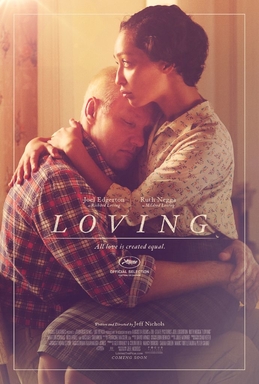
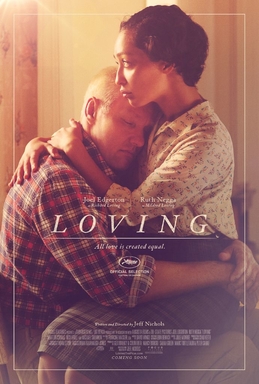
We don’t have to see how they met. We don’t have to see how he worked up the courage to ask her out or their first misunderstanding, or watch her try on different outfits before their big date. “Loving,” written and directed by Jeff Nichols (“Midnight Special,” “Mud”) brings us into the story of Richard and Mildred Loving (Joel Edgerton and Oscar nominee Ruth Negga) as they have a very short, very simple, but very meaningful conversation. She pauses, and we can see on her face that she does not know how he will react and is perhaps afraid to hope. Finally, she says it: “I’m pregnant.”

There is a pause, only a few seconds but it feels much longer. Finally he says only, “That’s great.” But it is clear that he is overjoyed that their love has created a child and he is fully committed to her. And it is clear, too, that they are not fully aware of the ramifications of having a child when the mother is black, the father is white, and the Commonwealth of Virginia, which shut down its entire school system just four years earlier in response to the Supreme Court’s Brown v. Board of Education decision, prohibits marriage or cohabitation between people of different races specifically because it does not want mixed-race children to be born.

Washington D.C. allows inter-racial marriage, so they are married there in 1958, and return home.  One night the sheriff crashes into their home as they are sleeping in their bed, their marriage license on the wall, and arrests them.  The judge suspends their sentence only if they will agree to leave the state and never return together.

They live with family in Washington, and raise three children.  But Mildred wants to go home. Nichols conveys the Edenic quality of the countryside they love. The Civil Rights movement has begun, so she writes to Attorney General Robert Kennedy to ask for his help.  He puts her in touch with the American Civil Liberties Union, a nonprofit that protects Constitutional rights. Two idealistic, if inexperienced, young lawyers (Nick Kroll and Jon Bass) want to take their case to the Supreme Court, which can invalidate all 16 state miscegenation laws.

Nichols keeps the legal stuff at the edges of the story. His focus is on the Lovings and their community, and the film is brimming with small, beautifully realized, evocative details. A dinner scene shows how completely Richard is accepted as a part of Mildred’s family. But we also see a frank conversation where a black man tells Richard that they may be alike, but Richard can “fix” his problem with the bigoted law by leaving Mildred while there is nothing they can do to “fix” theirs.

Richard’s mother, a midwife, only needs a few words to let Richard know that she did not give the police any information about where the Lovings were (and to let him know she was not entirely happy about the marriage, though she treats Mildred with kindness). We see a baleful glance from a defeated white competitor in a car race that could indicate the source of the complaint to the sheriff.

We see Richard’s careful, capable hands stirring mortar and laying concrete blocks and Mildred caring for the children and sitting at the kitchen table to write to the Attorney General. And, in a re-creation of the famous photo in LIFE Magazine by Grey Villet (a nice cameo by Nichols regular Michael Shannon), we see their quiet pleasure in each other as they laugh at the “Andy Griffith Show” episode about Aunt Bee’s pickles. He may need a lawyer to tell the nine old men on the Supreme Court he loves his wife. We see it in every frame.

Parents should know that this film depicts historic racism with some offensive epithets. The movie also includes a childbirth scene and an (off-screen) accident involving a child.

Family discussion: If you could take a case to the Supreme Court, what would it be?  What do we learn about the Lovings from seeing them with their families?

If you like this, try: the documentary “The Loving Story

Related Tags:


Based on a true story Drama DVD/Blu-Ray Pick of the Week Features & Top 10s Race and Diversity Romance
Coming Through the Rye

Coming Through the Rye

Posted on October 13, 2016 at 5:24 pm

B
Lowest Recommended Age: High School
MPAA Rating: Rated PG-13 for some drug material, sexuality and language
Profanity: Strong language
Alcohol/ Drugs: Drugs
Violence/ Scariness: Sad offscreen death,
Diversity Issues: None
Date Released to Theaters: October 14, 2016

Copyright Red Hat Films 2016
“What really knocks me out is a book that, when you’re all done reading it, you wish the author that wrote it was a terrific friend of yours and you could call him up on the phone whenever you felt like it.”

That, of course, is Holden Caulfield in J.D. Salinger’s classic of adolescent anguish, Catcher in the Rye. Even more than the parts about “phonies” and the simultaneous wish to avoid entanglements to protect all that is innocent and vulnerable in oneself and somehow protect the innocent and vulnerable in others, that line packing so much understanding and such a powerful invitation has made generations of teenagers feel understood and validated. (See “Six Degrees of Separation” for Will Smith’s fascinating and disturbing speech on the book’s meaning.) More, it has made them feel invited. If Holden thinks that connecting to a work of fiction can make you feel like the author’s friend, then perhaps, despite his being the most well-known recluse of 20th Century America, Salinger might welcome a visit.

That is the basis for this film about a very Holden-esque adventure undertaken by a prep school senior who wants J.D. Salinger to approve his theatrical adaptation of Catcher in the Rye. Like Catcher, it takes its title from the folk lyric by Robert Burns. Holden imagines himself saving children who are playing in a field of rye, catching them before they go off a cliff.

Alex Wolff plays Jamie Schwartz, a sensitive theater kid (we see him exclaim “A plague o’ both your houses” as Mercutio in a school production of “Romeo and Juliet.” He has a bit of a crush on the girl who plays Juliet and does not notice that there is less flashy but far more substantial girl named Deedee (Stefania LaVie Owen) who has a bit of a crush on him. When he is the target of a bullying prank at school, Jamie and Deedee decide to take a car trip and go visit J.D. Salinger. (What is it with these Wolff boys? Alex’s brother Nat appeared in “Paper Towns,” another movie about a teen car trip.)

We know where this is going. It’s the kind of journey where a lot of growing up will happen. There are not many surprises (except for the way Jamie and Deedee finally learn Salinger’s address from the only locals not committed to protecting his privacy). Owen does more than should be possible with an underwritten character who is essentially a fantasy figure, endlessly understanding and devoted (and on the Pill but not for sex!) But she and Wolff, and Chris Cooper in a brief but telling role, make it a worthwhile trip.

Parents should know that this film includes strong language, a dangerous prank, and teen drug use. There is a sad offscreen death.

Family discussion: What author would you like to visit? Was Salinger right about not allowing Catcher to be adapted for theater or film?

If you like this, try: “HairBrained” and “A Birder’s Guide to Everything”

Related Tags:


Inspired by a true story Movies -- format Romance Stories about Teens
The Dressmaker

The Dressmaker

Posted on September 22, 2016 at 5:29 pm

B
Lowest Recommended Age: Mature High Schooler
MPAA Rating: Rated R for for brief language and a scene of violence
Profanity: Some strong language
Alcohol/ Drugs: Drinking and tipsiness, drugs
Violence/ Scariness: Some peril and violence, murder, sad deaths
Diversity Issues: None
Date Released to Theaters: September 23, 2016

Copyright 2016 Amazon Studios
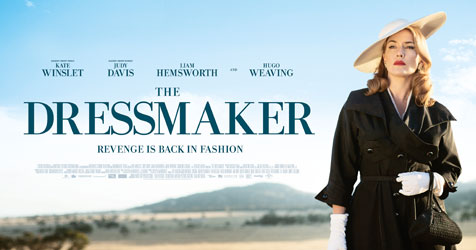
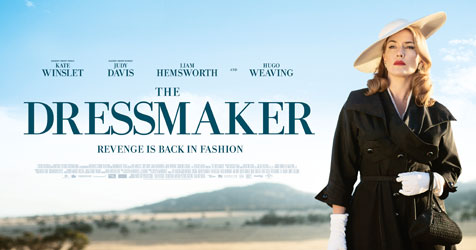
Kate Winslet plays Tilly Dunnage, a woman with secrets who returns to the tiny Australian town that threw her out as a child. She has become an accomplished couturier, working in London, Paris, and Milan. And she is a master of the bias cut, pioneered by Vionnet, whose photograph she carries with her for inspiration. This film, based on the novel by Rosalie Ham is also, in its way, cut on the bias, alternately wildly funny, wildly romantic, wildly satiric, and, at the same time, dark and tragic. Some will find that disconcerting; others will find it refreshing.

It is 1951. Tilly arrives home in the dust-covered town, her stylish heels stepping off the bus onto the dirt road. She goes up the hill to her mother’s shack, when there is a question from the local sheriff. “Is that…….Dior?” It is not; it is one of Tilly’s own designs. But she acknowledges the Dior inspiration. Sargent Ferrat (Hugo Weaving) is dazzled by the bold colors and sumptuous fabrics of Tilly’s designs. He’s a secret cross-dresser.

Winslet is marvelous as Tilly, who has come home to see her mother, known as Mad Molly (Judy Davis of “My Brilliant Career”), to find out the true story of what led to her exile, and to extract some revenge, both of the “living well is the best” variety and of the old-fashioned “make them suffer” variety as well. Tilly, then known as Myrtle, was abused by her teacher and the students in her class because she was poor and because her mother was not married. After an incident that resulted in the death of a boy in her class, she was sent away. The experience was so traumatizing that she cannot let herself remember exactly what happened, and worries that she was responsible, as everyone thinks. “Am I a murderer?” she asks of her mother.

Director Jocelyn Moorhouse and editor Jill Bilcock bring a vibrant energy to the storytelling that suits the theme of Tilly’s force and focus having an impact on the insular little town, and it is a lot of fun to see assumptions challenged and relationships in upheaval. There is a woman crippled by her wife-beating husband, a pharmacist who seems to be suffering from ankylosing spondylitis as he is bent over parallel to the ground. A civil leader gives his wife, agoraphobic and germophobic since the death of their son, knock-out medicine and then rapes her when she is unconscious. There are vicious gossips and snobs. And there are a few kind-hearted people, Ferrat, who regrets his treatment of Tilly and Teddy (Liam Hemsworth, clearly relishing the chance to speak in his native accent and very swoon-worthy when he removes his shirt). Molly becomes less mad and more feisty under Tilly’s care. Ferrat is not the only one who cannot resist the chance to wear something spectacular. “A dress never changed anything,” a local girl longing to be noticed by the town’s most eligible bachelor says to “Tilly.” “Watch and learn, my girl. Watch and learn.” And we know a Cinderella at the ball moment is coming — when it does, it is breathtaking. Soon, the tiny backwater is populated with ladies wearing haute couture. This has to be a dream assignment for a costume designer, and Marion Boyce and Margot Wilson (Winslet’s clothes) rise to the occasion with fabulously gorgeous and entertaining dresses.

The heightened quality of the story makes the darker turns unexpected and disconcerting. It is not as much of a feel-good movie as it originally promises. But it has its odd pleasures, and one of them is that, like its heroine, it has style to space.

Parents should know that this movie includes some strong language, drinking and drunkenness, sexual references and situations with some nudity, adultery and questions of paternity, domestic violence, murder, and very sad deaths.

Family discussion: What did Tilly want from her return home? Why was Teddy different?

If you like this, try: “Strictly Ballroom” and “Muriel’s Wedding”

Related Tags:


Comedy Drama Movies -- format Romance Satire
THE MOVIE MOM® is a registered trademark of Nell Minow. Use of the mark without express consent from Nell Minow constitutes trademark infringement and unfair competition in violation of federal and state laws. All material © Nell Minow 1995-2026, all rights reserved, and no use or republication is permitted without explicit permission. This site hosts Nell Minow’s Movie Mom® archive, with material that originally appeared on Yahoo! Movies, Beliefnet, and other sources. Much of her new material can be found at Rogerebert.com, Huffington Post, and WheretoWatch. Her books include The Movie Mom’s Guide to Family Movies and 101 Must-See Movie Moments, and she can be heard each week on radio stations across the country.

Website Designed by Max LaZebnik