Trailer: The Need for Speed

Posted on October 1, 2013 at 8:00 am

DreamWorks Pictures’ “Need for Speed” is a return to the great car culture films of the 1960’s and 70’s, when the authenticity of the world brought a new level of intensity to the action on-screen. Tapping into what makes the American myth of the open road so appealing, the story chronicles a near-impossible cross-country journey for our heroes — one which begins as a mission for revenge, but proves to be one of redemption. Based on the most successful racing video game franchise ever with over 140 million copies sold, “Need for Speed” captures the freedom and excitement of the game in a real-world setting, while bringing to life the passion for the road that has made our love of cars so timeless.

The film centers around Tobey Marshall (Aaron Paul), a blue-collar mechanic who races muscle-cars on the side in an unsanctioned street-racing circuit. Struggling to keep his family-owned garage afloat, he reluctantly partners with the wealthy and arrogant ex-NASCAR driver Dino Brewster (Dominic Cooper). But just as a major sale to car broker Julia Bonet (Imogen Poots) looks like it will save Tobey’s shop, a disastrous race allows Dino to frame Tobey for a crime he didn’t commit, sending Tobey to prison while Dino expands his business out west.

Related Tags:


Sports Trailers, Previews, and Clips

Rush

Posted on September 26, 2013 at 6:00 pm

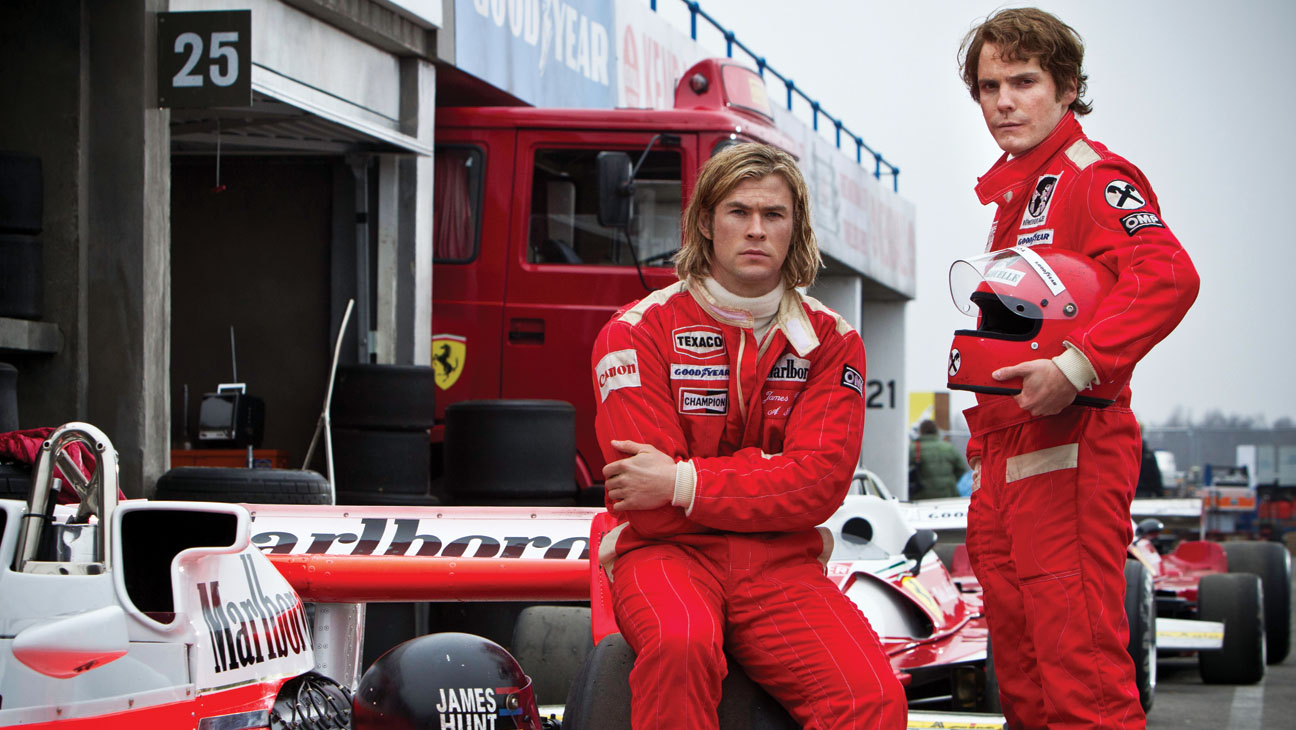
RUSHThe immensely gifted screenwriter Peter Morgan reunites with his “Frost/Nixon” director Ron Howard and returns to his favorite theme, a real-life drama about the clash between two brilliantly talented but flawed figures. This time it is the bitter rivalry between Formula One race car drivers James Hunt (“Thor’s” Chris Hemsworth) and Niki Lauda (“Inglourious Basterds'” Daniel Brühl).  The British Hunt is Maverick to the Austrian Lauda’s Iceman, the Michael to his Sonny, the id to Lauda’s superego.

Both were the rebellious sons of wealthy fathers.  Hunt is handsome, careless, and catnip to the ladies.  “He will have you pulling your hair out nine days out of ten,” a character says, but on the tenth day, when you need him, he will deliver.  Lauda is methodical and analytical.  He calculates the odds.  But they both know that they are among the very few who know what it feels like to get into a car that is essentially a bomb on wheels and speed it around a racetrack.  They both do it not because they like driving in circles but because they like to test themselves.  They both like to win, even need to win.  And, as they remind us perhaps one or two times too many in this film, they both know that the best way to do that is to compete against one another.  “The only people  I can get along with are those who can drive fast,” Hunt says.  He does not really get along with them, either.

Hemsworth, 30 pounds lighter than his Thor/Avengers muscled-up Norse god look, is able to make Hunt magnetic even in 70’s hair.  We meet him as he walks into an emergency room with a bashed nose, not from a racing accident, from a jealous husband.  The pretty nurse (Natalie Dormer) asks what he did to anger the husband and he rakishly offers to show her.  The curtain rings squeal against the rod as it is quickly swung around and soon he is introducing her to his pit crew as “Nursie.”  No time to learn her name, and no need.

Hunt was the James Bond of race car drivers, sexy, sophisticated, and fearless.  But I don’t think James Bond ever threw up before a confrontation.  “Rebels, lunatics, dreamers,” he tells us about race car drivers. “People who are desperate to make a mark and willing to die for it.”  Formula One averaged two deaths a year.  But, he adds, “The closer you are to death, the more alive you feel.”

Lauda says his brain is not that strong but his ass is very smart.  He can tell from a car’s vibrations under the seat that a fan belt will be in trouble and which tire needs air.  He negotiates his driving deals the way he drives, calmly but ruthlessly.   He gets up early to walk the track.  He calculates risk constantly and accurately.  When he explains that one race should be called off because the heavy rainstorm has made conditions unsafe, Hunt, behind on points, persuades the other drivers to vote to continue.  Lauda is very badly injured, including burns on his face and severe lung damage.  In one of the most extraordinary comebacks in the history of sports, Lauda was back on the track 42 days later, against doctor’s orders but able to compete.  In what passed for cheerfulness from the dour Austrian, he told the press that there was one advantage to the skin grafts on his forehead.  They don’t sweat, so he would no longer be bothered by sweat dripping in his eyes.  And, has his wife told him, you drive with your foot, not your face.

Howard conveys the pressure and the thrill of Formula One racing, giving us the view from inside the helmet, and showing us that Hunt’s air of casual mastery is accompanied by a nervous habit of playing with the cap on his cigarette lighter.   He shows us how Hunt and Lauda are always racing, whether it is Hunt visualizing the track or Lauda walking it, competing for the best cars and sponsors, or exchanging barbed comments about whether it is more important to be feared than loved.  The action is electrifying, on and off the track.

Parents should know that this movie includes some disturbing images of crashes and injuries, very strong language, sexual references and situations with nudity, drinking, smoking, and drug use, as well as a great deal of reckless behavior.

Family discussion: What were the most important ways in which Hunt and Lauda were alike?  If you were a sponsor, which would you hire and why?

If you like this, try: “Winning” with Paul Newman, “Grand Prix” with James Garner, and “Le Mans” with Steve McQueen, and Peter Morgan’s “The Damned United” about another real-life sports rivalry.

Related Tags:


Based on a true story Drama Sports

Interview: Maiken Baird and Michelle Major of “Venus and Serena”

Posted on May 9, 2013 at 10:07 pm

“Venus and Serena” is an enthralling new documentary about two of the most acclaimed athletes of our time.  Their story is even more extraordinary because they are sisters.  Venus and Serena Williams have won world trophies and broken records since they were teenagers.  Both have come back from daunting health issues.  I spoke to directors Maiken Baird and Michelle Major about the three years it took to gain the Williams sisters trust and how what they thought would be a documentary about competition became an even bigger story about and even bigger triumph, fighting their way back to the top.

How did you get the Williams sisters and their family to trust you?

MB: It took perseverance and not taking no for an answer.  We just kept pushing.  We began in April of 2007 and it took a good three years.

MM: In ’07 we came together with the idea and began to approach them.  It was countless meetings and hundreds of emails later when they finally agreed.  We started filming in 2011.   

In retrospect, from a dramatic standpoint, that was perfect timing.  You could not have anticipated a more tumultuous year. venus and serena

MB: It was not a great year for them.  From the point of view of the movie, we were extraordinarily lucky.  Serena had a near death experience, a pulmonary embolism.  She couldn’t walk.  We didn’t know if she would ever play tennis again.  And Venus had an auto-immune disease we discovered during filming.  It was a remarkable comeback story from a really bad place.

MM: We were planning on following tennis players playing tennis.  We didn’t know what was going to become of the film, what it was going to be.  We thought we would be on tennis courts and we found ourselves in medical facilities.

One of the most striking moments in the film is archival footage of the girls’ father interrupting a reporter, very upset at the questions he is asking Venus when she was a young teenager. Did he try to control your story?

MM: Venus actually saw the film after we completed it and she said, “I wish you had left more of that interview in the film so everyone could see that the reporter was badgering me.  I was happy that my father came to my defense.”  Richard loves them fiercely and is very protective of them.  But now they’re older and can do what they want.  He’s a live wire.  Sometimes he left us alone and sometimes he wanted us to go away, as you see in the film.

What will be most surprising to people who see this film?

MM: One of the most surprising moments for me was when Serena was on the treadmill after the third round of the U.S. Open.  She felt even though she didn’t drop a set that she had played really poorly — which I didn’t even understand.  And she was incredibly frustrated with her hitting partner and felt that he wasn’t training her hard enough for the match.  It’s like everybody dropped away.  The cameras weren’t there for her.  It was just the two of them and she was going to let him have it.  The most important thing to her was winning the tournament and playing excellent tennis.  She really ripped into him very honestly.  And her honesty in that moment, how in the zone she was, that was remarkable.

She wanted him to to be better to make her better.  That’s what it takes to be a champion.

MM: Absolutely.

You had some surprising fans in the film.  How did you get Bill Clinton?

MB: I pursued him for about a year.  He was President when Venus won her first Open, when she was 19.  He called to congratulate her and she told him that his motorcade made her late to her match!  And that he should lower the taxes in Florida.

Were they born to be champions or was it their father, who coached them continuously from the time they were preschoolers?

MM: In every situation, nature and nurture are always combined.  It helps that they are tall.  And in the film Serena even says that she has natural muscles and does not want to lift weights to make them bigger.  But we witnessed how hard they work to stay in top physical condition and hit for hours, take their lunch on the court, and keep hitting, the most unpleasant workout you can imagine, every single day.  Richard devised incredibly clever training methods, using the techniques of football players and basketball players, boxers, male athletes, techniques that had not been used for tennis players.  And their mother instilled in both of them this incredible strength of character and determination never to let anyone get you down.  So I would say more nurture than nature.

Do you think they are held to a different standard in arguing with the line judges than the men?

MB: Yes.  I love the scene when John MacEnroe tells Serena to apologize.  She has looked up to him her whole life and thinks that if he can do it, she can do it.

MM: She definitely gets into the zone.  You’re so in the moment that you’re going to go off every once in a while.  It happens to many players.  But she is tough-looking, imposing, African-American, and so her particular style of yelling receives a certain kind of pushback from the world, and it’s not equal.

What do you want people to get from this movie?

MM: We started out with the idea that this story would be inspirational.  It’s the American story — triumph over adversity of every single kind — it’s about how to maintain a close loving relationship with your sibling even if you have the ultimate rivalry.  There’s nothing you can’t do or accomplish if you set your mind to it and if you have the support of the people around you.

 

Related Tags:


Directors Documentary Interview Sports

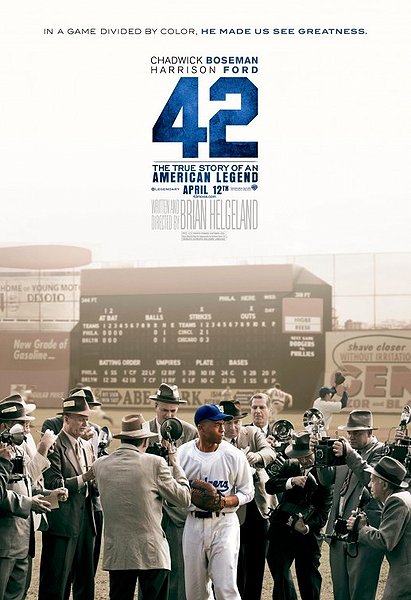
42

Posted on April 11, 2013 at 12:08 pm

B+
Lowest Recommended Age: Middle School
MPAA Rating: Rated PG-13 for thematic elements including language
Profanity: Racist epithets, crude and ugly insults, some additional strong language (s-words)
Alcohol/ Drugs: Drinking, smoking
Violence/ Scariness: Threats of violence, some scuffles, some injuries
Diversity Issues: A theme of the movie, brief homophobic humor
Date Released to Theaters: April 12, 2013
Date Released to DVD: July 15, 2013
Amazon.com ASIN: B009NNM9OA

Jackie Robinson was the first black man to play major league baseball. His number, 42, is worn by every player once a year to commemorate his achievements as a baseball player and as a man.  This version of the story of the year the Brooklyn Dodgers broke the color barrier in baseball from writer/director Brian Helgeland is a little superficial, it still packs a lot of power, thanks to an evocative sense of its period and star-making performances by Chadwick Boseman as Robinson and Nichole Beharie as his wife.  If what we see is a small part of the courage and integrity of this extraordinary man in taking on the virulent racism of his era, it is still enough to make this movie deeply moving.

It is just after the end of WWII.  Black soliders returned home from fighting for freedom on behalf of a country that was still segregated, from the separate fighting divisions in the military to the “Whites Only” laws of the Jim Crow South.  Brooklyn Dodgers manager Branch Rickey (a cigar-chomping Harrison Ford, in full growl) decides it is time to integrate baseball.  He needs to find a player who is not only an athlete of unquestionable ability but someone who has the temperament to stay cool despite the constant attacks he will face from his own team, opposing teams, and the fans.  Rickey decides that Roy Campanella was too sweet and Satchel Paige was too old (both would follow Robinson into the major leagues).

Rickey picked Robinson.  He had the skill, he has played with white teammates in college, and he is tough.  He was courtmartialed  for refusing to go to the back of a military bus — and won.  Rickey asks Robinson, “Can you control your temper?” “You want a player that doesn’t have the guts to fight back.” “I want a player who has the guts not to fight back.”  Rickey knows that no matter what the provocation, any show of temper from Robinson will only give ammunition to the bigots.  What would be called “spirit” in a white player will be called something different coming from him.

It is solidly entertaining, delivering all of the expected notes, and if it seems heavy-handed to anyone old enough to remember a time before the Montgomery bus boycott and the passage of the Civil Rights Act, it is perhaps understandable that Hollywood does not take for granted that younger audience members remember there was once a time when segregation was not only legal; it was the law.  It harks back to the Sidney Poitier era of saintly black characters, which is understandable.  But it is a movie about tolerance that cannot resist a homophobic joke about teammates showering together, which is not.

Parents should know that this movie features frank portrayals of bigoted behavior including a stream of racist invective, with crude insults.  There are some sexual references, including adultery.  Characters drink and smoke, and there are some scuffles and injuries.

Family discussion:  Why was Jackie the best choice to be the first?  How did he challenge the beliefs of his teammates?   Read more about Jackie Robinson.


If you like this, try: “The Bingo Long Traveling All-Stars & Motor Kings,” Ken Burns’ “Baseball” series, “Brian’s Song,” and “A League of Their Own”

Related Tags:


Based on a true story Biography Drama DVD/Blu-Ray Pick of the Week Spiritual films Sports
THE MOVIE MOM® is a registered trademark of Nell Minow. Use of the mark without express consent from Nell Minow constitutes trademark infringement and unfair competition in violation of federal and state laws. All material © Nell Minow 1995-2025, all rights reserved, and no use or republication is permitted without explicit permission. This site hosts Nell Minow’s Movie Mom® archive, with material that originally appeared on Yahoo! Movies, Beliefnet, and other sources. Much of her new material can be found at Rogerebert.com, Huffington Post, and WheretoWatch. Her books include The Movie Mom’s Guide to Family Movies and 101 Must-See Movie Moments, and she can be heard each week on radio stations across the country.

Website Designed by Max LaZebnik