I’ve already written about great documentaries and feature films about the military to watch on Memorial Day. These recent documentaries about our 21st century conflicts give the military a chance to tell their own story. They are not pro-war or anti-war. They are pro-soldier.
The War Tapes Operation Iraqi Freedom was filmed by three soldiers on the front lines in 2006.
Restrepo This documentary tells the story of the deployment of a platoon of U.S. soldiers in Afghanistan’s Korengal Valley. The movie focuses on a remote 15-man outpost, “Restrepo,” named after a platoon medic who was killed in action.
Gunner Palace This film shows us the lives of soldiers from the 2/3 Field Artillery in a bombed-out former pleasure palace once belonging to Uday Hussein.
Bomb Hunters: Afghanistan The US Army’s 23rd Engineer Company is are charged with clearing routes in southern Afghanistan and disarming the military’s number one threat: IEDs.
Always Faithful Military dog teams are on the front lines of war in Iraq and Afghanistan. “Always Faithful” follows five young Marines and their four-legged partners.
Baghdad ER Like a real-life update on the kinds of facilities portrayed in “MASH,” this film looks at life and death at the 86th Combat Support Hospital, the U.S. Army’s premier medical facility in Iraq.
Post-traumatic stress disorder, or PTSD, affects almost 30 percent of the 834,467 Iraq and Afghanistan War veterans treated through the U.S. Department of Veterans Affairs. Consumed by anger and traumatic memories long after their return, soldiers often resort to drugs or suicide to end their suffering.
Filmmaker Laurent Bécue-Renard provides a searing account of how the disorder has affected veterans and their families in Of Men and War. The film offers an unparalleled look at the enduring consequences of PTSD and the role treatment can play in helping soldiers reclaim their lives. An Official Selection of the 2014 Cannes Film Festival, the documentary has its national broadcast premiere during the 29th season of POV(Point of View)on Memorial Day, Monday, May 30, 2016 at 10 p.m. on PBS. (Check local listings.)
Of Men and War, made between 2003 and 2014, begins with a scenic drive through California’s Napa Valley, where therapist and social worker Fred Gusman, who pioneered revolutionary PTSD programs at the Veterans Administration in the late 1970s, opened The Pathway Home residential treatment center in Yountville in 2008. The beauty of the surroundings stands in stark contrast to the intense inner turmoil suffered by the veterans arriving by van.
Bécue-Renard filmed the servicemen speaking for the first time about their experiences. Survival in a war zone required a hardened attitude—“Rage and anger carried me through everything,” says one veteran—accompanied by alienation even from those in their units. “He was there and then he was gone,” a soldier says of a friend killed during their deployment together in Iraq. “It’s hard being close to anybody because you know they’re going to leave any time.” These attitudes did not disappear when combat tours ended.
“The return to civilian life is not what they thought it would be,” says Gusman, Pathway’s lead therapist. One veteran says that he “woke up mad” and “took things out” on loved ones. “When you come back you feel like you should have died over there. It would have been a hell of a lot easier to just fall down over there and not get back up.” Something as ordinary as driving can cause severe distress; in the combat zone, a soldier explains, an approaching vehicle was always seen as potentially carrying a bomb. That fear returns if a car pulls too close to his in traffic.
The war resurfaces in nightmares and panic attacks. A sudden noise might trigger a flashback. Other times, all it takes is a disagreement with a spouse or an ambiguous look from a stranger. Then the groundswell takes over—all that was buried from the war boils up, and the veteran lashes out. “The day I came home from Iraq was the last time I saw my daughter,” says one soldier. “I was given a restraining order.”
The film underscores another problem: Seeking help for PTSD can be a difficult step to take. “What we have is embarrassing,” a soldier says. It makes him feel “small” and “defective.” Wives and girlfriends often feel helpless. “I’m scared he’s going to give up trying,” says one.
Bécue-Renard says his camera performed a significant role in the soldiers’ therapy. “They came to perceive the filming itself as an additional glimmer of hope. Consciously or not, the veterans began to sense that voicing their brutal experiences might uncover deeper meaning: Their stories might contribute to a greater public consciousness of the hardships veterans confront long after the war’s end.”
Of Men and War shows that for many veterans, recovery will be a lengthy process. Although therapists cite the necessity of forgiveness, one soldier, who killed a colleague by mistake, responds, “I think it would be really selfish for me to learn to forgive myself.”
“Of Men and War came out of a reflection on what was left unspoken by my grandfathers,” says Bécue-Renard. “They had died by the time I was born—but they had also staunchly refused to talk about their experiences from the First World War while they were alive. Of Men and War is my way of honoring them.
“It took 11 years between my first idea for the film—when the Iraq war began in 2003—and its completion in May 2014. I spent 14 months in the therapy center and returned many times in the four years that followed. Filming therapy was a way of acknowledging people who had decided to move forward with their lives. Some days I’d leave the therapy room overwhelmed. How was I to make sense out of this mess? How could I communicate it to an audience? I became convinced that from all this mud, I could eke out rays of light. In doing so, I could find meaning for the protagonists in Of Men and War as well as for its viewers.”
Trailer: Miles Teller and Jonah Hill in “War Dogs”
Posted on March 25, 2016 at 3:11 pm
Based on a true story and from Bradley Cooper’s production company, “War Dogs” follows two friends in their early 20s (Jonah Hill and Miles Teller) living in Miami Beach during the Iraq War who exploit a little-known government initiative that allows small businesses to bid on U.S. Military contracts. Starting small, they begin raking in big money and are living the high life. But the pair gets in over their heads when they land a 300 million dollar deal to arm the Afghan Military—a deal that puts them in business with some very shady people, not the least of which turns out to be the U.S. Government.
Military violence including terrorism, bombs, explosions, characters injured and killed, some disturbing images
Diversity Issues:
Diverse characters
Date Released to Theaters:
March 11, 2016
Date Released to DVD:
June 27, 2016
Amazon.com ASIN:
B01CUMHBJS
Copyright Bleeker Street 2016
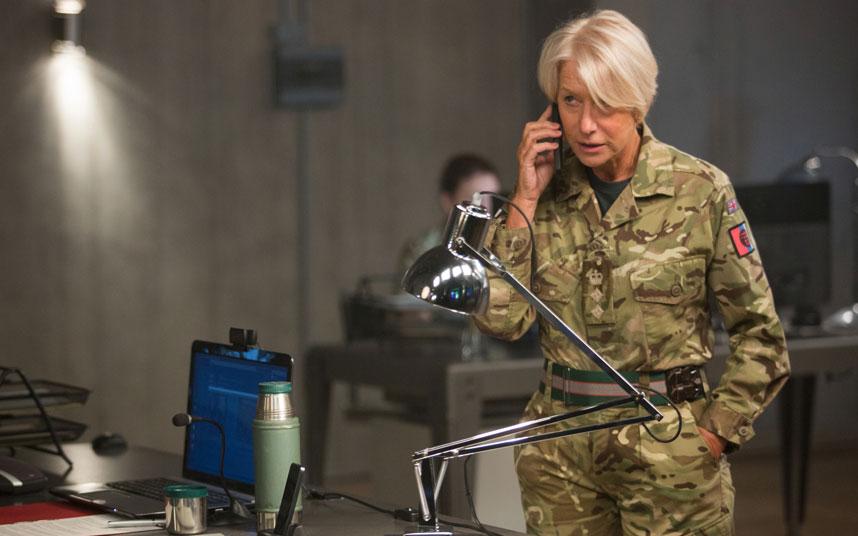
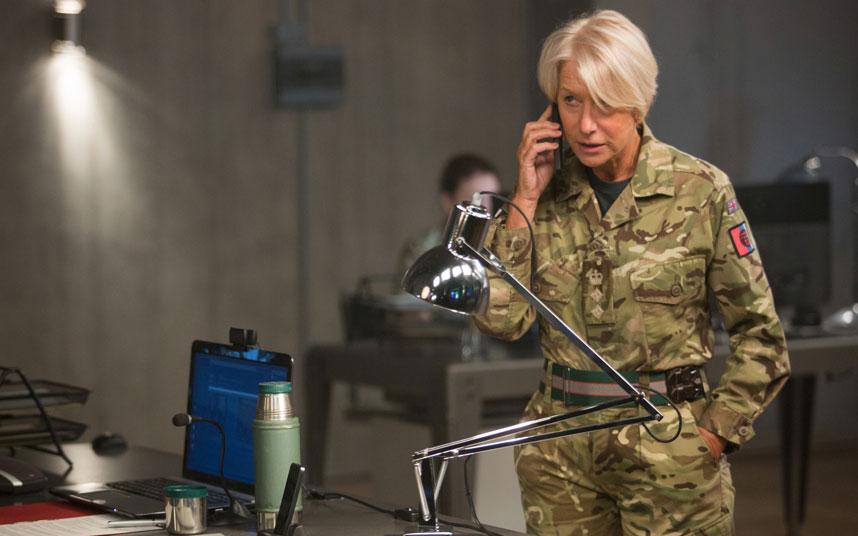
“Eye in the Sky” is a rare thriller that grips the mind and heart equally. Drones take our military closer than we have ever been before to the people and the activities of the enemy as they remove us further than we have ever been before from the visceral reality of the actions we take based on what we have learned. This film takes us inside the tactical, political, legal, and moral choices faced by the international governments and military in combating terrorism. Director Gavin Hood and screenwriter Guy Hibbert show us the stakes rising and the options shrinking with each passing second, so we in the audience must constantly ask ourselves not just what the characters should do but what we would do.
Colonel Katherine Powell of the British Army (Helen Mirren) is awakened by her phone. Intelligence received via drone indicates that three from the top ten international most wanted list of terrorists may possibly be together at a home in Kenya. The British and the US are especially interested in one couple they have been trying to find for six years. The wife is British and the husband is American. Both countries want them captured and tried at home.
If her team can positively identify the couple and the man they are meeting with, the mission will turn from reconnaissance to capture. But then the drone camera reveals that the danger is far more dire and imminent than they thought. The house is not just a meeting place. They are arming suicide bombers, taping their last statements, and presumably getting ready to send them into densely populated areas for maximum carnage. The people working on this are all over the world, with a military unit in Hawaii that analyzes images from a drone in Kenya, flown by a pilot in Las Vegas, commanded by military personnel in England, under the direction of elected officials who are both away from their countries on business.
The military has the capacity to prevent the suicide bombers from inflicting damage on civilians by blowing them up before they leave. But they are in the middle of a residential area. Is this warfare or an execution? Does it matter that two of the targets are British and US citizens? Does it matter that a little girl is selling bread just outside the house?
The international scope of the mission and the bureaucratic/political decision-making is fascinating. Information inside the house comes from a tiny mini-drone that looks like an insect, flown into the house by an operative nearby who is pretending to be both selling buckets in the open market and playing a video game on a phone. The operative is played by “Captain Phillips” star Barkhad Abdi, a very different and equally impressive performance of great intelligence and thoughtfulness. Information from the outside, including the biometric identification of the suspected terrorists, comes from drones monitored by Americans half a world away. Sitting at screens are Aaron Paul and Phoebe Fox as US military who are diligent and dedicated but not really prepared to blow up the people they’ve been spying on, especially that little girl.
There is a literal ticking time bomb in that house. We can see it. What should we do about it? Should we risk that child’s life to keep the suicide bombers from taking more lives? For the military, including Colonel Powell and her boss, Lieutenant General Frank Benson (the late Alan Rickman, making us miss him even more sharply), it is a mathematical calculus; not simple, but clear. They know they must consult the lawyers, who remind them of the criteria, almost a formula, they are required to apply. But the bureaucrats get nervous, and bump it up to the politicians. Calls must be made all over the world as the officials are participating in various diplomatic events; at one point it is even suggested that the question be put to the President of the United States.
But the film shows us that these questions have already been asked and answered. There is a calculus that is reassuringly quantitative and comprehensive but disturbingly clinical. As we see the people all over the world watching the people inside the house, trying to figure out how to apply those algorithms expressed in acronyms and percentages, the film forces us along with the characters to try to apply formulas to a world that will always confound them.
Parents should know that this movie features military violence including drones, guns, explosions, terrorism, suicide bombers, with some grisly and disturbing images, and very strong language. An extended part of the film focuses on potential “collateral damage” to civilians, including a child, from military action.
Family discussion: How would you improve the decision that was ultimately made? How would you improve the process for making it? Who should decide?
When Michiko Kakutani of the New York Times reviewed the book that inspired “Whiskey Tango Foxtrot,” the memoir of journalist Kim Barker about her days covering US military operations in Afghanistan and Pakistan, she wrote:
What’s remarkable about “The Taliban Shuffle” is that its author, Kim Barker — a reporter at ProPublica and the South Asia bureau chief for The Chicago Tribune from 2004 to 2009 — has written an account of her experiences covering Afghanistan and Pakistan that manages to be hilarious and harrowing, witty and illuminating, all at the same time.
It’s not just that Ms. Barker is adept at dramatizing her own adventures as a reporter — though she develops the chops of a veteran foreign correspondent, she depicts herself as a sort of Tina Fey character, who unexpectedly finds herself addicted to the adrenaline rush of war.
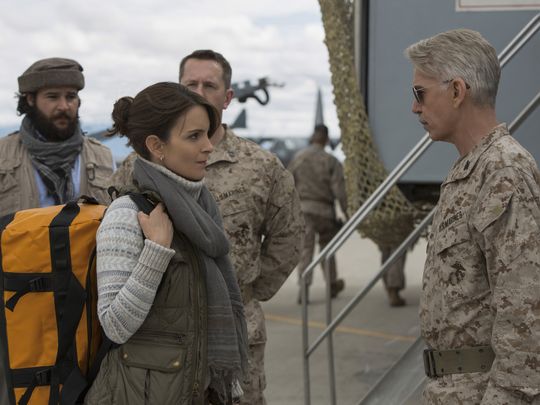
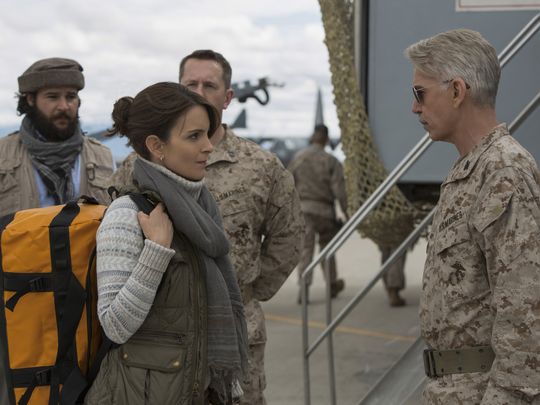
And now that book is a movie, and the role of Ms. Barker is being played by non-other than Tina Fey, who also co-produced. As always, her work is whip-smart and original. This is not Liz Lemon goes to war, it is an impressively sensitive dramatic performance.
But Barker’s story has been movie-ized, giving it the “inspired by” rather than “based on” designation, and removing the “r” from the character’s name to create some space. The real Barker was a print journalist, but making her a television correspondent to make it more cinematic. And the various love interests are fictional. It is disappointing that the movie makes the impetus for the assignment a combination of professional and romantic ennui. Barker was a dedicated journalist looking for a big story.
But much of the essence of it is the real deal, starting with Barker/Baker’s plan to spend three months in Afghanistan that turned into three years, and the ramped-up intensity of spending days embedded with the military, frantically editing the story, and then trying to obliterate memory and consciousness with some hard-core partying, only to start over again. Baker is inexperienced but dedicated and smart. She quickly impresses the cynical General (Billy Bob Thornton) who sees embedded journalists as a bother and a risk. And she quickly bonds with the other woman reporter (Margot Robbie), who shows her the ropes and asks very politely if she can sleep with Baker’s hunky security guy.
Alfred Molina is excellent, as always, as an Afghani official, though we should be past the time when European actors are cast as Middle Eastern characters. And maybe we do not need any more stories of Western characters discovering the mysteries of the other side of the world, with illuminating life lessons from exotic people. We don’t want this to be “Under the Tuscan Sun” but with war instead of sun-ripened Italian tomatoes, and it gets uncomfortably close at times. But the thoughtful script from longtime Fey collaborator Robert Carlock keeps the film from making war be just a growth experience for a reporter looking to shake up her life a bit, and the contrast between what the war does to the people trying to tell the story, knowing that the people back home just change the channel anyway give the story a sobering weight.
Parents should know that this movie has constant very strong, crude, and colorful language, drinking, drugs, smoking, wartime violence with some graphic images, characters injured and killed, sexual references and situations, and nudity.
Family discussion: What was the most important story Kim Baker reported? What did she mean when she said it “started to feel normal?”
If you like this, try: The book that inspired this film, The Taliban Shuffle, and the film “The Year of Living Dangerously”