For Memorial Day: Two Outstanding Short Films

Posted on May 25, 2013 at 12:22 pm

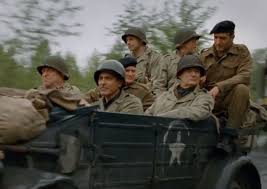
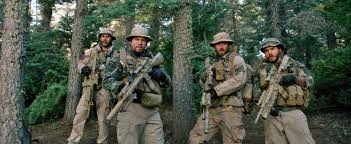
For Memorial Day, Sundance is making available online two outstanding short films about the military. Please take time to watch them with your family.

For aviation fans, get ready for a ton of wonderful archival footage coming your way in William Lorton’s Spitfire 944. A true-life story, Lorton has discovered rare 16mm footage of a 1944 spitfire crash and tracks down the pilot, now an 83-year-old World War II veteran to show him the footage. The early parts of this film consists of wartime remembrances and nostalgia for days gone by. The elderly pilot recalls his time spent with his comrades and explains the basic information involved with his aircraft. What he doesn’t know is that he is about to see, for the first time in his life, footage of his own crash. When the camera captures the man’s honest reaction to what he’s viewing, the greater theme at work is suddenly revealed in a flash. The result is an affirming, honest portrait of a man confronted with his past.

Based on a frightening true story that you won’t believe until you see, Rosso Fango details the ways in which a simple act of compassion can alter the entire course of human history.

Related Tags:


Documentary Shorts War

The Sapphires

Posted on March 28, 2013 at 6:00 pm

B+
Lowest Recommended Age: High School
MPAA Rating: Rated PG-13 for sexuality, a scene of war violence, some language, thematic elements, and smoking
Profanity: Strong language
Alcohol/ Drugs: Drinking, smoking
Violence/ Scariness: War violence
Diversity Issues: A theme of the movie
Date Released to Theaters: March 22, 2013
Date Released to DVD: August 15, 2013
Amazon.com ASIN: B00D2UMHQ0

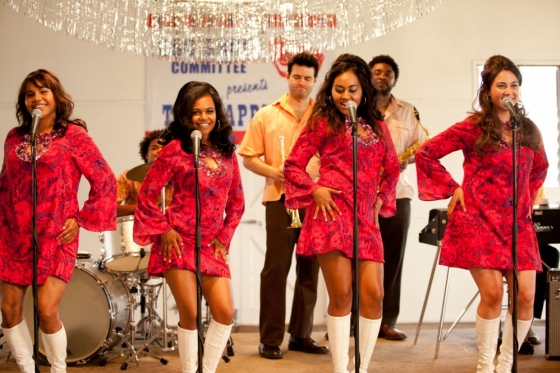
A very conventional story of a 60’s Australian girl group gains extra power from its context and setting in this fact-based story set to the beat of Motown soul.  Co-written by the son of one of the real-life singers and directed by Wayne Blair, who starred in the play based on their story, “The Sapphires” is clearly a labor of love for all involved and a touching tribute to four women for whom success as performers was just the beginning.

Before it begins, we learn two stark, devastating facts.  Until 1967, the native Australians dubbed “Aborigines” by the British settlers were not classified as humans by the Australian government.  They were considered “flora or fauna.”  And the government had the authority to remove light-skinned native children from their families as part of the program depicted in “Rabbit-Proof Fence” to make them part of the white community.

We meet the future singers as children, three sisters and their cousin, performing at a family celebration in 1958.  The light-skinned cousin is taken to become part of what is now known as the “Stolen Generation,” with no contact with her family.

A decade later, as young women, the sisters still sing together.  Gail, the feisty oldest (Deborah Mailman of “Rabbit-Proof Fence”), the ambitious Julie (pop singer Jessica Mauboy), and the flirty Cynthia (Miranda Tapsell) enter a local competition singing American country and western.  Braving the bigotry of the audience, they sing a Merle Haggard song.

The accompanist/master of ceremonies is Dave (“Bridesmaids'” Chris O’Dowd) is a broken-down mess who seems to have burned every possible bridge that once linked him to music, a job, his home in Ireland, or any semblance of self-respect.  But he still knows the real deal when he hears it.  As amateurish as they are, Dave sees what the sisters can become.  They ask him to come with them to try out for a chance to perform for American GIs in Viet Nam for $30 a week.  Soon they have reconnected with their cousin Kay (Shari Sebbens), switched from country to Motown, and passed the audition under their new name, inspired by a ring — The Sapphires. O’Dowd’s shambling charm plays well against Mailman’s protective ferocity and the wartime background and struggles against bigotry add some heft what might otherwise seem like a lightweight jukebox musical.

A girl group with four members under high-stress touring conditions far from home means many opportunities for romance, adventure, and power struggles, plus the inevitable rehearsal montages. “Can you make it sound blacker?” Dave asks.  He switches lead singers, guides them on stage presence, and suggests some different songs.  Both country and soul music are about loss, he tells them, but in country music the singer has given up.  “With soul, they’re still struggling.”  Dave’s passion for the music and his belief in the girls are scary but exhilarating.  So is being away from home for the first time.

The girls learn that performing is about more than great songs and tight harmonies as they are touched by the valor of the American soldiers.  It is not just that the GIs expect a show; they deserve one.  So, The Sapphires add spangles, go-go boots, rump-shaking and a lot of attitude.

That gives them the freedom to open themselves up to new experiences and new ways of looking at themselves.  And it means that we get to enjoy quite a show as well.  When the storyline starts to feel too close to the familiar “VH1 Behind the Music” soapy sagas of backstage tensions and heartache, those fabulous classic soul songs of the 60’s ring out, thoughtfully matched to what is happening off-stage.  “I Heard It Through the Grapevine,” “What a Man,” “I’ll Take You There,” “Hold On!  I’m Coming,” and many more add tremendous energy and spirit.  They are every bit as entertaining as they were nearly half a century ago.  Equally entrancing is a touching moment when they sing a native song called “Ngarra Burra Ferra.”

The credit sequence updates us on what happened after The Sapphires came home, with an extraordinary record of achievement, photos of the beautiful women who inspired the film, and a concluding line of piercing sweetness.  It would be great to have a sequel, but they deserve a documentary.

Parents should know that this movie includes strong language, sexual references, smoking, drinking, and wartime violence.

Family discussion: How do the racial conflicts portrayed in this film compare to those of the same era in the United States?  What makes them different?  Are you surprised by what the Sapphires did after their tour?

If you like this, try: “Rabbit-Proof Fence” and “Dreamgirls”

Related Tags:


Based on a play Based on a true story Biography Drama DVD/Blu-Ray Pick of the Week Family Issues Music Musical Romance War

Red Dawn

Posted on November 20, 2012 at 5:58 pm

There was much to improve in the original version of “Red Dawn,” a simple-minded fantasy film about a communist invasion of small town America: the plot, which asked us to believe that Cuban and Soviet invaders would focus their attention on subduing the teenage population of a town with no military significance; the dialogue, which was hilariously wooden; the special effects (the bad guys tracked our heroes using a locator that appears to have been borrowed from a 1930s Flash Gordon serial); the acting (despite a cast of future stars such as Patrick Swayze and Charlie Sheen, the original “Red Dawn” left the actors little to do except shoot guns and emote in their mountain hideouts); the production values (unseen artillery and aircraft shelled a lone tank in the middle of a vacant field with what appeared to be firecrackers). In fact, everything about the original “Red Dawn” had a childlike simplicity that made it endearing to audiences.

The plot of the new “Red Dawn” mimics the original in most respects.  Members of the Wolverines, a high school football team, refuse to surrender to or collaborate with the invaders (this time from Asia) the way many of their disappointing parents do. They take to the hills, learn to fight and inspire a resistance movement.  Along the way they learn lessons about loyalty, patriotism, and the price of the freedoms we all hold dear.  Older brother Jed Eckert is played by Chris Hemsworth (Thor from “The Avengers”) while younger brother Matty Eckert is played by Josh Peck. The obligatory girlfriend who looks hot in guerrilla garb is played by Adrianne Palicki.

MGM looked at the original formula and decided that if it was going to upgrade just one ingredient, it would be the quality of the explosions.  No firecrackers here, the new and improved “Red Dawn” has serious explosions and gunfire.  A residential neighborhood is blown up with high definition digital effects.  First time director Dan Bradley was previously a stunt coordinator and it shows.  We see house to house gunfights that look and sound authentic.  The new version uses realistic blood, rather than the Heinz ketchup favored by the producers of the original.

The problem is, this change in the formula disrupts the equilibrium that gave the original its charm.  Every element of the original was equally unpersuasive.  By making bullets more persuasive, Bradley only highlights the dumbnicity of the rest.

Worse, the new Red Dawn is a less kind movie.  Along with the more realistic violence, there is more drinking and profanity.  Unfortunately, the dialogue that is supposed to glue these elements together remains as insubstantial as the dialogue in the cartoonish original.  (Says the young guerrilla leader: “We have to make it too hard and too difficult for them.”)  One other change — the Soviet Union no longer being available as invaders, this film substituted the Chinese when it was shot a few years ago until the distributors who ended up with it after the first group ran out of money figured out that Chinese people constitute a very big audience for films, preferably ones that don’t make them the bad guys.  So, the Chinese invaders were digitally altered to make them North Korean.

The new “Red Dawn” is slicker than the original but it lacks the heart that was the only redeeming feature of the first version.  It is a meaner production, and probably not worth your time unless you go for the explosions, which are pretty good.

Parents should know that this film has extensive and sometimes graphic images of battle with guns and explosions, fighting, with characters injured and killed, and very strong language.

Family discussion: Why did some parents instruct their children to cooperate with the invaders? What made some people in the town choose to resist?  What would be the hardest thing for you about fighting the invaders?  How were the Wolverines like our founding fathers?

If you like this, try: the original 1984 version starring Patrick Swayze

Related Tags:


Action/Adventure Remake War

Veteran’s Day: Movies to Pay Tribute

Posted on November 11, 2012 at 11:11 am

As we remember and thank those who have served our country and defended our freedom, these movies help us begin to understand their contribution.
The Messenger One of the finest young actors working today, Ben Foster, stars with Woody Harrelson and Samantha Morton in this powerful story of an injured soldier assigned to visit the families of soldiers to deliver the news that they have been killed.

http://www.youtube.com/watch?v=1tTIQ8pkGf0

Gardens of Stone The detail assigned to Arlington Cemetery is responsible for honoring the war dead. James Caan, James Earl Jones, and D.B. Sweeney star in this moving tribute to the soldiers who pay tribute.

Taking Chance Kevin Bacon stars in this fact-based story of Lt. Col. Michael Strobl who volunteered to escort a fallen soldier’s remains when he found out they shared the same home town. It is a quietly touching drama about how the journey affected Strobl and the people along the way.

Related Tags:


Holidays War

Lincoln

Posted on November 8, 2012 at 6:00 pm

B+
Lowest Recommended Age: High School
MPAA Rating: Rated PG-13 for an intense scene of war violence, some images of carnage, and brief strong language
Profanity: Some strong language, one f-word
Alcohol/ Drugs: Drinking, smoking
Violence/ Scariness: Battle violence with some graphic images, sad deaths, assassination
Diversity Issues: A theme of the movie
Date Released to Theaters: November 9, 2012
Date Released to DVD: March 25, 2013
Amazon.com ASIN: B009AMANH4

The first question about big, prestige films like “Lincoln” is always where it falls on what I call the spinach scale.  Will I tell people to see it because it is entertaining or because it is good for them.  For all its meticulous attention to historical verisimilitude and its extended depiction of people in rooms talking about a Constitutional amendment, “Lincoln” is not an eat-your-spinach-because-it’s-good-for-you movie.  It is a robust, engrossing story that illuminates our own time as well as the era of the 16th and arguably greatest President.

Task number one for director Steven Spielberg, screenwriter Tony Kushner (Angels in America), and star Daniel Day-Lewis is to make the icon into a human being, to show us his greatness but also his humanity.  In our hearts, this almost-literally larger than life man sounds like James Earl Jones — we can almost hear that deep voice reciting the Gettysburg address.  But those who actually heard Lincoln speak described his voice as high, thin, and reedy-sounding.  It may be jarring at first, but in an exceptionally well-designed introductory scene Day-Lewis deploys that timbre with such gentleness and modesty that it quickly becomes an asset not just to his performance but to our understanding of this man.

Lincoln is sitting quietly, talking to a small group of Union soldiers, two black and two white.  We see immediately that the soldiers respect him greatly — they can recite the Gettysburg address from memory — but that they feel completely comfortable being honest with him about their experiences and their recommendations.  What we feel immediately is that he is both respected and trusted, and that he has a rare ability to listen.  He may not be a modest man — at one point he thunders, “I am the President of the United States and clothed in immense power!”  But he is a humble man, who understands that he can best lead by allowing others to move forward with him.  He loves to share stories, more than others love to hear them.  But like a great preacher, he knows that it is the stories that persuade people.  Everyone softens a little for a story, especially one with a punchline.  And a story helps the listener toward the conclusion without feeling pushed.

A century and a half later, audiences may be surprised to see how little has changed.  Indeed, even the vilest insults of the Twitterverse and the shrillest complaints of Super-PAC ads do not touch the comments made by Members of Congress, who do not hesitate to question each other’s integrity or sanity.  “Fatuous nincompoop,” for example.

Audiences may be more surprised to find that “Democrat” and “Republican” seem to have switched places.  What has not changed is the way that politics attracts people of great cowardice and even greater courage, of people who hold on and people who reach forward, of people who want to help themselves and people who want to help others at great cost to themselves, including those who can never thank them.

When Lincoln decides that his most important priority is eradicating slavery through approval of the 13th Amendment to the Constitution, his team brings in a trio of lobbyists (John Hawkes, Tim Blake Nelson, and a wonderfully puckish James Spader) who are as cheerfully cynical as anyone on K Street today.  Through a combination of bribes and threats, they work to get the votes they need.  It is clear the Civil War is about to end, and if the South is readmitted to the Union, it will never pass.  Lincoln understood that the only way to keep the country together was to take its most divisive issue off the table.  He also understood that doing so would have its own terrible costs.  Even those who supported the Amendment had to make compromises, including its most ardent defender (a scene-stealing performance by Tommy Lee Jones as Pennsylvania’s Thaddeus Stevens).

Kushner and Spielberg, like their main character, recognize the power of story-telling, and this illuminating tale would make its subject proud and perhaps to inspire all of us to aspire to that as well.

Parents should know that this film has some battle scenes, graphic images in hospital including amputated limbs, some strong language including one f-word, sad losses, drinking, and smoking.

Family discussion: There are a lot of compromises in this movie and a lot of shading of the truth – which were the most difficult?  Why was the passage of the 13th amendment so important?  What moments in the film reminded you of today’s political debates and strategies?

If you like this, try: some of the other portrayals of Lincoln on film, including “Young Mr. Lincoln” and “Abe Lincoln of Illinois” and the musical about the Declaration of Independence, “1776”

Related Tags:


Based on a true story Biography Drama DVD/Blu-Ray Pick of the Week Epic/Historical Politics War
THE MOVIE MOM® is a registered trademark of Nell Minow. Use of the mark without express consent from Nell Minow constitutes trademark infringement and unfair competition in violation of federal and state laws. All material © Nell Minow 1995-2026, all rights reserved, and no use or republication is permitted without explicit permission. This site hosts Nell Minow’s Movie Mom® archive, with material that originally appeared on Yahoo! Movies, Beliefnet, and other sources. Much of her new material can be found at Rogerebert.com, Huffington Post, and WheretoWatch. Her books include The Movie Mom’s Guide to Family Movies and 101 Must-See Movie Moments, and she can be heard each week on radio stations across the country.

Website Designed by Max LaZebnik