A Star is Born

A Star is Born

Posted on October 3, 2018 at 5:52 pm

B +
Lowest Recommended Age: Middle School
MPAA Rating: Rated R for language throughout, some sexuality/nudity and substance abuse
Profanity: Very strong language
Alcohol/ Drugs: Alcohol and drug abuse
Violence/ Scariness: Some fights, medical issues, suicide
Diversity Issues: None
Date Released to Theaters: October 5, 2018
Date Released to DVD: February 18, 2019
Copyright 2018 Warner Brothers

There are movies like “Invasion of the Body Snatchers” that are periodically remade to reflect changing times. And then there is “A Star is Born,” with its fifth version in just under 90 years, where the difference is in the details of the characters and performances but the theme remains the same. Going back to 1932, with “What Price Hollywood,” and then the Janet Gaynor/Judy Garland/Barbra Streisand versions of this same name, it remains the story of a fading male performer with substance abuse problems who falls in love with a young, talented female, helps her become a star, and then realizes he is in her way.

It is perhaps surprising that this story still carries so much power to move us. It could be corny and dated. After all, stars these days go to rehab and then come out to tell their stories of redemption and healthy habits on the cover of People Magazine. The credit for this latest version’s compelling power goes to its director/co-writer/star, Bradley Cooper, who has told the story with verve, specificity, and conviction, and who wisely selected pop superstar Lady Gaga to play the part of the young singer. Life imitates art for the performer originally as famous for her transgressive videos and wild attire (who can forget the meat dress, now at the Rock and Roll Hall of Fame museum?) as for her music. Reportedly, when Cooper met the artist originally known as Stefani Joanne Angelina Germanotta, he wiped the makeup off her face and told her that was how he wanted her to be seen in the film. Her character, Ally, would not be the highly burnished, defiantly confident, even brazen pop performer in grotesque haute couture, but the real girl underneath. That girl is a revelation. The emotions we see on her face as he tries to pull her onstage for the first time, and then her resolve as she steps out from the wings are achingly honest.

Writer/director/co-star Bradley Cooper shows as much evident pride and pleasure in showing her to us as his character, Jackson Maine, does in pulling Ally onstage to introduce her to the audience by making her sing, for the first time, her own songs. His careful attention to every detail is evident in every moment and he has a true musician’s sense of pace and timing. The songs are not just lovely; each of them is meaningful in revealing character and helps to tell the story. The two most recent “Star is Born” movies had their songs nominated for Oscars. One was a winner; the other should have been. This follows in that tradition and I hereby predict that “Shallow” will win this year’s Best Song and that Lady Gaga will be nominated as well.

Cooper’s script reflects the intensive textual analysis he learned in his studies at the Actors Studio and his direction reflects his deep understanding of the importance of creating a safe space for actors to take risks and be completely vulnerable on screen. His own performance is meticulously considered. We see his struggle, his pain, and his passion for music. But like his character, it is very much in service to Lady Gaga as Ally. Cooper says that the idea for the film came to him when he was backstage at a Metallica concert, where he could see the intimacy of the experience of the musicians working together on stage at the same time he saw the immensity of the crowd caught up in the experience. He creates that for us here, and one of the movie’s best images is the small, private smile we see when Jackson begins his signature song. For a moment, the agony of his world disappears and all that is left is the music and the connection it makes to the audience.

Ally gives him that feeling, too. Helping her pulls him out of himself, at least for a while. But his past and dark thoughts about his future are too much to bear.

Cooper also has some small but lovely tributes to the earlier versions of the story, to James Mason wiping off Judy Garland’s garish make-up and to the bathtub scene with Streisand and Kristofferson. But this is very much a stand-alone, a timeless story of love and loss, and a stunning debut from a director who arrives fully present, utterly committed, and astonishingly in control of a vision that is a work of art and completely heartfelt.

SPOILER ALERT: All of the other versions of this story end with a suicide that is portrayed as tragic but also noble, a sacrifice to make it possible for another person to succeed. I was very concerned going into this film that it would perpetuate this toxic romanticized notion. Cooper finds a way to mitigate that to some extent, but viewers should know that it remains a very troubling issue and is the reason I did not give the film a higher grade.

Parents should know that this film has very strong language, alcohol and drug abuse, some fighting, sexual references and situations, some nudity, and suicide.

Family discussion: Why didn’t Jackson tell Ally the truth about what was happening to him? What will Ally do next? How is this version of the story different from the previous films?

If you like this, try: the earlier versions of the story, with Frederic March and Janet Gaynor, Judy Garland and James Mason, and Barbra Streisand and Kris Kristofferson


Related Tags:


Drama DVD/Blu-Ray movie review Movies -- format Musical Remake Romance
Night School

Night School

Posted on September 27, 2018 at 5:58 pm

C
Lowest Recommended Age: Mature High Schooler
MPAA Rating: Rated PG-13 for crude and sexual content throughout, language, some drug references and violence
Profanity: Very strong language for a PG-13
Alcohol/ Drugs: Drug references
Violence/ Scariness: Comic peril and violence
Diversity Issues: Diverse characters
Date Released to Theaters: September 28, 2018
Date Released to DVD: January 7, 2019

Copyright Universal 2018
Maybe Night School might slide past more easily in the summer, when audiences are more susceptible to silly comedies. But it is possible even summer audiences would find this a disappointingly lesser work from two of the most unquenchably funny people in movies, Kevin Hart and Tiffany Haddish. It’s a warning sign when the opening credits show six different writers in a tangle of “ands” and “&s,.” The seams between the obvious rewrites trip over each other, interrupting the flow of the storyline and the build-up of the comedy.

The premise is in the title and the best jokes are all in the trailer. Kevin Hart plays Teddy, a high school dropout who is happy and successful, happy because he has a beautiful, accomplished, loving girlfriend (the exquisitely lovely Megalyn Echikunwoke as Lisa), but not as successful as she thinks he is because he does not want her to know that he never finished high school and is living paycheck to paycheck. His best friend Marv (Ben Schwartz) warns him that he cannot afford his duplex, Porsche, or the engagement ring he wants to give Lisa, but Teddy’s boss has promised to give him the store when he retires, and so he thinks it will all work out.

Of course, all of that has to fall apart for the story to happen, but it takes too long to get to the reason we are there — night school, so Teddy can get his GED and go to work for Marv as a financial analyst(!). And so we can see the scenes with Hart and Haddish, playing his teacher, Carrie. The early scenes drag, especially when Teddy tries to get out of paying an expensive restaurant bill by sticking his hand down his pants so he can put some hair into the food and claim it came that way from the kitchen. And then Teddy has to accidentally burn down the store, another pointless, overlong digression.

And then we get to the GED program, at the very high school that was so traumatic for Teddy, now run by his high school nemesis, Stewart (a woefully underused Taran Killam), who has a poster of “Lean on Me” behind his desk and carries a Joe Clark-style baseball bat to terrorize the students.

The night school instructor is Carrie (Haddish), a straight-talking, hard-working teacher who demands the best from students. She has no patience for the work-arounds Teddy has come up with to hide what she recognizes as learning disabilities. But she has all the patience it takes to find a way for him to succeed.

The night school classmates are lazily sketched out, relying on our familiarity with the types we have seen in so many movie classrooms and the talent of the supporting cast, including Rob Riggle playing the blustery part he usually plays, Mary Lynn Rajskub in another mousy role, and Al Madrigal as the waiter Teddy got fired in the restaurant incident. The movie heaves from one set-up to the next, and we get the sense that “Kevin does something funny” is pretty much all they had in mind for most of them. Ultimately, even that fails and they have to resort to the desperation go-to, a dance sequence. To Outkast’s “Hey-Ya.” Come on. Okay, that part made me smile, but I was not proud of myself for it.

We don’t need the movie to make sense or ring true, but we do need it not to fight with us. In other words, the events and the comedy have to bring the movie forward. It may be funny to see Haddish deliver a powerhouse punch to Hart in full boxing gear (followed by further punches as he gets more and more protective covering), but it undermines everything we have been told about her character’s dedication and decency and come on, this is how you “cure” ADD and dyslexia? Scenes like the whole class getting together to steal the answers to a test go on much too long for too little payoff. I’m a fan of director Malcolm Lee, whose films generally have an expert balance of heart and humor. This one, sorry to say, does not make the grade.

Parents should know that this film includes near-R-level language and crude humor, sexual references, comic peril and violence, and drug references.

Family discussion: How did understanding that he had learning disabilities change Teddy’s outlook? Why didn’t he tell Lisa the truth sooner?

If you like this, try: “Central Intelligence” and “Girls Trip”

Related Tags:


Comedy DVD/Blu-Ray movie review Romance
Operation Finale

Operation Finale

Posted on August 29, 2018 at 5:49 pm

B +
Lowest Recommended Age: High School
MPAA Rating: Rated PG-13 for disturbing thematic content and related violent images, and for some language
Profanity: Some strong and hateful language
Alcohol/ Drugs: Drinking, smoking
Diversity Issues: A theme of the movie
Date Released to Theaters: August 31, 2018
Date Released to DVD: December 3, 2018
Copyright 2018 MGM

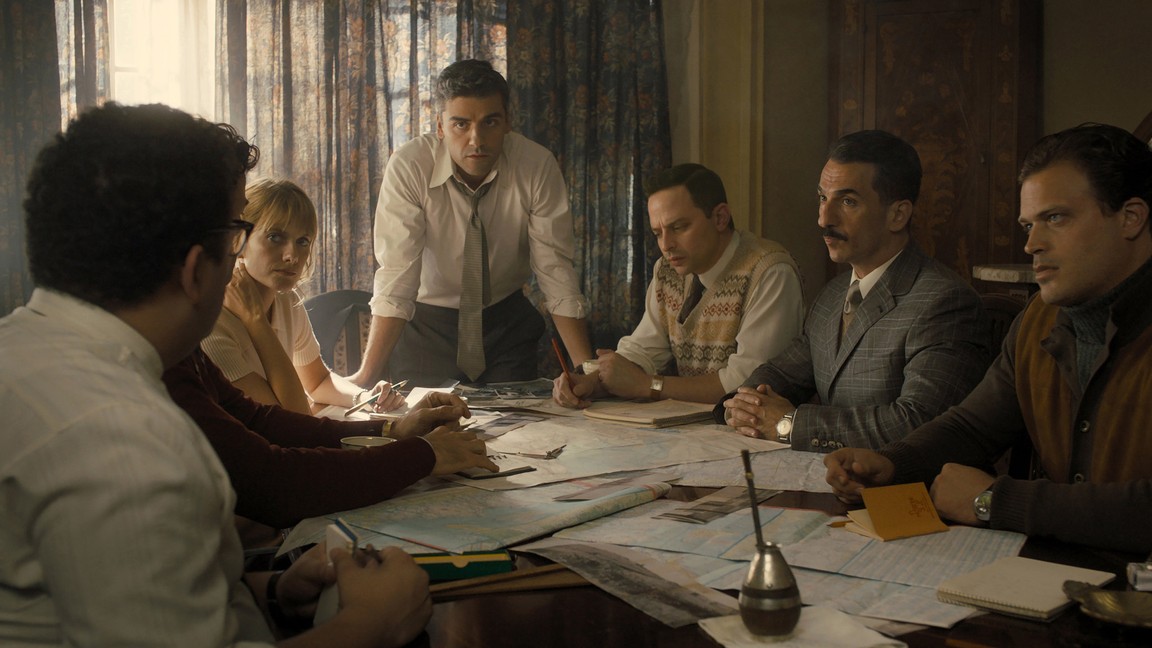
Operation Finale considers what is, perhaps, the ultimate conundrum, one that echoes throughout all of human history. How can good guys defeat the bad guys without becoming bad themselves? If the bad guys do not play by any rules at all, the good guys have two choices: to stay within the rules themselves, which can be high risk because it is like going into a fight with both arms tied behind your back, or decide that the ends justify the means and violate the rules to improve their chance of winning. Can it really be a win if you abandon your principles to get there?

Sometimes there is ambiguity about who exactly are the good guys and the bad guys. That is not the case with the Nazis in WWII. Among the worst of the worst, certainly the worst to survive the war, was Adolf Eichmann, the head of the “Department of Jewish Affairs” and the man responsible for creating the system that led to the murder of millions of people, including six million Jews. The other top Nazi leaders, Hitler, Himmler, and Goering, killed themselves at the end of the war. Then there were the Nuremberg trials for many others. But Eichmann and a few others escaped to Nazi-friendly Argentina. Fifteen years later, agents of Israel’s Mossad intelligence agency captured him and brought him back to Israel for a trial that was broadcast around the world. This is the story of how that happened, so tensely presented that we hold our breath even though we know that Eichmann made it to Israel, where his “man in a glass booth” (for security) trial was broadcast as it happened throughout the world, giving most people their first chance to hear testimony from Holocaust survivors.

Director Chris Weitz and screenwriter Matthew Orton skillfully portray the people of the young state of Israel, just 12 years old, still defining itself internally and still justifying its existence to the world. When someone approaches Mossad with evidence that Eichmann has been identified in Argentina, the first reaction is that the atrocities are old news, and they don’t have the resources to go after him because they are too busy fighting for the right to exist now. They ultimately decide to get him less from a sense of justice or even revenge than from the notion that at this stage, everything they do is definitional; every choice they make shows the world what it means to be a Jewish state after the Holocaust, an atrocity so unprecedented that the term was not even in widespread use for several more years.

We see what it is to have a country made up of displaced people, each of whom has suffered unthinkable trauma and grief. In one scene they almost start to have a grim “who lost the most” conversation before they stop. Their focus has to be on what happens next, and that is the risky, complicated plan to get Eichmann out of Argentina, even though there is no extradition and they don’t have access to military aircraft capable of transporting him.

Sir Ben Kingsley plays Eichmann, living under an assumed name, working at a Mercedes factory, living with his wife and sons, and speaking often to groups of other escaped Nazis about his wartime experiences. Oscar Isaac plays Peter Malkin, the Mossad agent who actually tackled Eichmann, and who, with his colleagues, had to keep him captive until he could be extracted and put on a commercial flight to Israel.

There is a wisp of a love story, and there is some exploration of the moral dilemmas. But it is the electrifying scenes between Kingsley and Isaac that are even more riveting than the “can they get him” and “will they be caught” moments of spycraft.

It was Eichmann himself who inspired Hannah Arendt’s term “the banality of evil,” and disconnect is jarring between Eichmann’s deeds in overseeing the mechanics of rounding up Jews and transporting them to their execution and torture and the bland, civilized factory foreman who loves his wife and children. Eichmann is not bothered by the slaughter of millions, even when a murdered baby’s brain was splattered over his coat. Malkin is still deeply wounded by the loss of one person, his adored sister, who was killed with her children. He is still anguished by a fatal mistake on a previous mission. We see that the very conscience that keeps Malkin from “putting a bullet between eyes,” as he said he would gladly do, can make it much harder to bring him to justice.

Eichmann, a master manipulator, tries to put them both in the same category of following orders to save their country. Malkin tries to manipulate Eichmann into signing the necessary consent form for leaving the country. Each tries to gain ground over the other, usually through appearing to be conciliatory, to find some point of vulnerability. The action scenes, especially toward the end, have a ramped-up “Argo” rhythm, but what is far more engrossing is when two people talk to each other.

The stakes are incalculable and inherently dramatic, but Kingsley and Issac take it to another level as characters and as actors, and it is fascinating to see them challenge each other. Two of the greatest actors alive, each with endless screen magnetism, superb control of acting technique, and the ability to tell a lifetime with an almost imperceptible shift of the eyes or slight additional huskiness in the voice, put all of that to show us a massive historical event can come down to two people in a room.

Parents should know that this film includes footage of Holocaust atrocities, including mass murder, with some graphic and very disturbing images, some peril and violence, drinking, smoking, and some strong language.

Family discussion: Why is it important to give someone a fair trial when the crime is unimaginably big and the evidence against him is overwhelming? Is it possible for a trial under those circumstances to be fair? Why did Eichmann sign the agreement?

If you like this, try: “Argo,” “Munich,” and “The Eichmann Show,” a film about the trial, and read Peter Malkin’s book, Eichmann in My Hands.

Related Tags:


Based on a true story Drama DVD/Blu-Ray movie review Movies -- format
The Happytime Murders

The Happytime Murders

Posted on August 23, 2018 at 5:35 pm

C
Lowest Recommended Age: Adult
MPAA Rating: Rated R for strong crude and sexual content and language throughout, and some drug material)
Profanity: Very strong, crude, and offensive language
Date Released to Theaters: December 3, 2018
Copyright STX Films 2018

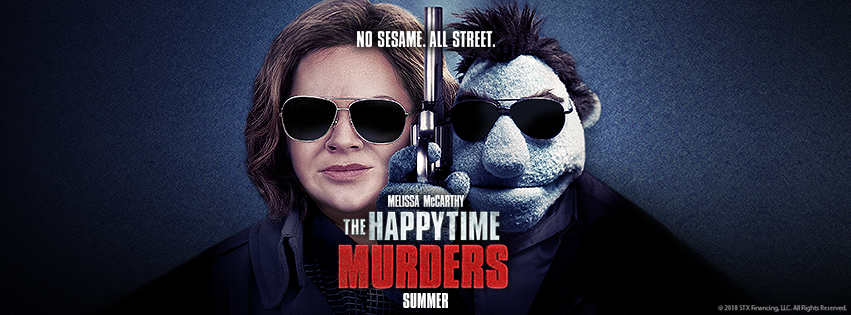
A couple of minutes into “The Happytime Murders,” an adorable Muppet-like puppet says the f-word. If that strikes you as funny, think very carefully about whether it is funny enough for 90 minutes of pretty much the exact same joke to justify the price of a movie ticket. If you want to hear puppets swear and talk about porn, see “Avenue Q.” If you want to see a detective try to solve a murder in a show business community where entertaining non-human characters are second-class citizens, see “Who Framed Roger Rabbit?” If you want a good time at the movies, do not go to see this.

It might have made a pretty good Funny or Die video. But it is not enough to sustain even a less-than 90-minute running time. It is vastly less entertaining than the behind-the-scenes credit sequence showing how some of the scenes were filmed. And it is vastly less interesting than a movie about adults trying to trash the imperishable legacy of a legendary father, as is the case here with the Henson kids making a hard-R movie with characters from the Muppet world their father created.

Phil Philips (Bill Barretta) is a disgraced cop-turned private detective with a comely receptionist named Bubbles (Maya Rudolph, the movie’s highlight). A beautiful new client (Dorien Davies) asks Phil to find out who is blackmailing her. Phil investigates a possible connection in a porn shop (where a puppet cow is having her udder massaged by a puppet octopus) just as a gunman arrives and kills everyone else in the store. One of the victims was an actor on a popular television show called “The Happytime Gang,” featuring Phil’s brother and a bunch of other puppets, along with a human named Jenny (Elizabeth Banks), once Phil’s girlfriend.

Phil’s former partner, Connie Edwards (co-producer Melissa McCarthy) shows up, and her lieutenant (Leslie David Baker) assigns them to work together on what turns out not to be a simple robbery but a plot to kill off all of the Happytime Gang. Phil and Connie track each one down, bickering along the way, and failing to protect any of them. This is an opportunity to show many puppets engaging in extremely depraved behavior including substance abuse and prostitution and brutal murders with bits of fluff and disembodied puppets everywhere. Fun!

What makes the Muppets magical is the vivid personalities. We don’t love Kermit and Miss Piggy and Statler and Waldorf and Elmo and Oscar and Big Bird and the Swedish Chef and Fozzy Bear because they are puppets. We love them because they are characters, as vivid and engaging and real as any human. The puppets here, are expertly made but bland. And so, despite all the naughty talk and truly filthy behavior, is the script. It is too lazy to even think through its premise, beyond “it’s funny to have characters usually designed for children say and do R-rated things.” A human has a transplanted puppet liver. Puppets and humans apparently have sex with each other. Puppets have puppet children and, if the puppets who have children are cousins, those children do not have the correct number of eyes. Hilarious! And on top of regular old fashioned bad taste, it has the extremely poor judgment to have a “puppet lives matter” element.

A brief pause before my conclusion to mention Maya Rudolph, who almost packs a whole movie’s worth of watchability in her irresistible performance. As Bubbles, she manages to pay tribute to and slightly parody the classic hard-boiled but soft-hearted dames who used to work for detectives like Bogart’s Marlowe and Spade. The timbre of her voice, she way she holds her shoulders, the way she walks, the way she picks a lock, the way she thanks Phil for bringing her a candy bar — each moment is a small chamber piece of exquisite choices. McCarthy is great. She’s always great. But she is not always great at picking projects, and this one, despite her crackerjack timing and remarkable focus, is a big, fluffy, dud.

Parents should know that this film includes constant extremely strong, vulgar, and crude language, very explicit sexual references and situations, drinking, smoking, drugs, violence including guns and fire, and characters injured and killed.

Family discussion: What parallels is this movie suggesting about today’s political issues? Why did the humans feel superior to the puppets?

If you like this,try: “Avenue Q”

Related Tags:


Comedy Crime DVD/Blu-Ray Fantasy movie review Movies -- format
Juliet, Naked

Juliet, Naked

Posted on August 23, 2018 at 3:32 pm

B
Lowest Recommended Age: High School
MPAA Rating: Rated R for language
Profanity: Strong language
Alcohol/ Drugs: References to alcoholism and drug abuse, alcohol
Violence/ Scariness: Medical issues
Diversity Issues: None
Date Released to Theaters: August 24, 2018
Date Released to DVD: November 13, 2018
Copyright 2018 Lionsgate

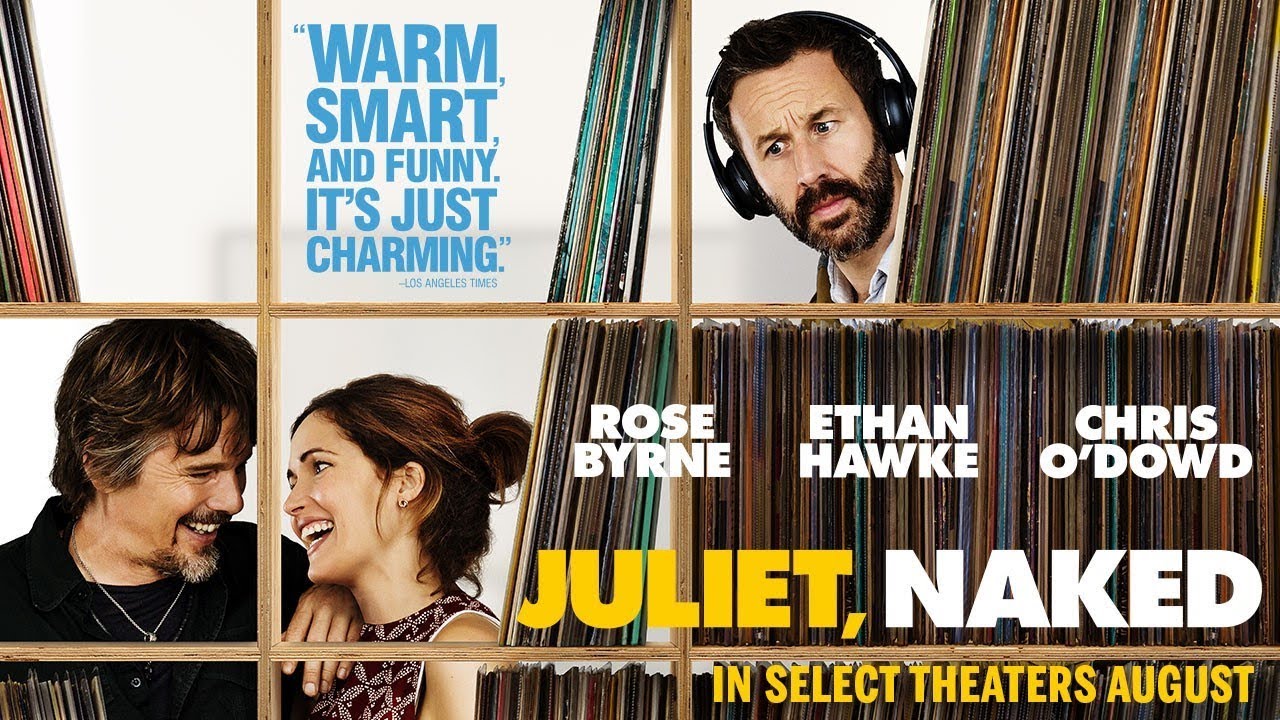
Nick Hornby understands passionate fans of rock music and the people who create it. His novel High Fidelity and the film starring John Cusack are classics. He also wrote About a Boy, the story of a man who, years after his father’s one novelty hit, is living off the royalties and not doing much else. It became a beloved film starring Hugh Grant and television series. He brought those two ideas together in Juliet, Naked, the story of a passionate fan and a faded rock star who are connected by the woman they both love.

Annie (Rose Byrne) cannot quite figure out how she got where she is and is even less able to figure out how to get anywhere else. When her parents died, she took over her father’s job as curator of a small history museum and raised her younger sister, who now works there with her. She has been living with Duncan (Chris O’Dowd), her boyfriend of 15 years, a professor of popular culture who shows his students clips from “The Wire” and who operates a fan site for the elusive Tucker Crowe, a rock star whose disappearance has only increased the interest in his one classic album, called “Juliet” and inspired by a break-up.

Duncan receives some previously unreleased Crowe songs, the original demos of “Juliet,” “naked” because they have no studio sweetening or instruments other than Crowe’s guitar. For a fan who obsessively collects Crowe arcana, this is the ultimate treasure. Annie, irritated with him for his fixation on a musician who has not released any new music in decades, writes a bad review of the new tracks on Duncan’s fan site, calling it a cash grab, and she gets an email from Crowe himself, agreeing with her. This leads to an email correspondence, “You’ve Got Mail”-style. And then to a meeting IRL.

The movie was directed by a real-life rock star, Jesse Peretz of The Lemonheads, and he has a feel for the life of a rock star and the life of a fan. He (and Hornby) have less of a feel for Byrne’s character, and even Byrne’s endless charm and skill cannot make up for an underwritten role. Hawke does better. Crowe is so shaggily rueful about his own failings as a performer, a person, and a father that we almost forget just how irresponsible he has been. It’s a slight story, but it’s a sweet one.

Parents should know that this film has very strong language, sexual references and non-explicit situations, references to alcoholism and drug abuse, references to irresponsible behavior, and a medical issue.

Family discussion: What makes some people into super-dedicated fans? Was Annie right about the museum exhibit?

If you like this, try: “About a Boy” and “High Fidelity”

Related Tags:


Based on a book Comedy Critics Choice Seal of Distinction DVD/Blu-Ray movie review Movies -- Reviews Romance
THE MOVIE MOM® is a registered trademark of Nell Minow. Use of the mark without express consent from Nell Minow constitutes trademark infringement and unfair competition in violation of federal and state laws. All material © Nell Minow 1995-2026, all rights reserved, and no use or republication is permitted without explicit permission. This site hosts Nell Minow’s Movie Mom® archive, with material that originally appeared on Yahoo! Movies, Beliefnet, and other sources. Much of her new material can be found at Rogerebert.com, Huffington Post, and WheretoWatch. Her books include The Movie Mom’s Guide to Family Movies and 101 Must-See Movie Moments, and she can be heard each week on radio stations across the country.

Website Designed by Max LaZebnik