





Interview: Regina Hall of “First Sunday”
Posted on January 11, 2008 at 8:00 am
Regina Hall has been the best thing in many movies that were either not worthy of her talents (the “Scary Movie” series), overlooked (Malibu’s Most Wanted
Regina Hall talks about her new movie with Ice Cube, Tracy Morgan, and Katt Williams, “First Sunday”
Regina Hall talks about her character, Omunique
I loved the way you made Omunique sympathetic — it would have been so easy to make her shrill and over the top. This was especially important because your scenes with Ice Cube and are in contrast to the rest of the movie, which is very broad comedy, and are what really make us care about what happens to the characters. Can you tell me how you thought about her and how you create that balance?
Omunique is like a lot of single mothers who work really hard and whose partners have not shown up in an equal capacity. It can make it difficult but she loves her son, and that is what matters to her. It’s about him, not about her. There’s another scene that got cut from the movie but will be on the DVD where she sees her son talking to his father on the phone about the video game and he tries to hide it from her. She tells him that he does not ever have to sneak to call his father, and it shows you that she is protective of the father-son relationship even though they are not together. It is a comedy, but you can’t caricaturize. Her name gave it enough! Omunique is not in a lot of scenes so I only had a few moments to get what you need for comedy and still leave truth there. That’s something that every woman of every race can understand.
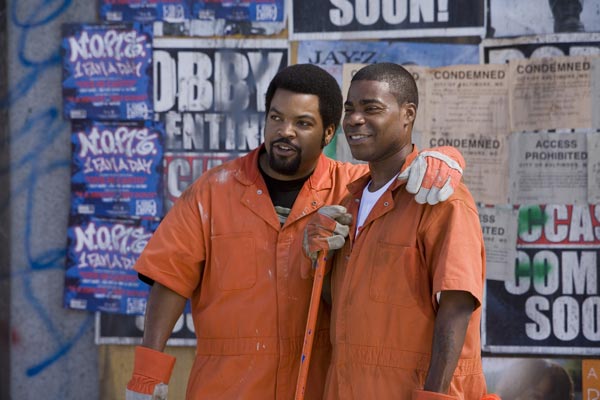 Ice Cube was once a member of the fiercely provocative gangsta rap group N.W.A. (for N****** With Attitude). He is now a prolific Hollywood producer with franchise films from R-rated (the
  series) to family-friendly (
 ). He is going for the PG-13 market with “First Sunday,” and it is more product than movie, filled with signifiers instead of story. It has the slapstick of a
  short without the comic timing, the characters of “Hot Ghetto Mess” without the irony, and the stereotypes of
  . Harry drove me around Santa Monica to show me the locations in movies from “The Sting” to “Gigli.”
 Last night, my husband and I attended our first-ever red carpet event, the Critics Choice Awards, which were broadcast on VH1. It was a lot of fun, especially the end, when all of the critics went up on stage to present the best picture award (to “No Country for Old Men”), so I could look down from the stage and see everyone from Brad Pitt and Angelina Jolie to Dixie Carter (who complimented my dress) and Hall Holbook, to Nikki Blonsky (best young actress), Queen Latifah, and Elijah Kelly from “Hairspray” to Don Cheadle (who graciously accepted the first-ever Joel Siegal award for achievement in both film and humanitarian efforts, presented to him by George Clooney). The talk of the evening was the cancellation of rival awards show the Golden Globes, due to the writers’ strike. The best line of the evening was when presenter Steve Zahn said he wished the writers would come back to work and the critics would go on strike. The funniest acceptance speech was from Casey Affleck, who wasn’t even accepting his own award, but one for his co-star, Amy Ryan. He pretended he was editing out her jokes about him as he read the speech he prepared.