Now You See Me 2

Now You See Me 2

Posted on June 9, 2016 at 5:40 pm
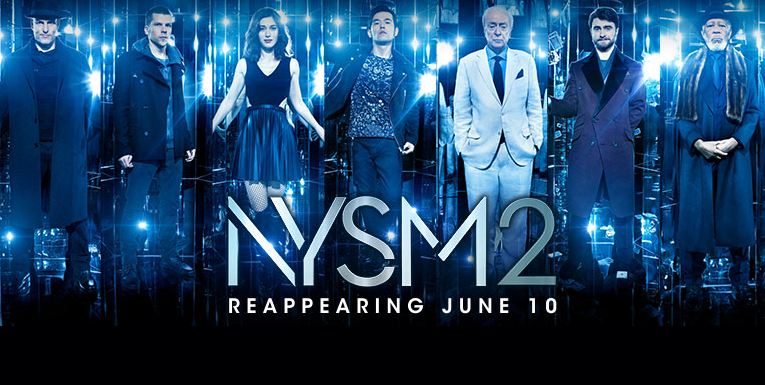
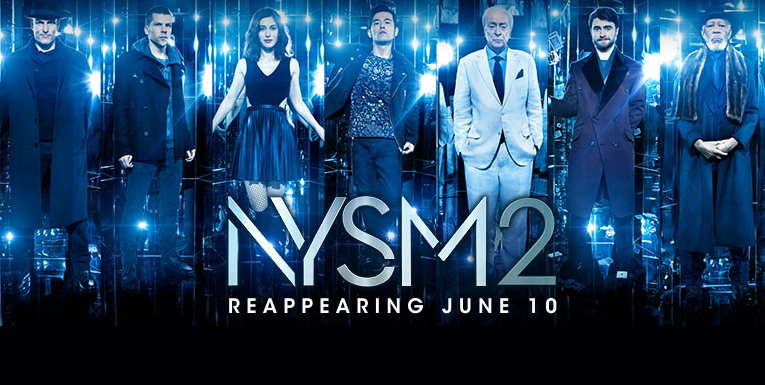
now-you-see-me-2The first “Now You See Me” was a deliciously entertaining heist film with “the Four Horsemen,” a team of magicians, engaged in a diabolically clever combination of misdirection and triple-cons for the purpose of revenge, Robin Hood reparations, and showmanship. We know what that means for part 2 — the Empire strikes back, and it is a popcorn pleasure. The Horsemen stole from billionaire Arthur Tressler (Michael Caine) and framed the magician turned debunker Thaddeus Bradley (Morgan Freeman) so he ended up in prison.

At the end of the last film, the surprise twist revealed FBI agent Dylan Rhodes (Mark Ruffalo) as the brains behind the operation. As this one opens, the FBI, with Deputy Director Natalie Austin (Sanaa Lathan) in charge, does not know and thinks Rhodes is still looking for three of the Horsemen. They believe Jack Wilder, played by Dave Franco, was killed. They’re wrong about both. Rhodes is working with the Horsemen, including Wilder. But there is a new member of the group: Lula (Lizzy Caplan, replacing Isla Fisher). And they immediately run into a snag involving someone who knows a bit about magic in the movies: Daniel Radcliffe as Walter Mabry, a mysterious, mega-wealthy guy who wants the Horsemen to steal something for him. It’s the usual MacGuffin — some sort of computer thing that would give him access to everything/control of everything blah blah, and it’s locked away in a place with the kind of crazy security reserved for heist movies. All the world’s biggest, richest baddies are after it, and so the Horsemen have to find a way to get in there before one of them gets it.

The first movie had sensational performance showpieces. This one is more “Mission: Impossible” (the television series, not the Tom Cruise movies) until the final scene. But it keeps the sly twists coming, using all the magicians’ favorite ruses, from misdirection to an almost-balletic slight of hand. Just like “The Avengers,” it is a lot of fun to see each of the Horsemen use their skills — mentalist Merritt McKinney (Woody Harrelson), lock wizard Wilder, card master Daniel Atlas (Jesse Eisenberg). We learned in the first film that McKinney’s brother stole all his money and disappeared; it turns out he was an identical twin brother, and he shows up, played by Harrelson with hair that looks like that awful perm Mike Brady had in the last season of “The Brady Bunch.”

It has all the twists and reveals and surprises we were hoping for, including one saucy switch that is not about magic, just social conventions that have not caught up to reality, some very old school means of communication, and a touch of movie magic in giving us a glimpse of one character’s past with some CGI that looks a little more realistic than the “work” that has ruined so many Hollywood faces. Director Jon M. Chu (the “Step Up” movies) has a superb sense of space and movement, giving the story exuberance and flair. It’s a fitting encore and I hope we will see them all again in part 3.

Parents should know that this film includes some strong language, and some action-style peril and violence.

Family discussion: Would you want to be selected by The Eye? Which magic trick would you like to be able to master?

If you like this, try: the original film and “The Sting”
Related Tags:


Crime Series/Sequel
Genius

Genius

Posted on June 9, 2016 at 5:23 pm

Copyright Lionsgate 2016

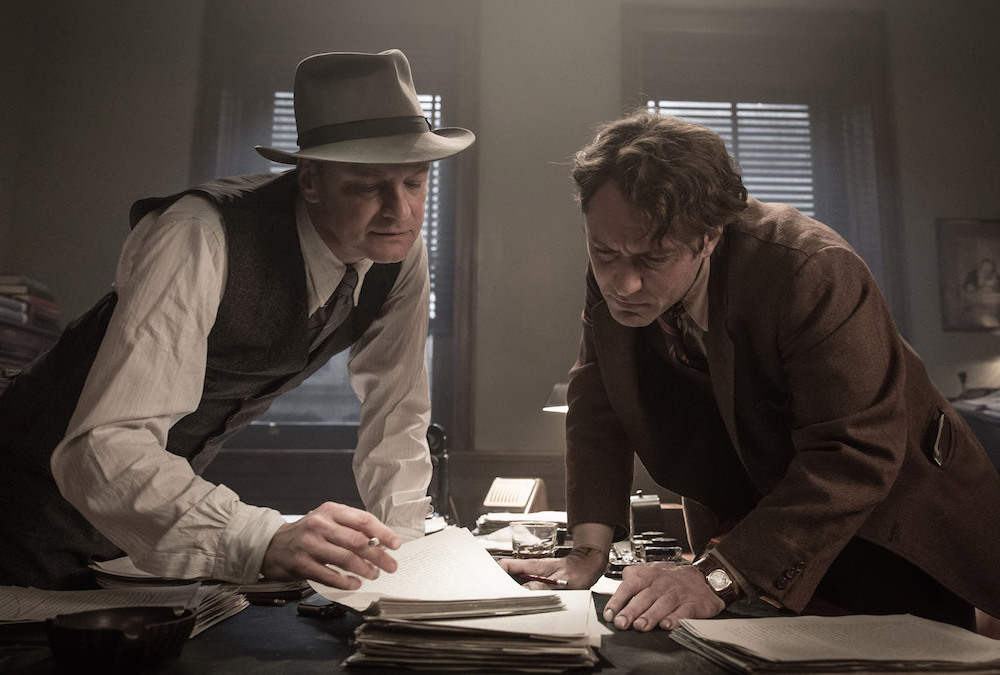
They are legends of 20th century American letters, so renowned a single name suffices: Fitzgerald, Hemingway, Rawlings, Lardner, Wolfe. But there is another name — Maxwell Perkins — who was essential to their work and often advisor and support system for their personal lives as well. A. Scott Berg’s brilliant 1978 biography of Perkins has inspired a film that focuses on the most important relationship of Perkins’ professional life — his work on the first two books by Thomas Wolfe.

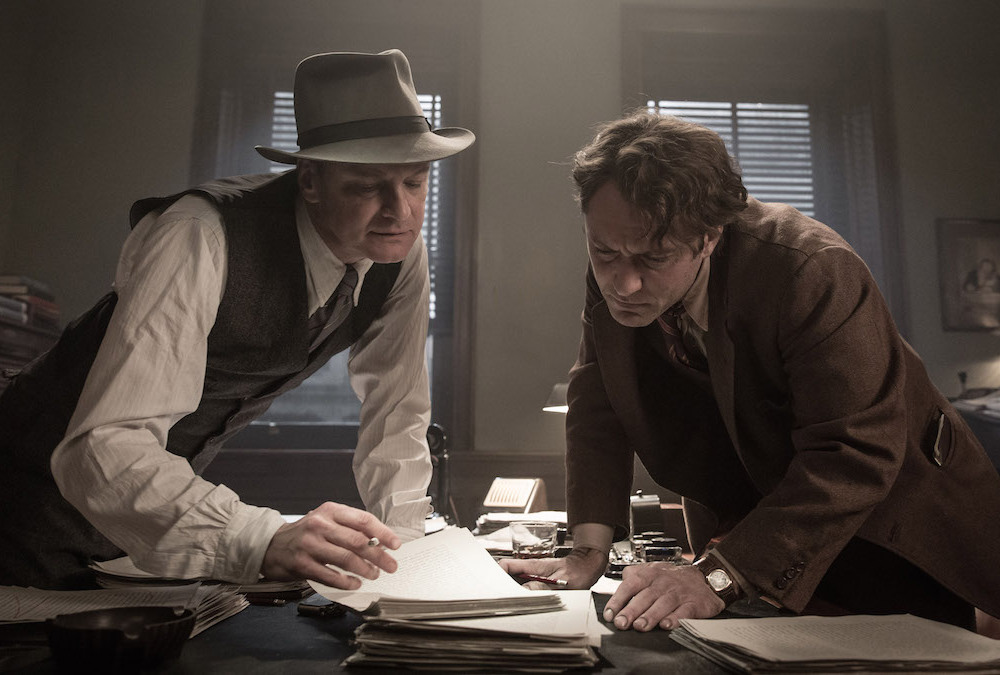
Intriguingly, all of the major male roles are taken by British and Australian actors playing Americans, and unsurprisingly they are all superb, never missing an final r or an elongated vowel — or worse — showing off. Colin Firth plays Perkins, a mild-mannered man who loved his family but was most alive as a appreciator of literature — he knew it when he received it as a manuscript and he knew how to trim away the underbrush to make it better. His great skill was seeing the story the writer wanted to tell and doing whatever was necessary to get it into the hands of readers.

After Hemingway’s spare, masculine prose and Fitzgerald’s elegant sentences and impeccable structure, Perkins receives a submission from Wolfe that is vital, poetic, and a veritable avalanche of words. “Please tell me it’s double-spaced,” he says, looking at the pile of paper. “That’s a long paragraph,” Perkins daughter remarks, reading over his shoulder. “It started four pages ago,” her father replies.

Like Michelangelo seeing the statue inside the block of marble, Wolfe sees a novel that preserves Wolfe’s torrential style but prunes away the excess. He reassures Wolfe that he will only “shape it a bit, cut off the top branches.” Wolfe knows it needs pruning. “You don’t know how I struggled to cut the gorgon down.”

And Wolfe (Jude Law), who tells Perkins that not just his books but most of all literature is about the search for a father, responds to Perkins’ utter engagement in service to his story. The relationship between a writer and a great editor is one of the most intimate and fulfilling, something between a gifted psychoanalyst, an inspiring teacher, and a fairy godparent — or, just a parent. Perkins, the father of five daughters (charmingly portrayed), found a spiritual son in the troubled genius, and, as Berg’s book argues, was a genius himself in the way he was able to cull out of him timeless classics.

This sympathetic portrayal acknowledges the devastation that can be wrought by geniuses. We see Wolfe’s troubled relationship and careless dismissal of his supporter and mentor, the set designer Aline Bernstein (Nicole Kidman), who is anguished not because she left her husband and children for the much-younger Wolfe, but because once she was successful at getting him launched, he did not need her anymore. We the devastation that can be felt by them as well, as Fitzgerald (Guy Pearce) struggles to write and to care for his wife, Zelda, who is near-catatonic. But the hero of the story is the man waiting patiently backstage, ready to supply a discreet loan or a helpful suggestion: Don’t name the book Trimalchio in West Egg — how about The Great Gatsby? The quiet dignity and integrity of Firth’s performance is a tribute to all whose art is a life of service.

Parents should know that this film includes drinking and drunkenness, smoking, abusive behavior, some sexual references, mental illness, and a sad death.

Family discussion: What did Perkins see in Wolfe that the other publishers did not? Do you agree with Wolfe’s statement that literature is about the search for fathers? How was that reflected in his relationship with Perkins?

If you like this, try: the writing of Wolfe, Fitzgerald, and Hemingway and the biography of Maxwell Perkins by A. Scott Berg. You can also read the unedited manuscript originally submitted to Perkins to see if you think he was right.

Related Tags:


Based on a book Based on a true story Biography Drama
Popstar: Never Stop Never Stopping

Popstar: Never Stop Never Stopping

Posted on June 2, 2016 at 5:37 pm

Copyright Universal 2016
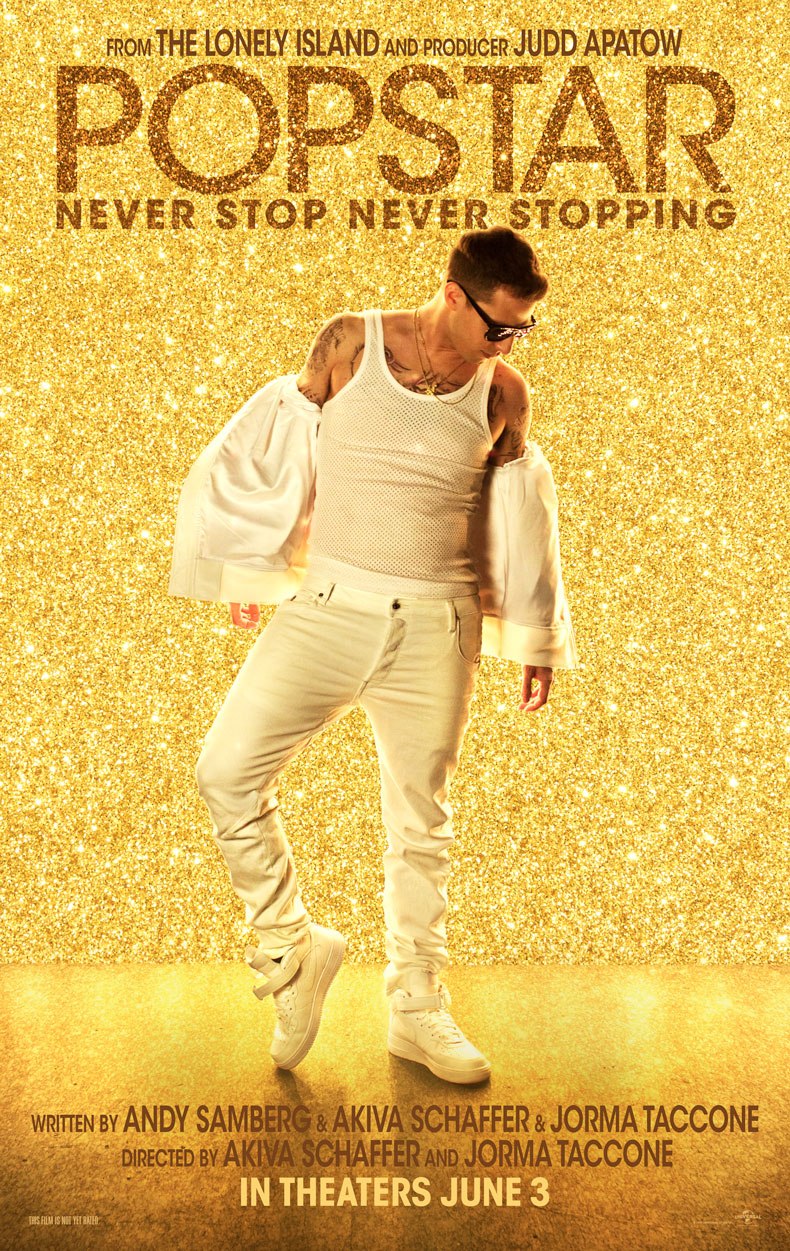
Andy Samberg, Akiva Schaffer, and Jorma Taccone are masters of the music video parody, and their SNL shorts “D*** in a Box,” “Jack Sparrow,” and “I’m on a Boat,” all featuring genuine music stars, followed the first true viral video, the classic “Lazy Sunday.” They are gifted at composing catchy hooks, writing silly lyrics, and nailing the music and look of genres from rap to pop to R&B. With appealing targets and a three-minute running time, they did very well. Now they’ve produced, written, and starred in a feature length parody of music documentaries with “Popstar: Never Stop Never Stopping.” So, instead of comparing them to the performers they take on with their video shorts, they are going up against films like “This is Spinal Tap” and “Walk Hard,” both of which managed the daunting challenge of being more over-the-top than the acts they were parodying. “Popstar” is pleasant enough, but does not quite meet that challenge, getting most of its energy and most of its laughs from an endless parade of celebrity cameos, mostly winking at the audience.

Samberg plays Conner, once part of a popular band called Style Boyz with his childhood friends Owen (Taccone) and Lawrence (Schaffer), and now a hugely successful solo performer known as Conner4Real. Owen is now reduced to serving as DJ. Taccone provides the film’s rare subtle charms, making Owen so endearing he deserves his own movie. On stage, he sits behind an impressive high-tech set-up, but as he explains in one of the film’s comic high points, everything is set up on his iPod, which also has room for the audio books he listens to on the road. He makes the best of his relegation to the sidelines, even when Conner decides that he should have to wear a huge, heavy electro helmet/mask that shoots a zillion-watt light beam out of the top, so powerful it could probably disrupt the navigation system of the space station.

Lawrence is furious with Conner for stealing the credit he felt he deserved for one of his biggest hits. He has retreated to a farm in Colorado, where he makes terrible wood carvings and broods about the unfairness of it all. That hit, by the way, in a shrewd jab at the recording industry and its fans, turns out to be a brief rap segment in a song by a superstar (a blink-and-you’ll-miss her Emma Stone). Connor tells us that most rap artists do catchphrases, but his innovation (actually Lawrence’s) was to do a lot of catchphrases.

Conner is, of course, dating a starlet (Imogen Poots) and decides to distract the press from the terrible reviews of his new album by proposing to her in a stunt that goes terribly wrong. When ticket sales for his tour lag, he brings on an opening act, an up-and-coming rapper (Chris Redd) who “All About Eve”-style begins as a fan and then starts to take over the show.

The trio gets able support from SNL veterans Tim Meadows, Maya Rudolph, and Joan Cusack, and there are some funny cutaways to a TMZ-style sleazy “news” organization, but at a brisk under-90 minute running time no one is on screen for very long. The musical numbers are hilarious and the film is never mean-spirited about its characters or the real-life celebrities it is parodying. And by the time you figure out a joke isn’t working, two more have gone by, the pace itself enough things bouncing along. It tries so hard to entertain you, it would be hard-hearted not to give in.

Parents should know that this film includes very explicit nudity, very strong and crude language, sexual references, some comic violence, drinking, and drugs.

Family discussion: What celebrities does this remind you of? Why did Conner decide he wanted someone to be honest with him?

If you like this, try: “This is Spinal Tap,” “Walk Hard,” “Gentle and Soft” (the brilliant Bill Hader/Fred Armison mockumentary about a 70’s soft rock duo) and the Lonely Island videos

Related Tags:


Comedy Musical Satire
Me Before You

Me Before You

Posted on June 2, 2016 at 5:21 pm

Copyright 2016 New Line Cinema
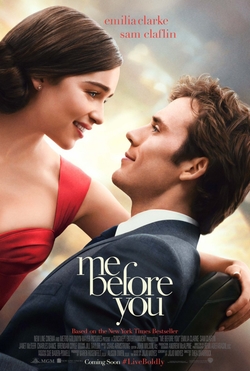
It’s all about the eyebrows. Emilia Clarke (“Game of Thrones”) has gamine-like “natural” eyebrows ideal for expressing wonder, hurt feelings, and enthusiasm, and Sam Claflin (“Hunger Games”) has circumflex-like eyebrows ideal for expressing skepticism, irony, and stoicism. All four eyebrows get an extensive workout in “Me Before You,” based on the international best-seller by JoJo Moyes about Louisa Clark (Clarke), a high-spirited, warm-hearted pixie of a girl, just laid off from her job behind the counter at a bakery, and Will Traynor (Claflin), a once-energetic, once-successful finance type from a wealthy family who is now paralyzed below the shoulders following an accident. Lou is hired by Will’s mother (the redoubtable Janet McTeer) as a “companion” for Will, a position that only exists in novels about warm-hearted young women sent to castles with names like Thornhill that have eligible but tortured men waiting to have their hearts warmed. Will has an Aussie aide who handles the icky physical stuff (Stephen Peacocke), so Lou is there to bring cheer to Will, who has no intention of being cheered. And did I mention he lives in a literal castle?

Lou’s family depends on her for money, because her father has been laid off (due, as we will find, to the financial engineering of Will’s one-time protege). And so she accepts the job with no real understanding of caring for a severely disabled person and stays in it even when he refuses to speak to her or to accept her many offers of a cup of tea. Ultimately, through a combination of ennui, frustration, and the impossibility of resisting the charm of Lou’s kindergarten teacher meets Lisa Frank and Hello Kitty-style attire, Will begins to thaw a little. The immense pressure of what he has lost inspires him to want more for her than she wants for herself, and he feels impelled to show her that, even with a castle in its midst, her little town cannot be enough for all she should want from life. Did I mention that his name is Traynor?

This is not a movie that leaves anything to the imagination. Just in case you were not sure of that, Lou’s boyfriend Patrick (one-time Neville Longbottom Matthew Lewis) is Will’s polar opposite, a fitness instructor and “motivational coach” who thinks a few more reps can solve any problem. And just in case that isn’t enough, there’s a brief encounter with the divine Joanna Lumley to spell it all out for Louisa and for us as well.

Okay, so no surprises here, especially if you’ve read the book. Bring a handkerchief, maybe two. But Clarke and Claflin have palpable chemistry, and we are no more able to resist Lou than Will is. As she takes him back out into the world, she thinks it is for him, but he knows it is for her, and we find that the real hero of the story is Will’s, well, will.

SPOILER ALERT: Some groups have raised concerns about the film’s portrayal/advocacy of assisted death, adapting the movie’s #liveboldly tagline to urge movies to portray disabled people who are active and engaged.

Parents should know that this film includes non-explicit sexual references and situation, mild language, severe injury and discussion of assisted death.

Family discussion: Should Will have changed his mind? What will Louisa do next?

If you like this, try: “Love Story” and “A Walk to Remember”

Related Tags:


Based on a book Illness, Medicine, and Health Care Romance
Alice Through the Looking Glass

Alice Through the Looking Glass

Posted on May 26, 2016 at 5:50 pm

Copyright 2016 Walt Disney Pictures

“Alice Through the Looking Glass” the movie has almost no relationship to Alice Through the Looking Glass, the book by Lewis Carroll in spirit, character, or storyline. That might possibly be all right if the spirit, character, or storyline were in any way worthwhile, but it is not. Gorgeous production design and some cool stunts do not make up for a story that begins as passable and ends as painful.

Tim Burton, who produced this one, previously gave us an “Alice in Wonderland” with an adult Alice (Mia Wasikowska) replacing the little girl of the story and spending way too much time in the above-ground “real” world as she attends a party, turns down a proposal of marriage from the odious Haimish (Leo Bill), and accepts instead the offer from his father to serve as crew on a merchant ship.

In “Looking Glass,” we first see Alice, now captain of the ship, in an exciting escape from pirates that show us her courage and love of adventure. But when the ship returns to port in London, she finds that Hamish’s father has died, leaving him in charge, and he refuses to let her go back to sea. In his home, she finds a mirror over a fireplace that is a portal back to Wonderland, led by the former caterpillar, now-butterfly (voice of of the much-missed Alan Rickman).

Having already imported the talking flowers, chess pieces, Tweedledum and Tweedledee, and the Jabberwocky from “Through the Looking Glass” into the first film, conflating the first story’s Queen of Hearts (the “Off with the head!” one) with the second story’s Red Queen (the chess one) this movie takes — but makes no use of — the first book’s characters like the Cheshire Cat and the White Rabbit, and then has a completely invented story about time travel.

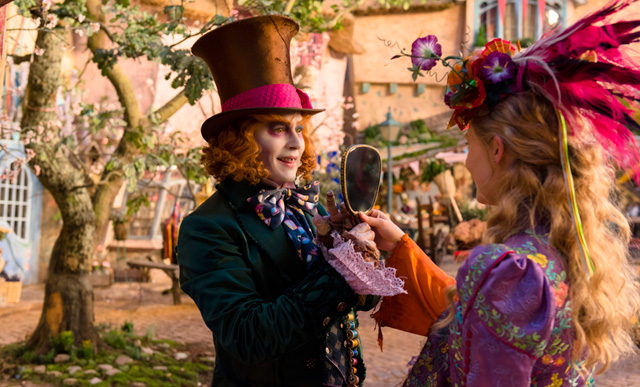
This has many disagreeable aspects, but the worst is when it puts Sasha Baron Cohen as the embodiment of Time into a scene with Johnny Depp as the Mad Hatter and allows them to try to out-grotesque each other in a manner clearly intended to be charming. It is not.

Neither is the plot, which relies heavily on just the kind of treacly heartstrings-plucking backstories that Carroll would never have allowed, asking us to feel sympathy for outrageous behavior and affection for caricatures. The first film’s attempt to create a warm, devoted friendship between Alice and the Mad Hatter was rather ooky. In the sequel, we are asked to believe that she has returned to do whatever it takes to help him because they love each other so much.

To paraphrase the folks behind “Seinfeld,” in the Alice world, there should be no hugging and no apologizing — and no heartfelt professions of affection, especially when they are not in any way justified by the characters’ history with each other.

Alice is needed on the other side of the mirror because the Mad Hatter has found something that has convinced him that his family is still alive, and not killed by the Jabberwock as he had thought. Why is this so important? Is it because he misses them so? Not really. It is because he feels bad about his behavior and needs to see them again so he can be forgiven. The disconnect between the expressions of devotion and the narcissistic reality of behavior is disturbingly cynical. Alice decides the only way she can save his family is to go back in time to the Jabberwock battle, which means she has to retrieve the chronosphere from Time himself, and that leads to more time travel as she solves various not-very-mysterious mysteries and Time chases her to get it back. Not that any of it makes any sense, logically or emotionally.

The production design is imaginative and witty, but it is buried under a gormless, hyperactive mess of a film. The book is endlessly witty and imaginative and delightful with all kinds of wordplay, math puzzles, and chess references from Carroll (aka Charles Dodgson), a math professor.  The movie wastes all of that opportunity.  Look at the title — the movie should be about a reverse world, not a heist/time travel saga that only concludes you can’t change history.  If I had the chronosphere, I’d use it to go back to the moment I sat down to watch this movie so I could go home.

Parents should know that this film has extended fantasy peril with many disturbing images, discussion of loss of parents, brief image of someone dying, and bullying.

Family discussion: If you could go back in time, what time would you pick? Why did the Hatter and the White Queen have a hard time telling their families how they felt?

If you like this, try: the many other movie Alice stories including the Disney animated version and the Kate Beckinsale version of “Through the Looking Glass” and the books by Lewis Carroll

Related Tags:


3D Action/Adventure Based on a book Fantasy Remake Series/Sequel
THE MOVIE MOM® is a registered trademark of Nell Minow. Use of the mark without express consent from Nell Minow constitutes trademark infringement and unfair competition in violation of federal and state laws. All material © Nell Minow 1995-2026, all rights reserved, and no use or republication is permitted without explicit permission. This site hosts Nell Minow’s Movie Mom® archive, with material that originally appeared on Yahoo! Movies, Beliefnet, and other sources. Much of her new material can be found at Rogerebert.com, Huffington Post, and WheretoWatch. Her books include The Movie Mom’s Guide to Family Movies and 101 Must-See Movie Moments, and she can be heard each week on radio stations across the country.

Website Designed by Max LaZebnik