How to be Single

How to be Single

Posted on February 11, 2016 at 5:40 pm

Drew Barrymore — you know I love you but how does your Flower Films production company produce a film about female friendship and empowerment that barely passes the Bechdel test? how to be single
And did we really need a thinly disguised remake of “He’s Just Not That Into You?” I know it’s Valentine’s Day and the time feels right for a girls’ night out movie, but despite its entertaining moments, I’d go for “Star Wars” again over this.

Now, on to the entertaining moments. This is one of those “three girls looking for love” or “three girls looking for love or its close equivalent” stories with cute guys, cute clothes, cute apartments, cute problems, and cute pop songs on the soundtrack. Yes, get ready for “Worth It.” Again. It’s the new “I Feel Good.”

Alice (adorable Dakota Johnson) breaks up with her college boyfriend Josh (Nicholas Braun). She loves him, but they’ve been together four years and she does not know who she really is anymore. She needs to be on her own for a while, she tells him. It’s not a break-up; it’s just a break. Her new friend Robin (Rebel Wilson doing her usual shtick) reminds her that “Hey, Season Three Ross, there’s no such thing as being on a break.” Robin encourages her to drink, dance, and have meaningless sex with a cute bartender named Tom (Anders Holm of “The Intern”) who is the master of the one-night stand.

Alice has an older sister, Meg (Leslie Mann), an obstetrician who wants to have a baby. And then there is Lucy (Alison Brie), who lives above Tom’s bar and goes there to use his wi-fi to scroll through endless dating site profiles and complain about how DIFFICULT it is to find a presentable man who will COMMIT. This entire section is pretty much ripped off from the Justin Long/Ginnifer Goodwin part of “He’s Just Not That Into You” by the same screenwriters.

Johnson and Brie are adorable, and up-and-comer Jake Lacy (“Carol,” “Obvious Child”) is very appealing as one of Alice’s co-workers who likes Meg. But it is disappointing that it claims to be about the importance of taking responsibility for your own life and your own dreams, and apparently it is written by and very loosely based on a novel by women who are capable in jobs they find satisfying. But Alice seems to have no interest in her job as a paralegal and is as clueless about what it takes to be a professional as she is about even the most basic of daily tasks. She literally cannot dress herself. And learning to do so is portrayed as a major life achievement. Her romance with a handsome widower (an underused Damon Wayans, Jr.) makes little sense and her BFF relationship with Robin makes even less. In fact, there isn’t one relationship in the movie that makes us think they could have an actual conversation or even have much fun together.

“How to be Single” is more like a series of skits at a sorority slumber party than a story with characters. If Alice, Robin, Meg, and Lucy went out for a girls’ night at the movies, they’d choose something else.

Parents should know that this film includes very strong sexual content with many casual encounters, explicit sexual humor and sexual situations, and brief nudity, very strong and crude language, drinking and drugs.

Family discussion: What was the most important lesson Alice learned from each of the men she dated? Why did she listen to Robin?

If you like this, try: “He’s Just Not That Into You,” “Bridget Jones’ Diary,” and “Think Like a Man”
Related Tags:


Comedy Romance
Zoolander 2

Zoolander 2

Posted on February 11, 2016 at 5:22 pm

B-
Lowest Recommended Age: Mature High Schooler
MPAA Rating: Rated PG-13 for crude and sexual content, a scene of exaggerated violence, and brief strong language
Profanity: Brief strong language, crude references
Alcohol/ Drugs: None
Violence/ Scariness: Mostly comic peril and violence, characters injured and killed, some disturbing images, assault weapons, knives, explosions, building collapse
Diversity Issues: None
Date Released to Theaters: February 12, 2016
Date Released to DVD: May 23, 2106
Amazon.com ASIN: B018IDVB6W

Copyright 2016 Paramount

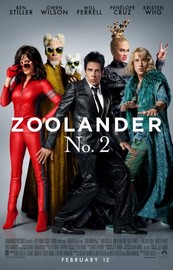
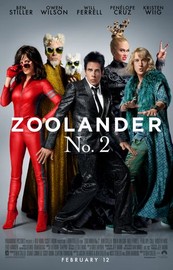
Kind of like fashion itself, we don’t really care whether “Zoolander 2” is any good. We go because it is silly fun.

The original Zoolander, released in 2001 just after the attacks on 9/11, was based on shorts Ben Stiller created for the VH1 fashion awards. It was moderately successful on release but has become a big hit on DVD/Blu-ray and an enduring cultural touchstone. It’s the kind of movie that is best watched at home, with friends who know exactly where the punchlines and star cameos come in, or while sick in bed recovering from the flu when you’re not quite up for binge-watching something that requires more than half your attention.

I suspect the same will happen with this 15-years-later sequel, again directed by Stiller, who stars as the dimwitted supermodel of the title and co-wrote with Justin Theroux, Nicholas Stoller, and John Hamburg. The script relies heavily on the audience’s affection for and knowledge of the first, with more winking references to the original than attempts to be funny about the current state of fashion and the industry.

In the first film, Derek Zoolander plans to build a book-shaped center called The Derek Zoolander Center for Kids Who Can’t Read Good and Who Wanna Learn to Do Other Stuff Good Too. After that film ended, we are told through clips from television news shows (Katie Couric, Jane Pauley, and Jim Lehrer are among the first of an avalanche of what-is he/she-doing-in-this-movie celebrity cameos) that after it was built the building immediately collapsed, killing Zoolander’s wife (Stiller’s real-life spouse, Christine Taylor) and injuring Derek’s rival-turned BFF, Hansel (Owen Wilson).

Partly because he was so distraught, but mostly because he is an idiot, Derek was unable to take care of his son, Derek Jr., and he was taken away by Child Protective Services. Derek announced at a press conference that he was retiring from modeling to become “a hermit crab.” Hansel, his face scarred from his injury, also retreated from the world, to live in the desert (well, Malibu) with an 11-person assortment of consorts he refers to affectionately as his orgy.

But then a nefarious villain is killing pop stars, who die with what appears to be Derek’s famous Blue Steel look on their faces. When Justin Bieber is killed (with time for an Instagram filters joke), Interpol’s fashion division, led by a former swimsuit model (eternal beauty Penelope Cruz) decides that they need Derek’s help to solve the crime.

There’s a lot of fan service here, which can seem stale to those who know the first movie well. But as a lukewarm fan of the earlier film, I found myself being a lukewarm fan of this one, too. The dumb jokes (both those about being dumb and those that actually are dumb) and grotesqueries are no funnier but no less funny. The storyline (Will Derek be reunited with his son? Will Hansel be a father to his various upcoming babies? Will Will Ferrell’s Mugatu destroy whatever it is he is planning to destroy?) is weak, but it is a hoot to see the fashion dream team (even Anna Wintour!) playing themselves with such good humor. In fashion terms, it’s a cheap knock-off, but sometimes that’s all you need.

Parents should know that this film includes very strong content for a PG-13 including very crude sexual references and brief graphic sexual humor, mostly comic violence with characters injured and killed and some disturbing images, and brief strong language.

Family discussion: What are the most important messages we receive from the fashion industry? If they make a “Zoolander 3,” what celebrities would you like to see included?

If you like this, try: the first “Zoolander”

Related Tags:


Comedy Movies -- format Series/Sequel
Hail, Caesar!

Hail, Caesar!

Posted on February 4, 2016 at 5:59 pm

Copyright Mike Zoss Productions
Copyright Mike Zoss Productions 2016
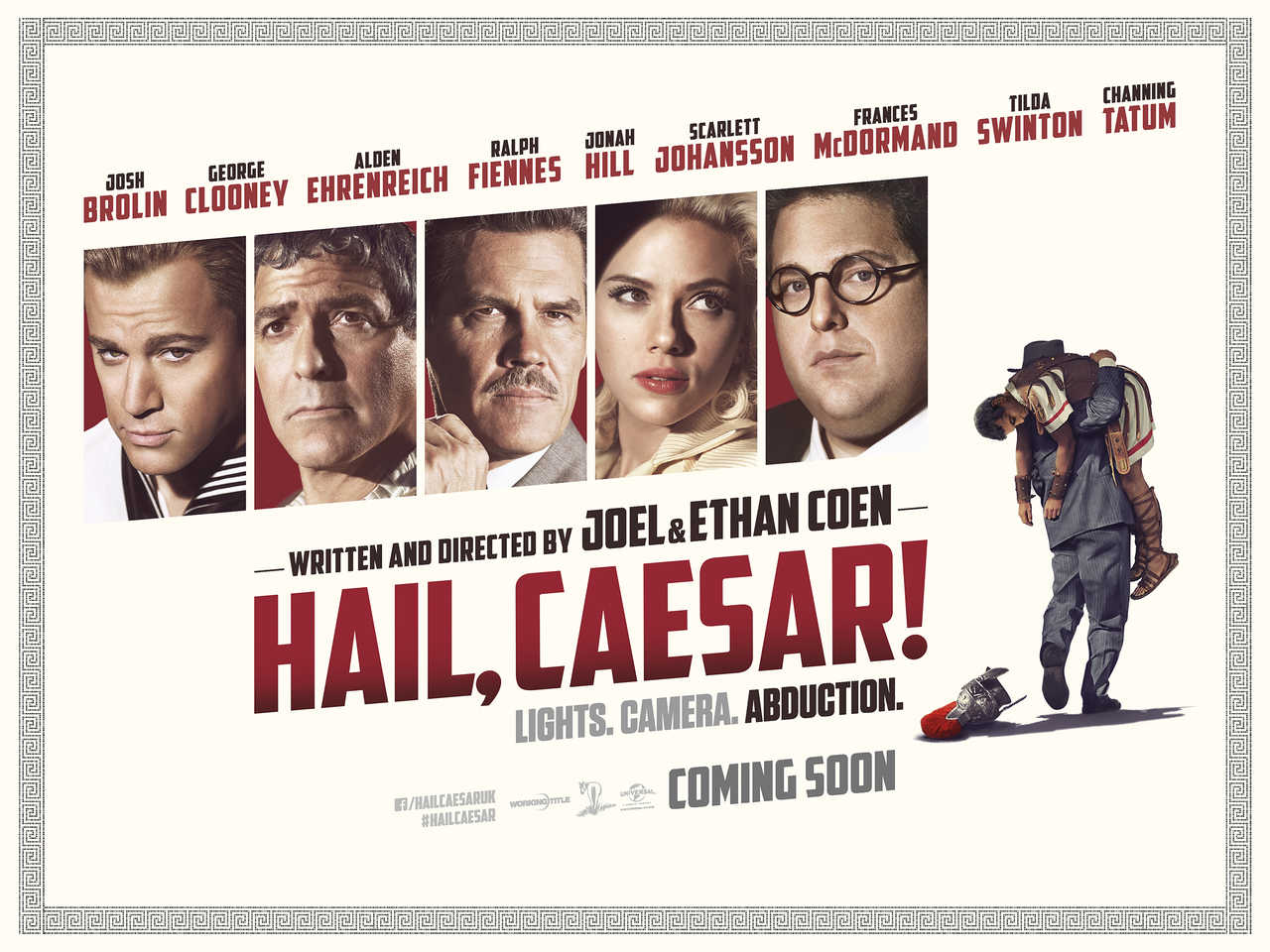
The Coen brothers love old movies, and not just the classics. I remember reading an interview where they discussed their affection for “With Six You Get Eggroll,” which even Doris Day’s most fervent fans do not consider one of her best. With “Hail, Caesar!” they pay loving tribute to the final years of the golden era of the Hollywood studios, in part because it gives them a chance to tell a story about change, and choice, responsibility and irresponsibility, and in part because it gives them a chance to play studio heads themselves, overseeing not just one movie but five. And as Orson Welles said, that’s “the biggest electric train set any boy ever had.”

There really was an Eddie Mannix, the MGM executive who had various titles but who was pretty much a full-time fixer. Whether it was a starlet’s nude photos or a male star’s casting couch encounter with a male director, his job was to keep it out of the courts and especially out of the gossip columns and scandal magazines with names like “Confidential.” This was accomplished with bribes, intimidation, and trading of favors. A reputation would be saved by giving the reporter exclusive access or even a juicy story about a lesser star who could be sacrificed to save the day for someone the studio considered a major asset.

The Eddie Mannix played by Josh Brolin works at a studio called Capitol Pictures, but the issue of capital will arise as well. Eddie is under so much stress he goes to confession every day. He is responsible for keeping the entire studio running smoothly, and that begins before dawn, where he extracts an actress from a compromising situation (paying off the cops), and continues on the studio lot. There he assigns an amiable singing cowboy star named Hobie Doyle (a winning Alden Ehrenreich) to put on a dinner jacket and take over the lead in a high-prestige drawing room drama, even though he’s “a dust guy” and his dialog in previous films was pretty much limited to whistling for his horse, Whitey, and “Hold on, there, partner.” Cleaning him up and putting him in a dinner jacket is not a problem, but the intricate drama he is thrown into requires tricky lines like “Would that t’were so simple,” preceded by a mirthless laugh.

Mannix visits the set of a big-budget musical and sees a water ballet out of Busby Berkeley’s wildest dreams. But the star is pregnant but not married (a career-killer in those days). She’s played by Scarlett Johansson with enough wit and brio to power the massive flume of water that lifts her mermaid character up into the sky.

The biggest studio production is the epic “Hail, Caesar,” about a Roman centurion who becomes a follower of Jesus (oddly similar to the upcoming “Risen”). It stars the studio’s most valuable actor, with the manly name of Baird Whitlock (a wickedly funny George Clooney). Mannix thinks his biggest problem is going to be making sure that the movie does not offend anyone in the audience, and in a hilarious scene, he consults with a focus group of clergy, or tries to. But then a real problem arises. Baird Whitlock is kidnapped and being held for ransom by a group that calls itself “The Future.” They are a group led by the most improbable of 20th century scholars, accurately quoted if not accurately portrayed, and supported by…well, no more spoilers here.

It’s flat-out funny, whether you know the history or not, and I left wishing for a quadruple feature that would include all of the films we see in production (well, maybe not the other “Hail, Caesar”). What keeps it buoyant, even effervescent, is the pure affection for films and filmmaking in every one of what in the pre-digital days we used to call frames. (We see them up close and personal in a hilarious scene with Frances McDormand as an old-school film editor.) The movie touches lightly on issues of story-telling and the inherent chaos and frustration of trying to balance art and commerce, plus the skills and needs of a large group of people. But the love story here is between Mannix, as a stand-in for the writer/directors, and the movies.

Parents should know that this film includes kidnapping, out-of-wedlock pregnancy and paternity issues, some sexual references, drinking and references to alcoholism, and smoking.

Family discussion: Which real-life characters inspired this movie? Should Eddie take the job offer?

If you like this, try: some of the movies that inspired this one like “Million Dollar Mermaid,” “Anchors Aweigh,” “My Pal Trigger,” and “The Robe”

Related Tags:


Comedy Satire
Kung Fu Panda 3

Kung Fu Panda 3

Posted on January 28, 2016 at 5:24 pm

Copyright Dreamworks Animation 2016

The only panda more “aw-worthy” than Po (Jack Black), is the National Zoo’s Tian Tian rolling in the snow.  In this third outing, the roly poly martial arts hero is still kind, humble, brave, and wiser than he knows. And, once again, the film’s gorgeous visuals lend a touch of epic grandeur to the story that provides a nice balance, as the Furious Five do for Po.

Two important characters join the story. The first is a more powerful foe than any we have seen before. His name is Kai and he has the deep growl of J.K. Simmons and the deep animosity of someone who has been waiting centuries in the Spirit Realm for revenge. He has supernatural powers and it is genuinely shocking to see him quickly overcome a character we thought was the most powerful of all dragon warriors. Kai has the ability to steal the “chi” (life force) of his opponents. And he is determined to defeat the Furious Five, their teacher, Shifu (Dustin Hoffman), and Po as well.

The second new character is Li (warmly voiced by Bryan Cranston), Po’s long-lost biological father. Po loves his adoptive father Mr. Ping (James Hong), proprietor of a small noodle restaurant. But he is very different from everyone around him. That is one reason for his compassion and ability to appreciate the difference in others. He longs to learn more about where he comes from.

As Kai comes closer, Li brings Po to the Panda community, where he is delighted to find out how quickly he feels at home. Mr. Ping has come along, and does his best to hide his jealousy, but he is worried about losing Po.

Fathers are the theme of the film, as Po in a sense loses his spiritual fathers Shifu (who tells Po he must now take over as teacher) and Oogway (Randall Duk Kim) and has to figure out what his new relationship with Li will be and how that will affect Mr. Ping. Po also loses the support of some of the characters he has always depended on when their chi is stolen by Kai. At the same time he is gaining new friends and a community he has always somehow missed, he realizes how much of a family his old friends have been for him.

Kai is coming for the pandas, and so Po must train them to protect themselves. The ultimate battle, though, will be left to the dragon warrior, and even though Po is now a teacher, he still has to discover some new techniques to fight a foe who holds the chi of so many valiant warriors. “There is always something more to learn, even for a master.”

Jennifer Yuh, whose last film in this series is the highest-grossing ever by a woman director, returns with co-director Alessandro Carloni, who worked as as artist on both the previous films. Yuh also began as an artist and the visuals are imaginative and gorgeous, inspired by Chinese paintings and landscapes. Po’s early encounters with his new extended family are endearing. While some families, especially adoptive families, may be uncomfortable with Po’s eagerness to rejoin a group he can barely remember, the issues of abandonment and strain between the biological and adoptive fathers are handled with sensitivity.

Like the martial arts masters themselves, the film achieves a seemingly effortless balance, with a light, graceful touch. It that encompasses silly comedy (mostly delightfully so, though making fun of a character with bad teeth is questionable). And it has some sophisticated, self-aware humor (beginning with a joke on the studio logo and continuing with commentary on “the power of a dramatic entrance”), along with warm-hearted lessons learned, and skillfully-orchestrated action.

Parents should know that this film includes action-style violence, some characters (temporarily) transformed and turned into enemy operatives, themes of adoption and identity with jealousy between adoptive and biological parents, and some potty humor.

Family discussion: How does Po feel differently about PIng and Li? Why did Shifu want Po to teach the others? What is the wrong thing for the right reasons?

If you like this, try: the first two “Kung Fu Panda” movies

Related Tags:


3D Animation Family Issues Fantasy Series/Sequel Talking animals
The Lady in the Van

The Lady in the Van

Posted on January 21, 2016 at 5:55 pm

Copyright 2015 Sony Pictures

What connects us to each other? What creates a sense of obligation? Why is it that we somehow find ourselves alone when we don’t want to be and with others when we don’t want to be? Are there secrets that completely change the way we think about people we thought we knew?

And is it possible to be fair to the other people in our lives when we tell stories about them?

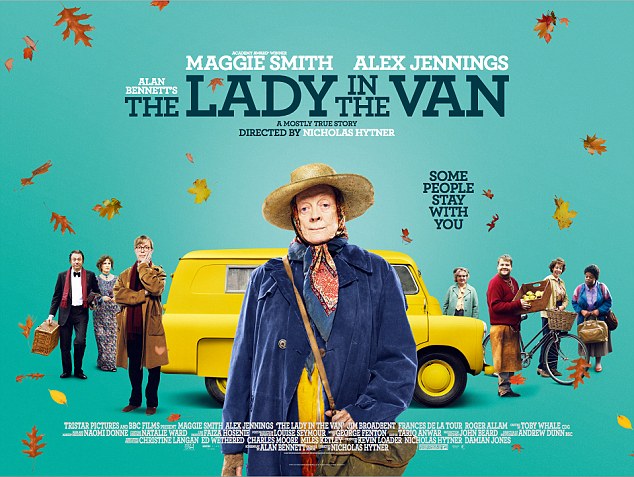
Writer Alan Bennett (“The History Boys,” “The Madness of King George”) got an urgent appeal from a disheveled woman in a kerchief. You know the kind of person I am talking about, the ones we ignore or pretend to ignore. She is not exactly homeless. She has a dilapidated, broken-down van parked on the street near his new home. His neighbors are not unkind. One even tries to bring her food. But for some reason, Miss Shepherd (Maggie Smith) likes Bennett. And for some equally inexplicable reason, he kind of doesn’t dislike her. And for another equally inexplicable reason, as frustrating and annoying and inconvenient and often infuriating as Miss Shepherd (as he always calls her) is, he finds it easier to deal with her than with his own mother, who is beset with her own cognitive challenges.

“A writer is doubled,” Bennett tells us, “the one who writes, the one who lives.” He is clearly most comfortable as the one who writes. And we get to see them both. Alex Jennings plays two slightly different variations on Bennett, the subtle variations of clothing and attitude showing us the tension as he wavers between being involved and observing. Part of him recoils from Miss Shepherd’s “multi-flavored aroma” with a thin layer of talcum powder. Part of him knows that she could lead to exactly what we are watching — a book, a radio play, a theatrical production, a movie with an Oscar-winning Dame in the title role. Yes, she asks if she can park temporarily in his driveway and stays for 15 years. But given the money he made from the story, who was sponging on who?

A writer will inevitably be drawn to the peculiar mix of sense and nonsense, sometimes called a word salad, coming from someone like Miss Shepherd. There’s something about the way she ends her mildly preposterous statements with equivocation. “I’m in an incognito position, possibly,” she tells Bennett. He will learn more about her past, but Bennett has enough respect for us and for Miss Shepherd that there is no attempt to try to explain her. It is just to help us do what he did instinctively, though perhaps reluctantly — to see the person inside the weirdness.

“A proper writer might welcome such an encounter.” Yes, he might. Yet, he thinks, “You won’t catch Harold Pinter pushing a van down the street.” Shouldn’t a writer get to pick his subject? “I don’t want to write about her,” he says. “I want to write about spies.” He knows that “you don’t put yourself into what you write; you find yourself.” And his two selves seem to come closer together as Miss Shepherd disintegrates further. If, as Arthur Miller wrote in “Death of a Salesman,” attention must be paid to people we would prefer to overlook, Bennett has done that for Miss Shepherd, with grace and humanity.

Parents should know that this film includes themes of mental and physical illness, fatal car accident, blackmail, and non-explicit sexual situations and bodily functions.

Family discussion: Why did Alan treat his mother and Miss Shepherd differently? Why does he let her stay? Why are there two Alans and what can we tell from the way they dress and speak?

If you like this, try: “The Madness of King George” by the same author and his early work in “Beyond the Fringe”

Related Tags:


Based on a book Based on a play Based on a true story Drama Family Issues
THE MOVIE MOM® is a registered trademark of Nell Minow. Use of the mark without express consent from Nell Minow constitutes trademark infringement and unfair competition in violation of federal and state laws. All material © Nell Minow 1995-2026, all rights reserved, and no use or republication is permitted without explicit permission. This site hosts Nell Minow’s Movie Mom® archive, with material that originally appeared on Yahoo! Movies, Beliefnet, and other sources. Much of her new material can be found at Rogerebert.com, Huffington Post, and WheretoWatch. Her books include The Movie Mom’s Guide to Family Movies and 101 Must-See Movie Moments, and she can be heard each week on radio stations across the country.

Website Designed by Max LaZebnik