The Peanuts Movie

The Peanuts Movie

Posted on November 5, 2015 at 5:26 pm

B
Lowest Recommended Age: Kindergarten - 3rd Grade
MPAA Rating: G
Profanity: None
Alcohol/ Drugs: None
Violence/ Scariness: Some tense scenes of anxiety, hurt feelings, and shyness, some mild action scenes and peril (Snoopy’s flying ace battles)
Diversity Issues: None
Date Released to Theaters: November 6, 2015
Date Released to DVD: February 29, 2016
Amazon.com ASIN: B018WXLHVM

I admit that I approached this film with some of the same trepidation Charlie Brown approaches the football, knowing Lucy’s history of pulling it out of the way at the last second. I’m a fan of Charles Schultz’s original comic strip and fond of many of the animated specials and features that were careful to preserve the simplicity of his aesthetic. I was concerned that a more fully-animated version (in 3D!) would drown out the gentle storylines. But Schulz’s family has been careful to preserve his legacy. The script is co-written by his son and grandson and is timed to appear on the 65th anniversary of the strip and the 50th anniversary of the classic “Charlie Brown Christmas” special. And Blue Sky (which made the “Ice Age” and “Rio” movies) understands the material and its audiences — the older generations who are attached to the original version and today’s children, who are new to these characters.

The brightly colored, rounded figures were easier to get used to than I feared. The iconic details — Charlie Brown’s yellow shirt with the brown zigzag (it turns out he has a whole closetful) and wisps of hair are familiarly iconic. It’s not a period piece but there is a timeless quality. Phones are corded landlines. We never see a laptop and no one ever checks Google or GPS. Indeed, one of the most important items in the story is a pencil. It has glitter and a feather decorating it, but it also has the teeth marks of its sometimes nervous owner, and that is something you won’t find on a smartphone.

The movie does not commit any serious blunders. There are pleasant moments and welcome echoes of the past, but it does not justify its existence by adding anything of value to the canon already available. The first and best of the television specials, A Charlie Brown Christmas, is less than half an hour long, but it has more wit, charm, poignancy, than this feature film, and it includes one of the most beautiful holiday songs ever written, the piercingly bittersweet Christmastime is Here. In almost two hours, this film has time for just a snippet, to make room for inferior contemporary pop songs. A joke about “merch” seems ill-advised given the strip’s history of selling its characters for everything from insurance to toothbrushes.

The film begins promisingly, with Schroder playing the studio’s theme music on his piano and an immersive soft, gentle snowfall. It’s the most joyous day of the year — a snow day — and we meet the characters as they wake up and choose the winter activities they most enjoy. Charlie Brown decides it is a good time for him to try the kite again, figuring that the “kite-eating tree” will be out of commission in winter. It does not go well. Once school is back in session, a new student arrives, a girl with red hair, and Charlie Brown is smitten — and terrified. How can he impress her?

The Schulzes are true to the spirit of the original. We squirm with Charlie Brown as he agonizes over his insecurity, especially when he is faced with a dilemma at the school talent show and when he is awarded an honor it turns out he did not deserve. The sections with Snoopy’s Red Baron fantasy are of less interest and appeal and the 3D effects and the talents of top-tier musical stars (Trombone Shorty playing the “waa waas” for the adult voices and Kristen Chenoweth as Snoopy’s daring aviatrix love interest) are underused. The best use of this film is as an introduction to the classic television specials — and the original comic strips that inspired them.

Parents should know that this film includes some tense scenes of anxiety, hurt feelings, and shyness, and some mild action scenes and peril (Snoopy’s flying ace battles).

Family discussion: Which character is most like your friends? Which would you most want to be like? Why don’t we hear the grown-up voices?

If you like this, try: The Peanuts comic strip collections and the television specials.
Related Tags:


3D Animation Comic book/Comic Strip/Graphic Novel DVD/Blu-Ray Pick of the Week School Stories About Kids

Burnt

Posted on October 29, 2015 at 5:50 pm

Tormented but brilliant chef Adam Jones (Bradley Cooper) invites the sous chef he hopes to persuade to come work for him to lunch. At Burger King. They are both food snobs. She does not want to touch anything in the fast food outlet and is barely willing to sit in the booth. And he, improbably but only slightly more improbable than pretty much everything else in the movie, tries to persuade her that it is part of the rich tradition of “peasant food.” Yes, it is a lesser cut of meat, but that is why it is so imaginatively prepared.

Uh, no. That is not true of Burger King, and it is not true of this film, a lesser cut of meat indeed, and not deserving of the terms “imaginative” or “peasant food.” We don’t believe the praise for fast food from a guy who says anything less than perfect must be thrown away, that a chef must apologize not to the boss or to the customer but to the piece of turbot for inferior preparation. We don’t believe that a man who says he does not want customers to appreciate his food — he wants them to ache with longing — would eat a Whopper.

Most important, we just do not believe Adam, even with Cooper’s piercing blue eyes and movie star magic, is more than a lesser cut of meat himself. Here’s a hint, Hollywood — it is often fatal to a movie to have its characters more in thrall to the lead than the audience is.

We meet Adam as he is completing his self-imposed penance for sins we will spend the rest of the film learning about. The three-year expiation — shucking one million oysters. Does that have anything to do with making amends to those he harmed? No, but it is picturesque and it gives him a chance to tell us that oysters and apples cannot be improved upon, but it is the duty of the chef to try.

It turns out that Adam was once a star of the foodie world, but hubris — and many, many drugs — led to his downfall, taking lots of other people down with him. And so, we see him visit his old friends, enemies, and frenimies, to see if he can put the old band back together to make culinary history and achieve a third Michelin star.

For those who missed the Michelin star lecture in The 100-Foot Journey, we get the “Star Wars” version here. One star from the legendary rater of restaurants is Luke Skywalker. Two stars are “whoever Alec Guinness was” (Obi-Wan Kenobi). And three stars is the Jedi Master: Yoda. (I actually prefer Michelin’s own cost-benefit analysis approach: worth a stop, worth a detour, worth a journey.)

Or, in movie terms, worth a theater ticket, worth a Netflix rental, wait for cable. This falls somewhere between the second and third category. Food and food preparation are presented with loving, luscious care far in excess of the attention to the story or characters, neither especially well seasoned or fresh.

Parents should know that this film has constant very strong language, some sexual references, references to drug abuse, some angry confrontations, and brief violence.

Family discussion: Would you want to eat in Adam’s restaurant? What do you think of his million-oyster penance?

If you like this, try: “Chef” and “Babette’s Feast” and reality shows about Mario Batali and Gordon Ramsey, who worked on this film

Related Tags:


Not specified
Goosebumps

Goosebumps

Posted on October 15, 2015 at 5:04 pm

Copyright 2015 Sony Pictures

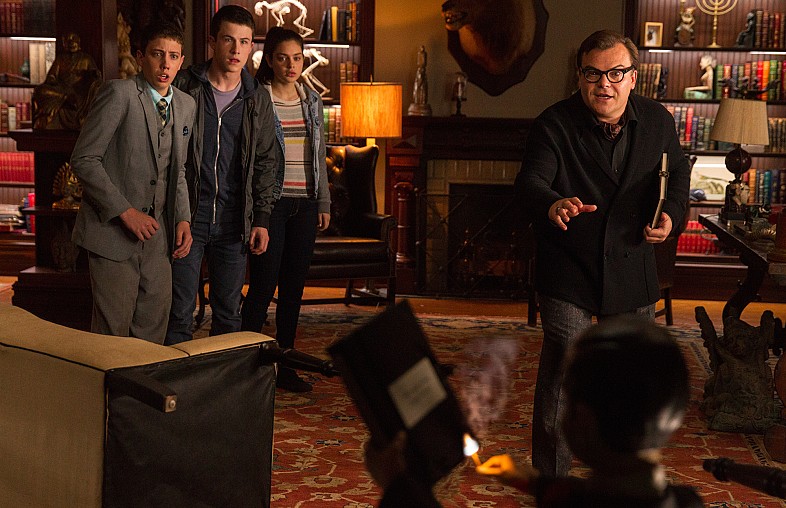
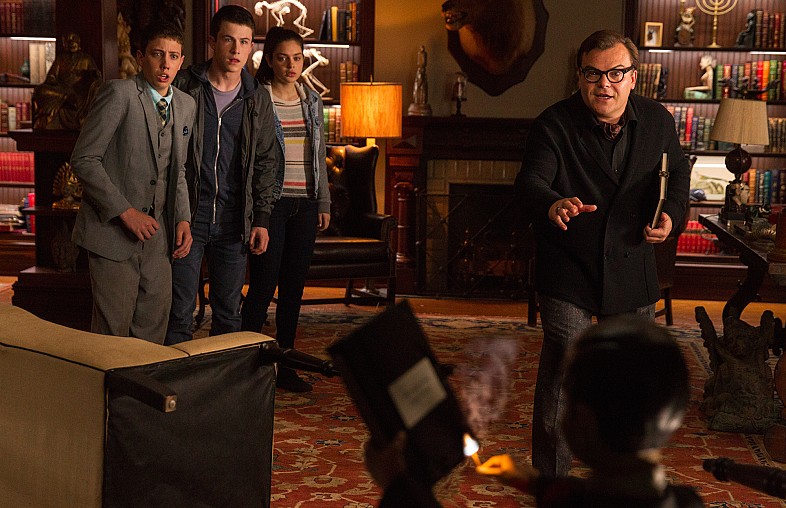
Screenwriters Mike White (“School of Rock”) and Darren Lemke (“Turbo,””Lost”) bring just the right blend of scary, funny, and heartwarming in this first film based on the books by tween favorite R.L. Stine, the man who put the BOO in BOOOKs. And when I say “books,” I mean the plural. This movie does not bring just one of Stine’s creepfests for kids to life. It brings many of his more than 300 books to life, sometimes creepy undead life, but life on screen.

Our hero, handsome Zach Cooper (Dylan Minnette of “Alexander and the No Good…etc”) and his mother (Amy Ryan) move in next door to a pretty girl named Hannah (“The Giver’s” Odeya Rush), who lives with her dad (Jack Black). Zach would like to get to know Hannah, but her father warns him to stay away. Hannah would also like to get to know Zach. While her dad tries to keep her in the house, she sneaks out to visit an abandoned amusement park and takes Zach along. Then when Zach thinks he hears Hannah in trouble, he goes to investigate, with his amiably dorky friend Champ (Ryan Lee).

It turns out Hannah’s father, the legendary author R.L. Stine, has not been keeping Hannah inside to protect her. He has been keeping everything inside to protect everyone outside. For some mysterious reason, each of the books he wrote contains a literal monster, and if the book is opened, the monster escapes. And it is very, very, very hard to get them locked back inside. You’ve heard of Pandora’s box? These are Pandora’s books. Whatever scares you the most — insect monster, clown monster, zombies, mummies, werewolf, angry yeti, evil ventriloquist dummy — it’s in there, or, I should say, it’s coming out of there. And a lot of things you didn’t know were scarey (garden gnomes? fluffy poodle? Jack in the box?) turn out to be very scary, too. All the monsters escape and Stine, Hannah, Zach, and Champ have to get them locked back up. If they can do that without getting eaten first.

It is too bad to see the brilliant Jillian Bell, who stole “22 Jump Street” from Jonah Hill and Channing Tatum, relegated to a retro man-crazy single lady. The equally brilliant Amy Ryan does the best she can with her limited role. But the special effects, stunts, and production design are state-of-the-art, and Zach and Hannah are likeable leads, with Black and Lee providing some comic relief and a superb score from Danny Elfman, who just about owns Halloween music. There are dozens of allusions to classic scary tales, which should inspire at least some kids to pursue literary and movie monsters from “Dracula” and “Frankenstein” to “The Dark of Night,” “The House that Dripped Blood,” and the original “The Haunting.”

Parents should know that this movie has lots of monsters, some very scary looking, as well as some scary surprises, schoolyard language, and brief potty humor.

Family discussion: Which is the scariest monster and why? How are the three kids different in the way they view the monsters?

If you like this, try: “Monster House” and the books by R.L. Stine

Related Tags:


Based on a book Fantasy Horror
Freeheld

Freeheld

Posted on October 8, 2015 at 5:50 pm

Copyright Lionsgate 2015

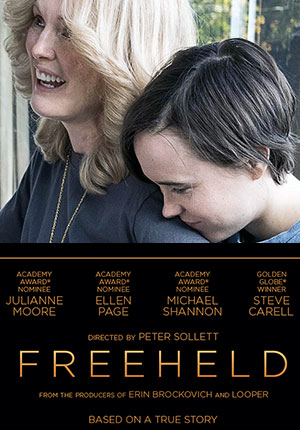
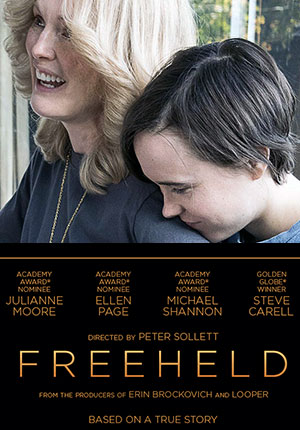
Laurel Hester (Julianne Moore), a 23-year veteran of the police force, learns that she has terminal cancer. And then she learns something even more devastating — that her registered domestic partner, Stacie Andree (Ellen Page) is not eligible for the pension benefits that she would be entitled to if they had been a heterosexual married couple.

It is hard to believe that was only ten years ago. But in 2006, marriage equality seemed very far in the future. And that was not Laurel Hester’s concern. As shown in the Oscar-winning documentary short, also called “Freeheld,” she did not want her fight for death benefits to be used to promote marriage equality. Hester was a very private person who did not even tell her longtime detective partner (Michael Shannon) that she was gay. She just wanted what she believed she had earned, and she wanted the woman she loved to be able to stay in the home they created together.

The term “Freehold,” by the way, is unique to New Jersey, and it goes back to the state’s earliest history. New Jersey’s first constitution, written in 1776, declared a county representative must be worth “fifty pounds proclamation money, clear estate in the same and have resided in the county in which they claim a vote for twelve months immediately preceding the election.” “Clear estate” means owning a property outright, and is also called a “freehold,” so only those who owned land could vote or be elected to office. While that restriction no longer applies, the position most localities call “representative,” “supervisor,” or “councilman” is referred to in New Jersey as “Freehold.” In the case of this movie, “freeheld” refers to the property shared by Hester and Andree and their love for each other as well.

There are really two stories here, both familiar to moviegoers, but not combined in this way. There is the story of the fight for justice against the barriers of bureaucracy, bigotry, and bullies. And there is the story of a reserved loner opening up to love. The combination is at times uneasy. The love story is the stronger part of the film, but gets less attention. Moore is superb as Hester, with her Farrah Fawcett hair wings, utter dedication to her job, and resolve built up into isolation after more than two decades of mostly good-natured but sexist and homophobic humor from her fellow cops. She crosses state lines to play in on a lesbian volleyball team in Pennsylvania so no one in New Jersey will see her.

And then she meets Stacie, tiny, much younger, but confident in who she is and who she loves. The scene where Andree proves herself to the manager of a car repair shop is a highlight. And so is their date, where we see Hester’s conflicting feelings. She is very attracted to Andree, she cannot quite believe Andree is attracted to her, she wants love in her life, she does not want to be exposed or vulnerable. When the two of them walk away from the bar to talk quietly, they are approached by thugs, and Hester pulls out her gun and identifies herself as a police officer. It is, in a way, a supremely romantic gesture. Later, she introduces Andree as her “roommate” and barks at her for answering the phone. But when she gets sick, she understands quickly what her priorities need to be.

She remains clear, even after Steven Goldstein (Steve Carell), a flamboyant activist for gay rights, shows up. Hester reluctantly allows him to create some political theater to support her cause. There is a loophole in the law. Domestic partners of state employees are covered, but local Freeholders decide whether city and county-level employees will qualify. Hester’s Freeholders have already turned her down and she does not have much time.

As often happens in re-telling a recent true story, the movie trips over the proportions in trying to get the facts straight. The interactions between the various Freeholders, including Josh Charles as the most inclined to support Hester’s rights, are no more interesting than municipal-level politics usually are. But the deep love between Hester and Andree and their quiet insistence on simple justice give the story sincerity, sweetness, and conviction.

Parents should know that this film includes very sad scenes of a terminal cancer patient, and death, themes of LGBTQ rights including homophobic and bigoted characters, some sexual references and situations, some strong language, smoking, drinking, and some law enforcement-related violence.

Family discussion: Why did Laurel insist that she was not an advocate of marriage equality? Should she have told her partner the truth?

If you like this, try: the Oscar-winning documentary that inspired the film

Related Tags:


Based on a true story GLBTQ and Diversity
99 Homes

99 Homes

Posted on October 1, 2015 at 5:22 pm

Copyright 2015 Broad Green Pictures

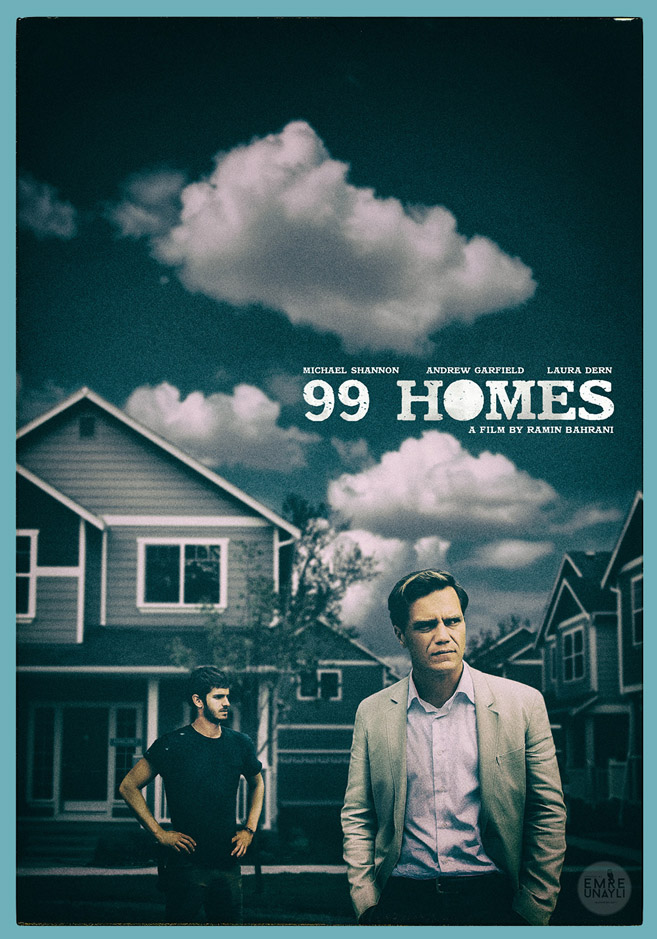
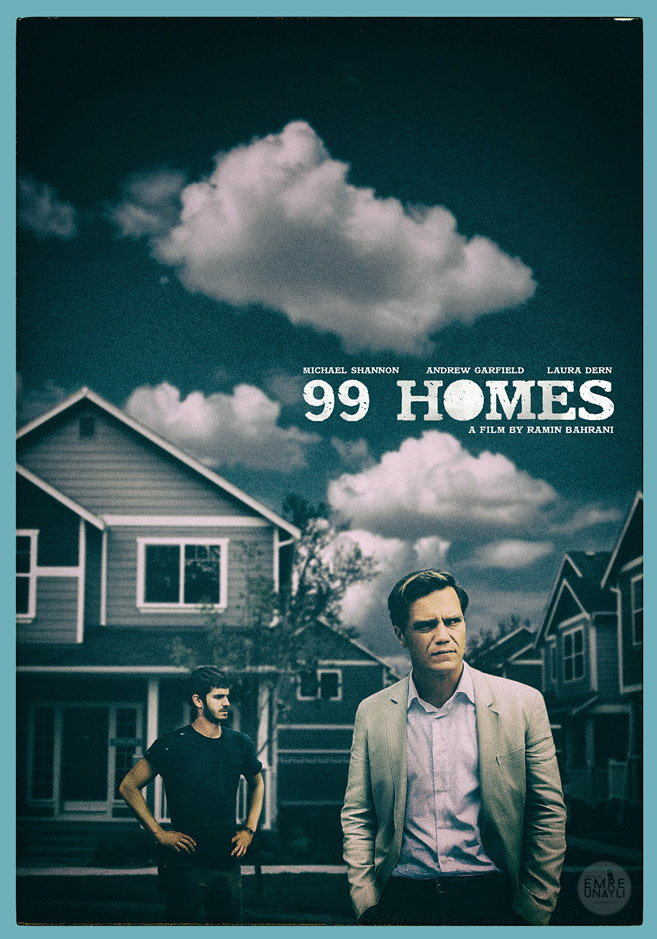
It’s not called “99 Houses” or “99 Foreclosures,” though that is how they are seen by some of the characters in the film. The banks and the predatory dealmakers may think of these buildings as “assets” or “derivatives” following the 2008 subprime financial meltdown as buyers swoop in, buy them out of foreclosure, take government money to fix them up and then flip them for a profit. But for the people who live or lived in them, they are homes, they are sanctuaries, they are personal treasures filled with memories. They are the fortress of the people who call them home, and when that is breached, the family hardly knows who they are anymore.

Single dad Dennis Nash (Andrew Garfield) does not just live in a home. He works in construction. His job is building and fixing homes. But after the subprime meltdown, there is no work. That means no money and soon that means no home. One of the cruelest consequences of the financial crisis was that in order to meet the pressure from Wall Street to keep producing subprime derivatives, mortgage brokers pushed loans on people who could not afford them, creating the notorious “liar’s loans” for people whose financial qualifications would not be adequate for a traditional mortgage. And so people like Dennis were thrown out of their houses by people like the appropriately named Rick Carver (Michael Shannon), who show up moments before the house will be foreclosed by the bank to buy the house from the owners, who really have no other choice.

Dennis makes the deal with the devil and that turns out to be just the beginning. Carver offers him a job. He begins with construction work but shows an aptitude for hard work, following orders without asking questions, and willingness to do whatever it takes to make enough money to get his mother (Laura Dern) and young son back home. He is determined to restore what they lost and bring them back to the house Carver, the bank, and the Wall Street derivative brokers took from them.

Writer/director Ramon Bahrani (“Goodbye Solo”) has an extraordinary gift for making intimate dramas that do more than exemplify complex and murky issues; they illuminate them. A thousand headlines and think pieces could not do as much to bring, well, home, the real-life impact of the failures of bankers and politicians than a movie like this one. As specific in time as a mix-tape featuring Flo Rida with T-Pain and Coldplay’s Viva La Vida, it approaches epic, even operatic scope as Dennis gets pulled, sometimes yanked, deeper and deeper into becoming what he most despised. He does not realize that he is giving up something much deeper and more visceral than his home and belongings.

Michael Shannon, master of volcanic anger, is mesmerizing as Carver, rough charm and brutal fury. As Dennis gets pulled deeper and deeper into Carver’s way of doing business, and then his way of thinking, we see how seductive corruption can be, and how, after a point no matter where you live, it is not a home.

Parents should know that this film has constant very strong and aggressive language, crude sexual references and some situations, severe family distress and homelessness, threats, illegal activity, suicide, and brief violence.

Family discussion: Who is responsible for the foreclosures? What does Dennis admire about Rick?

If you like this, try: “Sunshine State” and the upcoming film “The Big Short”

Related Tags:


Not specified
THE MOVIE MOM® is a registered trademark of Nell Minow. Use of the mark without express consent from Nell Minow constitutes trademark infringement and unfair competition in violation of federal and state laws. All material © Nell Minow 1995-2026, all rights reserved, and no use or republication is permitted without explicit permission. This site hosts Nell Minow’s Movie Mom® archive, with material that originally appeared on Yahoo! Movies, Beliefnet, and other sources. Much of her new material can be found at Rogerebert.com, Huffington Post, and WheretoWatch. Her books include The Movie Mom’s Guide to Family Movies and 101 Must-See Movie Moments, and she can be heard each week on radio stations across the country.

Website Designed by Max LaZebnik