
White Actors in Asian Roles — Not Just Ghost in the Shell

White Actors in Asian Roles — Not Just Ghost in the Shell

Posted on April 9, 2017 at 12:39 pm
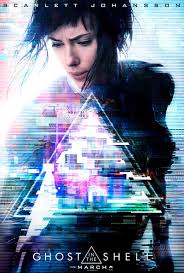
Copyright DreamWorks 2017

The casting of Scarlett Johansson in “Ghost in the Shell” is just the most recent “whitewashing” that has created controversy and played at least a contributing factor to the poor results at the box office. Audiences have understandably objected to having white actors play Asian characters. It might be different if it ever worked the other way, if actors of color were cast in roles written for white actors. But with so few explicitly Asian characters in movies and so few Asian actors being cast in lead roles, it is especially troubling. To make matters much worse (SPOILER ALERT) the cybernetic characters played by Johansson and white actor Michael Carmen Pitt are both supposed to be Japanese humans who now have white-featured robot “shells” or bodies.

This is just one of many examples in current and past productions. Asian characters have been played by white actors for decades, including Katharine Hepburn, John Wayne, Marlon Brando, Alec Guinness, Peter Sellers, Warner Oland, Peter Lorre, and Mickey Rooney. More recently, Cameron Crowe was sharply criticized for casting Emma Stone in “Aloha” as a woman with some native Hawaiian heritage.

In the LA Times, Jen Yamato and Justin Chang wrote about this issue:

Chang: We seem to have fallen into a dispiritingly familiar pattern where Hollywood-goes-East blockbusters are concerned, and it usually starts with the announcement of some fresh casting outrage: Tilda Swinton enlisting as a Celtic version of a Tibetan mystic in Marvel’s “Doctor Strange,” or Matt Damon being called in for white-hero duty on “The Great Wall” (a China-U.S. co-production, incidentally).

From there, the woker-than-thou factions of the press and public react with unsurprising anger. The marketing campaign becomes a passive-aggressive exercise in damage control. The movie is released, and the casting is duly dubbed either the worst thing ever or a complete non-issue. And neither reaction, I think, really gets at the more complicated truth of the matter….I liked Johansson in “Ghost in the Shell,” just as I liked Swinton in “Doctor Strange.” And I was perfectly fine with Damon in “The Great Wall,” in which he’s not really a white savior at all, and is in fact amusingly upstaged by director Zhang Yimou’s make-China-great-again production design.

As she demonstrated in “Lucy” and the masterful “Under the Skin,” Johansson can be a mesmerizing screen presence, with the kind of otherworldly aura that naturally lends itself to science fiction. All of which is to say: It’s possible to admire a performance while still acknowledging the ways in which it’s — to use a word I loathe, but sometimes there’s no alternative — problematic.

Yamato: It’s one thing for a film or television show (see Marvel’s “Iron Fist” and Netflix’s upcoming Americanized “Death Note”) to be problematic. It’s more insulting for filmmakers — and the stars whose white faces are plastered on posters and billboards in front of exotic Asian scenery — to ignore the damage their failures have wrought. That is both irresponsible and cowardly….But whether you call it yellowface, white saviorhood, race-bending, erasure — it’s all whitewashing if a story rooted in Asian origins or an Asian setting defaults to a white normative reality. The filmmakers behind these properties, nearly all white men, are forcing white preference and white privilege into the spotlight and blaming it on a system that necessitates bankable white stars. The more these movies bomb while others like “Get Out” flourish, the more these excuses get exponentially more tedious.

And in the Hollywood Reporter, four Japanese actresses gave their thoughts. They spoke about some cultural dissonance or outright mistakes they think would have been handled correctly if the filmmakers were Japanese. Some of their comments:

Keiko Agena: It was harder to watch than I thought it was gonna be. To get emotionally invested, you have to really care that she needs to find out who she is. But when she finally meets her mom, my gut felt so weird in that moment.

Atsuko Okatsuka: ScarJo was probably lost. “OK, hold on. So I’m a Japanese woman. I used to be? Wait, I am. I talk to my boss in English even though he speaks to me in Japanese?”…It’s not even about seeing me on the screen as a performer. It’s a bigger concern. It’s 2017 and I don’t know why these representation issues are still happening. It’s overwhelming. This means so much to our community but is so on the side, still, for a lot of people.

Even if Hollywood does better on this (and on casting trans and disabled actors in roles reflecting their experience and understanding), we still have the problem of the past. An Asian friend recently wrote to a movie theater about their showing of the beloved Audrey Hepburn classic, “Breakfast at Tiffany’s.” Hepburn’s impeccable elegance cannot make up for the outrageously offensive portrayal of her Japanese neighbor, played by Mickey Rooney.

The theater manager’s thoughtful response:

I can say that this is a constant issue of programming a repertory theater. Showing anything from classic Hollywood is generally at the very least problematic, and in many cases, such as “Breakfast at Tiffany’s,” an example of a horrible history of filmmaking. While this is not a plea to justify our decision to book this film, I hope you can understand that we do not condone every element of all of the films that we show and when booking classic film this issue is unavoidable. This film is playing as a part of a ‘music in film’ series; they will be performing a song from this film later in the month. I do hope the rest of our programming, specifically the new indie and modern repertory titles, reflect our commitment to diversity, progressivism, and positive depictions.

After a further exchange, the manager said they would provide some context.

On the evening of the screening, I will be present to introduce the film and to discuss Rooney’s performance in “Breakfast at Tiffany’s” in order to shed light on these issues in classic Hollywood cinema and to let the audience know that both institutions are opposed to such portrayals. We will also be distributing a handout that discusses Rooney’s character and the history of racial stereotypes in Hollywood films.

That is the best we can do for movies of the past — to raise the issue and insist that it be addressed. We can do a lot better with movies of the future, to make sure that the history of racial stereotypes in Hollywood films is coming to an end.

Related Tags:


Race and Diversity Understanding Media and Pop Culture
Ghost in the Shell

Ghost in the Shell

Posted on March 30, 2017 at 11:11 pm

Copyright DreamWorks 2017

Oh, I don’t know. Maybe if you are a long-time fan of the “Ghost in the Shell” mange by Masamune Shirow and anime and are yet still not offended at the casting of a white actress in a Japanese story you might enjoy seeing a big-budget version of the story with very high-end design and special effects. I am new to the franchise and I was bored. Like a lot of video game movies, it loses the story and characters in a barrage of visual effects and shoot-outs.

Scarlett Johansson plays Major, who used to be a person but is now robot with a human brain or a human brain with a robot body. People do a lot of explaining in this movie, but never about the stuff we would like to have explained. So one character tells us that Major is not a machine but a weapon in the fight against cyber-terrorism. But we never find out why Major’s clothes keep disappearing when she goes into battle. Or why a robot breathes and cries.

In an early scene, we see businessmen at an expensive dinner, being served by elegant but not un-sexy robot geishas. I hope you have seen enough movies to know that when one of them arrogant insists that “There is nothing I can’t do, nothing I can’t know, nothing I can’t be,” he is not going to be around much longer. Some gunmen break in and start shooting, and Major arrives to fight them.

Major was once a human woman. When she was injured in the terrorist attack that killed her parents, her body could not be saved but in a pioneering experiment by Dr. Ouelet (Juliette Binoche), she is turned into a cyborg. At least that is the story she has been told. She has flashes of what could be memories but it seems to her as though there is thick fog over her memories “and I can’t see through it.” Dr. Ouelet is very proud of Major, almost maternal. And Major has a partner, Batou (Pilou Asbæk). Where she is a robot with a human brain, he is a human with mechanical parts.

The man/robot/operating system/entity behind the attack is cerebral hacking and killing more people as Major is experiencing what she calls “glitches,” especially after she does a risky “deep dive” into the network of the hacked geisha robot. But are they glitches or “Total Recall”/”Bourne”-style flashes of memory?

When the comic first appeared, some of these issues were cutting edge but they have been so thoroughly hashed out in so many movies (and in real life) that most of it is as outdated as a VHS video of “WarGames.” The issue of consent is more timely, as Major has to affirmatively accept various risks and procedures (like all of those “I agree” boxes you have to check every time you update your software), but the movie is too busy showing us zippy Pokemon Go-style virtual ads all over the city to spend any thought on it, or anything else, for that matter.  It is a shame that a movie about the spark of human consciousness that remains inside a machine is itself a machine without any evidence of humanity at all.

Parents should know that this film has constant sci-fi/action style peril and violence, guns, explosions, fire, terrorism, a suicide, murder, with characters injured and killed, and some graphic and disturbing images, some nudity, prostitutes and sexual predator, smoking, and drinking. There has been some controversy over the casting of non-Asian actors. Scarlett Johansson responded “I certainly would never presume to play another race of a person. Diversity is important in Hollywood, and I would never want to feel like I was playing a character that was offensive. Also, having a franchise with a female protagonist driving it is such a rare opportunity. Certainly, I feel the enormous pressure of that—the weight of such a big property on my shoulders.” The director of the anime version also supports Johansson in the role: “What issue could there possibly be with casting her? The Major is a cyborg and her physical form is an entirely assumed one. The name ‘Motoko Kusanagi’ and her current body are not her original name and body, so there is no basis for saying that an Asian actress must portray her.”  On Slate, Aisha Harris explains why a revelation late in the film is especially troubling in the movie’s portrayal of race.

Family discussion: Is Major a person, a machine, or a weapon? What enhancement would you like to have?

If you like this, try: the “Matrix” and “Bourne” series, “Lucy,”  and the Ghost in the Shell comics and anime

Related Tags:


3D Action/Adventure Comic book/Comic Strip/Graphic Novel Remake Science-Fiction

March 2017 — Here’s What’s Coming to Theaters This Month

Posted on March 1, 2017 at 8:00 am

Happy March! Here’s what I’m most looking forward to this month.

FRIDAY, MARCH 3

Before I Fall — Zoey Deutch plays a high school girl who lives the same day over and over until she learns to pay attention to what is going on around her.

Table 19 — Anna Kendrick stars in a romantic comedy about the people assigned to the worst table at a wedding.

The Shack — The Christian best-seller is now a film about a father devastated by grief who gets as message from God.

Logan — Hugh Jackman returns as Wolverine in a dark and violent story.

FRIDAY, MARCH 10

Kong: Skull Island — An all-star cast goes off in search of a giant ape.

The Sense of an Ending — Jim Broadbent, Michelle Dockery, Harriet Walter, and Charlotte Rampling give performances of elegance and grace in this touching story based on the award-winning best-seller by Julian Barnes.

FRIDAY, MARCH 17

Beauty And The Beast — The tale as old as time returns to the screen in this live action version with Emma Watson and Dan Stevens.

FRIDAY, MARCH 24

CHiPS — This raunchy comedy embraces and celebrates the unabashedly cheesy 70’s television series. Writer/director Dax Shepard stars with Michael Pena.

Saban’s Power Rangers — The cartoon series comes to the big screen with a live-action reboot.

FRIDAY, MARCH 31

The Zookeeper’s Wife — Jessica Chastain stars in this real-life story of Warsaw zookeepers who saved people and animals during the Holocaust.

The Ghost In The Shell — A cyborg policewoman attempts to bring down a nefarious computer hacker in this sci-fi story based on a manga.

The Boss Baby — Alec Baldwin plays a talking baby with a briefcase in this animated fantasy.

Related Tags:


Opening This Month
THE MOVIE MOM® is a registered trademark of Nell Minow. Use of the mark without express consent from Nell Minow constitutes trademark infringement and unfair competition in violation of federal and state laws. All material © Nell Minow 1995-2026, all rights reserved, and no use or republication is permitted without explicit permission. This site hosts Nell Minow’s Movie Mom® archive, with material that originally appeared on Yahoo! Movies, Beliefnet, and other sources. Much of her new material can be found at Rogerebert.com, Huffington Post, and WheretoWatch. Her books include The Movie Mom’s Guide to Family Movies and 101 Must-See Movie Moments, and she can be heard each week on radio stations across the country.

Website Designed by Max LaZebnik