Wake Up Dead Man: A Knives Out Mystery

Wake Up Dead Man: A Knives Out Mystery

Posted on January 2, 2026 at 9:34 pm

B +
Lowest Recommended Age: High School
MPAA Rating: Rated PG-13 by the MPAA for violent content, bloody images, strong language, some crude sexual material, and smoking
Profanity: Strong and crude language
Alcohol/ Drugs: Drinking and drunkenness
Violence/ Scariness: Gristly violence, graphic and disturbing images, murders
Diversity Issues: None
Date Released to Theaters: November 22, 2025
Date Released to DVD: December 13, 2025

I love Rian Johnson‘s “Knives Out” movies, and this latest one had everything I hoped for: a twisty plot, a knock-out cast, a dash of commentary about contemporary life and searching for meaning. Also: searching for money. Power, too, but especially money. Writer/director Rian Johnson makes each film in the series a different setting and tone, so instead of “Glass Onion’s” sunny setting in a huge, art-filled mansion on a Greek island, this one has a gothic feeling, set in and around a spooky Catholic Church in upstate New York.
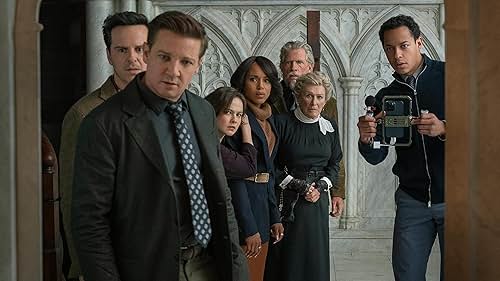
Copyright 2025 Netflix

It begins with a literal knock-out. An idealistic young priest named Father Jud Duplenticy (2025’s MVP Josh O’Connor, in his third of four films released this year) punches another priest in the nose for some unnamed offensive remark. Father Jud came to the Catholic church after a brief career as a boxer and a period of feeling lost and guilty. He is devoted to his calling as a way to share healing, encouragement, trust, and community.

He is assigned by his bishop (Jeffrey Wright) to be assistant priest to the imperious Monsignor Jefferson Wicks (Josh Brolin). Even the names have a gothic ring. Monsignor Wicks (do NOT call him Father) has a small coterie of devoted followers and enjoys being so bombastic and judgmental from the pulpit that anyone outside that group walks out of the service. He is not happy to have Father Jud and immediately accuses him of trying to take over the church. Then he insists on giving his confession and intentionally makes it as uncomfortable for Father Jud (though hilarious for the audience) as possible.

Glenn Close plays Martha Delacroix (I told you about the names), who is the church’s pretty much everything but the priest. She runs the office and fills the chalice. As a child, she was devoted to Wicks’ grandfather, a widower with a daughter who became a priest, and it has been the center of her life ever since.

The Wicks loyalists are groundskeeper Samson Holt (Thomas Hayden Church), who is in love with Martha, popular author turned fanatic Lee Ross (Andrew Scott), currently working on a book about Wicks with a strong overlay of conspiracy theories, ailing young cellist Simone Vivane (Cailee Spaeny), who believes Wicks will find a way to cure her through faith — and her generous financial contributions, doctor Nat Sharp (Jeremy Renner), devastated because his wife left him, and attorney Vera Draven (Kerry Washington), who gave up her dream of advocating for the public good to follow her father as lawyer for the church. Her father also told her she had to be responsible for Cy, a young boy he brought home. Cy (Daryl McCormack) is now an adult, back living with Vera after a failed political campaign, and trying to make a comeback as an influencer, posting Wicks’ sermons.

This is a nicely toxic soup for what will turn out to be that favorite of mystery authors and fans, a locked door murder. A body is discovered in a locked alcove near the pulpit during a service with everyone in the pews as witnesses that the murder victim was the only one who entered. The sheriff shows up (Mila Kunis) and of course so does master murder-solver Benoit Blanc (Daniel Craig).

Composer Nathan Johnson, as he did on the two previous films, enhances the story with evocative music, starting with screechy strings in the first scene and reaching for resolution.

As with the earlier films, there is some sharp commentary on contemporary culture, but the film is always respectful of Father Jud’s sincerity and his attempts to create a caring environment for the congregation. O’Conner continues to impress with his exceptional range and the precision of his characterization. Like the other two British actors, Scott and McCormack, he has an impeccable American accent. With so many characters, some are more clearly defined than others. Kunis and Washington do not get a chance to show much depth to thinly drawn roles, but Bridget Everett of “Somebody Somewhere” makes the most of a tiny part as an employee of a local company who has some crucial information for Blanc and Father Jud. Like the priest, we quickly move from irritation to empathy as she keeps him on the phone. And then we get to enjoy the twists and surprises. Can’t wait for the next one.

Parents should know that this is a murder mystery with violent deaths. Characters drink alcohol and there are references to a child born out of wedlock and an adult who is a drug abuser and has sex with many people. There are very explicit sexual references.

Family discussion: What drew each of the members of the congregation to Monsignor Jefferson Wicks? Why was Martha so loyal? What will Father Jud do next?

If you like this, try: the other “Knives Out” movies, Agatha Christie films like the original “Murder on the Orient Express,” “And Then There Were None,” and “Witness for the Prosecution,” as well as locked room classics like the one mentioned in the film, Hollow Man by John Dickson Carr.
Related Tags:


movie review Movies -- format Movies -- Reviews Mystery Series/Sequel
The Prom

The Prom

Posted on December 10, 2020 at 5:44 pm

B +
Lowest Recommended Age: Middle School
MPAA Rating: Rated PG-13 for thematic elements, suggestive/sexual references, and language
Profanity: Mild language
Alcohol/ Drugs: Some drinking
Violence/ Scariness: Tense confrontations
Diversity Issues: A theme of the movie, homophobia
Date Released to Theaters: December 11, 2020

Copyright Netflix 2020
Irving Berlin was right. There’s no people like show people. And no one knows and loves show people as much as other show people, which is why “The Prom” is 20 percent sly satire and 80 percent love letter to the craziness that goes into entertaining audiences.

“The Prom” was a mildly successful Broadway musical about Broadway stars who want to restore their reputations after their new show has a disastrous opening night (a musical about Franklin and Eleonor Roosevelt). They see an injustice on Twitter. A small Indiana high school has cancelled its prom rather than allow a student to bring a same-sex date. And so, not even sure where Indiana is or what it is, they get on a bus, sure that their Broadway luster and can-do spirit will teach those people in flyover country about respect and inclusion. “This will be the biggest thing that’s happened in Indiana since..whatever the last big thing that happened in Indiana was,” one declares.

As you might guess, the Hoosiers are not impressed, even when Broadway leading lady Dee Dee Allen (Meryl Streep) pulls out her two Tony Awards, which she apparently has on hand at all times, in case someone does not who Who She Is. The high school student at the center of the fuss is Emma (a star-making turn from Jo Ellen Pellman) has a bigger problem than the prom; the girl who would be her date is the daughter of the woman fighting to prevent same-sex couples from attending (Kerry Washington as Mrs. Greene). Caught in the middle is the high school principal, Tom Hawkins, who happens to be a fan of Broadway musicals, especially those featuring Dee Dee (Keegan-Michael Key).

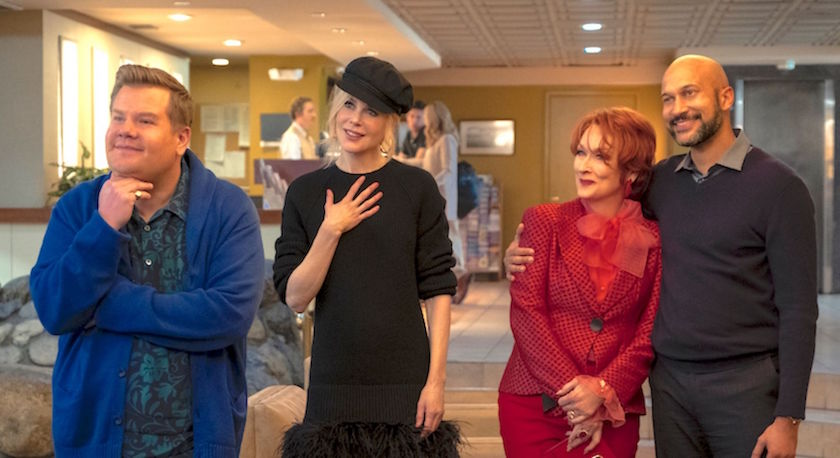
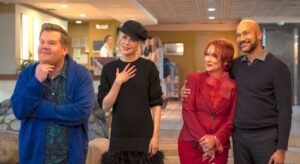
The story adds some unexpected sweetness and reconciliation but really the entire production is just a change to have some fun with some inside theater humor and put on a big, colorful, splashy show with a bunch of Tony and Oscar-winners. Streep has a blast as a larger-than-life personality who is only at home on stage. After letting down someone who genuinely cares for her, the only way she can apologize is to reprise one of her career’s signature numbers. Andrew Rannells (a Tony Award winner for “Book of Mormon”) has a huge musical number with local kids in a shopping mall. Nicole Kidman plays the kind of chorus line hoofer who goes from show to show but never makes it into a lead role, and James Corden is a gay man who sees Emma’s problems in very personal terms because his parents rejected him after he came out.

You don’t have to understand the relative status of a Tony vs. a Drama Desk award or remember which musical had the most performances before “Cats” to sit back and enjoy the good-hearted fun, clever lyrics (by Chad Beguelin), and the jubilant dance numbers choreographed by Casey Nicholaw. It most important message is not inclusion but about the power of art itself, especially big, splashy, energetic, colorful musical, to bring us together and heal what hurts.

Parents should know that the theme of this movie is homophobia and inclusion. It includes some sexual humor and some sexual references, some alcohol, and some strong language.

Family discussion: What would you say to Mrs. Greene? What’s your favorite musical?

If you like this, try: “Bye Bye Birdie,” “Footloose,” “Hairspray,” and “High School Musical”

Related Tags:


Based on a play Comedy GLBTQ and Diversity movie review Movies -- format Movies -- Reviews Musical VOD and Streaming

Peeples

Posted on May 9, 2013 at 6:04 pm

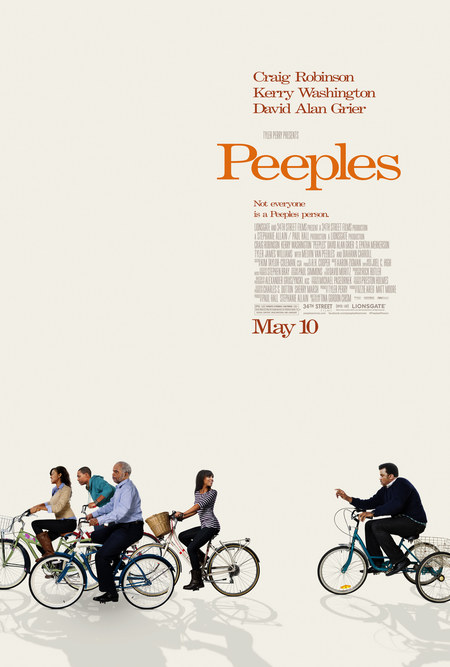
peebles posterSometimes I think that all the myths and fairy tales about scary monsters, dragons, and ogres are just metaphors for life’s most terrifying meeting — the introduction to the family of one’s beloved.  Every family is its own country, with its own language and customs.  The pressure of trying to make a good impression while navigating the dynamics and cultural imperatives of another family and supporting the significant other is terrifying.  And when it happens to someone else, it is funny, which makes it a popular theme in movies going back to “Abie’s Irish Rose,” and up through “Meet the Parents.”

Tyler Perry loves raucous family conflicts, and here he produces the latest “meet the family” comedy, written and directed by Tina Gordon Chism (“Drumline”).  Wade (funny man Craig Robinson in his first romantic and leading role) wants to propose to Grace (“Scandal’s” Kerry Washington).  But she has never let him meet her family, an intimidating group of high-achievers he refers to as “the chocolate Kennedys.”  “Peeples,” the homey family name that makes them sound a little bit like Weebles, is a sly contrast with a group so imposing and remote a better name for them could be “the chocolate Mt. Rushmores.”

Wade decides to surprise Grace by showing up at her family’s magnificent home on the beach.  (“You probably have Oprah dollars.”)  He’s the one who gets surprised when he finds out that his girlfriend has not even told her family that she is seeing someone.  It turns out that her stern and demanding father Virgil (David Alan Grier) has such impossibly high standards that she does not even want to risk allowing him to apply.  Virgil is a judge by profession and a judge by nature.  Grace knows that the easy-going Wade, whose current job consists of singing a song about potty training to children, will not fit in with her highly competitive, uptight family.

But Wade sees immediately that Grace’s family is not as perfect as they want to pretend to themselves and everyone else.  Grace’s mother Daphne (S. Epatha Merkerson) has a couple of secrets.  So do Grace’s broadcast journalist sister (Kali Hawk) and teenage brother (Tyler James Williams).  At first, Wade makes things much worse when he tries to fit in and begins to feel threatened and insecure.  Things get more complicated when his own brother (Malcolm Barrett) shows up.

The humor is often crude and silly, but it is so good-hearted and the performers are so appealing that like Wade and the Peeples, it might win your heart.

Parents should know that this film as very crude and raunchy humor, explicit sexual references and situations, drinking, marijuana, and very strong language.

Family discussion:  What is the scariest thing about meeting the family of your significant other?  What did Grace’s family learn from Wade?

If you like this, try: “Jumping the Broom” and “Meet the Parents”

Related Tags:


Comedy Family Issues Romance

Django Unchained

Posted on December 24, 2012 at 6:00 pm

How do you solve a problem like Tarantino?

The prodigiously talented writer/director is a master of style, sensation, and a uniquely muscular kind of cinematic storytelling that builds on a stunning ability to mash up high and low art in a singular and wildly entertaining combination shot through with pure cinematic testosterone and filled with saucy variations on dozens of other films.

But then there is the content of the films, which it seems that Tarantino looks at as just another tool for jacking up a movie’s adrenalin.  In “Pulp Fiction,” there was the shock of a literal shot of adrenalin to the heart of an overdosing character and the frisson of hired killers whose biggest concern about blowing someone’s head off is the challenge of getting the blood off the car upholstery.  The purest expression of Tarantino’s art is in the “Kill Bill” movies, where he wastes no time on plot, just the minimum nod to the simplest and most relatable of  motives — revenge.

In “Django Unchained,” as in his last film, Tarantino uses an actual historic atrocity almost as an afterthought or a placeholder.  Like The Bride’s revenge motive, the Holocaust and slavery — and endless uses of the n-word by both black and white characters — are used to justify massive carnage, and, apparently, for no other reason.  With “Kill Bill,” the less we knew about the specifics of the reason for the revenge, the better.  With “Inglourious Basterds” and “Django Unchained,” we are already aware of the horrors that give the characters license to wreak destruction (artfully).  But it is, ultimately, empty.  Put another way: sound and fury, check.  Signifying: nothing.

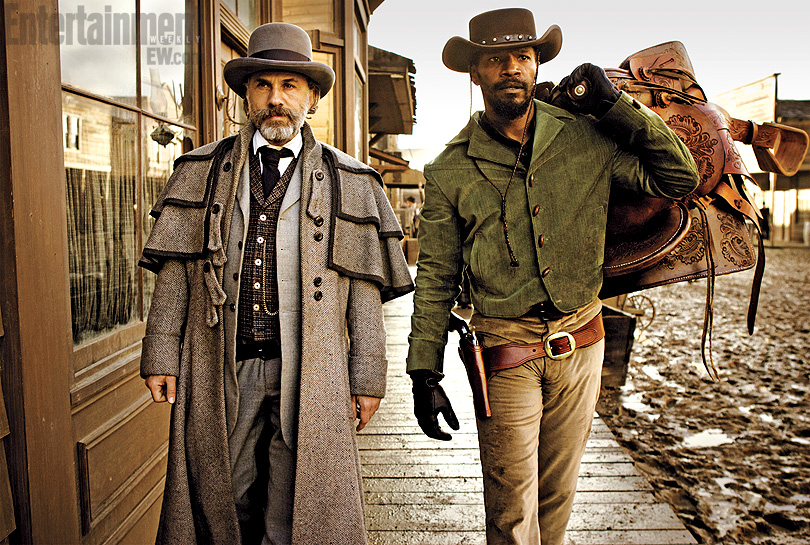
Foxx plays the title character.  As the movie begins, slave dealers are marching a group of slaves in leg irons and with the scars of whip marks along their backs, through the wilderness.  A cheerful man with an elegant, cultured manner pulls up in a cart with a big tooth mounted on a spring.  He is passing as a dentist.  He cordially offers to buy a slave but when the brutish, dull-witted men refuse, and the first massive slaughter of the story is underway, and all the other slaves set free.  The man is Dr. King Schultz (Christoph Waltz, who won an Oscar as a Nazi for Tarantino’s “Inglourious Basterds”).  He is a bounty hunter who hunts down “wanted dead or alive” men and kills them to collect the reward.  In those pre-Google image search days, he needs Django to identify three brothers.  The information on the wanted posters is not enough for a positive identification.  He is opposed to slavery, so he makes a deal.  He will keep Django a slave only long enough to complete the job.

Django proves so adept at the bounty hunter business that Schultz offers to bring him on as a partner.  “Kill white people and get paid for it? What’s not to like?” Django replies.  Django wants to rescue his wife, Broomhilda (Kerry Washington).  When they tried to escape from their owner, they were separated and sold.  Schultz says that Django will not be able to do it alone, and promises to help him get her back.  Their travels take them through several different adventures and many nods and winks to other films (Franco Nero, the original Django, shows up in a brothel bar), including a completely hilarious scene with a bunch of proto-Klan types who can’t get the eyeholes right in their masks and some completely horrifying scenes with a slave torn apart by dogs and a seemingly endless “mandingo fight” to the death.  Broomhilda is now owned by a man named Candy (his plantation is called Candyland).  He is utterly corrupt and despicable, but even worse is his house slave (Samuel L. Jackson), because he betrays other slaves.

Tarantino gets top marks for style, as always.  The violence and historical reversals are possibly intended to be empowering (oddly, Broomhilda is surprisingly less powerful than the usual Tarantino female characters).  On the contrary, it is dispiritingly disrespectful to the people who suffered unspeakable atrocities.  And Tarantino’s increasing distance between style and substance grows less palatable with each film.

Parents should know that this film includes extremely brutal, graphic, bloody, and disturbing violence with many characters injured and killed, an extended fight to the death, whipping and torture, prostitutes, slaves, some nudity, and constant very strong language including many uses of the n-word.

Family discussion:  Why did Stephen tell Calvin his suspicions about Django?  How does this movie show the influences of spaghetti westerns, American westerns, and “Blazing Saddles?”  Any other inspirations?

If you like this, try: “Inglourious Basterds” and “Kill Bill”

Related Tags:


Action/Adventure Drama Epic/Historical Western

April’s TV Highlights

Posted on April 3, 2012 at 3:00 am

There’s good news for television viewers this month as there are fresh episodes of favorite series, big-time guest stars, and premieres of high-profile new shows.  I’m especially looking forward to:

Scandal This show, inspired by a real-life (and very low-profile) White House aide turned “crisis management” consultant, stars the brilliant and beautiful Kerry Washington.  You know her from supporting roles in films like Ray and “Fantastic Four,” but a better opportunity to see what she can do is in the outstanding independent film, “Lift.”
Magic City The look of this series about cut-throat 1959 Miami mob battles is stunning and it stars Jeffrey Dean Morgan (“Watchmen,” Denny on “Grey’s Anatomy”) and Danny Houston. It looks like “Mad Men” crossed with “The Godfather.

Revenge Emily Thorne and those rich meanies return April 18, which gives you just enough time to catch up with the deliciously twisty plot so far.

Saturday Night Live “Modern Family’s” Sofia Vergara hosts on April 7.

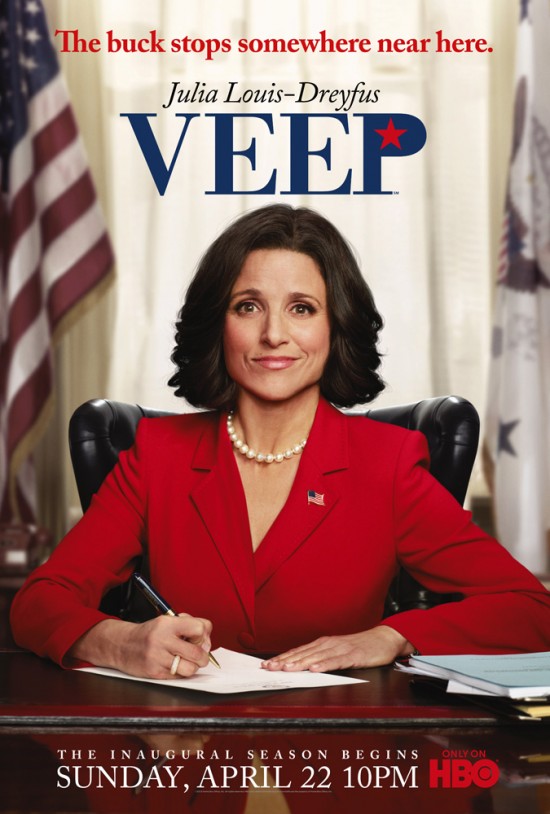
Veep The hilarious Julia Louis-Dreyfus (“Seinfeld,” “The New Adventures of Old Christine”) plays the Vice President of the United States in a new HBO series from the people behind the sharp and wildly funny political satire, “In the Loop.”

The Big Bang Theory Fanboy heaven.  Last week Leonard Nimoy provided the voice for an action figure from “Star Trek.”  Next week, the man even Sheldon Cooper must admit is the greatest living physicist, Stephen Hawking, will make a guest appearance.


P.S. Thanks to jestrfyl for correcting my mistake about sweeps months!

Related Tags:


Television
THE MOVIE MOM® is a registered trademark of Nell Minow. Use of the mark without express consent from Nell Minow constitutes trademark infringement and unfair competition in violation of federal and state laws. All material © Nell Minow 1995-2026, all rights reserved, and no use or republication is permitted without explicit permission. This site hosts Nell Minow’s Movie Mom® archive, with material that originally appeared on Yahoo! Movies, Beliefnet, and other sources. Much of her new material can be found at Rogerebert.com, Huffington Post, and WheretoWatch. Her books include The Movie Mom’s Guide to Family Movies and 101 Must-See Movie Moments, and she can be heard each week on radio stations across the country.

Website Designed by Max LaZebnik