The Birth of a Nation

The Birth of a Nation

Posted on October 6, 2016 at 5:52 pm

B+
Lowest Recommended Age: Mature High Schooler
MPAA Rating: Rated R for disturbing violent content, and some brief nudity
Profanity: Racist epithets
Alcohol/ Drugs: Drinking and drunkenness
Violence/ Scariness: Intense, brutal, and graphic violence, rape, murder, hanging, lynching
Diversity Issues: A theme of the movie
Date Released to Theaters: October 7, 2016
Date Released to DVD: January 9, 2017
Amazon.com ASIN: B01LTHN5TU

Copyright 2016 Fox Searchlight
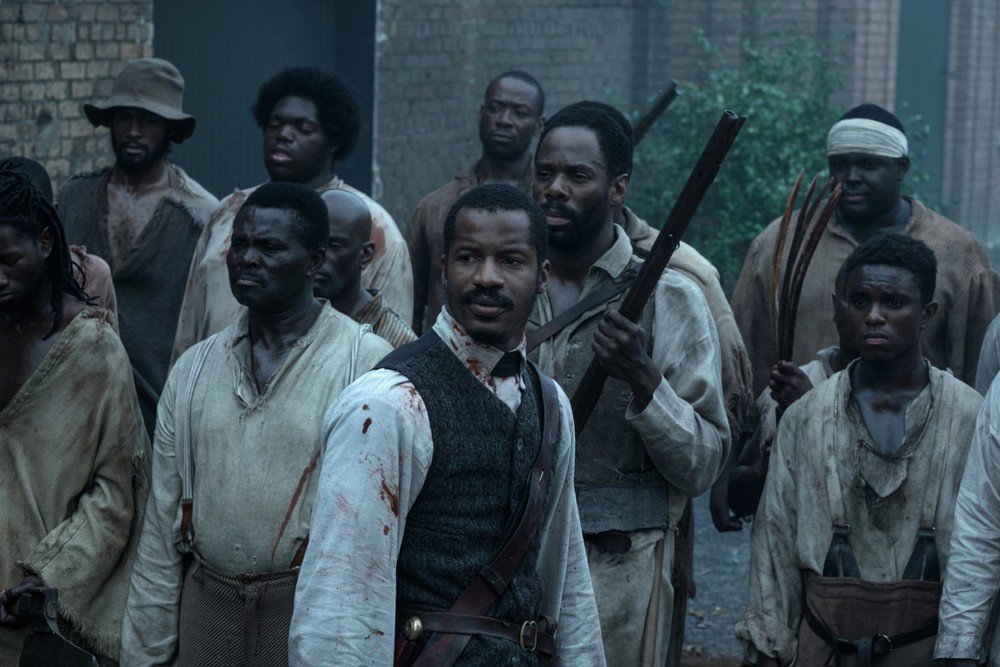
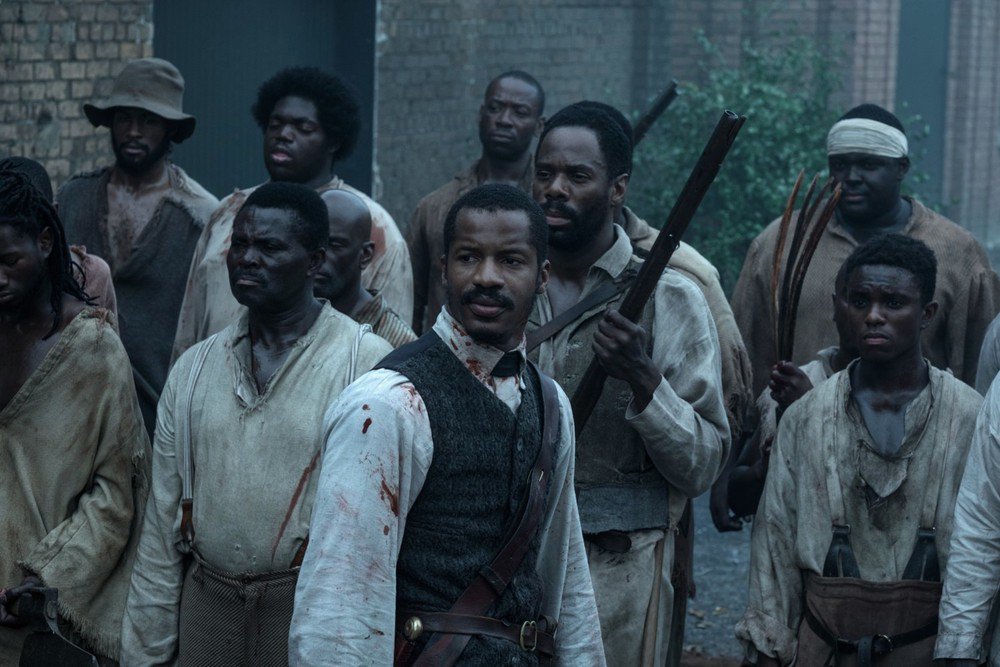
Nat Turner was an enslaved man in early 19th century Virginia who led other enslaved people in an armed rebellion against slaveholders thirty years before the Civil War. They killed more than 50 white people and more than 200 black people.

For actor Nate Parker, Turner’s story has been a long-time passion project, and he has audaciously claimed, or reclaimed the title of the D.W. Griffith silent film as revered for its innovations in cinematic storytelling as it is reviled for its racist, pro-KKK storyline. “The Birth of a Nation” title is provocative, timely, serious-minded, and powerful, and so is the film. The title refutes the pernicious narrative of the 1915 Griffith film, an act of rebellion and justice and an assertion of dignity and humanity. And so does the quote at the beginning of the film, from the man who both wrote of the inalienable rights of all men and was a slaveholder, Thomas Jefferson. The film opens with a selection from this passage:

an the liberties of a nation be thought secure when we have removed their only firm basis, a conviction in the minds of the people that these liberties are of the gift of God? That they are not to be violated but with his wrath? Indeed I tremble for my country when I reflect that God is just: that his justice cannot sleep for ever: that considering numbers, nature and natural means only, a revolution of the wheel of fortune, an exchange of situation, is among possible events: that it may become probable by supernatural interference! The Almighty has no attribute which can take side with us in such a contest.–But it is impossible to be temperate and to pursue this subject through the various considerations of policy, of morals, of history natural and civil. We must be contented to hope they will force their way into every one’s mind. I think a change already perceptible, since the origin of the present revolution. The spirit of the master is abating, that of the slave rising from the dust, his condition mollifying, the way I hope preparing, under the auspices of heaven, for a total emancipation, and that this is disposed, in the order of events, to be with the consent of the masters, rather than by their extirpation.

We first see Nat as a young boy, in a firelight gathering where enslaved people have congregated for some moments that recall the traditions of their home. Three birthmarks on the boy’s chest identify him as someone who will be a leader. Nat’s father, trying to get food for his family, kills a slave hunter and runs away.

There is a tense scene of terrible menace, as the other slave hunters come looking for Nat’s father that night, threatening Nat’s mother and grandmother, and finally the boy, too. We then see Nat running from a young white boy on the plantation, only to find that it is an innocent game, and the two seem to share a genuine sense of companionship. This is mirrored later in the film, when the then-adult Nat sees a little white girl playing with an enslaved girl by tugging her along with a rope like a dog on a leash.

Later, noticing the boy’s intelligence, the wife of the plantation owner (Penelope Ann Miller) brings the boy inside her home and teaches him to read. But the books on the shelves are not for him. “These books are for white folks. They are full of things your kind won’t understand.” There is just one book she will let him read: the Bible. He becomes a fervent believer, preaching the gospel to the other enslaved people.

As adults, Sam (Armie Hammer), the boy who was playing with him, has become the plantation owner and Nat (Parker) is his trusted servant. Nat persuades Sam to buy a woman who is being auctioned, and who clearly has suffered terribly. She becomes his wife and they love each other dearly.

When Sam falls on hard times and begins to drink too much, he starts renting out Nat’s services as a preacher to the other slaveholders. The plantation owners hope that his lessons about God’s will and the promise of heaven will keep them compliant. But Nat’s travels bring him into contact with the horrific atrocities inflicted by other slave holders. And some of the Bible’s lessons about justice and opposing tyranny take on an urgent power, as Nat’s wife is raped and beaten by slave hunters, another enslaved woman (Gabrielle Union) is forced to have sex with a man Sam hopes to do business with, and Nat is brutally whipped for baptizing a white man. He increasingly sees visions of a rebellion.

As a film, the movie falters, slipping into melodrama that recalls the Griffith film in ways it does not intend. But it transcends its storytelling shortcomings because of its palpable sincerity and passion, its force as a searing statement of history, and its relevance today. The fight for justice is a defining purpose of humanity, and Nat Turner’s cause goes on.

Parents should know that this film includes brutal slavery-related abuse including whipping, rape, beating, and forced feeding, a marital sexual situation with some nudity, drinking and drunkenness, and strong and racist language.

Family discussion: What made Nat Turner willing to take the risks of a rebellion? Why does this movie share the title of the famous D.W. Griffith silent film?

If you like this, try: “12 Years a Slave” and “Amistad” and read Nat Turner’s own words

Related Tags:


Based on a book Based on a true story Drama DVD/Blu-Ray Pick of the Week Epic/Historical
Denial

Denial

Posted on October 6, 2016 at 5:50 pm

Copyright 2016 Bleeker Street
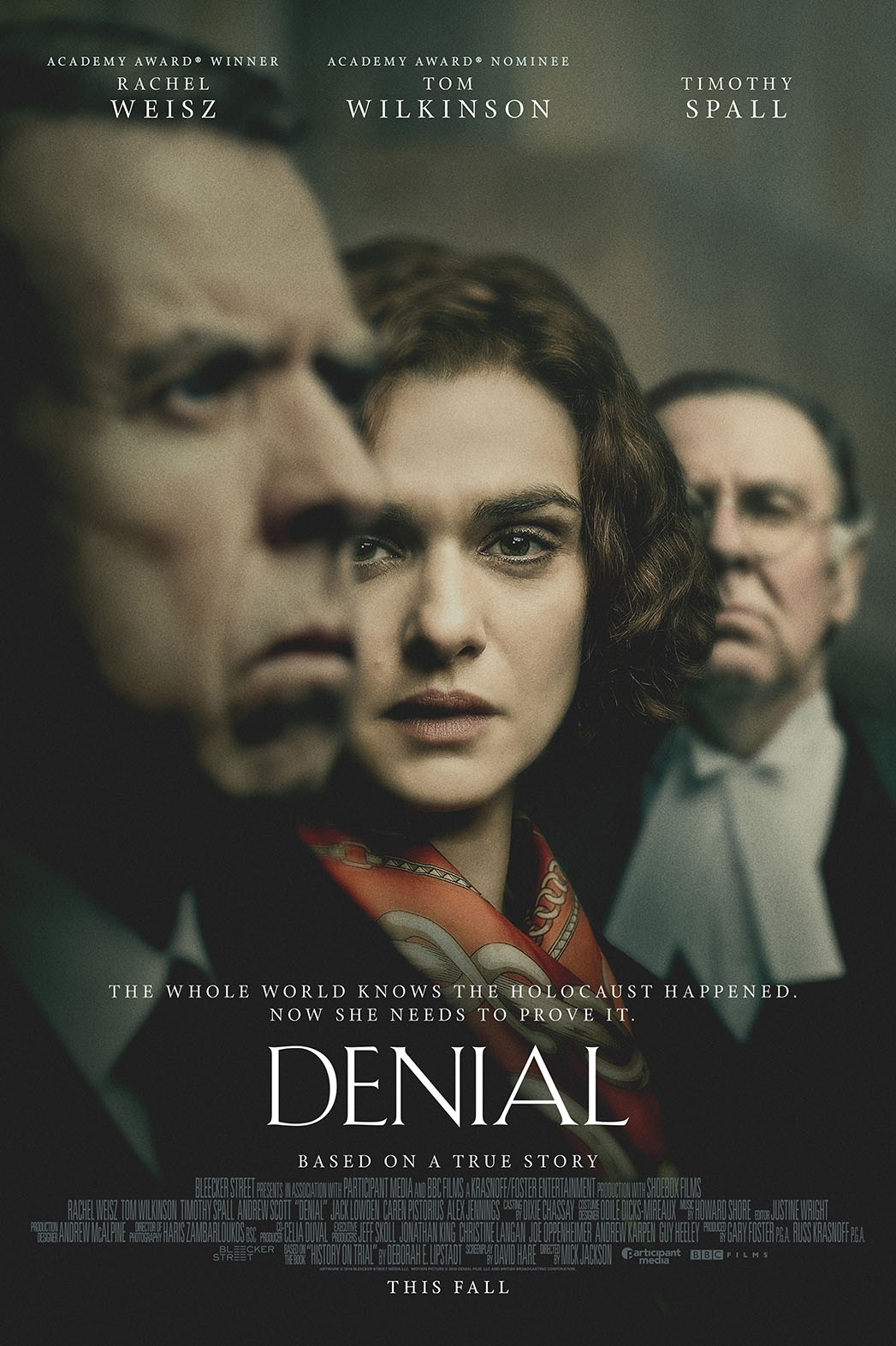
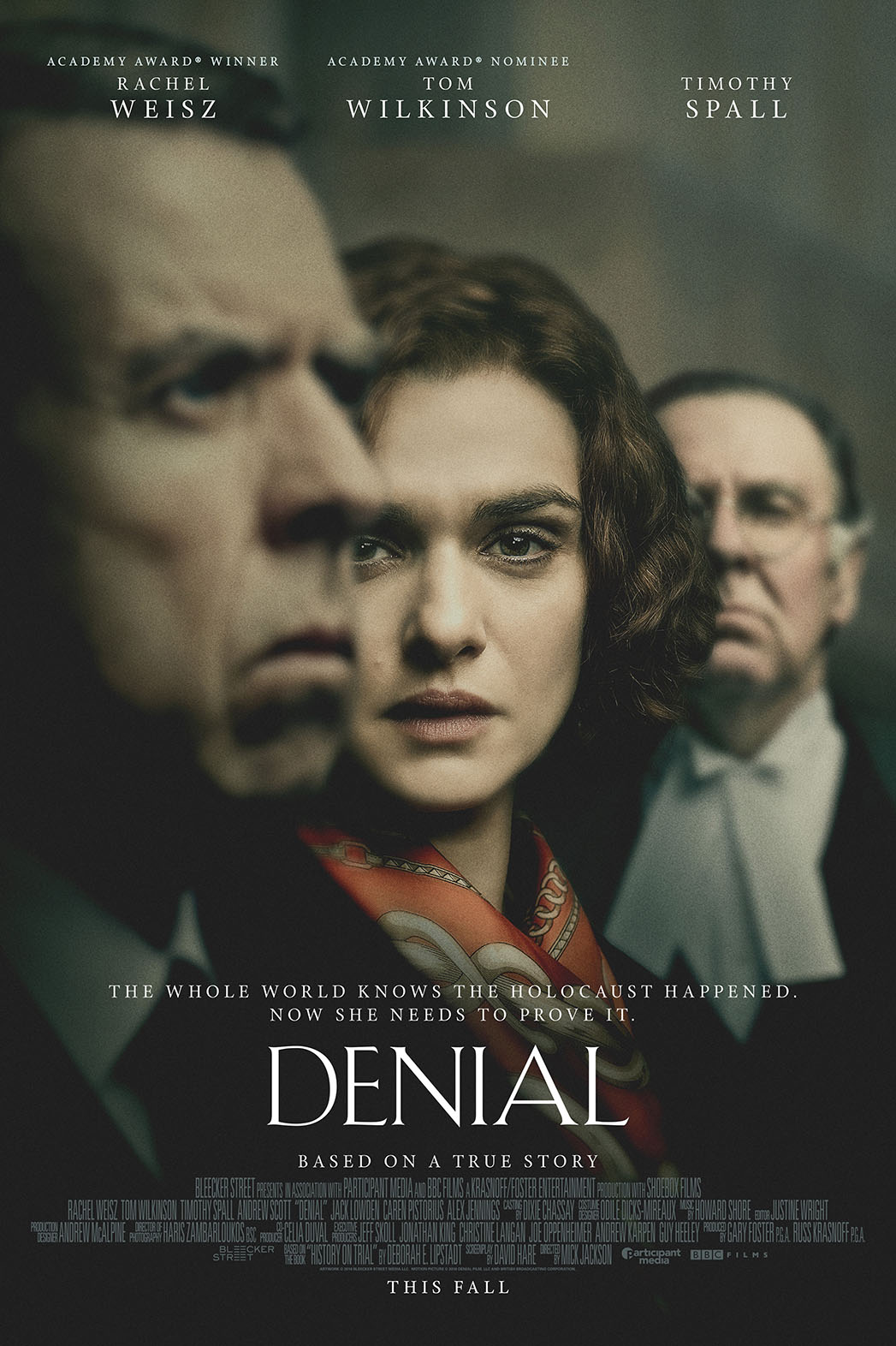
You can refuse. You can disagree. You can object. You can argue. But none of those words is as charged as “denial,” with its multiple uses all implying injustice, unfairness, even bullying. The title of this film establishes immediately that the courtroom and media battle it depicts is not one of popularity, reputation, or consensus. It is about the core issue of proof — how we know what we know, and, in this case, what that means as we approach the time when everyone with a memory of the experience in question is gone.

The experience in question, in the most literal sense of the term, is the Holocaust. David Irving (Timothy Spall, all oily charm), a British self-described historian, wrote and lectured widely about his view that Hitler never ordered the killing of Jews in concentration camp and that in fact there were no gas chambers used for mass executions of Jewish prisoners. He was intentionally offensive — in both sense of the word. He said:

Ridicule alone isn’t enough, you’ve got to be tasteless about it. You’ve got to say things like ‘More women died on the back seat of Edward Kennedy’s car at Chappaquiddick than in the gas chambers at Auschwitz.’ Now you think that’s tasteless, what about this? I’m forming an association especially dedicated to all these liars, the ones who try and kid people that they were in these concentration camps, it’s called the Auschwitz Survivors, Survivors of the Holocaust and Other Liars, ‘ASSHOLs’. Can’t get more tasteless than that, but you’ve got to be tasteless because these people deserve our contempt.

And he took his case to the classroom of a professor who specialized in the Holocaust, Emory’s Deborah Lipstadt (Rachel Weisz, feisty but thoughtful, with a red perm, bright scarves, and a Queens accent), to confront her in person, without notice but with a video camera. She refused to debate him, saying that it would legitimize his arguments. And she described him in her book, Denying the Holocaust: The Growing Assault on Truth and Memory, as:

one of the most dangerous spokespersons for Holocaust denial. Familiar with historical evidence, he bends it until it conforms with his ideological leanings and political agenda. A man who is convinced that Britain’s great decline was accelerated by its decision to go to war with Germany, he is most facile at taking accurate information and shaping it to confirm his conclusions.

He wanted more than a classroom confrontation after that. He filed a lawsuit against Lipstadt and her publisher, and he filed it in England, where the laws are more favorable for plaintiffs in libel cases. In the US, the person filing the suit has to prove his or her case. In the UK, it is up to the defendant to prove the truth of the statements made. In cinematic terms, the legal and physical setting heightens the inherent courtroom drama — all the wigs and posh accents and strangeness of the rules boost the theatricality of the presentation, especially after Lipstadt learns that neither she nor the Holocaust survivors who are vitally concerned with the trial will be allowed to testify. For Lipstadt, not being permitted to use her voice was a whole separate category of denial.

This is a compelling courtroom drama that goes to the deepest questions not just of Holocaust history or any history but of how we know what we know and who we believe. It is always tempting to say “let’s listen to both sides.” But as the late Daniel Patrick Moynihan used to say, “Everyone is entitled to his own opinion, but no one is entitled to his own facts.” The meticulous combing of Irving’s work to check footnotes and translate original documents (funded by Steven Spielberg and other donors) proved that Irving’s “conclusions” were based on misrepresentation. The meticulous combing of his shelves and shelves of diaries proved his bias. This is a compelling drama and an urgent reminder of the importance of rigorous challenges to unsubstantiated, malicious “history.”

Parents should know that this film deals with the Holocaust, with references to genocide and ethnic bigotry. It includes social drinking and some strong language.

Family discussion: What evidence would you want to see if you were the judge in this case? Should Professor Lipstadt have testified?

If you like this, try: This C-SPAN program about the trial, featuring Irving and Lipstadt and the website that includes the trial documents

Related Tags:


Based on a book Based on a true story Courtroom Drama
Deepwater Horizon

Deepwater Horizon

Posted on September 29, 2016 at 5:54 pm

Copyright 2016 Lionsgate
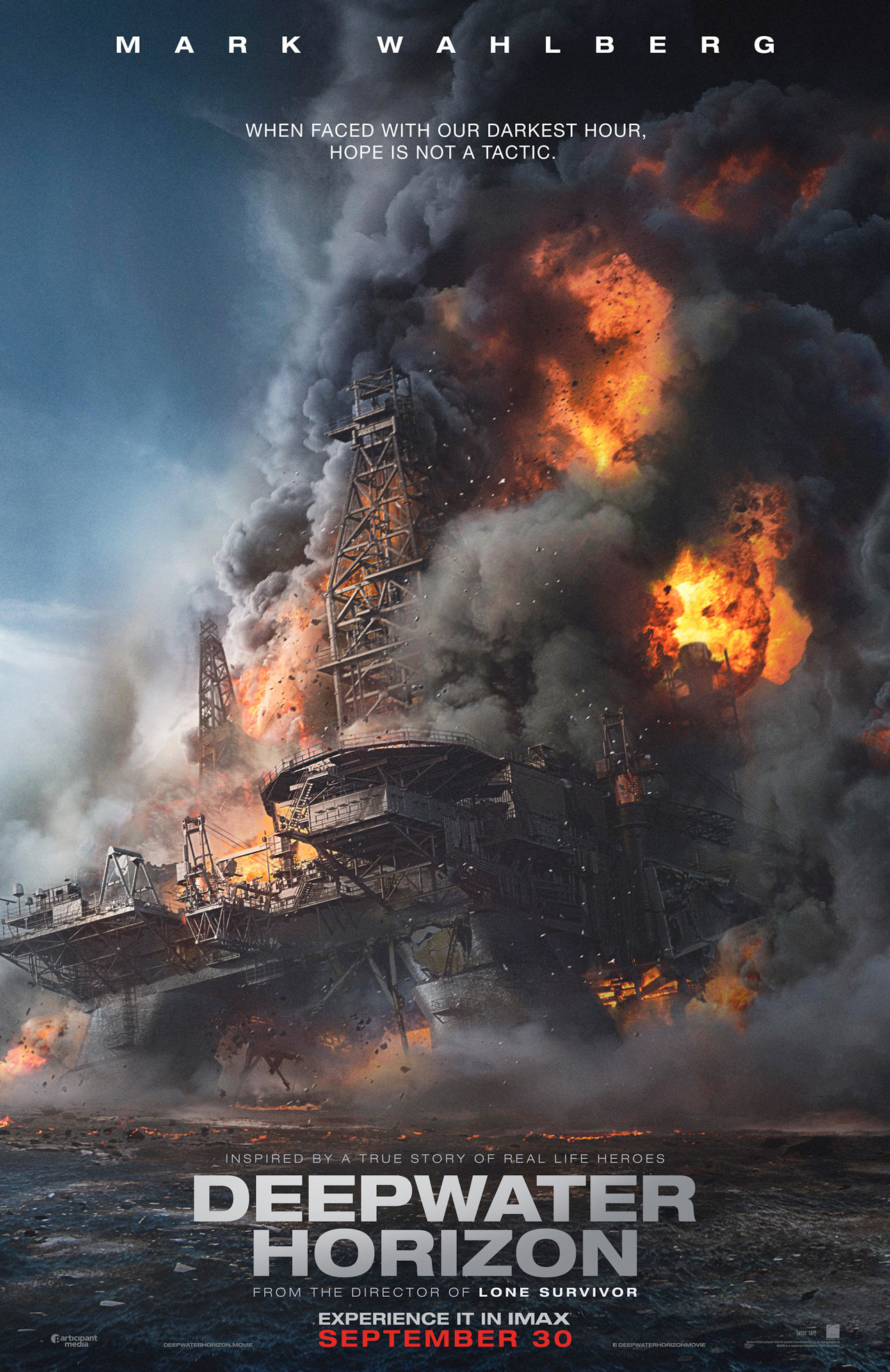
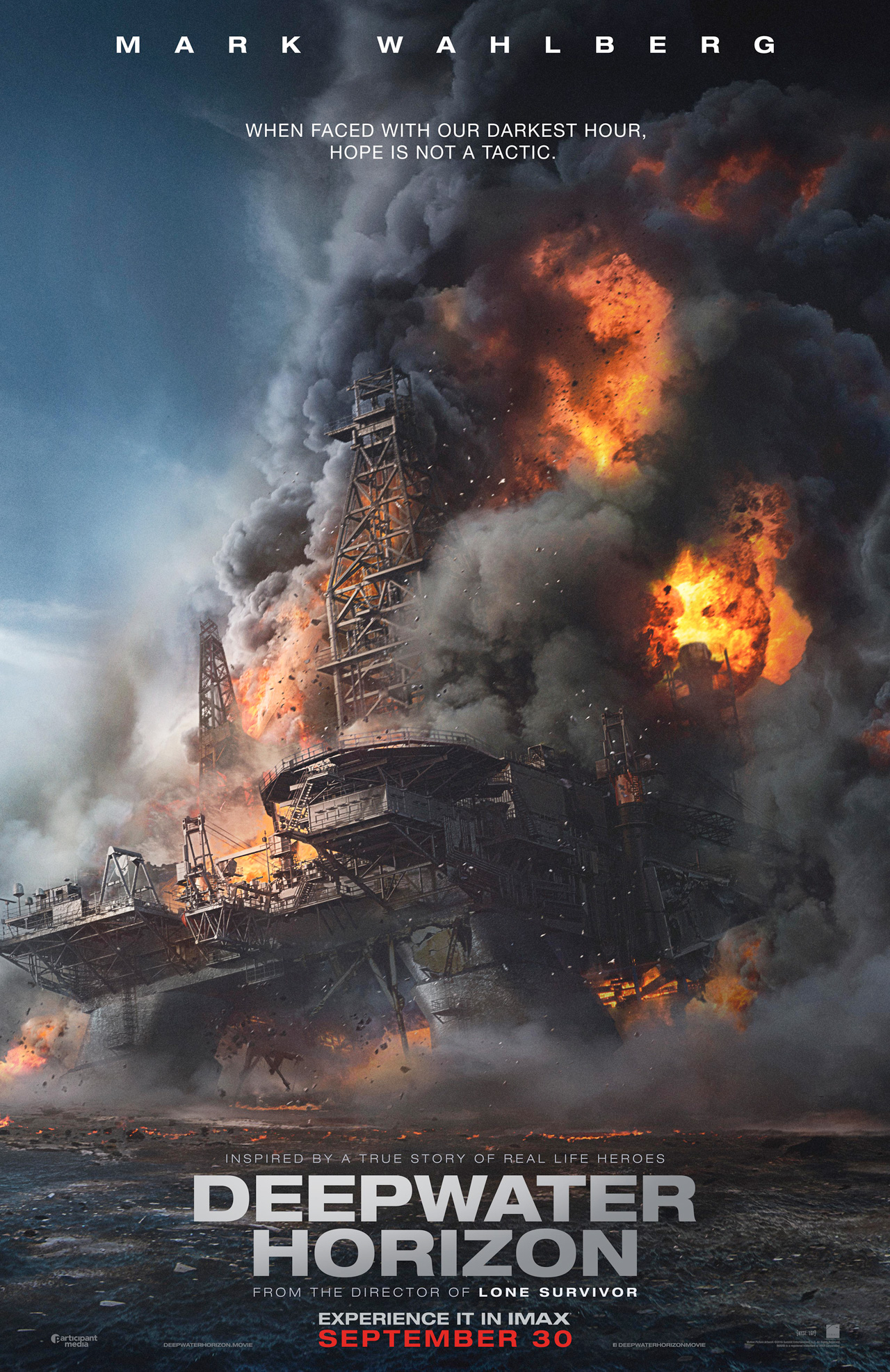
I’m a fan of director Peter Berg. His excellent “Friday Night Lights” film has been eclipsed by the popular television series it inspired. And I like the much-derided “Battleship,” which I thought was a great example of well-executed action movie, taking its entertainment value seriously without taking itself too seriously. His new “Deepwater Horizon,” based on the 2010 explosion and sinking of BP’s Deepwater Horizon oil rig in the Gulf of Mexico, shows his skill in cinematic storytelling and his gift for pacing and action. But it is curiously constructed, as though for a fictional story more along the lines of Bruce Willis fighting a meteor than a real-life environmental catastrophe that killed 11 people and spread an estimated 3.19 million barrels of oil into the Gulf. It should be an action-movie version of “The Big Short.” Instead, it’s an updating of “The Towering Inferno,” meaning — spoiler alert — the bad guy is the one who tries to cut costs.

Berg and screenwriters Matthew Michael Carnahan and Matthew Sand follow the established formula for action films. The first ten minutes make us fall in love with the hero, his adoring wife, and adorable child. That’s not hard to do. The hero is Mike Williams, Mark Wahlberg, his wife is Felicia (Kate Hudson), and their daughter happens to be working on a report for school about Daddy’s job, which gives us a chance to find out about some very technical stuff in very simple terms. Daddy works on an oil rig out in the middle of the Gulf that pumps up oil from under the ocean. “That oil is a monster like the dinosaurs it used to be. My daddy tames the dinosaurs.” And Mommy will miss him very much when he goes. They are adorable. Got it.

The next scene introduces us to hero number 2, the weary veteran who is all about competence and integrity, Captain Jimmy Harrell, superbly played by Hudson’s real-life dad, Kurt Russell. And then there are the guys in suits, who are all about making their numbers and therefore cutting the corners that the veterans knows are not there for show but are actually necessary. There’s a lot of jargon, but basically all you need to know is that the good guys understand that there may be a problem and the bad guys do not want to take the steps necessary to find or prevent it. And the good guys are really endearing, and therefore it all matters a lot.

And then it all starts to blow up, and we get to the real reason for the movie, which is the “who will get out of this and how will they do it?” part. This is where Berg’s strengths really show, as each of the set-pieces are thrillingly staged. He has an exceptional clarity in conveying a three-dimensional space on screen — actually, several of them in different locations — and balancing the urgency of the action with genuine emotion. We see how the people on board think through the problems, from the logistics and the mechanics to the choices based in morality and courage. Wahlberg is, as ever, just right to play the guy you’d like to have next door, a decent, hard-working, family-loving man with enormous capability and integrity. Here, as in their previous collaboration, “Lone Survivor,” Berg keeps the focus on the challenges faced by individuals who have little control over the monumental, life-or-death tasks they are assigned by people far away with little understanding of the consequences of their orders. That worked better in the earlier film, as the story of the soldier far from command has existential implications that are inherent and instantly recognized. Here, the action is disconnected from the consequences that a brief text coda before the credits cannot make up for.

Parents should know that the movie includes extensive peril and violence, with some disturbing images and characters injured and killed, some strong language, and sexual references and a situation.

Family discussion: Why do the people on the rig use the term “Mr.”? Who could have prevented the explosion?

If you like this, try: “The 33” and the documentary about Deepwater Horizon, “The Great Invisible”

Related Tags:


Action/Adventure Based on a true story
The Queen of Katwe

The Queen of Katwe

Posted on September 22, 2016 at 5:59 pm

null
Copyright Disney 2016
An illiterate girl from the slums of Uganda became an internationally ranked chess champion. So of course there is a Disney movie. But director Mira Nair has not made the usual feel-good underdog story. It is a wonderfully rich depiction of a family and a culture, as complex in its way as a master-level chess game with intricate moves by many pieces with different strengths and vulnerabilities.

At the center of the story is Harriet (Lupita Nyong’o of “12 Years a Slave”), a young widow with five children living in dire poverty. She cannot afford to send her children to school, and so they sell maize in the street and at an open market. Her oldest daughter, Night (Taryn Kyaze) is a young teenager already attracting the attention of a man. The youngest is a baby. When Harriet’s daughter Phiona (Madina Nalwanga) and her brother are lured into a chess class with cups of porridge, Harriet is scared and angry. She needs the children to bring in money, and she believes that the chess teacher, Robert Katende (David Oyelowo of “Selma”) is using them for some sort of gambling operation. But Katende, who is waiting for a job as an engineer, persuades her that he just wants her children to learn.

Nair (“Monsoon Wedding,” “The Namesake”) has a great eye, and a great gift for creating vibrant, layered, wonderfully inviting communities on screen. As Harriet tries to protect her family, despite eviction, a sexual predator, a terrible injury, she recognizes that she has to do more than keep her children safe. She has to open the world to them. Phiona cannot read or count, but somehow she can see eight moves ahead on a chess board as only a very few masters of the game can do. Robert knows that poverty is only the beginning of the problem the children face. The snobbery and bigotry of the middle class Ugandans is the real obstacle. They will not even allow the children from the slum to compete. Robert tricks the official into agreeing to let them in if they can raise the entry fee. And then he raises the money himself, by playing soccer.

Newcomer Nalwanga, from a community much like Phiona’s, has a winning screen presence, and we can see that she has inherited her ability to think through chess problems from her mother’s canny navigation of the challenges to the family’s most basic survival. Nyong’o shows a grace and courage, even in the direst moments, that echo Phiona’s resilience.

Parents should know that this movie includes themes of poverty and deprivation, child is hurt in an accident with scenes of painful medical treatment, there are also some references to sexual predators and there is an out of wedlock teen pregnancy.

Family discussion: Why did Robert change his mind? Why did Phiona get cranky after she returned home?

If you like this, try: “Searching for Bobby Fischer,” “Brooklyn Castle,” and “Endgame”

Related Tags:


Based on a true story Stories About Kids
Command and Control

Command and Control

Posted on September 22, 2016 at 5:30 pm

B+
Lowest Recommended Age: High School
MPAA Rating: Not rated
Profanity: Some strong language
Alcohol/ Drugs: None
Violence/ Scariness: Theme of nuclear weapons and accidents, peril and violence, sad death
Diversity Issues: None
Date Released to Theaters: September 23, 2016
Copyright 2016 Robert Kenner Films

You want to know what’s scary? A teenager dropping a wrench onto an aging but still very potent nuclear missile. Even scarier is that the wrench hit so hard it poked a hole in the missile, which led to a fuel leak, which led to a massive explosion, killing one man, injuring others, and destroying the launch facility. Scarier than that is that this happened in 1980, in Arkansas. It wasn’t a secret. Then-governor Bill Clinton appeared on television to reassure Arkansans that everything was all right. Here’s what’s scary: no one remembers it, and it was just one of many “broken arrow” accidents involving nuclear weapons stored on US soil, and that’s just the ones we know about that took place in America. Who knows what is going on in other countries?

Based on a book by reporter Eric Schlosser, “Command and Control” tells the story of the Titan II Missile explosion with riveting interviews and seamless re-creations, moment by moment of the night the young airman dropped the wrench and the steps taken at great risk and great speed to prevent contamination. We see how painful the events still are to the people involved and how terrifyingly close we — meaning all of us on the planet — were to complete annihilation. Schlosser, whose calm delivery somehow makes it seem even more dire, has assembled a terrifying dossier of denial and neglect.

Director Robert Kenner (“Merchants of Doubt”) wisely presents it like a “tick-tock” thriller, a “Mission: Impossible” or James Bond story come to life. But this film has no supervillain attempting total world domination. This is a Pogo-style “we have met the enemy and he is us” story. Somehow, it is easier for us to believe that a Dr. Evil out there can devise a strategy to destroy us than to believe that in a world where most of us cannot re-set our car clocks for Daylight Savings Time, we keep designing machines that are too complicated for us to operate, or, in this case, even store safely. The bombs used during WWII were built and dropped. The deterrence-arsenal built up during the Cold War has created an unprecedented maintenance problem. We simply do not know how to take care of them or even whether it is possible to do so for decades or centuries.

It seems pretty obvious that at some point, someone is going to drop a wrench. Indeed, that seems far more likely than someone breaking in to do intentional damage. And yet, Kenner and Schlosser show us, calmly, devastatingly, while we argue about every other political issue, this one keeps being overlooked. This movie should make it harder to continue to do so.

Parents should know that the topic of this film is nuclear weapons. There are scenes of peril and explosions and discussions of injuries and death.

Family discussion: Which politicians are paying attention to this issue?

If you like this, try: “Merchants of Death”

Related Tags:


Documentary Movies -- format
THE MOVIE MOM® is a registered trademark of Nell Minow. Use of the mark without express consent from Nell Minow constitutes trademark infringement and unfair competition in violation of federal and state laws. All material © Nell Minow 1995-2026, all rights reserved, and no use or republication is permitted without explicit permission. This site hosts Nell Minow’s Movie Mom® archive, with material that originally appeared on Yahoo! Movies, Beliefnet, and other sources. Much of her new material can be found at Rogerebert.com, Huffington Post, and WheretoWatch. Her books include The Movie Mom’s Guide to Family Movies and 101 Must-See Movie Moments, and she can be heard each week on radio stations across the country.

Website Designed by Max LaZebnik