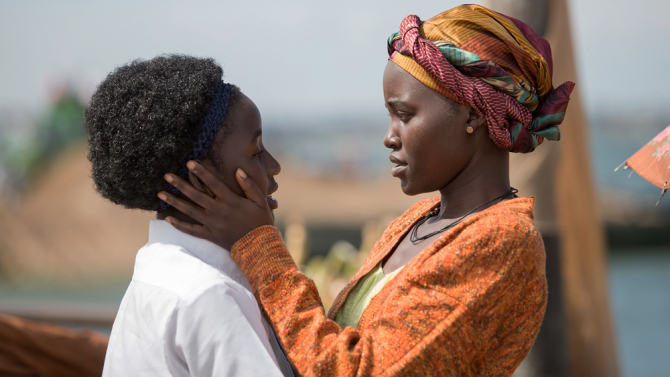
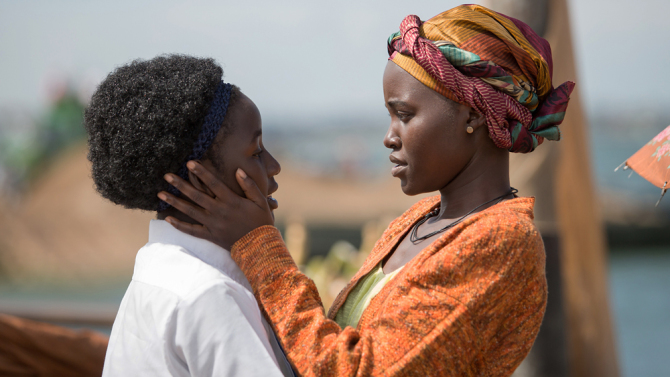
Copyright Disney 2016An illiterate girl from the slums of Uganda became an internationally ranked chess champion. So of course there is a Disney movie. But director Mira Nair has not made the usual feel-good underdog story. It is a wonderfully rich depiction of a family and a culture, as complex in its way as a master-level chess game with intricate moves by many pieces with different strengths and vulnerabilities.
At the center of the story is Harriet (Lupita Nyong’o of “12 Years a Slave”), a young widow with five children living in dire poverty. She cannot afford to send her children to school, and so they sell maize in the street and at an open market. Her oldest daughter, Night (Taryn Kyaze) is a young teenager already attracting the attention of a man. The youngest is a baby. When Harriet’s daughter Phiona (Madina Nalwanga) and her brother are lured into a chess class with cups of porridge, Harriet is scared and angry. She needs the children to bring in money, and she believes that the chess teacher, Robert Katende (David Oyelowo of “Selma”) is using them for some sort of gambling operation. But Katende, who is waiting for a job as an engineer, persuades her that he just wants her children to learn.
Nair (“Monsoon Wedding,” “The Namesake”) has a great eye, and a great gift for creating vibrant, layered, wonderfully inviting communities on screen. As Harriet tries to protect her family, despite eviction, a sexual predator, a terrible injury, she recognizes that she has to do more than keep her children safe. She has to open the world to them. Phiona cannot read or count, but somehow she can see eight moves ahead on a chess board as only a very few masters of the game can do. Robert knows that poverty is only the beginning of the problem the children face. The snobbery and bigotry of the middle class Ugandans is the real obstacle. They will not even allow the children from the slum to compete. Robert tricks the official into agreeing to let them in if they can raise the entry fee. And then he raises the money himself, by playing soccer.
Newcomer Nalwanga, from a community much like Phiona’s, has a winning screen presence, and we can see that she has inherited her ability to think through chess problems from her mother’s canny navigation of the challenges to the family’s most basic survival. Nyong’o shows a grace and courage, even in the direst moments, that echo Phiona’s resilience.
Parents should know that this movie includes themes of poverty and deprivation, child is hurt in an accident with scenes of painful medical treatment, there are also some references to sexual predators and there is an out of wedlock teen pregnancy.
Family discussion: Why did Robert change his mind? Why did Phiona get cranky after she returned home?
If you like this, try: “Searching for Bobby Fischer,” “Brooklyn Castle,” and “Endgame”
Theme of nuclear weapons and accidents, peril and violence, sad death
Diversity Issues:
None
Date Released to Theaters:
September 23, 2016
Copyright 2016 Robert Kenner Films
You want to know what’s scary? A teenager dropping a wrench onto an aging but still very potent nuclear missile. Even scarier is that the wrench hit so hard it poked a hole in the missile, which led to a fuel leak, which led to a massive explosion, killing one man, injuring others, and destroying the launch facility. Scarier than that is that this happened in 1980, in Arkansas. It wasn’t a secret. Then-governor Bill Clinton appeared on television to reassure Arkansans that everything was all right. Here’s what’s scary: no one remembers it, and it was just one of many “broken arrow” accidents involving nuclear weapons stored on US soil, and that’s just the ones we know about that took place in America. Who knows what is going on in other countries?
Based on a book by reporter Eric Schlosser, “Command and Control” tells the story of the Titan II Missile explosion with riveting interviews and seamless re-creations, moment by moment of the night the young airman dropped the wrench and the steps taken at great risk and great speed to prevent contamination. We see how painful the events still are to the people involved and how terrifyingly close we — meaning all of us on the planet — were to complete annihilation. Schlosser, whose calm delivery somehow makes it seem even more dire, has assembled a terrifying dossier of denial and neglect.
Director Robert Kenner (“Merchants of Doubt”) wisely presents it like a “tick-tock” thriller, a “Mission: Impossible” or James Bond story come to life. But this film has no supervillain attempting total world domination. This is a Pogo-style “we have met the enemy and he is us” story. Somehow, it is easier for us to believe that a Dr. Evil out there can devise a strategy to destroy us than to believe that in a world where most of us cannot re-set our car clocks for Daylight Savings Time, we keep designing machines that are too complicated for us to operate, or, in this case, even store safely. The bombs used during WWII were built and dropped. The deterrence-arsenal built up during the Cold War has created an unprecedented maintenance problem. We simply do not know how to take care of them or even whether it is possible to do so for decades or centuries.
It seems pretty obvious that at some point, someone is going to drop a wrench. Indeed, that seems far more likely than someone breaking in to do intentional damage. And yet, Kenner and Schlosser show us, calmly, devastatingly, while we argue about every other political issue, this one keeps being overlooked. This movie should make it harder to continue to do so.
Parents should know that the topic of this film is nuclear weapons. There are scenes of peril and explosions and discussions of injuries and death.
Family discussion: Which politicians are paying attention to this issue?
Rated R for for brief language and a scene of violence
Profanity:
Some strong language
Alcohol/ Drugs:
Drinking and tipsiness, drugs
Violence/ Scariness:
Some peril and violence, murder, sad deaths
Diversity Issues:
None
Date Released to Theaters:
September 23, 2016
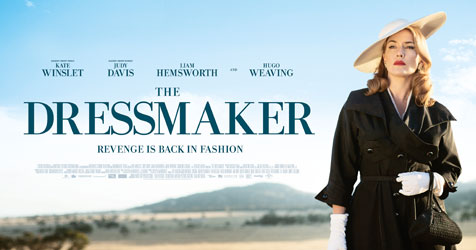
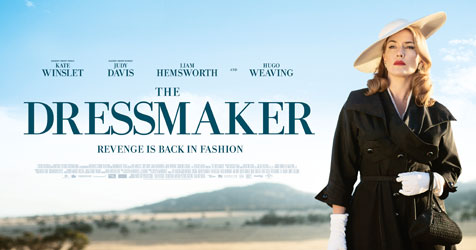
Copyright 2016 Amazon Studios Kate Winslet plays Tilly Dunnage, a woman with secrets who returns to the tiny Australian town that threw her out as a child. She has become an accomplished couturier, working in London, Paris, and Milan. And she is a master of the bias cut, pioneered by Vionnet, whose photograph she carries with her for inspiration. This film, based on the novel by Rosalie Ham is also, in its way, cut on the bias, alternately wildly funny, wildly romantic, wildly satiric, and, at the same time, dark and tragic. Some will find that disconcerting; others will find it refreshing.
It is 1951. Tilly arrives home in the dust-covered town, her stylish heels stepping off the bus onto the dirt road. She goes up the hill to her mother’s shack, when there is a question from the local sheriff. “Is that…….Dior?” It is not; it is one of Tilly’s own designs. But she acknowledges the Dior inspiration. Sargent Ferrat (Hugo Weaving) is dazzled by the bold colors and sumptuous fabrics of Tilly’s designs. He’s a secret cross-dresser.
Winslet is marvelous as Tilly, who has come home to see her mother, known as Mad Molly (Judy Davis of “My Brilliant Career”), to find out the true story of what led to her exile, and to extract some revenge, both of the “living well is the best” variety and of the old-fashioned “make them suffer” variety as well. Tilly, then known as Myrtle, was abused by her teacher and the students in her class because she was poor and because her mother was not married. After an incident that resulted in the death of a boy in her class, she was sent away. The experience was so traumatizing that she cannot let herself remember exactly what happened, and worries that she was responsible, as everyone thinks. “Am I a murderer?” she asks of her mother.
Director Jocelyn Moorhouse and editor Jill Bilcock bring a vibrant energy to the storytelling that suits the theme of Tilly’s force and focus having an impact on the insular little town, and it is a lot of fun to see assumptions challenged and relationships in upheaval. There is a woman crippled by her wife-beating husband, a pharmacist who seems to be suffering from ankylosing spondylitis as he is bent over parallel to the ground. A civil leader gives his wife, agoraphobic and germophobic since the death of their son, knock-out medicine and then rapes her when she is unconscious. There are vicious gossips and snobs. And there are a few kind-hearted people, Ferrat, who regrets his treatment of Tilly and Teddy (Liam Hemsworth, clearly relishing the chance to speak in his native accent and very swoon-worthy when he removes his shirt). Molly becomes less mad and more feisty under Tilly’s care. Ferrat is not the only one who cannot resist the chance to wear something spectacular. “A dress never changed anything,” a local girl longing to be noticed by the town’s most eligible bachelor says to “Tilly.” “Watch and learn, my girl. Watch and learn.” And we know a Cinderella at the ball moment is coming — when it does, it is breathtaking. Soon, the tiny backwater is populated with ladies wearing haute couture. This has to be a dream assignment for a costume designer, and Marion Boyce and Margot Wilson (Winslet’s clothes) rise to the occasion with fabulously gorgeous and entertaining dresses.
The heightened quality of the story makes the darker turns unexpected and disconcerting. It is not as much of a feel-good movie as it originally promises. But it has its odd pleasures, and one of them is that, like its heroine, it has style to space.
Parents should know that this movie includes some strong language, drinking and drunkenness, sexual references and situations with some nudity, adultery and questions of paternity, domestic violence, murder, and very sad deaths.
Family discussion: What did Tilly want from her return home? Why was Teddy different?
If you like this, try: “Strictly Ballroom” and “Muriel’s Wedding”
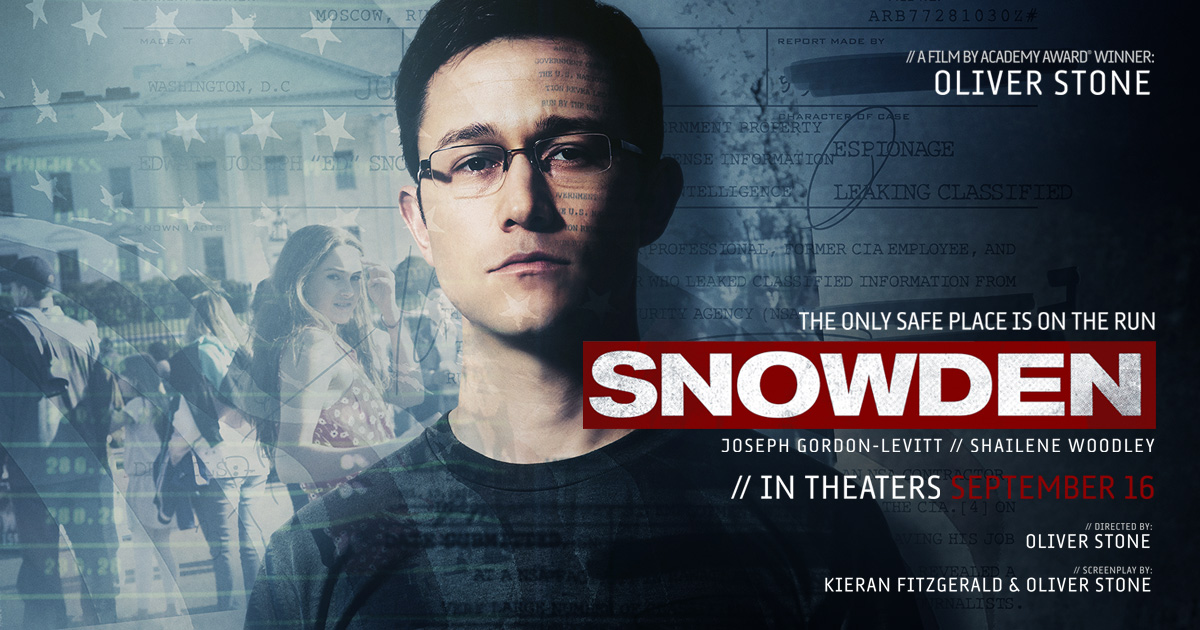
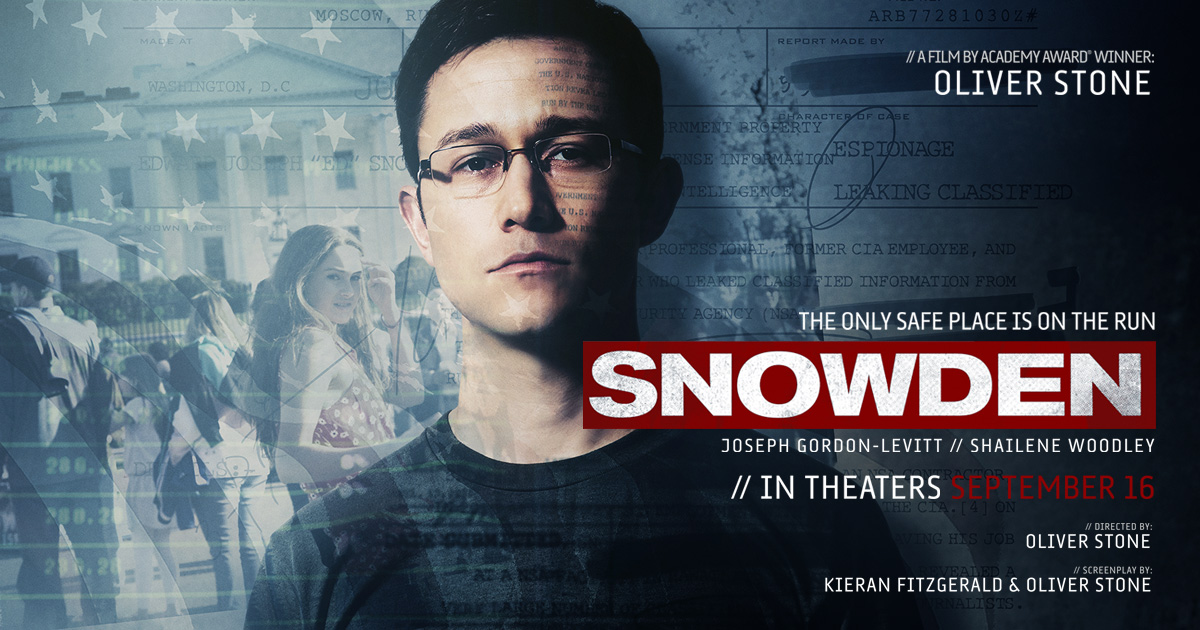
Copyright Endgame Entertainment 2016Who better to take on the story of Edward Snowden than cinema-of-paranoia director Oliver Stone? Well, Laura Poitras, who directed the documentary about Snowden, “Citizenfour,” and who is portrayed in this film by Melissa Leo. As is usually the case, the documentary is the better film. But Stone’s narrative version, “Snowden,” is an absorbing version of the story, presenting vitally important issues in an arresting, provocative manner, with some superb moments. It is flawed, as Stone’s “historical” films tend to be, by unnecessary stacking of the deck that detracts from the credibility of the film. Stone does not trust the government, which is fine, but he doesn’t trust his audience, which is distracting. If you are going to make your hero a seeker of Truth, then Hollywood-izing the story is counter-productive.
The movie takes on three big questions, answers one, partially answers another, and turns the third over to us. The first question is: what happened? How did a 29-year-old computer guy get access to what appears to be the entire scope of US intelligence, copy it, and turn it over to reporters? Second, why did he do it? And third, is he a hero or a traitor?
Snowden was an enormously gifted, deeply patriotic young man who was in training for military special forces when an injury forced his return to civilian life. “There are other ways to serve your country,” the doctor crisply advises him. Naming Ayn Rand as one of his influences does not raise any concerns in his battery of entry tests and interviews, including lie detector tests. And so he goes to work for the CIA, NSA, and private contractors for both agencies, gaining access to the information and intrusions into personal data that are being constantly combed and mined for possible terrorist activity. Think of it as the government having Google that searches not just all public material but everything we think of as private: every email, every phone call, every bank account and credit card transaction, even invading your non-digital, analog world, including your home. According to this film, the government can spy on you Big Brother style via your webcam, even if the indicator light is off. I will wait here while you go get a Band-Aid to cover it up right now.
A combination of consciousness-raising from his left-leaning girlfriend (Shailene Woodley), horrifying discoveries of 4th Amendment violations, disturbing revelations about the military-industrial complex (from Nicolas Cage!), and disappointment in President Obama’s failure to curb these abuses leads Snowden to decide to go public. Briefly touched on are some other possible factors: the abuse of Tom Drake, who tried to raise these questions through official channels, and, possibly, some psychological or cognitive disturbance resulting from the onset of epilepsy and the drug used to treat it, or from the level of work-related stress that may have triggered the seizures. There is one “Beautiful Mind”-style scene where Snowden’s CIA boss (Rhys Ifans) speaks to him via a Skype-ish video conference, with a looming, room-size head along the lines of the Wizard of Oz. It is not clear whether this is Snowden’s subjective viewpoint or intended to be a realistic portrayal, but the conversation is, even within the framework of this film about massive intrusions into private lives of citizens with no suggestion of any inappropriate activity, preposterously paranoic.
All of this would be so much easier to take if Snowden was not heroic and brilliant every single moment. Given 5-8 hours to complete a programming test at the beginning of his tenure at the CIA, he finishes in under 40 minutes (38, he corrects his instructor), and everywhere he goes, he blows everyone away with his mad skills. As he zippily downloads the files he plans to turn over to the press (in real life it took months, not minutes), colleagues knowingly nod their approval, hard to understand given his insistence that he was careful to make it clear that he alone was responsible for the breach. Gordon-Levitt is, as ever, an enormously talented actor, but he is playing something of a cipher, a person with low affect. The endlessly skilled Melissa Leo is playing a tough and savvy journalist but as written she has little to do but gaze adoringly as she points her camera. The standouts in the cast are two of the most versatile and talented young actors working on film today: Ben Schnetzer and Lakeith Lee Stanfield as two of Snowden’s colleagues. In their brief screen time, each of them creates vivid, three-dimensional characters we instantly connect to more than we do to any of the main characters.
No matter where we place the balancing point between national security and individual freedom, we can all agree that the decisions should not be made unilaterally by individuals in their 20’s like Edward Snowden and Chelsea Manning. Snowden says he is hoping to start a conversation. I hope that the conversations about this film will be less about its failings and more about what we should do to make sure the next Snowden does not decide to take this step.
Parents should know that this film has very strong language, sexual references and situations and some nudity, tense and perilous situations, and issues of betrayal.
Family discussion: Is Snowden a hero or a traitor? What would you have done if you discovered the level of government surveillance? Who should decide and how much should be disclosed?
If you like this, try: “Zero Days” and “Citizenfour”
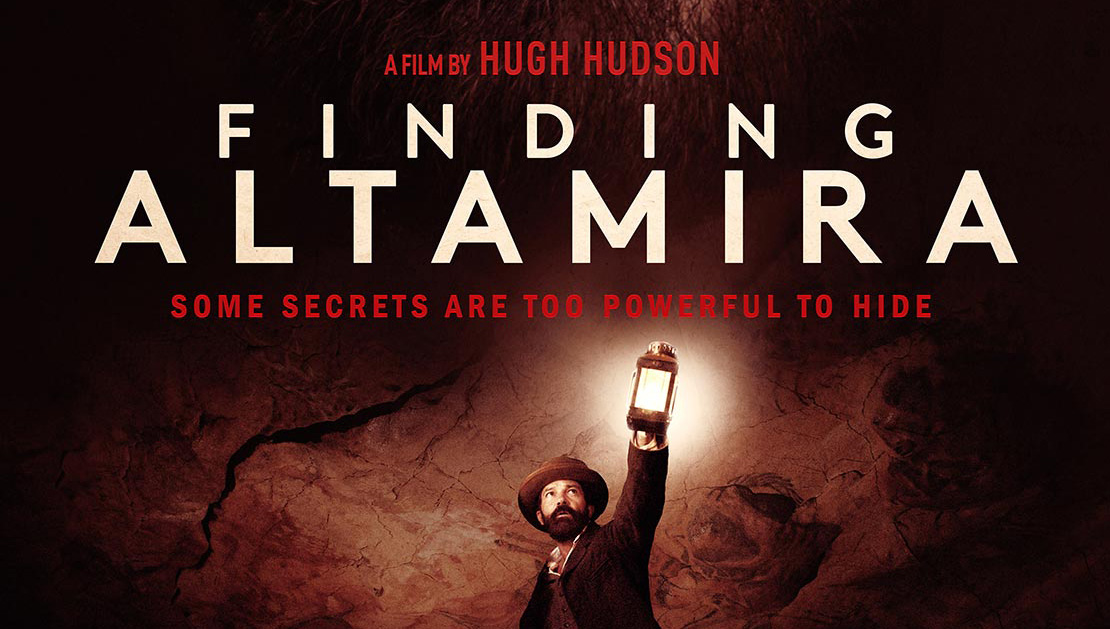
Copyright 2016 Mare Nostrum ProductionsOne of the most deeply moving, inspiring, and just plain thrilling experiences of my life was visiting the legendary Altamira cave, where the earliest humans created art that is stunningly beautiful. It is the earliest work we have that tells us something about the spirit, sophistication, understanding, and aesthetics of our ancestors who lived four or five times as long before ancient Egypt as ancient Egypt is from us. The paintings are every bit as beautiful and sophisticated as Michelangelo’s Sistine Chapel or Rembrandt’s Last Supper.
Imagine being the first modern person to see them, to wander into a cave and find perfectly preserved paintings of animals extinct for thousands of years. This is the story of Marcelino Sanz de Sautola (Antonio Banderas), a nobleman scholar who first identified the cave paintings prehistoric in the 1870’s. The focus of the film is the rejection of his conclusions by the church, which considered them heretical and a threat to their power, and by the scientists of the time, who considered them a secular form of heresy as well. Like the cinematic portrayals of Darwin (“Creation”) and Stephen Hawking (“The Theory of Everything”), it is also the story of a scientist married to a woman of faith, and the conflicts that creates for their relationship.
Director Hugh Hudson (“Chariots of Fire”) has a feel for period drama, but some striking shots cannot make up for static storytelling and a clunky script. There is too much focus on Marcelino’s relationship with his science-minded young daughter (one scene of her gazing at the paintings as they come to life would be more than enough) and the conflicts with his wife. The dialogue is clunky and over-explanatory, more suitable for an educational film to be shown in middle school than a theatrical release. Frustratingly, the movie never really conveys the astonishing splendor and the vibrant colors of the paintings themselves, the way the artists used the surface of the cave for perspective and shaping of the images. For that see Werner Herzog’s “Cave of Forgotten Dreams,” about the cave paintings at Chauvet, a movie that comes much closer to living up to the art to which it pays tribute.
Parents should know that this film has some peril and confrontations and a clash between religion and science.
Family discussion: Why do some people see a conflict between religion and science? Who is most like Marcelino today?