Rated PG-13 for some partial nudity/sensuality and thematic elements
Profanity:
None
Alcohol/ Drugs:
Alcohol
Violence/ Scariness:
Devastating tragedy (off-screen), some peril
Diversity Issues:
None
Date Released to Theaters:
September 16, 2016
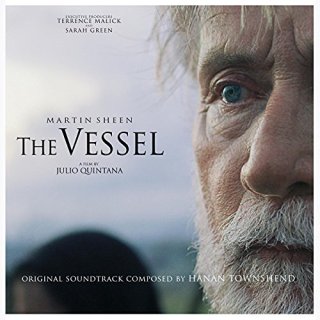
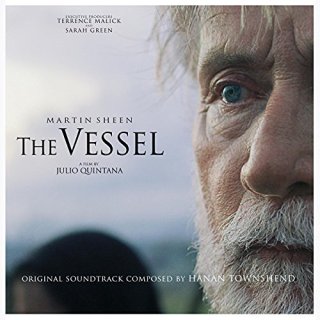
Copyright New Territory Pictures 2016Many people have asked why bad things happen to good people, and many theories have been proposed. Fewer people have explored the more important question: when devastating tragedy happens, how do we find a way to go on? That is the question in “The Vessel,” produced by Terrence Malick and written and directed, in both Spanish and English versions, by Julio Quintana. Malick’s influence or inspiration is felt throughout, from the exquisitely composed images and impressionistic storytelling to the spiritual symbols.
Like Malick, Quintana lets the story unfold slowly, with a dreamy quality, allowing the audience to discover the story rather than serving it to us. There is a narrative voiceover from Leo (Lucas Quintana), a man who lives with his mother, a woman closed off in a deep silence. He cares for her tenderly, patiently. Leo tells us that all of the women in his community wear black in a sort of contest. Whoever puts aside mourning clothes first will lose some unspoken contest. And so we begin to discover she is not the only person in this Spanish-speaking town on the ocean who has had a tragic loss. The entire community has been devastated. They can barely speak. They seem stuck in grief, with no way to return to any part of their lives.
An American-born priest (Martin Sheen, a performance of deep grace and generosity) tries to help. He does everything he can. He listens. He counsels and commiserates. He gently urges. He prays. But nothing changes.
And then, Leo does something. What is a vessel, after all? The word can mean a ship or a container for liquids or a biological or botanical term for a physical delivery system. And poetically it can be used for a human body as the container for a soul. All of the above applies here, with images of water to underscore the metaphor. Leo begins to build something, not sure why or what he will do when it is finished. The priest opposes it; for him it is a distraction, a rival to the church, a golden calf. And yet, the community begins to see it as a portal to a return to themselves. They will never forget. They will never be free from pain. But for the first time, they begin to see the possibility that they might not be numb anymore.
This is a gentle, poetic, touching film, itself a vessel with a message of hope. It does not pretend to answer the question of why bad things happen to good people, but it reminds us that when they do, there are other good people paying attention.
Parents should know that this movie includes themes of devastating loss, some peril, and a brief sexual situation with some nudity
Family discussion: What do we learn from the different ways of grieving? Why did the boat make a difference?
If you like this, try: “The Sweet Hereafter” and “Tree of Life”
The animation is quite good in “The Wild Life,” with exceptional use of space designed to make the best use of 3D and cleverly constructed mechanics. But the voice talent is poor, the characters are dull, and the story and script start out badly and go downhill from there.
It is inspired by but bears little relation to the classic shipwreck story Robinson Crusoe, by Daniel Defoe, memorably illustrated by the great N.C. Wyeth (father of Andrew). But in this version there is no Man Friday. Instead it is, for no particular reason, told as a flashback from the perspective of the animals on the island, including a pangolin, a hedgehog, a tapir, and a parrot named Mak, later dubbed “Tuesday” by Crusoe.
The movie begins with pirates seeing what they think is a signal flame on a remote island. The captain sends his men to check it out and bring back anything of value. They capture Crusoe, and Tuesday settles in with some friendly mice on the ship to tell them the story from the beginning.
We meet Crusoe and his dog Ainsley onboard La Luna. They are novices at sea travel and looked down upon by the seasoned sailors. Crusoe does a lot of looking down, too, at the ocean, as he barfs into it. Also on board are two scraggly cats with Cockney accents, the scheming May and henchman Mal (Debi Tinsley and Jeff Doucette). A storm destroys the ship and Crusoe and Ainsley are trapped when the sailors depart in the lifeboat. The ship crashes on the shore of a tiny uninhabited island. Well, uninhabited by humans. The animals live in a predator-free paradise, with daily luaus, and they are all very happy except for Mak the parrot, who dreams of finding something exciting and different.
Crusoe, Ainsley, and the splintered remains of the ship are thrilling for Mak but terrifying for the other animals. Eventually Crusoe gains Mak/Tuesday’s trust and the animals begin to make friends with him, helping him to build a treehouse complete with running freshwater. But May and Mal, briefly stuck on an adjacent rock and soon accompanied by a litter, are determined to return to the island and pretty much eat and/or destroy everything and everyone.
Illuminata had the same mix of exceptional animation technique and underwritten story in “Fly Me to the Moon.” I wrote in my review, “Unfortunately, the dull characters and weak story keep getting in the way of the gorgeously produced backgrounds.” My strong recommendation for their next film is that they try to find writers and performers as capable as their visual artists.
Parents should know that this film includes a scary shipwreck, mean cats, pirates, guns, and fire, characters drink alcohol and there is a sad offscreen death of a character.
Family discussion: Why is Mak the only one on the island who is curious about the rest of the world? Why did Mal do what May said? How can you tell the difference between a coincidence and a bad omen?
If you like this, try: “The Pirates! Band of Misfits” and “Shipwrecked”
Rated PG-13 for some peril and brief strong language
Profanity:
Brief strong language
Alcohol/ Drugs:
Acohol
Violence/ Scariness:
Intense peril, dire and tense real-life situation, airplane near-crash
Diversity Issues:
None
Date Released to Theaters:
September 9, 2016
Date Released to DVD:
December 19, 2016
Amazon.com ASIN:
B01LBWHQRA
Copyright 2016 Warner Brothers
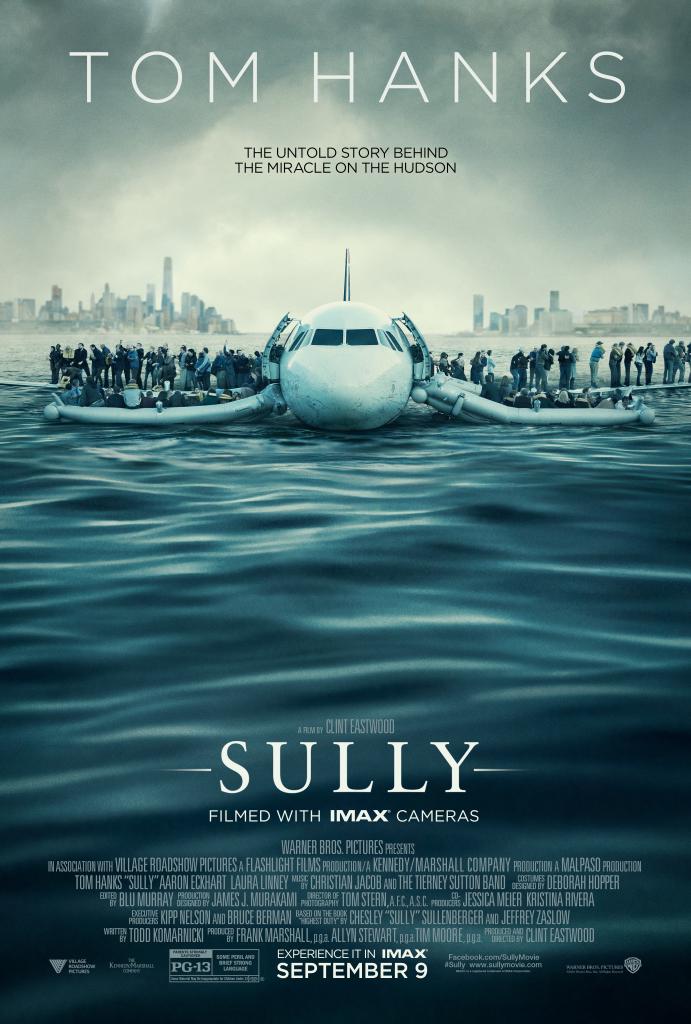
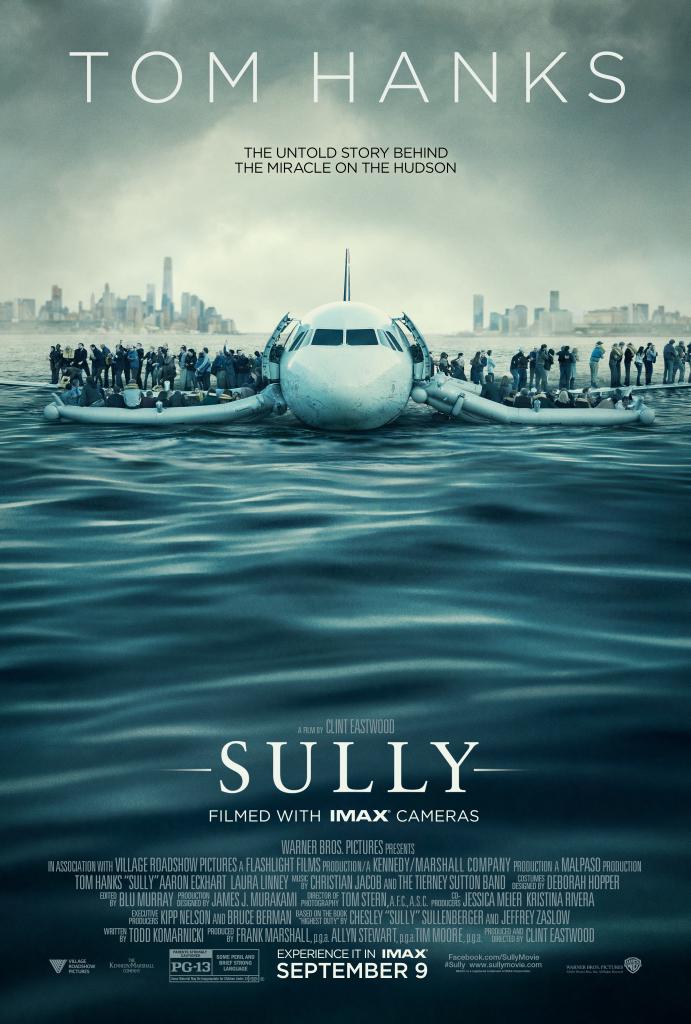
Pay attention to the numbers in “Sully,” the new movie from director Clint Eastwood, with Tom Hanks as “Sully” Sullenberger, the pilot who lost both engines and landed his plane safely on the Hudson River on January 15, 2009. 208 is the number of seconds that Sully and his co-pilot, Jeff Skiles (Aaron Eckhart) had from the time two “bird strikes” took out both of the plane’s engines. 1549 was the number of the United flight, an Airbus A320-214 flying from New York’s LaGuardia Airport to a stopover at Charlotte Douglas International Airport. 155 is the number of people whose lives were saved by Sully’s quick thinking. And 17 — I will let you find out for yourself why that number matters in one of the film’s key turning points.
We know what happened. No one can forget those images of the passengers standing on the wings of the plane on the river in freezing weather. And 208 seconds, no matter how tense and exciting, is not enough for a film. Screenwriter Todd Komarnicki sets the film in the days after the “controlled ditching” (that is the technical term), as Sully and Skiles are lauded as heroes by the media and cross-examined with skepticism by the investigating authorities, overseen by the National Transportation Safety Board. The facts were improbable, even unimaginable. The panel chair (“Glee’s” Mike O’Malley) notes dryly that they have never before listened to the “black box” recording in the presence of the people on the tape. Everyone in the room knows that is because they were all dead. When asked about “the crash,” Skiles interrupts to correct the choice of words: “It was not a crash. It was a ditching, a forced water landing.”
Even Sully, following the intensity of the emergency landing and his concern for what he refers to as the “155 souls” on board, including the crew, is in something of a daze. He is peppered with questions: “When did you last have a drink? Are you having trouble at home?” He is interviewed by Katie Couric and appears with the crew on David Letterman’s show. And yet, he is facing a challenge every bit as daunting and far more complex than losing two engines at a low altitude. There is the relentless, often hostile, dissection of every one of those 208 seconds through an extensive government investigation and the media spotlight, reviewing every decision, every risk assessment, every protocol. Was that second engine really out? Could they have made it to a runway in New Jersey? The only questions tougher and more suspicious than those of the investigators are those Sully asks himself. He is numb from the trauma of the forced landing and especially from the excruciation hours until he was told that all 155 souls were safe.
The script from screenwriter Todd Komarnicki, based in part on Sullenberger’s book, is one of the most well-crafted, tightly constructed screenplays of the year, efficient in providing us the information we need without getting us lost in technical jargon, and making each return to the seconds of crucial decision-making more revealing and more compelling. Hanks, as always, is superb in conveying the ultimate of decency and integrity. And I promise, after this, when they recite the safety details at the beginning of your flight, you will listen.
Parents should know that this movie has extreme, intense peril with some disturbing images. Characters drink and use some strong language.
Family discussion: What experience and character qualities made it possible for Sully to think through his options so quickly and figure out a way to save everyone on board? Were any of the questions they were asked unfair?
If you like this, try: “Apollo 13” and “Captain Phillips,” two other fact-based films with Tom Hanks in charge of a vessel in trouble.
Jerry Lewis is back, playing the title character in “Max Rose,” a longtime jazz musician rocked to discover that his late wife might have been unfaithful. This 2013 film arrives in theaters in 2016, with Lewis giving a performance that is best described with a word not usually thought of for him: subdued. Lewis, then age 86, has learned to trust himself and the audience. He does not have to be big, loud, and needy. He can be quiet, subtle, and patient. The script is under-written, but it is a pleasure to watch Lewis in this mode, along with a bunch of other familiar octogenarian co-stars who bring their decades of experience to the under-written script.
Writer/director Daniel Noah locates us very quickly: some hospital paperwork, a clock ticking, a sympathetic voice asking, “Grandpa, can I get you anything?”
Max was married to Eva (Claire Bloom, lovely and warm in flashbacks), and he believed they were the great loves of each other’s lives. After a lifetime together, he does not know how to begin to live without her. Max has a tense relationship with his son, Christopher (Kevin Pollak). But he is very close to his granddaughter Annie (Kerry Bishé), who is spending much of her time with him, making sure that he eats and trying to make sure he takes his medicine. We see Max outsmarting her on that one. Max hands Annie Eva’s compact, and she smiles in recognition of one of her grandmother’s favorite treasures. But then Max shows Annie the inscription, and while she tries to reassure him that it might not be evidence that she had another relationship, they both know that is its implication.
Max is badly shaken. He questions everything he thought he knew about Eva, their relationship, and the choices he made. How can he reconcile the relationship he thought he had with the idea that Eva’s favorite compact reminded her of someone else every time she looked in the mirror to check her make-up? “I failed my wife, I failed my family, I failed myself.” And yet, he cannot forgive Christopher, now in the midst of his second divorce, for what Max considers Christopher’s own failures as a husband and father.
The story is thin and unconvincing, but it is a pleasure to see Lewis in the role. And in brief appearances, veterans Rance Howard, Dean Stockwell, and Fred Willard make us wish the whole movie was these guys sitting around talking.
Parents should know that the movie has mature material including strong language and sexual references.
Family discussion: What did Max want from his confrontation with the man who gave Eva the compact? Why was he so hard on Christopher?
If you like this, try: “The King of Comedy” and “45 Years”
Rated PG-13 for brief strong language, smoking, a violent image and a drug reference
Profanity:
Brief strong language
Alcohol/ Drugs:
Smoking, reference to drugs
Violence/ Scariness:
None
Diversity Issues:
A theme of the movie
Date Released to Theaters:
August 26, 2016
Date Released to DVD:
December 12, 2016
Amazon.com ASIN:
B01LTHMFPK
Copyright 2016 Miramax
People who make movies know that we are eager to see couples falling in love. If they throw in a chirpy pop song over a montage of the highly attractive pair walking on the beach and laughing together at a street fair, we are happy to believe that they are in love and we can move on to the (short-term) complication before the happy ending.
“Southside With You” is a rare movie that shows us what it is really like to fall in love, over the course of an all-day first date. It would still be utterly witty, charming, and captivating even if it was not based on the real-life beginning of the romance of Barack and Michelle Obama. The historical context is primarily significant because we start off with information the characters do not have. We know what they will do and who they will become. But it also is especially meaningful as we come to the end of the Obama administration, and only the most partisan opponents can fail to appreciate their graciousness, elegance, and family values — and the true partnership and romantic spark that is evident in their relationship.
We begin with the amusing contrast of their preparations for the date. Michelle Robinson (Tika Sumpter, who also co-produced) is put together so meticulously that her father (Phillip Edward Van Lear) teases her: “Can’t you at least run a comb through your hair?” She insists to her parents, as she will to Barack, that this is not a date. She is just accompanying the law student she has been assigned to supervise for the summer to a community meeting.
Then there is a glimpse of his “preparation” for the date — smoking and reading a book. And losing track of the time. “You’re late,” she says when he arrives at her home. “I was hoping you wouldn’t notice.” She points out that she is his supervisor and she has noticed his lateness at work as well. She also notices, but does not mention, that the floorboard of his car is rusted through. One of the pleasures of this film is listening in as two extremely intelligent people uncertain about where they are going but certain they want to improve the lives of the people in their communities, getting to know one another through a thoughtful, thought-provoking, and above all honest conversation, especially as we see the growing pleasure each of them feels in finding someone who can both understand and challenge them.
>
Their first stop is an art show. As they look at paintings by Ernie Barnes, Barack asks Michelle if she ever watched the television show, “Good Times.” She says the Robinsons were more of a “Dick van Dyke Show” family, and we can tell she is a bit defensive. Perhaps some of her Princeton classmates assumed that “Good Times,” set in the projects of Chicago, was based on families like hers. But then he tells her why he asked, and we can see her relax and start to appreciate his curiosity, depth, and knowledge. Despite all of her insistence that this is not a date, we can see her begin to get captivated. Each kindly, if not gently, pushes the other, she on his bitterness toward his father, he on her joining a corporate law firm rather than pursuing her goal of working for the community. Each bristles at first at being pushed, but then we see both of them genuinely grateful for being able to engage so honestly.
The talk is superbly written and performed. But some of the moments where nothing is said are just as moving, thanks to the performances of Sawyers and Sumpter, who do not impersonate the First Couple but give portrayals of great sensitivity and wisdom.
The POTUS and FLOTUS we see on television are more polished and self-assured than they were in their 20’s. Sawyers shows us a Barack Obama who was a long way from the understanding and forgiveness toward his absent father he would convey in his book. And yet, when he gets up in front of the community group, people who are disappointed after a setback and ready to give up, we see for the first time some of the cadences and mannerisms and ability to inspire that are so familiar to us now. Sumpter is lovely, with an exquisitely calibrated performance, first less, than more, then much less reserved. She is careful, and professional, and then we see her sense of fun and adventure when she gets up to dance with a group performing in a park. We we see how, despite her resolve, she cannot help being drawn to Barack.
This is a movie that understands that love is a conversation you never want to end, with someone who instinctively understands you and unreservedly supports you but who doesn’t let you get away with being less than you are capable of, someone who earns your absolute honesty. As we see them fall in love, dropping their defenses, allowing themselves to be hopeful, moving together toward a life of service, it renews our faith in love and purpose as well.
A PERSONAL NOTE: The First Couple met when they were both working in my dad’s office, and characters loosely inspired by my parents appear in this film. While I completely support the decision of writer/director Richard Tanne to create a scene with an interaction that is a bit awkward and uncomfortable, in real life my parents are far cooler (and more attractive!) than the characters in the film, and the interaction was warm and supportive. My parents and the Obamas became good friends.
Parents should know that this film includes smoking, brief strong language, drug reference, and some discussion of family dysfunction.
Family discussion: How did the difference in Barack’s and Michelle’s relationships to their parents affect their perspective? What did each of them say to change the other’s mind? What did Michelle learn about Barack at the community event?
If you like this, try: “Before Sunrise” and “Medicine for Melancholy”