American Pastoral

American Pastoral

Posted on October 20, 2016 at 5:47 pm

C
Lowest Recommended Age: Mature High Schooler
MPAA Rating: Rated R for some strong sexual material, language and brief violent images
Profanity: Very explicit and strong language
Alcohol/ Drugs: Alcohol, drugs
Violence/ Scariness: Mostly offscreen violence including riots, domestic terrorism, characters injured and killed
Diversity Issues: Reflects the biases of its era
Date Released to Theaters: October 21, 2016

Copyright 2016 Lakeshore
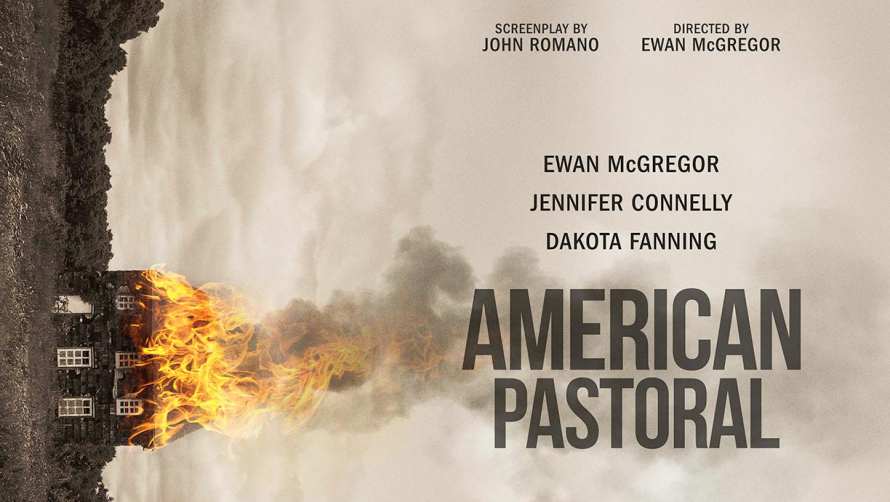
Ewan McGregor’s first film as a director is “American Pastoral,” based on Philip Roth’s Pulitzer Prize-winning novel about a man whose good and lucky life is torn apart by the upheavals of the 1960’s. It is a thoughtful and diligent effort, but the film cannot overcome two insurmountable problems of adaptation.

The first is the timing. The book was published in 1997, the first of Roth’s American trilogy, and it described the contemporary experience of people who had raised children in post WWII era of peace and prosperity, believing that they had given their children everything they were denied growing up during the Depression and war years, only to find that they raised a generation of angry teenagers who rejected the gifts they had been so proud to present. The dismay they felt is presented in the book as evidence of nobility of spirit; today, in the midst of another era of political polarization and resentment of the first generation as powerful a demographic as the baby boomers, it is difficult to see it as anything other than representing white male privilege.

The second is the inherent challenge of any adaptation of a work of fiction. It is impossible to replicate the experience of a novel, and this one, which depends so entirely on its voice, loses a great deal of its power in the translation to a visual medium. The framing story, with Roth representative Nathan Zuckerman (David Strathairn) attending a reunion and hearing the story that will become the movie from an old friend, is entirely superfluous, missing the essential focus of the book on the limits to our ability to understand the lives of others, even those we think we understand. Zuckerman helpfully sums it up for us: “It’s getting them wrong that is living, getting them wrong and wrong and wrong and then, on careful consideration, getting them wrong again. That’s how we know we’re alive: we’re wrong.”

Zuckerman hears the story of “Swede” Luvov, the kind of golden boy that every high school has to have, the one who is effortlessly good at everything and so nice that you can’t even hate him for it. Swede was a superb athlete and young enough that he was drafted into the army near the end of WWII and just missed action. He returned to a hero’s welcome and married a beauty queen named Dawn (Jennifer Connelly), with the grudging approval of his parents because she was not Jewish.

And then he has the perfect life that his personal grace and talent and respect should earn. He and Dawn move to a house in the country and have cows. He takes over his father’s business, a glove factory, where they produce fine leather goods and treat their workers — mostly African Americans — well. He and Dawn have a beautiful blonde daughter named Merry and she loves them and their bucolic, pastoral life. Everything makes sense.

And then nothing makes sense. Merry (now played by Dakota Fanning) becomes an angry teenager and is enthralled by the protesters against the Vietnam War (and the patriarchy, and pretty much everything else her parents represent). She bitterly accuses: “You’re just contented middle class people.” He helplessly replies, “Some people would be happy to have contented middle class parents.”

She disappears after a post office is bombed. Swede and Dawn are devastated. He cannot stop looking for her. Dawn has a breakdown.

They all try their best, but the result is static and off-key. We are supposed to admire Swede’s decency, but the movie is slanted so precipitously in his favor that even McGregor’s palpable sincerity cannot obscure the film’s smug misogyny. The men are decent, sympathetic, patient, and virtuous. Most of the women are needy, unstable, and sexually provocative. As a child Merry asks for a kiss on the lips and then confesses that she always goes too far. These women should be happy with whatever the men want to give them. They mostly exist merely to disappoint or betray the men in their lives, and sometimes the other women, too.

Or, they are one-dimensional saints. Samantha Mathis (good to see her as always) has a brief scene as a member of the community who is philosophical after a devastating loss. Vicky (“Orange is the New Black’s” Uzo Aduba) is Swede’s top manager in the glove factory. Though Aduba is excellent, the role is limited to a bland loyal subordinate.

When there are riots outside the factory following the murder of Martin Luther King, Vicky helps Swede hang a banner out of the window that reads: Negroes Work Here. Instead of Zuckerman’s meditation on how the people who spend so much of your life envying end up having less enviable lives than your superficial, incurious assessment contemplated, it would have been much more telling to explore the world of a man who thinks that employing African Americans in a glove factory should protect him from the consequences of the system that has for so long tilted in his favor.

Parents should know that this movie includes very explicit sexual references and situations, very strong language, domestic terrorism and murder, riots, alcohol, and drugs.

Family discussion: What do we learn from the framing story at the reunion? What should Merry’s parents have done differently, either before or after the bombing?

If you like this, try: “Goodbye Columbus,” “The Human Stain,” and “Indignation,” also based on books by Philip Roth

Related Tags:


Based on a book Drama Movies -- format
Jack Reacher: Never Go Back

Jack Reacher: Never Go Back

Posted on October 20, 2016 at 5:12 pm

Copyright Paramount 2016
Tom Cruise is back in a second “Jack Reacher” movie, based on the hard-boiled series by Lee Child. Jack Reacher is a quintessential and perfectly named fantasy action hero — former military but resistant to authority, capable of instant assessment of threats and options, crackerjack fighting skills, and no strings of any kind. He has no home, no family, no ID other than an expired military card, no car, no bank account, no possessions, just a passion for justice and a knack for getting into and out of trouble. And the equally perfectly named Cruise, capable of challenging himself as an actor but apparently not at the moment very interested in it, except maybe physically, is just right for Reacher, a bit world-weary but ever-righteous. He still runs very fast and looks good with his shirt off.

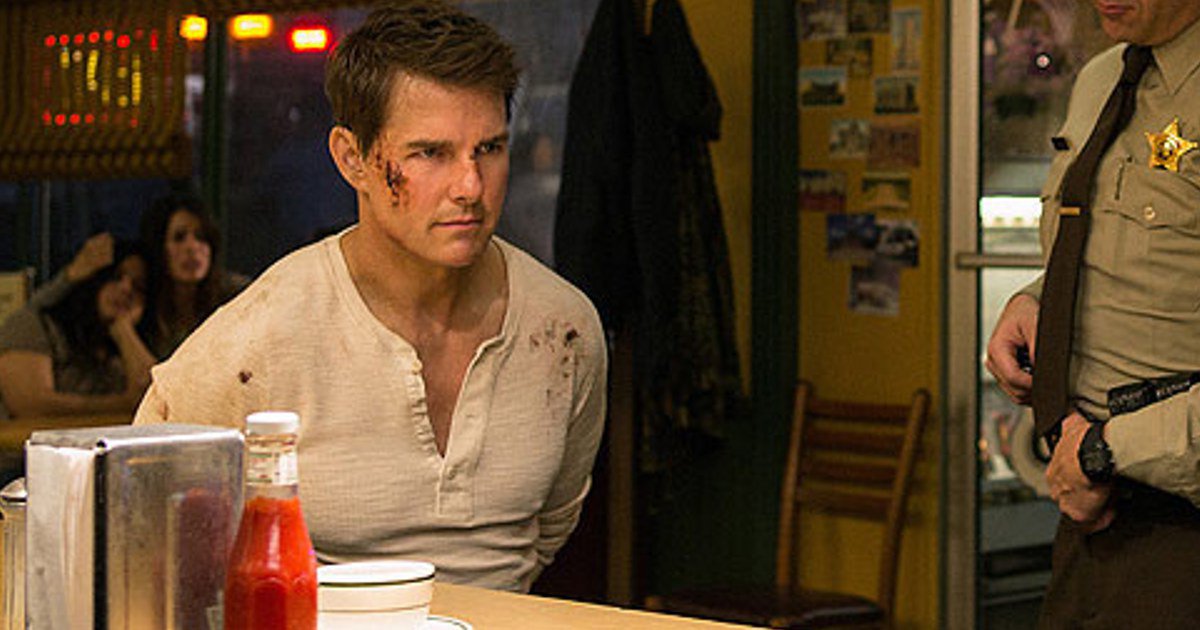
We first see Reacher in a diner with his hands cuffed behind his back, a bit scuffed up but characteristically steely. A sheriff informs him he is about to be arrested and charged with felony assault of the men lying injured on the ground. He coolly informs the officers that the pay phone is about to ring and that it is the sheriff who will soon be wearing the cuffs. The officer’s derisive snort is barely over before the phone rings, and sure enough, Reacher is right again.

He has solved a problem for the military (we won’t worry about the various laws — and bones — he broke on the way), and thanking him is his successor as overseer of an investigative unit, Major Susan Turner (Cobie Smulders of “How I Met Your Mother” and “Avengers”). They do a little phone flirting, and he decides to go see her in DC, only to find she has just been arrested for espionage. So, now Reacher has what he loves best, an injustice that only he can make right, of such an order of magnitude that it is certain to provide many opportunities for mayhem. But there is one problem that is, for a change, entirely outside of his ability to shoot, punch, or evade. Turner’s military attorney conveniently agrees to meet with Reacher (in an officer’s club, surrounded by pretty much everyone who might be interested), and he conveniently happens to have Reacher’s file with him as well, and helpfully shows Reacher the paperwork showing that a woman had filed a child support request with the military because she said the father of her teenage daughter was Jack Reacher. The same bad guys who are after Maj. Turner are after the girl, so Reacher ends up on the run with both Turner and his possible daughter Sam (Danika Yarosh).

Pairing up again with Edward Zwick (“The Last Samurai”) and with a script by Zwick and his “thirtysomething” partner Marshall Herskovitz (with Richard Wenk), Cruise stays right in his “Mission Impossible” action hero sweet spot. The interplay with Sam gives a little balance and emotional weight to the various fight scenes and shoot-outs, without diminishing the appeal of the ever-able hero with no strings.

Parents should know that the violence in this film is borderline R with very intense action and fight scenes, chases, fights, shoot-outs and explosions, torture, hired killers, corruption, many characters injured and killed, threat of rape, some strong language.

Family discussion: How was military training and experience reflected in the choices made by both the good and bad guys in this movie? What did Jack want the answer to be about Sam?

If you like this, try: the earlier “Jack Reacher” film and the “Bourne” series

Related Tags:


Action/Adventure Based on a book Crime Series/Sequel
Coming Through the Rye

Coming Through the Rye

Posted on October 13, 2016 at 5:24 pm

B
Lowest Recommended Age: High School
MPAA Rating: Rated PG-13 for some drug material, sexuality and language
Profanity: Strong language
Alcohol/ Drugs: Drugs
Violence/ Scariness: Sad offscreen death,
Diversity Issues: None
Date Released to Theaters: October 14, 2016

Copyright Red Hat Films 2016
“What really knocks me out is a book that, when you’re all done reading it, you wish the author that wrote it was a terrific friend of yours and you could call him up on the phone whenever you felt like it.”

That, of course, is Holden Caulfield in J.D. Salinger’s classic of adolescent anguish, Catcher in the Rye. Even more than the parts about “phonies” and the simultaneous wish to avoid entanglements to protect all that is innocent and vulnerable in oneself and somehow protect the innocent and vulnerable in others, that line packing so much understanding and such a powerful invitation has made generations of teenagers feel understood and validated. (See “Six Degrees of Separation” for Will Smith’s fascinating and disturbing speech on the book’s meaning.) More, it has made them feel invited. If Holden thinks that connecting to a work of fiction can make you feel like the author’s friend, then perhaps, despite his being the most well-known recluse of 20th Century America, Salinger might welcome a visit.

That is the basis for this film about a very Holden-esque adventure undertaken by a prep school senior who wants J.D. Salinger to approve his theatrical adaptation of Catcher in the Rye. Like Catcher, it takes its title from the folk lyric by Robert Burns. Holden imagines himself saving children who are playing in a field of rye, catching them before they go off a cliff.

Alex Wolff plays Jamie Schwartz, a sensitive theater kid (we see him exclaim “A plague o’ both your houses” as Mercutio in a school production of “Romeo and Juliet.” He has a bit of a crush on the girl who plays Juliet and does not notice that there is less flashy but far more substantial girl named Deedee (Stefania LaVie Owen) who has a bit of a crush on him. When he is the target of a bullying prank at school, Jamie and Deedee decide to take a car trip and go visit J.D. Salinger. (What is it with these Wolff boys? Alex’s brother Nat appeared in “Paper Towns,” another movie about a teen car trip.)

We know where this is going. It’s the kind of journey where a lot of growing up will happen. There are not many surprises (except for the way Jamie and Deedee finally learn Salinger’s address from the only locals not committed to protecting his privacy). Owen does more than should be possible with an underwritten character who is essentially a fantasy figure, endlessly understanding and devoted (and on the Pill but not for sex!) But she and Wolff, and Chris Cooper in a brief but telling role, make it a worthwhile trip.

Parents should know that this film includes strong language, a dangerous prank, and teen drug use. There is a sad offscreen death.

Family discussion: What author would you like to visit? Was Salinger right about not allowing Catcher to be adapted for theater or film?

If you like this, try: “HairBrained” and “A Birder’s Guide to Everything”

Related Tags:


Inspired by a true story Movies -- format Romance Stories about Teens
The Accountant

The Accountant

Posted on October 12, 2016 at 5:50 pm

Copyright Warner Brothers 2016
Ben Affleck plays the title character in “The Accountant,” a man on the autism spectrum who has what clinicians call a “flat affect” and some obsessive-compulsive tendencies, but also the math skills of a 93 petaflop computer and the martial arts skills of a Navy Seal who competes on weekends as an American Ninja Warrior.

Director Gavin O’Connor (the underseen gem “Warrior“) and screenwriter Bill Dubuque (the underseen “The Judge“) have concocted a twisty thriller with surprises up to the last minute. The crafty back-and-forth structure keeps the information just out of our reach until it is exactly the right moment for it to fall into place.

After a brief opening shoot-out, we go back in time to see the Wolff family. The parents are meeting with a specialist, who is explaining what it means to be gifted but not neuro-typical. The boy they are discussing is Christian (Seth Lee), who is speed-solving a jigsaw puzzle as his younger brother Brax (Jake Presley) watches. We are given three important pieces of information in this scene. First, Christian cannot handle not being able to finish the puzzle. Second, when the piece that fell off the table is located, we see it fit into place from underneath — he has been working on upside-down puzzle pieces, the blank underside rather than the picture.

Third, his parents do not agree on how to help him. His mother accepts the advice of the specialist, who says that Christian’s hyper-sensitivity to stimulation means that he should be protected from light and noise. But his father (Robert C. Treveiler), who is in the military, insists on the opposite. If light and noise bother Christian, “he needs more.”

We will learn more about the consequences of that disagreement later.

Christian grows up to be an accountant, operating out of a tiny office in a strip mall. (Is the name of his firm, ZZZZ, a reference to one of the most notorious accounting frauds of the 1980’s?). He advises a couple on how to use home office deductions to reduce their tax bill and shows no interest when the receptionist tries to fix him up with her daughter. He then takes on a big case, tracking down a missing $61 million at a company about to go public, where he meets Dana, the very bright young CPA who discovered the discrepancy in the financial reports (Anna Kendrick, lighting up the screen as always). But there is more to him, including a treasure trove that includes originals by Pollack and Renoir and a #1 Action Comic (first appearance of Superman, worth about $3 million), a torturous nightly ritual, a Siri-like virtual assistant who seems to know everything and some very serious guys with guns who are determined to kill Christian and Dana.

Meanwhile, a government official (JK Simmons) is trying to track down a mysterious figure who shows up in photos of some of the most dangerous people in the world, a guy who appears to be their…accountant. He blackmails a savvy young woman on his staff (Cynthia Addai-Robinson) into tracking him down. And a paid assassin (Jon Bernthal) efficiently deals with people he has been assigned to take care of, who may or may not be connected to all of this.

As he did with “Warrior,” O’Connor plays with the borders of genre. There are unexpected moments of humor (“We should go” turns out to be very funny when the tone and timing are right). And he knows how to make us feel for the characters, giving some heft to the puzzle and action. By the end of the film, we get the same satisfaction Christian does in seeing that last piece fit into place.

Parents should know that this film includes intense, sustained action-style violence involving adults and children with martial arts and guns, characters are paid assassins and criminals, fraud, very strong language, and parental abandonment.

Family discussion: What does it mean to be neuro-typical? Who was right about Chris, his father or his mother? What was the purpose of his nightly ritual?

If you like this, try: “Warrior” from the same director

Related Tags:


Drama Thriller
Middle School: The Worst Years of My Life

Middle School: The Worst Years of My Life

Posted on October 6, 2016 at 5:53 pm

B+
Lowest Recommended Age: Middle School
MPAA Rating: Rated PG for rude humor throughout, language and thematic elements
Profanity: Some schoolyard language
Alcohol/ Drugs: Social drinking (adult)
Violence/ Scariness: Some peril, sad off-screen death of a child, parental abandonment and marital break-up, cartoonishly exaggerated adult villains, some misbehavior including vandalism and mayhem
Diversity Issues: Diverse characters
Date Released to Theaters: October 7, 2016
Date Released to DVD: January 2, 2017
Amazon.com ASIN: B01LTHWXX4
Copyright Lionsgate 2016

This just might be the most accurate movie title of all time. Middle school is pretty much the worst years of everyone’s life. Terrible stress and tragedy happens at all ages, but it is the years from 12 to 14 where the internal turmoil and agonizing uncertainty are so acute that we still wince remembering them decades later. This film, based on the series of books by mega-bestselling author James Patterson (with Chris Tebbetts and illustrations by Laura Park) has some delightfully satisfying moments of fantasy revenge against a tyrannical, rules-obssessed principal and a borderline-abusive potential stepfather. But it sneaks in some quietly touching and surprisingly wise insights about loss and working with a “new normal.” Bright direction and an exceptionally engaging cast of kids make this film a genuine fall family treat.

Rafe Khatchadorian (Griffin Gluck) has been expelled from two schools (we never find out why) and has just one more chance. He would rather stay home all day and draw pictures in his notebook, where he has created a whole world of monsters and aliens, charmingly animated. “There’s a big world out there,” Rafe’s mother (Lauren Graham) tells him. “There’s a big world in there, too,” he says. And it is clear that is the world he prefers.

He does not even make it inside the building, though, when he meets the new school’s Principal Dwight (Andy Daly), who cares about just two things: his rules, and the school’s test score ranking. Dwight’s rules basically outlaw anything that is fun, friendly, expressive of individuality, or likely to keep the school from the #1 test score ranking Dwight cherishes so deeply that he has cultivated a number 1 bush by topiary in front of the school. Dwight’s consigliere/enforcer is Ida Stricker (“Parks and Recreation’s” Retta). So, bright, patterned shirts, talking in the hallways, even drawing in a notebook — all banned. There’s also a school bully who threatens to give Rafe “a wedgie so bad you’ll be able to taste your underwear.”

But there are three bright spots. Rafe’s best friend, Leo (Thomas Barbusca), is always there to make him laugh and spur him on. There’s a friendly girl named Jeannie (Isabela Moner), and a kind, sympathetic teacher (“Happy Endings'” Adam Pally) who uses the Drake and the Wu-Tang Clan to teach the class about macroeconomic trends. Rafe decides to take on Dwight by breaking every rule, with Leo’s help. Meanwhile, Rafe’s mom is getting serious with the boyfriend Rafe and his sister call “Bear” (Rob Riggle in his usual role of a walking Axe body spray).

The revenge fantasy is funny and satisfying, mostly about making the pompous Principal Dwight look silly. And it gives Rafe a way to begin to make new friends, to resolve issues with the school bully, and to think through the other problems in his life.

The film is bright and fun, like its sparkling soundtrack of pop songs. The young actors are refreshingly natural and Barbusca has great comic timing. Rafe’s sister Georgia (Alexa Nisenson) and love interest Jeanne (Isabela Moner) are real characters, smart and capable. When the more serious issues arise, it is organic and sensitively handled. The pranks are signed RAFE, which stands for “rules aren’t for everyone.” But this movie is.

Parents should know that this film includes schoolyard epithets, potty humor, references to death of a child, parental abandonment, and marital breakup, comically exaggerated adult villains, cartoon-style peril, and tween misbehavior including driving and mild vandalism.

Family discussion: What is the best way to challenge unfair rules? What school rules would you like to change?

If you like this, try: “Harriet the Spy,” “How to Eat Fried Worms,” and the book series that inspired the film

Related Tags:


Based on a book Comedy Coming of age DVD/Blu-Ray Pick of the Week Family Issues School Stories About Kids Tweens
THE MOVIE MOM® is a registered trademark of Nell Minow. Use of the mark without express consent from Nell Minow constitutes trademark infringement and unfair competition in violation of federal and state laws. All material © Nell Minow 1995-2026, all rights reserved, and no use or republication is permitted without explicit permission. This site hosts Nell Minow’s Movie Mom® archive, with material that originally appeared on Yahoo! Movies, Beliefnet, and other sources. Much of her new material can be found at Rogerebert.com, Huffington Post, and WheretoWatch. Her books include The Movie Mom’s Guide to Family Movies and 101 Must-See Movie Moments, and she can be heard each week on radio stations across the country.

Website Designed by Max LaZebnik