Room

Room

Posted on October 15, 2015 at 5:50 pm

Copyright A24 2015
Copyright A24 2015

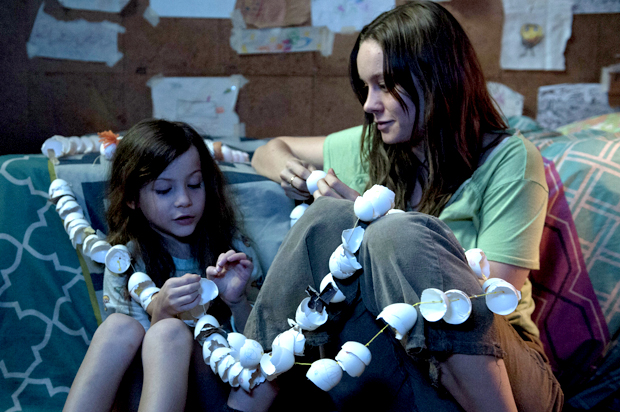
Jack (Jacob Tremblay) wakes up on his fifth birthday and says hello to everything in his world. Through his eyes, and his narration, we gradually come to understand that his world is so entirely circumscribed by the walls of his tiny home that no definite or indefinite articles are needed. There is only one of everything, and everything means very little.

Where Jack and his mother, Ma (Oscar winner Brie Larson) live is just called “Room.” And anything outside of Room, the world Jack glimpses in the flickers of a broken down television, is, his mother tells him, just pretend. Their entire world is contained in Room, and anything they have is brought to them by a gruff-voiced man they call Old Nick (Sean Bridgers). When he comes to Room, opening the locked door whose combination Ma is not allowed to know, Jack hides in Wardrobe until he is gone.

It is only gradually that we come to understand what Jack still does not see. Ma was a teenager when Old Nick captured her and locked her in the shed behind his house so he could rape her and keep her there as his prisoner. She became pregnant with Jack two years later.

Keeping Jack safe and happy is what has kept her from despair. As horrifying as her circumstances are, they have enabled her to maintain a sense of control over Jack’s world that helps her through the absence of control she feels, having to cajole Old Nick for even the smallest accommodation and with no way to escape or contact her family.

But she cannot control Jack’s getting older, challenging her authority, and wanting to know more about what is really happening. That means he may be getting old enough to help her with a daring plan of escape.

Irish writer Emma Donoghue wrote the screenplay, adapted from her book. While it was inspired in part by a real-life case, this is not a true crime story or a woman in jeopardy thriller. Like the post-apocalyptic “The Road,” this is a heightened dramatic exploration of universal experiences all parents — and children of parents — struggle with: the challenges of setting boundaries in an ever-shifting relationship and balancing the need for protection with the need for independence.

And that is why Ma’s greatest challenge comes after the escape. It is surreal to be back in the bedroom she left as a teenager, with her parents who are both the same and different. At first, Jack is terrified. Ma is numb. Everything outside of Room has to be re-evaluated and re-negotiated. Issues of identity, control, separation, boundaries, and what parents and children owe each other are sensitively explored. Larson is one of the finest young actors making movies today and her interaction with the gifted Tremblay is natural, fiercely devoted, and deeply moving.

Parents should know that this movie deals with abduction, rape, and abuse. While they are portrayed sensitively, the material is disturbing. The movie includes strong language, tense scenes, and a suicide attempt.

Family discussion: How was going home different from what Ma expected? How did Ma and Jack differ in their reactions to the escape? Why didn’t Ma’s father want to look at Jack?

If you like this, try: another magnificent performance by Brie Larson in “Short Term 12”

Related Tags:


Based on a book Drama
Goosebumps

Goosebumps

Posted on October 15, 2015 at 5:04 pm

Copyright 2015 Sony Pictures

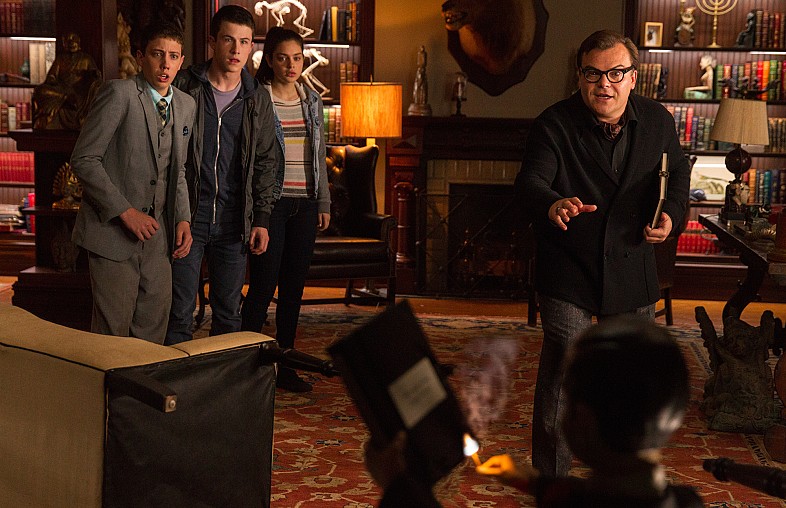
Screenwriters Mike White (“School of Rock”) and Darren Lemke (“Turbo,””Lost”) bring just the right blend of scary, funny, and heartwarming in this first film based on the books by tween favorite R.L. Stine, the man who put the BOO in BOOOKs. And when I say “books,” I mean the plural. This movie does not bring just one of Stine’s creepfests for kids to life. It brings many of his more than 300 books to life, sometimes creepy undead life, but life on screen.

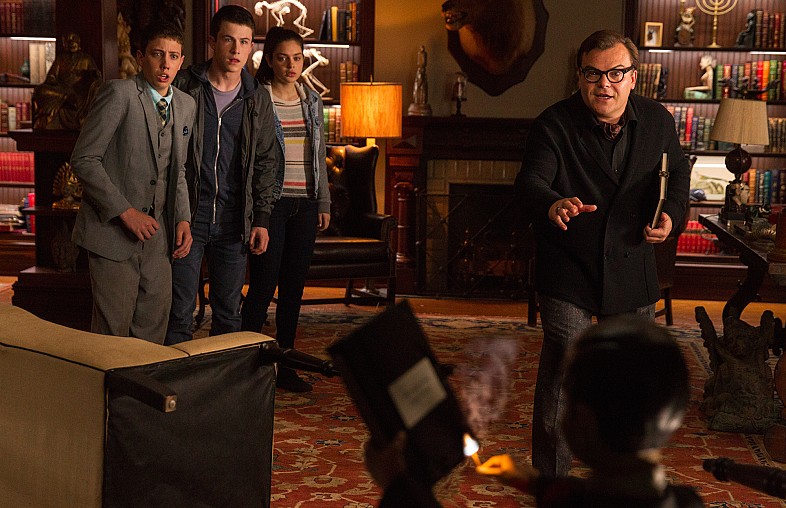
Our hero, handsome Zach Cooper (Dylan Minnette of “Alexander and the No Good…etc”) and his mother (Amy Ryan) move in next door to a pretty girl named Hannah (“The Giver’s” Odeya Rush), who lives with her dad (Jack Black). Zach would like to get to know Hannah, but her father warns him to stay away. Hannah would also like to get to know Zach. While her dad tries to keep her in the house, she sneaks out to visit an abandoned amusement park and takes Zach along. Then when Zach thinks he hears Hannah in trouble, he goes to investigate, with his amiably dorky friend Champ (Ryan Lee).

It turns out Hannah’s father, the legendary author R.L. Stine, has not been keeping Hannah inside to protect her. He has been keeping everything inside to protect everyone outside. For some mysterious reason, each of the books he wrote contains a literal monster, and if the book is opened, the monster escapes. And it is very, very, very hard to get them locked back inside. You’ve heard of Pandora’s box? These are Pandora’s books. Whatever scares you the most — insect monster, clown monster, zombies, mummies, werewolf, angry yeti, evil ventriloquist dummy — it’s in there, or, I should say, it’s coming out of there. And a lot of things you didn’t know were scarey (garden gnomes? fluffy poodle? Jack in the box?) turn out to be very scary, too. All the monsters escape and Stine, Hannah, Zach, and Champ have to get them locked back up. If they can do that without getting eaten first.

It is too bad to see the brilliant Jillian Bell, who stole “22 Jump Street” from Jonah Hill and Channing Tatum, relegated to a retro man-crazy single lady. The equally brilliant Amy Ryan does the best she can with her limited role. But the special effects, stunts, and production design are state-of-the-art, and Zach and Hannah are likeable leads, with Black and Lee providing some comic relief and a superb score from Danny Elfman, who just about owns Halloween music. There are dozens of allusions to classic scary tales, which should inspire at least some kids to pursue literary and movie monsters from “Dracula” and “Frankenstein” to “The Dark of Night,” “The House that Dripped Blood,” and the original “The Haunting.”

Parents should know that this movie has lots of monsters, some very scary looking, as well as some scary surprises, schoolyard language, and brief potty humor.

Family discussion: Which is the scariest monster and why? How are the three kids different in the way they view the monsters?

If you like this, try: “Monster House” and the books by R.L. Stine

Related Tags:


Based on a book Fantasy Horror
A Ballerina’s Tale

A Ballerina’s Tale

Posted on October 14, 2015 at 5:32 pm

B
Lowest Recommended Age: Middle School
MPAA Rating: Not rated
Profanity: None
Alcohol/ Drugs: None
Violence/ Scariness: Injury and recovery
Diversity Issues: A theme of the movie
Date Released to Theaters: October 16, 2015
Copyright 2015 Sundance Selects

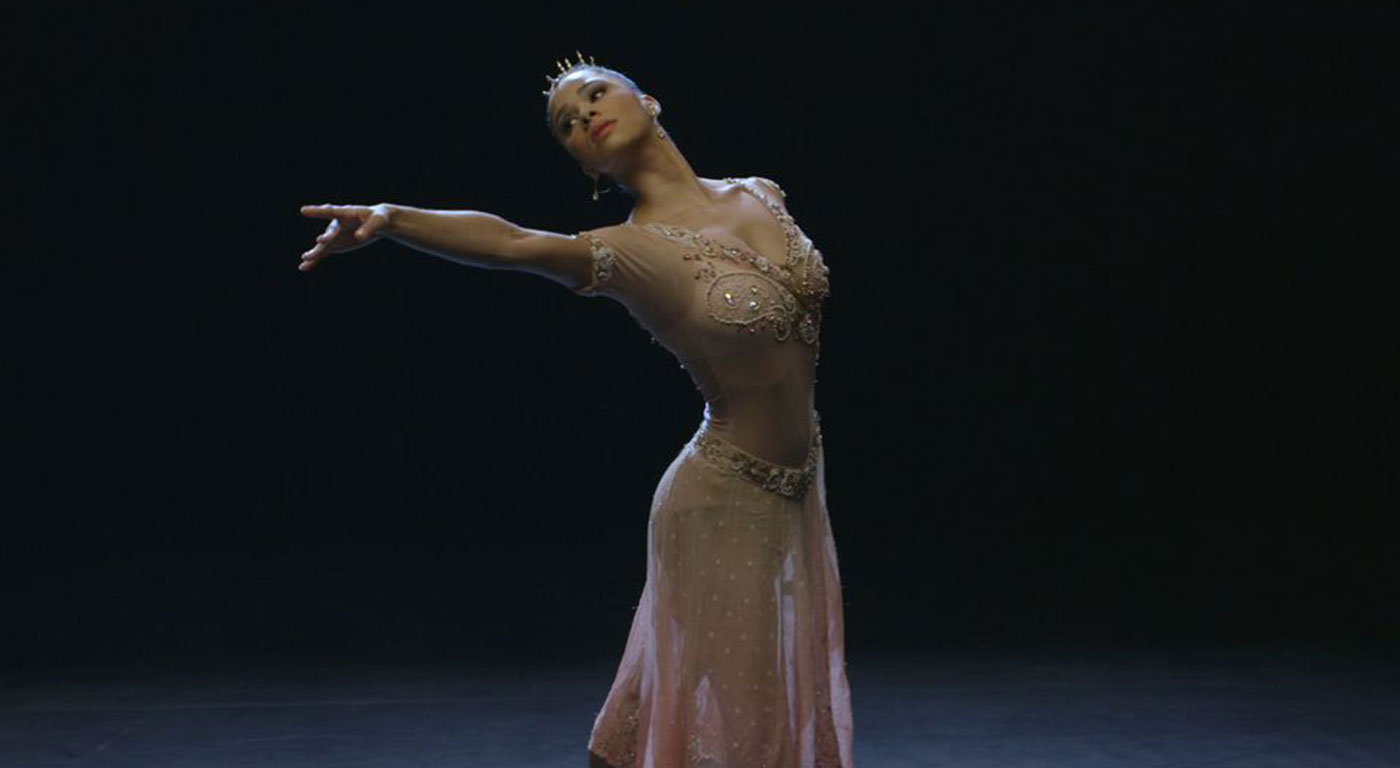
“A Ballerina’s Tale” — the title suggests a fairy story, with sugar plums and a happily ever after ending. But this documentary about Misty Copeland is a story about the brutal hard work and resolve necessary to create those exquisitely graceful performances and make them look effortless. Like the Venus and Serena documentary about the superstar tennis champions, this is a story of an African-American pioneer in a world that has traditionally been white. While ballet does not offer a competition as definitive as a sporting event, like the Williamses Copeland has a level of ability, skill, and dedication that made it impossible to put her anywhere but front and center.

And, like the Williams sisters, Copeland is in a field where people in their 20’s and 30’s may be at the end of their careers. Furthermore, like the Williams sisters, Copeland faces an unexpected health crisis that put her ability to continue at risk. Just as she was given the chance for her first lead role, Copeland found that she had a severe stress fracture in her lower leg. She was 29 years old, and did not know if she would ever dance again.

This is a good movie about a subject and a person who deserve a great movie. The drama is compelling, although it is hard to see an ad campaign as the triumph it expects us to cheer. The best parts of the movie are Copeland’s performances, starting with home video footage at the beginning, going back to when she was in her teens. Her grace and stage presence are there from the beginning. We see her stand in her favorite spot in the practice room, admitting she is a perfectionist. We learn a little about the relatively recent but still-prevalent notion that a ballet dancer should be waiflike and prepubescent-looking and as indistinguishable as possible from the other dancers. Copeland has a strong, healthy body, curvier than the typical principal dancer. And she is black. The film’s most touching moments are when the previous generation’s African-American dancers become her mentors, and we see in their eyes, faces, and still-graceful gestures how much it means to them that she may be able to go farther than they did. If this is a fairy tale, they are the fairy godmothers.

Parents should know that this film has frank discussions of racial prejudice and an injury with brief graphic images.

Family discussion: What other fields are as demanding as ballet? What did Misty Copeland learn from the women who went before her?

If you like this, try: “First Position,” “Pina,” and “Ballet 422”

Related Tags:


Documentary Movies -- format Race and Diversity
Big Stone Gap

Big Stone Gap

Posted on October 8, 2015 at 5:51 pm

B
Lowest Recommended Age: High School
MPAA Rating: Rated PG-13 for brief suggestive material
Profanity: Mild language
Alcohol/ Drugs: Drinking and drunkeness
Violence/ Scariness: Tense confrontations, sad death
Diversity Issues: Ethnic diversity
Date Released to Theaters: October 9, 2015
Copyright 2015 Picturehouse

Even in small towns, big things can happen. Sometimes the most famous movie star in the world stops by and makes international headlines. And even bigger things happen, too — they just don’t get into the newspapers. Adriana Trigiani’s best-selling novels about her home town of Big Stone Gap, Virginia are loving tributes to the down-home values and adorably quirky characters she grew up with. Big things happen. There are sad losses and disappointments. But there is love and honor and generosity, too. In her first feature film as a director, Trigiani has assembled a superb cast, mixing top Hollywood and Broadway talent with some locals. Ashley Judd is at the center as a woman whose discovery of a secret about her past makes her think differently about her future.

It takes place in 1978. The woman is Ave Maria Mulligan, the owner of the local pharmacy. With a name like that, there has to be a story. When her beloved mother dies, she learns for the first time that her mother’s husband was not her father, as she thought. Her mother has left her a letter explaining that her father was a man she loved in Italy. Ave is determined to find her real father, though she has never traveled anywhere. She has great friends with colorful names and personalities, especially wisecracking Fleeta Mullins (Whoopi Goldberg) and starry-eyed bookmobile librarian Iva Lou Wade (Jenna Elfman). Then there’s Theodore Tipton (John Benjamin Hickey), the high school band and choral director who works with her on the town’s legendary annual “Trail of the Lonesome Pine” pageant and is Ave’s sort-of boyfriend and a handsome coal miner with the rare ordinary name of Jack (Patrick Wilson), who has a very possessive girlfriend (Jane Krakowski as Sweet Sue Tinsley).

It takes place in an eternally cozy past where coal mining is romantic because it creates electricity and there’s no mention of black lung disease. It’s corny cornpone, but unpretentious and it goes down easy, like sweet tea brewed by sunshine.

Parents should know that this film has some sexual references including potency, paternity, and a closeted gay character and non-explicit situations, drinking and drunkenness.

Family discussion: How is Ave Maria different from the people around her? Why did her mother keep the secret so long?

If you like this, try: the book series by Adriana Trigiani and the film “Win a Date with Tad Hamilton!”

Related Tags:


Comedy Movies -- format Romance
Freeheld

Freeheld

Posted on October 8, 2015 at 5:50 pm

Copyright Lionsgate 2015

Laurel Hester (Julianne Moore), a 23-year veteran of the police force, learns that she has terminal cancer. And then she learns something even more devastating — that her registered domestic partner, Stacie Andree (Ellen Page) is not eligible for the pension benefits that she would be entitled to if they had been a heterosexual married couple.

It is hard to believe that was only ten years ago. But in 2006, marriage equality seemed very far in the future. And that was not Laurel Hester’s concern. As shown in the Oscar-winning documentary short, also called “Freeheld,” she did not want her fight for death benefits to be used to promote marriage equality. Hester was a very private person who did not even tell her longtime detective partner (Michael Shannon) that she was gay. She just wanted what she believed she had earned, and she wanted the woman she loved to be able to stay in the home they created together.

The term “Freehold,” by the way, is unique to New Jersey, and it goes back to the state’s earliest history. New Jersey’s first constitution, written in 1776, declared a county representative must be worth “fifty pounds proclamation money, clear estate in the same and have resided in the county in which they claim a vote for twelve months immediately preceding the election.” “Clear estate” means owning a property outright, and is also called a “freehold,” so only those who owned land could vote or be elected to office. While that restriction no longer applies, the position most localities call “representative,” “supervisor,” or “councilman” is referred to in New Jersey as “Freehold.” In the case of this movie, “freeheld” refers to the property shared by Hester and Andree and their love for each other as well.

There are really two stories here, both familiar to moviegoers, but not combined in this way. There is the story of the fight for justice against the barriers of bureaucracy, bigotry, and bullies. And there is the story of a reserved loner opening up to love. The combination is at times uneasy. The love story is the stronger part of the film, but gets less attention. Moore is superb as Hester, with her Farrah Fawcett hair wings, utter dedication to her job, and resolve built up into isolation after more than two decades of mostly good-natured but sexist and homophobic humor from her fellow cops. She crosses state lines to play in on a lesbian volleyball team in Pennsylvania so no one in New Jersey will see her.

And then she meets Stacie, tiny, much younger, but confident in who she is and who she loves. The scene where Andree proves herself to the manager of a car repair shop is a highlight. And so is their date, where we see Hester’s conflicting feelings. She is very attracted to Andree, she cannot quite believe Andree is attracted to her, she wants love in her life, she does not want to be exposed or vulnerable. When the two of them walk away from the bar to talk quietly, they are approached by thugs, and Hester pulls out her gun and identifies herself as a police officer. It is, in a way, a supremely romantic gesture. Later, she introduces Andree as her “roommate” and barks at her for answering the phone. But when she gets sick, she understands quickly what her priorities need to be.

She remains clear, even after Steven Goldstein (Steve Carell), a flamboyant activist for gay rights, shows up. Hester reluctantly allows him to create some political theater to support her cause. There is a loophole in the law. Domestic partners of state employees are covered, but local Freeholders decide whether city and county-level employees will qualify. Hester’s Freeholders have already turned her down and she does not have much time.

As often happens in re-telling a recent true story, the movie trips over the proportions in trying to get the facts straight. The interactions between the various Freeholders, including Josh Charles as the most inclined to support Hester’s rights, are no more interesting than municipal-level politics usually are. But the deep love between Hester and Andree and their quiet insistence on simple justice give the story sincerity, sweetness, and conviction.

Parents should know that this film includes very sad scenes of a terminal cancer patient, and death, themes of LGBTQ rights including homophobic and bigoted characters, some sexual references and situations, some strong language, smoking, drinking, and some law enforcement-related violence.

Family discussion: Why did Laurel insist that she was not an advocate of marriage equality? Should she have told her partner the truth?

If you like this, try: the Oscar-winning documentary that inspired the film

Related Tags:


Based on a true story GLBTQ and Diversity
THE MOVIE MOM® is a registered trademark of Nell Minow. Use of the mark without express consent from Nell Minow constitutes trademark infringement and unfair competition in violation of federal and state laws. All material © Nell Minow 1995-2026, all rights reserved, and no use or republication is permitted without explicit permission. This site hosts Nell Minow’s Movie Mom® archive, with material that originally appeared on Yahoo! Movies, Beliefnet, and other sources. Much of her new material can be found at Rogerebert.com, Huffington Post, and WheretoWatch. Her books include The Movie Mom’s Guide to Family Movies and 101 Must-See Movie Moments, and she can be heard each week on radio stations across the country.

Website Designed by Max LaZebnik