The Martian

The Martian

Posted on October 1, 2015 at 5:50 pm

A-
Lowest Recommended Age: Middle School
MPAA Rating: Rated PG-13 for some strong language, injury images, and brief nudity
Profanity: Some strong language
Alcohol/ Drugs: None
Violence/ Scariness: Intense peril throughout with some injuries, some graphic and disturbing images
Diversity Issues: Diverse characters
Date Released to Theaters: October 2, 2015
Date Released to DVD: January 11, 2016
Amazon.com ASIN: B017S3OP34
Copyright 2015 Twentieth Century Fox

In a crackling sharp movie about brilliant people solving very tough problems, it is endearing that the first and most important involves one of the earliest skills developed by mankind. Indeed, it is the skill that made it both possible and necessary to develop the very first communities. It is the skill that turned nomads and hunters into complex societies: the cultivation of crops.

Mark Watney, played by Matt Damon as an endlessly resourceful Eagle Scout-type who would run over from next door to help carry your groceries, is part of a US astronaut team on a mission to Mars. When a storm comes up, they have to make an emergency evacuation weeks before the mission is completed. He is separated from the group and they believe he is dead. So, like ET, he is left behind on an alien planet. But no Reeses Pieces here, and no Elliot to befriend him. The first thing he has to do is figure out how to feed himself. “Fortunately,” he explains to us via his video log, “I am a botanist!” {Hmmm, just like ET, who came to earth to collect plant specimens.) That credential has never been announced with such deserved satisfaction. What if the one left behind was the expert in telemetry or navigation?

As he explains in an unnecessary coda, one of the tightly constructed film’s few excesses, he knew he was probably going to die. But his attitude was, “Not today.” He understands that any hope of rescue is 140 million miles away. Even if NASA could figure out that he was still alive and could figure out a way to rescue him, it would take years before they could reach him. He counts out the meals left behind by the crew to figure out how long he has before he has to have some sustainable source of nourishment. Of course there are no seeds. There is no water (Mark would be very happy with the latest reports that in fact there might be water on Mars, but for this movie, there is none.) The ground (I guess you can’t call it “earth”) does not have the necessary nutrients. But there’s a bag marked “Do not open before Thanksgiving,” and inside, there are potatoes. And Mark is a botanist. He rigs up a machine to create water and empties out the lav for fertilizer. He plants the potatoes and sure enough, little shoots appear.

Meanwhile, the crew is still on its way back to earth. On earth, there is a state funeral for Watney. And then an analyst looking at transmissions from Mars sees something that could be a person. NASA realizes that Watney is alive. Can they mount a rescue mission before it is too late? Given the risks to the crew, should they?

Director Ridley Scott and the nicely space-named screenwriter Drew Goddard (based on the book by first-time author Andy Weir) have created a completely believable and utterly immersive world, and Damon’s Watney is an idea hero for the story. He is smart, self-deprecating, optimistic, and inventive. “I’m going to science the s*** out of it!” he says, understanding that the odds are against him but also understanding that the only way to stay sane and focused is to work each problem, one at a time. He genuinely enjoys the challenge (well, most of the challenges) and that makes it fun to watch.

Watching the way he thinks through problems is endlessly enthralling. He even rigs together a version of ET’s Speak and Spell to phone home. On earth, we see characters debate the politics and practicality of a rescue operation, ranging from who should know what when to whether the US should work with the Chinese on a launch mission. Jeff Daniels as the head of NASA, Kristen Wiig as the media liaison, and the various people in charge of crew and equipment all have different perspectives and priorities. The political and personality puzzles are as tricky as the scientific ones.

Production designer Arthur Max and cinematographer Dariusz Wolski (who worked with Scott on “Prometheus”) provide striking images of stunning beauty that are both strange and familiar. At times, it almost looks like the red rocks of the American Southwest but we are also aware of the peril constantly surrounding Watney, where a crack in the helmet can mean death. The scenes on the spacecraft, with the captain (Jessica Chastain) and crew matter-of-factly floating through corridors, are brilliantly realized.

This is an exciting, absorbing story, an adventure with a genuine hero whose courage, fortitude, and intelligence will spark the hero inside anyone who see it.

Parents should know that this film includes intense and prolonged peril with injuries, some disturbing images, brief nudity, some strong language

Family discussion: What was Mark’s most difficult challenge? What were the differing priorities of the people at NASA and when there are conflicts, who should decide?

If you like this, try: “Gravity” and “Apollo 13” and the miniseries “From the Earth to the Moon” — and the book by Andy Weir

Related Tags:


3D Based on a book DVD/Blu-Ray Pick of the Week Science-Fiction
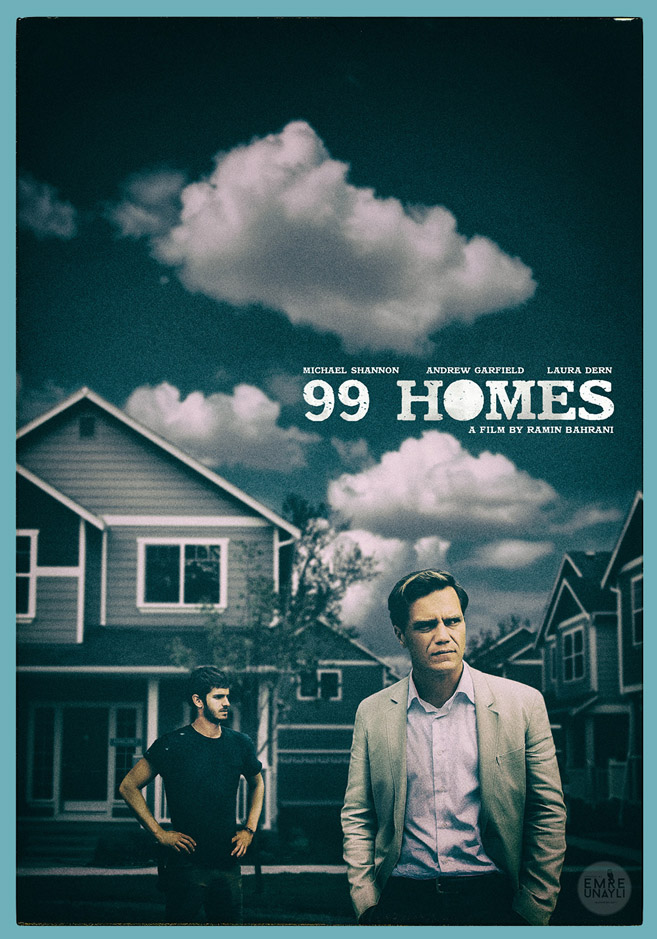
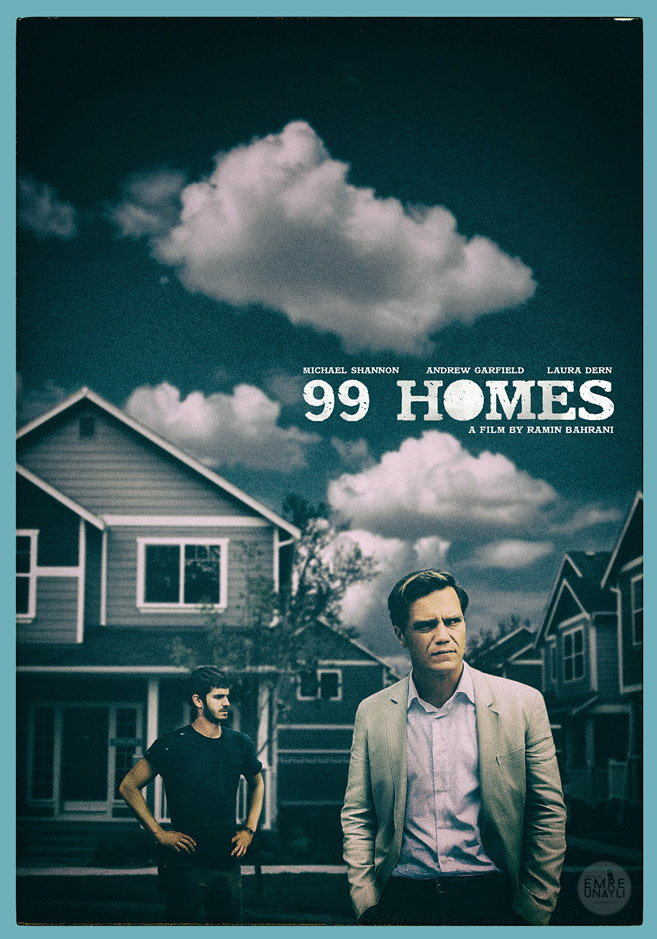
99 Homes

99 Homes

Posted on October 1, 2015 at 5:22 pm

Copyright 2015 Broad Green Pictures

It’s not called “99 Houses” or “99 Foreclosures,” though that is how they are seen by some of the characters in the film. The banks and the predatory dealmakers may think of these buildings as “assets” or “derivatives” following the 2008 subprime financial meltdown as buyers swoop in, buy them out of foreclosure, take government money to fix them up and then flip them for a profit. But for the people who live or lived in them, they are homes, they are sanctuaries, they are personal treasures filled with memories. They are the fortress of the people who call them home, and when that is breached, the family hardly knows who they are anymore.

Single dad Dennis Nash (Andrew Garfield) does not just live in a home. He works in construction. His job is building and fixing homes. But after the subprime meltdown, there is no work. That means no money and soon that means no home. One of the cruelest consequences of the financial crisis was that in order to meet the pressure from Wall Street to keep producing subprime derivatives, mortgage brokers pushed loans on people who could not afford them, creating the notorious “liar’s loans” for people whose financial qualifications would not be adequate for a traditional mortgage. And so people like Dennis were thrown out of their houses by people like the appropriately named Rick Carver (Michael Shannon), who show up moments before the house will be foreclosed by the bank to buy the house from the owners, who really have no other choice.

Dennis makes the deal with the devil and that turns out to be just the beginning. Carver offers him a job. He begins with construction work but shows an aptitude for hard work, following orders without asking questions, and willingness to do whatever it takes to make enough money to get his mother (Laura Dern) and young son back home. He is determined to restore what they lost and bring them back to the house Carver, the bank, and the Wall Street derivative brokers took from them.

Writer/director Ramon Bahrani (“Goodbye Solo”) has an extraordinary gift for making intimate dramas that do more than exemplify complex and murky issues; they illuminate them. A thousand headlines and think pieces could not do as much to bring, well, home, the real-life impact of the failures of bankers and politicians than a movie like this one. As specific in time as a mix-tape featuring Flo Rida with T-Pain and Coldplay’s Viva La Vida, it approaches epic, even operatic scope as Dennis gets pulled, sometimes yanked, deeper and deeper into becoming what he most despised. He does not realize that he is giving up something much deeper and more visceral than his home and belongings.

Michael Shannon, master of volcanic anger, is mesmerizing as Carver, rough charm and brutal fury. As Dennis gets pulled deeper and deeper into Carver’s way of doing business, and then his way of thinking, we see how seductive corruption can be, and how, after a point no matter where you live, it is not a home.

Parents should know that this film has constant very strong and aggressive language, crude sexual references and some situations, severe family distress and homelessness, threats, illegal activity, suicide, and brief violence.

Family discussion: Who is responsible for the foreclosures? What does Dennis admire about Rick?

If you like this, try: “Sunshine State” and the upcoming film “The Big Short”

Related Tags:


Not specified
The Walk

The Walk

Posted on October 1, 2015 at 12:17 pm

If you have vertigo or acrophobia, you will have trouble with “The Walk,” the story of Frenchman Philippe Petit’s tightrope walk between the towers of the World Trade Center. If you don’t have vertigo or acrophobia, you might have after you watch the movie, with the most stunningly realistic 3D effects ever put on screen. At least I think they’re still just on the screen. It sure feels like it goes on way, way behind it.

Copyright 2015 Sony
Copyright 2015 Sony

“Man on Wire,” a documentary about Petit’s 1974 stunt, or, as he might prefer to say, coup, won an Oscar in 2008. In this film, Joseph Gordon-Levitt, with an accent that just manages to avoid Pepe LePew dimensions, plays Petit, a street performer who saw a photograph of the World Trade Center in the waiting room of his dentist and was instantly consumed with the dream of a walk in the sky, more than 1300 feet above the sidewalk, between the towers. Like Petit himself, the movie does not bother with the question of why this might be a good thing to do. If pressed, he might just say, like Mallory, “Because it’s there.” The problem is that he doesn’t have an answer but still keeps talking and talking. For no reason we keep going back to Petit narrating the story from the torch of the Statue of Liberty. It is distracting and dull.

Petit could not or would not articulate it, but I think I know why. When huge institutions get together to create a world-record setting edifice — taller than the Eiffel Tower, the Frenchman notes — there is something irresistibly enticing about coming back as a lone soul and literally topping it. Director Robert Zemeckis, who can get more excited about the technology than the story in his films, may identify with that challenge. Petit wanted to walk across the sky, with an audience to appreciate it. And Zemeckis wants to recreate that experience for us, taking us to the roof of the Towers, and inviting us to look down.

Still, while we love movies about dreamers of impossible dreams who make them come true, we do like to have a reason, and Petit edges over the line from audacious dreamer to inconsiderate narcissist, despite Gordon-Levitt’s considerable appeal. This lends a hollow quality, overcome less from the story of the film to what is in our own hearts as we watch, knowing what the tragedy that lies ahead for the World Trade Center.

What works well in the first part of the film is Petit’s tutorials with a tightrope master played by Sir Ben Kingsley and the procedural elements once Petit and his team get to New York and start preparing as though they are getting ready to rob a bank. Indeed, it becomes a heist film of a sort because they have to find different ways to sneak into a building that is still under construction and gather the information they need to figure out how to install the cable and keep it from swaying or buckling. And then to install it. There are a lot of problems along the way, including Petit stepping on a nail and injuring his foot and dropping his black turtleneck from the roof when he is trying to assume his performer persona. They omit, however, my favorite detail from the documentary: Petit explains that in America, if there’s pencil in your pocket everyone assumes you are part of the construction team and are entitled to be there. Like the loss of the buildings themselves, Petit’s ability to exploit lax security is a poignant reminder of what we no longer have.

The last half hour or so of the film is breathtaking and well worth the price of admission in IMAX 3D. You will feel that you are on the tightrope with Petit. As the crowd gathers below and the police arrive (who thought a police helicopter would be a good idea?), Petit is suspended in the clouds, mentally, emotionally, and physically. For just a moment, Zemeckis and Gordon-Levitt bring us up there with him, and his dream, however frivolous and ephemeral, becomes ours.

Parents should know that this film has very risky and dangerous behavior, vertiginous 3D effects, brief nudity, some strong language, and smoking and drinking.

Family discussion: What big dream would you like to make come true? Who would you want to be your team?

If you like this, try: the documentary “Man on Wire”

Related Tags:


3D Based on a true story Drama IMAX
Stonewall

Stonewall

Posted on September 25, 2015 at 8:00 am

D
Lowest Recommended Age: Mature High Schooler
MPAA Rating: Rated R for sexual content, language throughout, some violence and drug use
Profanity: Very strong and crude language
Alcohol/ Drugs: Drinking, smoking, drugs
Violence/ Scariness: Police brutality, riots, reference to murders
Diversity Issues: A theme of the movie
Date Released to Theaters: September 25, 2015

In 1969, when the federal government prohibited the firing of gays and lesbians, when it was illegal for them to congregate in a bar or even to have consensual sex, when police harassment and brutality was not only permitted but expected, a man threw a brick, shattered a window, and began four days of riots that galvanized the fight for GLBTQ equality. The window was in a bar called Stonewall, and its name lives on as the symbol of the moment that ignited a revolution.

The movie “Stonewall,” intended as history and tribute, instead throws a brick through the meaning and the moment, shattering both. This movie is more than bad and worse than disappointing. It is a tragic distortion of a vitally important story that insults the people it tries to honor and insults its audience as well. Director Roland Emmerich (known for movies with a lot of big explosions and stunts) and screenwriter Jon Robin Baitz so vastly underestimate their audience that they apparently believe cannot understand a movie about the GLBTQ community unless we have an all-American-style high school football hero from the heartland to identify with. How do you make a movie about the Stonewall uprising and so completely miss the point?

Copyright 2015 Roadside

Our point of entry is handsome but bland Danny (Jeremy Irvine), a Hoosier who has a crush on the quarterback. He is Goldilocks to the three bears of his family, spread out to represent all points on the gay-friendliness spectrum: a taciturn father (also his football coach), a passive mother, and a devoted and free-thinking younger sister (Joey King). When his assignations with the quarterback are discovered, “faggot” is scrawled on his locker and he is shunned by everyone. He refuses to tell his father that it was a one-time thing and leaves for New York.

And so we shift from tone-deaf cliches about the Midwest to tone-deaf cliches about Christopher Street, with a group of adorably scruffy and flamboyant runaway Lost Boys who spend their time tricking and clubbing. Their leader is an Artful Dodger type known as Ray (Jonny Beauchamp). They sit on the stoop and talk about Judy Garland, alternately enjoying shocking decadence and longing for home. Around the edges of the story are the real-life characters who are far more interesting, or at least who were in real life.

This is a bad movie, purely from the standpoint of drama. It is poorly constructed, with cardboard characters and worst-of-the-year category clangers in dialog, provoking snicker and then outright snorts from the audience. “I’m too angry to love.” “These kids have nothing to lose.” But the monumental failure here is the disrespect for the real-life courageous souls who fought back nearly half a century ago and for the audience, who would relish a film that does them justice.

Parents should know that this film has explicit sexual references and situations, including predatory behavior, abuse, and prostitution, homophobic and bigoted insults, police brutality, and riots. Characters use very strong language, drink and smoke, and use drugs.

Family discussion: How was the gay rights movie like and not like other civil rights movements of the 20th century?

If you like this, try: “Longtime Companion.” “Pride,” and “Milk”

Related Tags:


Based on a true story Drama GLBTQ and Diversity Movies -- format Politics
The Intern

The Intern

Posted on September 24, 2015 at 5:55 pm

Copyright Warner Brothers 2015
Oh, to live in Nancy Meyers-land, where the 60’s and 70’s really are a golden age, where AARP-eligible Oscar winners go to be universally adored by bright young people, and where every sumptuously spacious but cozy home has the kitchen of your dreams. It’s not a coincidence that more than once in the movie one character compliments another on the decor. Or that you can now buy it all yourself to collect your own accolades, making the movie into an infomercial. It’s soft-focus, feel-good, female empowerment. So of course it’s all to a soundtrack of Pottery Barn-like upscale easy listening songs like “All About That Bass (No Treble).”

Following in the beautifully shod footsteps of Eli Wallach (“The Holiday”), Diane Keaton (“Something’s Gotta Give”), and Meryl Streep (“It’s Complicated”) comes Robert De Niro, with infinite charm and grace in a role he seldom gets to take: an ordinary guy.

De Niro plays Ben, 70 years old, living in Brooklyn, a widower after a long, happy marriage, retired, and looking for something to do. He has traveled, visited his grandchildren, taken classes. There is a single woman his age (Linda Lavin) who would love to date him. But he wants something more. “The nowhere to be thing hit me like a ton of bricks.”

And then he sees a flier. A local start-up is looking for “senior interns,” for no other reason than to make a cute movie plot, but okay. It’s an online sales company, selling fashion with some special ability to make sure the items fit properly), and he still uses a flip phone, but Ben decides to apply. And he is undaunted that applicants, instead of submitting a resume, are asked to upload a video about themselves. “I want to be challenged,” he explains, “and needed.”

He gets the job and is assigned to the start-up’s visionary but harried CEO, Jules Ostin (Anne Hathaway). Is the name supposed to make us think of Jane Austen? Could be. She has an only-in-movies adorably precocious moppet and a shaggy (in a cute, artisanal, Brooklyn way) devoted stay-at-home-dad of a husband. And, guess what? They live in an exquisitely decorated brownstone with a couple of legos and a backpack sprinkled around for relatability. Plus, she is played by Anne Hathaway, so she is stunningly beautiful in a we’d-totally-be-best-friends-if-she ever-met-me sort of way. She gets to channel her “Devil Wears Prada” co-star Meryl Streep as the boss who can be terrifying, but she knows and we know she’s there to be loveable, not scary. And he is endlessly calm and resourceful, whether cleaning up the office junk pile, crunching data, giving dating advice, or retrieving a disastrously mis-sent email.

In the normal world of movies, Jules would have a lot to teach Ben about being up with the times and there would be all kinds of cute/funny scenes with him learning what a hashtag is while imparting a few Yoda-like gems of wisdom. But this is Nancy Meyers-land, so the lessons all go the other way. And those lessons are not so much “why don’t you do it this way” as “you can do it!” It is undeniably refreshing, especially to those of us closer in age to Ben than Jules, but let’s face it. This is less a movie than it is comfort food and a glossy shelter magazine wishbook, sprinkled with fairy dust and truffle powder.

Meyers is all about you-go-girl empowerment, so her films are delectable visions of soft-focus fantasy, but there are some revealing moments of personal payback, too, as in her treatment of a wandering husband. It crosses the line from pleasant daydream to selfishness, entitlement, and denial. It’s one thing to create a fairy tale. It’s another to promote the idea that women can “have it all” without a lot of other people having a lot less. And maybe next time we could add some people of color to the cast. This is Brooklyn, for goodness’ sake. It’s practically a living version of “It’s a Small World.” How did the cast get so white?

But Ben’s handkerchief rule? That’s the real deal.

Parents should know that this film features adult themes including adultery and male sexual response. There are references to a sad death, drinking, including drinking and medication to deal with anxiety, and characters use some strong language. There is an awkward and unfunny joke about a child possibly having bipolar disorder.

Family discussion: What most surprises seniors and millennials about each other? What would you like to do when you retire? Do you agree with Jules’ decision?

If you like this, try: “It’s Complicated” and “The Holiday”

Related Tags:


Comedy Drama
THE MOVIE MOM® is a registered trademark of Nell Minow. Use of the mark without express consent from Nell Minow constitutes trademark infringement and unfair competition in violation of federal and state laws. All material © Nell Minow 1995-2026, all rights reserved, and no use or republication is permitted without explicit permission. This site hosts Nell Minow’s Movie Mom® archive, with material that originally appeared on Yahoo! Movies, Beliefnet, and other sources. Much of her new material can be found at Rogerebert.com, Huffington Post, and WheretoWatch. Her books include The Movie Mom’s Guide to Family Movies and 101 Must-See Movie Moments, and she can be heard each week on radio stations across the country.

Website Designed by Max LaZebnik