Get on Up

Posted on July 31, 2014 at 5:59 pm

Copyright 2014 Universal Pictures

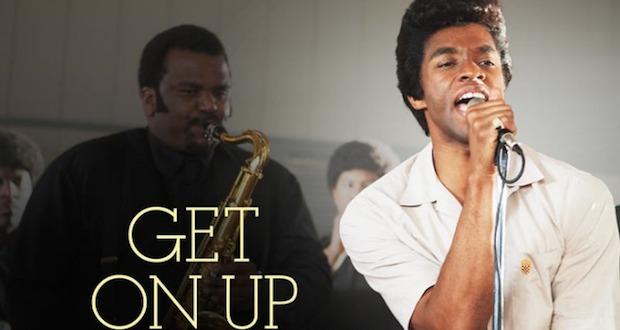
There are a lot of challenges in taking on the life story of James Brown, known variously as the Hardest Working Man in Show Business, the Godfather of Soul, Mr. Dynamite and others with variations on the term “Funk.” First and foremost, James Brown was one of the most electrifying performers of all time and though he is gone, the memories of his sizzling stage shows are vivid and the evidence is on YouTube.

Second is the conundrum that besets all who want to do biographical stories of well-known people, especially musicians. Is there a life as big as the work they did? We know that those who achieve greatly often pay an enormous price in personal turmoil for themselves and those around them. But those stories are not easy to tell, especially in the structure of the typical biopic, which goes from hardscrabble childhood to big dreams to first discovery by someone who can open doors to triumph, the first recording session where the heard-it-all studio technicians are blown away, the rapturous discovery by the fans, setback, the corrosive impact of fame and money, and then some catharsis and the achievement of legendary status. (I’m looking at you, “Jersey Boys.” Also “Ray,” “Coal Miner’s Daughter,” “Walk the Line,” “What’s Love Got to Do With It,” “The Benny Goodman Story,” “8 Mile,” etc. etc. etc. etc.)

Director Tate Taylor (“The Help”) makes some good choices addressing these challenges. First, he wisely cast Chadwick Boseman (“42”) in the lead role. Boseman is an actor of exceptional ability and magnetism, and he works as hard as the man he is playing to convey the power of Brown’s stage presence. Second, Taylor, who grew up in the South, has a superb sense of place that helps evoke Brown’s world. And he is not afraid of cinematic touches to evoke what is going on in Brown’s mind, including some asides to us in the audience.

But the film frustrates us with its random swings back and forth as we get so many flashbacks we are not sure where we are. Is this Brown looking back over his life with any insight or regrets or pride? Is the layering supposed to add depth to the story? Are we supposed to make sense of the juxtapositions between scenes of the past and present, sometimes explicitly expressionistic and imagined or exaggerated? It comes across as tricked up and distracting. Boseman is outstanding in the performance scenes but trapped in the rest of the film by Brown’s thick Georgia accent and frequent habit of just not making any sense, as in the very beginning scene when he uses a gun to threaten someone for using his bathroom. It skips over at least one wife and at least seven children, various arrests, and most of the saga of his extended problems with the IRS, without making it clear how what it does tell us illustrates his triumphs, struggles, and motives.

Even more frustrating is that we get so little sense of Brown himself. He comes across as damaged but opaque. What was it that drove him as a performer? What inspired him? We see him berating and imposing fines on his band, but very little of him creating.

There are moments in the film that could be enough for an entire feature. When he is talking to his manager (a wryly sympathetic Dan Aykroyd) on his private plane, en route to the White House, about the conflict he faces as he achieves the mainstream acceptance he strove for in meeting the President at the same time he is accused of selling out. The conflict between “show” and “business” deserved much more exploration.  And then there is the core relationship in the story, between Brown and Bobby Byrd (the terrific Nelsan Ellis), the long-time member of his team who finally could not take the star’s ego any more. A Peter Morgan-style story on any of those conflicts would be far more powerful and avoid the “what happened to that person/marriage/record” that this VH1 Behind the Music too-quick trip over a very complicated life can hold.

Parents should know that this is a movie about sex, drugs, and rock and roll, with strong material for a PG-13 with strong language including two f-words, drugs, domestic abuse, child abuse, sad deaths, brief wartime violence, and sexual references and situations.

Family discussion: Why did James and Bobby call each other “Mr.?” How do you “flip” an obstacle? What did it mean when he said, “I paid the cost?”

If you like this, try: watch James Brown’s real-life performances

Related Tags:


Based on a true story Biography Drama Musical Race and Diversity

Magic in the Moonlight

Posted on July 31, 2014 at 5:58 pm

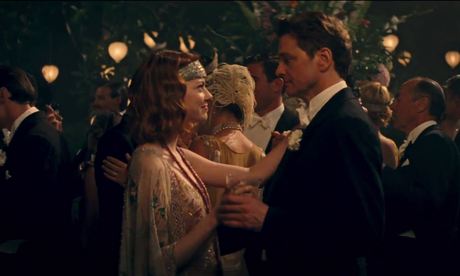
Magic In The Moonlight Emma Stone Colin FirthWoody Allen’s 44th film is an amuse bouche without a meal, a dollop of whipped cream without the dessert underneath.  In last year’s film, “Blue Jasmine,” the strength of the performances (especially Oscar-winner Cate Blanchett) and the resonance of its Bernie Madoff-ish crossed with “Streetcar Named Desire” plot line provided a simulacrum of seriousness of purpose that suggested a deeper meaning.  But this year’s pastiche has no such pretensions and no such weight as entertainment or as ostensible exploration of one of Allen’s favorite themes, the battle between faith and reason.  And of course exploration of his even more favorite theme, the generative power of an adoring young woman in the life of a desiccated and lonely older man.  Even without the queasy context of the allegations of child abuse and the reality of Allen’s marriage to the daughter of his one-time romantic partner and co-parent, this theme feels increasingly icky.

The jazz age 1920’s setting among rich Americans on the glamorous French Riviera (the same setting as Hitchcock’s classic “To Catch a Thief”) may resemble a fancy chocolate box, but the candy inside is strictly low grade. Allen’s greatest advantage at this point is that everyone wants to work with him.  Two of the hottest stars in Hollywood, Colin Firth and Emma Stone play the leads in this story of a man of reason, empiricism, and proof  who is (for a while at least) trumped by faith in things unseen.

Firth plays Stanley Crawford, a magician who performs on stage as a caricature of a mysterious man from China called “Wei Ling Soo.”  Not only his tricks are illusions — his very persona is as well.  He is abrasive and judgmental and prides himself on being committed to pure logic and debunking those who pretend to do real magic, including mediums with claims of contact with spirits and ghosts.

An old school friend and fellow magician named Howard (Simon McBurney) appears just as Stanley is about to go on vacation with his level-headed fiancee.  He has a proposition.  Some wealthy friends are being taken in by a young American named Sophie Baker (Stone) who claims to commune with the spirit world, and their relatives want her to be revealed as a fraud.  Stanley is enticed less by the prospect of a reward than by the chance to triumph over someone making false claims and the chance to triumph over Howard, who admits he has been unable to find a flaw in the medium’s act. In addition, he will get the chance to visit his favorite relative, who lives on the Riviera, Aunt Vanessa (a superbly vinegar-y Eileen Atkins, who steals the film).

So Stanley and Howard visit the rich widow (Jacki Weaver as Grace) and her son Brice (Haimish Linklater), who is besotted with Sophie, and hopes to win her heart by serenading her with his ukelele.  Also in the house is Sophie’s mother (Marcia Gay Harden), who is interested in nailing down the details of the foundation Grace plans to endow for Sophie.

It’s all pretty jolly for a while, though Stone and Firth have no chemistry as antagonists or otherwise.  Stone is utterly beguiling, as always, despite Allen’s inability to situate the camera to get the most from her lovely face.  (She is already working on his next film; here’s hoping they do better.)  Other than Aunt Vanessa, though, the characters are all thinly, even limply imagined. Even Stone’s natural effervescence cannot give Sophie the necessary depth to make her interesting either as a fraud or as a genuine medium.  Linklater and Weaver are both criminally underused.

There are some sharp lines, but the structure is by-the-numbers, including a visit to a celestial observatory for shelter from a rainstorm and a last-act hospital scene to raise the stakes on the faith vs. science debate. The problem is that most of the time, we need access to both, and this film’s shortcomings are proof in both categories.

Parents should know that this film includes smoking, drinking, and sexual references.

Family discussion: Does there have to be an absolute line between reason and faith? How do you decide which is appropriate in particular circumstances?

If you like this, try: “Blithe Spirit,” “Midnight in Paris,” and “The Curse of the Jade Scorpion”

Related Tags:


Comedy Romance

Lucy

Posted on July 24, 2014 at 6:00 pm

Copyright 2014 Universal Pictures

I always enjoy Luc Besson’s stylish car chases and shootouts. I like his use of locations, his strong female characters, and unexpected flashes of sentiment in the midst of mayhem.  While I found much to like in this story about a young woman who gains superpowers through a new drug, it was a mistake to have her show less emotion as she becomes physically and emotionally stronger.  Instead of sentiment, this time Besson inserts some preachy ruminations on the meaning of life.  I’m not opposed to existential ponderings in the middle of a crashes and explosions film.  But they need to be a little less silly and a lot less intrusive.

For a moment, I thought we were back on the Planet of the Apes or perhaps picking up some deleted scenes from “Tree of Life” as we returned to the dawn of time with the earliest hominids.  But no, this is just some sort of context for what is to come.  Our heroine, you see, shares a name with the skeleton of the oldest human remains, thought of as the first woman.

We then meet our present-day Lucy, standing on the sidewalk, arguing with her boyfriend of a week, who is trying to persuade her to deliver a briefcase for him.  She may not be very focused, but she is sharp enough to know that he and the deal he is proposing are both very sketchy.  But she is not smart enough to walk away before he can handcuff her to the case and shove her toward the door.  She has no choice.  She walks into the building.  The boyfriend gets shot.  And she is hustled upstairs but a lot of very scary-looking guys in black suits.

She is soon knocked out, and awakens to find that a pouch of a powerful new drug has been sewn into her abdomen.  She is one of four mules to be sent to cities across Europe to deliver the drug.  But before she leaves, a thug kicks her in the belly, the pouch opens, and the drug, a synthetic version of a chemical essential in fetal development, goes into her bloodstream and she is suddenly super-smart, super-powerful, and super-mad.  Also, she can time-travel, sweeping eras to the side like Tinder rejects.

Meanwhile, all of that brain power has not led her to the obvious conclusion that wiping out all of the bad guys who are in charge of distribution of the new drug is not going to solve very much if there are still people out there manufacturing it.

For a while it is fun to see her think, kick, punch, stab, and, yes, levitate the bad guys.  But there are too many returns to Morgan Freeman lecturing a group of students about what would happen if we used more than ten percent of our brains (by the way, that old myth has no more basis in reality than this movie does) and the decision to make Lucy increasingly robotic in demeanor as she gets more cerebrally enhanced lessens the narrative propulsion and emotional heft to the storyline. She also loses a lot of our sympathy when she engages in needless murders of innocent parties. I like Luc Besson. But I think he was using less than ten percent of his brain when he wrote this one.

Parents should know that this film includes extensive action-style violence with many characters injured and killed, lots of guns, knives, surgery, car chases and crashes, fights, threat of sexual assault with some grabbing, explicit scenes of animal and brief human sex and childbirth, sexual references, brief strong language, theme of drug dealing and effects of illegal drugs

Family discussion: If you could access more of your brain capacity, what would you use it for? Why did Lucy become less emotional as she got smarter?

If you like this, try: “The Transporter” and “Limitless”

Related Tags:


Action/Adventure Fantasy

And So It Goes

Posted on July 24, 2014 at 6:00 pm

12 June 2013 Photo by Clay Enos – © 2013 ASIG Productions LLC

A second marriage is, as Samuel Johnson famously said, “The triumph of hope over experience.” And as lyricist Sammy Cahn wrote in the song Bing Crosby sang in “High Time,” “Love is lovelier the second time around.” In this slight but endearing new film, director Rob Reiner and screenwriter Mark Andrus (“As Good as it Gets”) bring us an autumn-years love story. Oscar-winners Michael Douglas and Diane Keaton play two characters with little in common but the experience of great loss, the knowledge that love carries great risks, and the fear that there may not be another chance.

Douglas is Oren, a successful realtor and even more successful misanthrope. He insults people.  He is bitter.  He shoots a dog with a paintball gun.  He does not like anyone and no one likes him, with the exception of his longtime colleague played by the invaluable Frances Sternhagen.   Keaton plays Leah, a widow experimenting with singing at a restaurant.  She is universally beloved, especially by her neighbors in a fourplex and her loyal accompanist (played by the director himself).  Oren lives in the fourplex, too, ironically named “Little Shangri-La,” and is revealed early on to be the owner as well.  He hopes for one last big-ticket house sale so he can retire and move away and never deal with anyone ever again.

But life has a way of entangling those who most try to rid themselves of obligations and relationships — at least in movies.  Oren’s long-estranged son arrives to inform his father that (1) he is no longer a drug addict, (2) he has a daughter, and (3) he needs Oren to care for her while he serves a prison term.

Oren refuses, saying “I already tried to raise a kid and it didn’t work out.”   So Leah steps in and says the girl can stay with her.  She is Sarah (Sterling Jerins).  And anyone who has ever seen a movie (or read “Heidi”) knows that the girl will charm her grandfather and open the hurting hearts of both Oren and Leah to her and to each other.  Oren finally admits to Leah, “I like you and I don’t like anyone.”

Despite contemporary references like “Duck Dynasty” and “Hoarders,” this film has a musty, retro feel, like a script that has been sitting in a drawer for a couple of decades.  The plot is predictable and creaky.  An attempt to return Sarah to her mother goes exactly the way you think.  The caterpillar Sarah collects is exactly the metaphor you think. The pregnant neighbor provides exactly the opportunity for Oren’s showing what he is capable of that you thought but hoped you could avoid.  The racial humor is painfully out of date, so you didn’t predict it, but that does not make it a good surprise.  Far from it.

What the movie does have, though, is Douglas and Keaton, and they triumph over the limitations of the material, making us believe that the greatest love in our lives may still be waiting for us.

Parents should know that this film includes  sexual references, some crude, childbirth scene, some strong language, some racial insults, drinking, drug abuse, references to sad deaths

Family discussion: Why was it so hard for Oren to be nice to people? How did Leah make Sarah feel at home?

If you like this, try: “As Good as It Gets” and “Something’s Gotta Give”

Related Tags:


Comedy Drama Romance

Wish I Was Here

Posted on July 20, 2014 at 7:21 pm

My intention was to review Zach Braff’s new film without mentioning the controversy he stirred up in funding it via Kickstarter.  My view was that what mattered was the movie itself, and the kerfluffle over how it was all paid for was beside the point.  But it turns out that it is the point.  “Scrubs” star Braff says that despite the success of the first film he wrote, directed, and starred in, Garden State, not one studio was willing to give him the money for this follow-up.  So, he went to crowd-funding as a way to give him artistic freedom.  To those who said that crowd-funding should not be used by wealthy celebrities, he correctly pointed out that no one who objected had to send any money.  Many people did want to support the project.  He asked for $2 million. He raised $3,105,473 from 46,520 people.

That’s a good thing for making sure he got to realize his very individual artistic vision.  I’m just not sure whether we would not have been better off with a studio persuading him to make this film, as the suits in Hollywood like to say, “more relatable.”wishiwashere The script, written by Braff and his brother, is kind of a mess. Of course, life is kind of a mess, too, and movies don’t all have to be rigidly linear or consistent in tone. But this one does not come across as intentionally messy to reflect the rich tapestry of life. It comes across as undercooked and self-indulgent. Maybe I should say Kickstarter-enabled.

In “Garden State,” Braff played a struggling young actor named Andrew Largeman who returns to New Jersey for his mother’s funeral, decides to go off of his mood-numbing meds originally prescribed by his disapproving, remote father, meets the warm and loving and completely adorable Natalie Portman, and learns to begin to feel his feelings.

While not formally a sequel, in this film Braff plays a struggling less-young actor named Aiden Bloom married to a warm, loving, and completely adorable Sarah (Kate Hudson), and struggling with his remote, disapproving father, Gabe (Mandy Patinkin).

Aiden and his father have agreed that if Gabe will pay the grandchildren’s private school tuition, he can pick the school. So, even though Aiden is not an observant Jew, his children go to an Orthodox yeshiva school. He is frustrated that his daughter Grace (Joey King) has become very devout. And he is even more frustrated when Gabe tells him that he will not be able to pay the tuition any longer because he needs the money for some experimental cancer treatment. “So much bad news all at once,” Aiden says, learning that his children will have to leave school and his father may be dying in the same moment.

Aiden unsuccessfully tries to persuade the school’s principal, an aged rabbi, to give the children a scholarship. Because Aiden is not trying to get a job to support his family, and because they would have to take money from other families who are in need, the rabbi says no, firmly but not unkindly. Aiden haplessly starts to homeschool his children as Sarah struggles with an obnoxious co-worker who insists on making highly sexual and completely inappropriate comments.  She gets no help from her boss, who tells her to lighten up.

Aiden also has a brother, Noah (Josh Gad), a brilliant near-recluse who lives in a trailer.  He has genius-level analytic skills but toddler-level interpersonal skills.

There are moments in this film that are pure, inspired, and clearly the work of an exceptional filmmaker.  Too many of the best of them recall even better versions of themselves in “Garden State.”  And too many other moments are spoiled by an unwillingness to trust the audience.  The portrayal of Judaism borders on the grotesque (rebbe on a Segway — funny; rebbe on a Segway he can’t maneuver — not).  Braff as writer and director makes the mistake we see too often: Jewish actors and filmmakers who portray Jews feel that they have to ACT Jewish so they go painfully over the top.  The way Aiden and Sarah handle their daughter’s wish to be more religious is insensitive and unrealistic.  The way she chooses to demonstrate her faith is inappropriate for a young girl and makes no sense.  Until a moment late in the film when a quiet conversation with a sympathetic young rabbi, the portrayal of the Jewish community is unremittingly negative.  And Aiden is not as endearing as his director/portrayer apparently think.

It is a second quiet conversation that makes up for a lot of the missteps along the way.  Kate Hudson speaks to a man in a hospital bed, and it is touching and moving. There are some striking images and some choice performances, especially Jim Parsons (who had a similar role in “Garden State,” also in a wild get-up) as another aspiring actor.  And, as with “Garden State,” the music on the soundtrack is beautifully curated.

If Braff decides to go back to Kickstarter for #3, I might sign up.  Until then, I’ll think of this as a transitional film and hope that Braff will learn from it that sometimes when people say no it’s for a good reason.

Parents should know that this film includes very strong language, some crude, some used by children, explicit sexual references and situations, pornography and workplace sexual harassment, and drinking.

Family discussion:  How did Noah and Aiden respond differently to Gabe’s parenting?  Was Sarah right to support Aiden?

If you like this, try: “Garden State” and “Scrubs”

Related Tags:


Comedy Drama
THE MOVIE MOM® is a registered trademark of Nell Minow. Use of the mark without express consent from Nell Minow constitutes trademark infringement and unfair competition in violation of federal and state laws. All material © Nell Minow 1995-2026, all rights reserved, and no use or republication is permitted without explicit permission. This site hosts Nell Minow’s Movie Mom® archive, with material that originally appeared on Yahoo! Movies, Beliefnet, and other sources. Much of her new material can be found at Rogerebert.com, Huffington Post, and WheretoWatch. Her books include The Movie Mom’s Guide to Family Movies and 101 Must-See Movie Moments, and she can be heard each week on radio stations across the country.

Website Designed by Max LaZebnik