Money Monster

Money Monster

Posted on May 12, 2016 at 5:58 pm
Copyright Smokehouse Pictures 2016

Director Jodie Foster, in her most ambitious project so far, shows an impressive command of the language of film and a discerning eye for the gulf between the way we like to think of ourselves and the way we are in “Money Monster,” which begins promisingly but then pulls its punches with a disappointingly conventional last 40 minutes. It aims for “The Big Short” plus “Dog Day Afternoon,” but comes up just ahead of “Man on the Ledge.”


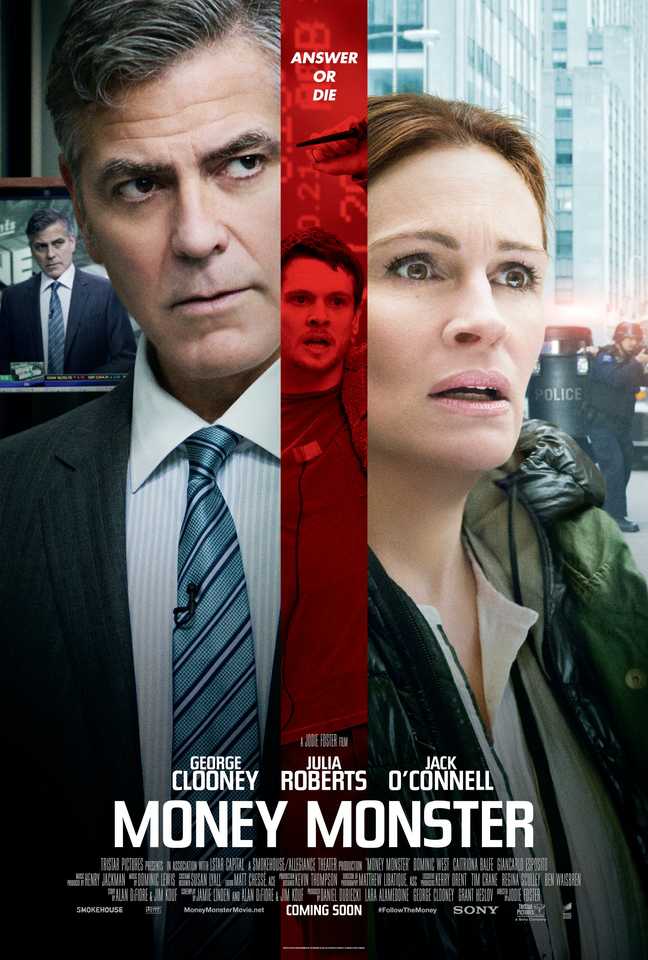
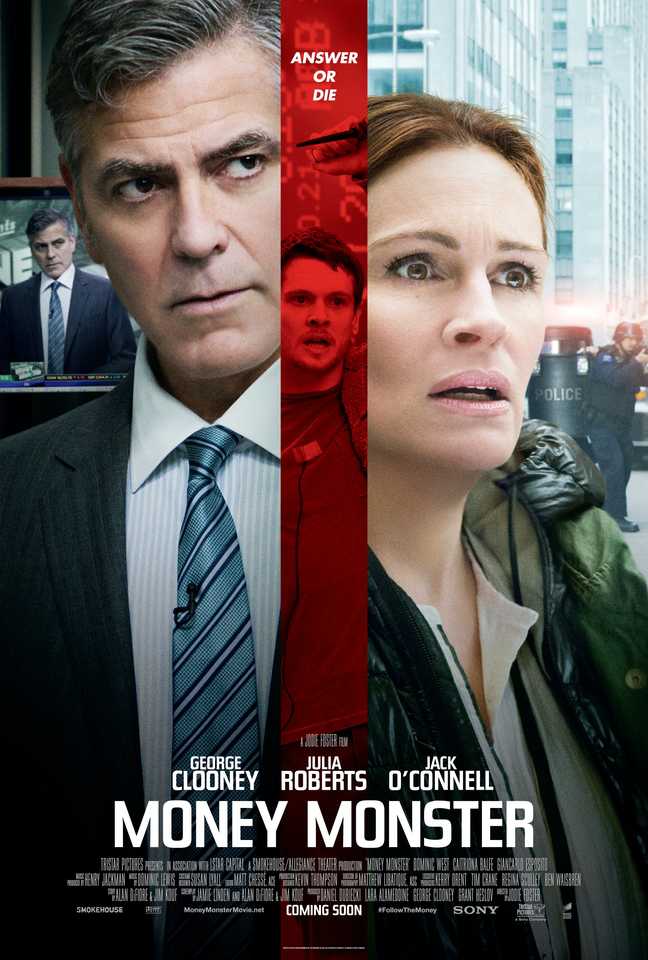
George Clooney plays Lee Gates, the host of a Jim Cramer-style television show about investing that is more dazzle than reporting. He dances with back-up girls, he amplifies his commentary with movie clips and outrageous stunts. Every episode has a stock buy recommendation “of the millennium,” and on this night he has to announce that one of his previous favorites, IBIS, has suffered a precipitous drop in the stock price due to a “glitch in its algorithm.” IBIS is one of those buzzword-y Wall Street darlings that no one really understands, but it has to do with a fully automated system for “high-frequency trading.”

Gates, a long-time enthusiast of the company, has invited the IBIS CEO (Dominic West as Walt Camby) to be a guest on the show, but the company’s director of communications, Diane Lester (Caitriona Balfe) is appearing instead, explaining that Camby is on an airplane and cannot be reached. Before her segment, though, a man named Kyle (Jack O’Connell of “Unbroken”) walks onto the set. He has a gun, and he takes Gates hostage, forcing him to wear a vest packed with explosives. He invested everything he had in IBIS, based on Gates’ glib assurances.

In the booth, speaking to Gates via earpiece, is his producer, Patty Fenn (Julia Roberts). As a producer, she is used to being the only grown-up in the room (and a little tired of having to be one). She quickly evaluates the situation and keeps things going moment to moment while she tries to figure out a way for the situation to end without anyone being hurt.

Foster skillfully takes us from the intensity of the hostage standoff on live television to show us what is going on with the police led by Captain Powell (Giancarlo Esposito), trying to find out more about the man with the gun and evaluating potential strategies for disarming him, and to the efforts to track down Camby both by Patty’s staff and by IBIS insiders. A couple of unexpected twists and some well-timed comic relief help hold our interest. And Clooney gives one of his most nuanced performances as a man who has spent a lot of time and burned a lot of bridges trying not to think too hard about the impact he has had on people. As both he and Patty use the skills that made them successful in the world of infotainment — and a few new skills, too — the natural chemistry between Clooney and Roberts and their combined star power keep the tension level high. But Kyle and Camby are under-written and the last 20 minutes are a disappointment with a resolution that is too easy and too Hollywood. We know who the monster is, here and we wish the movie knew it, too.

Parents should know that this film includes constant strong language, violence including gun, bomb, characters injured and killed, betrayal and illegal behavior, and sexual humor and situations, and drug use.

Family discussion: What makes Lee change his mind about Kyle? Would you take investing advice from Lee? What does it mean to say “we don’t do journalism?”

If you like this, try: “Dog Day Afternoon,” “John Q,” and “The Big Short”

Related Tags:


Drama Television
Love & Friendship

Love & Friendship

Posted on May 12, 2016 at 5:54 pm

B+
Lowest Recommended Age: Middle School
MPAA Rating: Rate PG for some thematic elements
Profanity: None
Alcohol/ Drugs: Alcohol
Violence/ Scariness: Scuffles
Diversity Issues: Class issues
Date Released to Theaters: May 13, 2016
Date Released to DVD: September 6, 2016
Amazon.com ASIN: B01HE7NTX6

Copyright 2016 Westerly Films
Who better to adapt Jane Austen’s epistolary novel, Lady Susan, for the screen than our finest contemporary observer of life among the “haute bourgeoisie,” Whit Stillman? A highlight of his first film was a conversation about Austen’s Mansfield Park, and his gift for epigrammatic dialog and understanding of class and money — and female protagonists — make it a natural fit. The result is a delightful confection about a woman described by Austen via one of the other characters as “the most accomplished coquette in England,” and one who “does not confine herself to that sort of honest flirtation which satisfies most people, but aspires to the more delicious gratification of making a whole family miserable.”

That assessment is not exactly accurate. Making a whole family miserable is somewhere between collateral damage and side benefit.

Lady Susan (fearless but effervescent Kate Beckinsale) is a recent widow with a teenaged daughter. In the manner of the era, when the gentry visited each other for months at a time, she has been staying with friends. First, she has no money and therefore her primary asset, aside from her guile and is her relationships with more comfortably settled members of her class. And second, the best chance for her to have a home of her own again is to marry her daughter off to a wealthy man. Stillman makes Lady Susan a more sympathetic character than Austen did, in part due to the vivacity of the actress who portrays her. It’s hard to have her believably portray such a captivating figure without our being captivated ourselves. But in addition, it is clear throughout that she may be ruthless and mercenary, but she has no other options. Her very status and gender constrain her from any other option, but she is undeterred. “In one’s plight is one’s opportunity,” she says. She has a gift for outrageous comments made with so much confidence they almost sound reasonable: About being sent away by her hostess: “If she were going to be jealous, she should not have married such a charming man.” About her daughter’s school: ““The fees are too high to even think of paying!” In the midst of an era of polite misdirection and euphemism, she is focused and direct, a hint of the coming modernity in the days of the harpsichord.

If she was around today, she’d be a CEO. Or a reality star.

Lady Susan has very little by way of education. She is not sure how many Commandments there are or what they contain. But she knows people, especially men. She knows her husband’s family has no socially acceptable vocabulary to tell her she can no longer stay with them. And when a handsome, eligible man warned about her skill with the opposite sex appears ready to resist her, she cleverly upends his expectations and before he knows it, he is captivated.

Stillman presents the story with wit and brio, introducing us to the characters with helpful on-screen descriptors: “his wealthy wife,” “a divinely attractive man.” The slight archness is his, or Austen’s, or Lady Susan’s; all are a bit reductionist when it comes to assessing everyone in the story according to his or her usefulness. He resists the usual musty respect for all classics, especially those featuring corsets, and presents the story with elegance and a refreshing briskness. Lady Susan would approve.

Parents should know that this film includes themes of deception and adultery.

Family discussion: Why did Lady Susan confide in Alicia? How did Lady Susan show her understanding of what it took to gain the affection of the different men around her?

If you like this, try: more Jane Austen films including “Sense and Sensibility” and “Pride and Prejudice,” as well as the books that inspired them

Related Tags:


Based on a book Comedy DVD/Blu-Ray Pick of the Week Romance
Captain America: Civil War

Captain America: Civil War

Posted on May 4, 2016 at 8:00 pm

B+
Lowest Recommended Age: Middle School
MPAA Rating: Rated PG-13 for extended sequences of violence, action and mayhem
Profanity: Brief strong language
Alcohol/ Drugs: None
Violence/ Scariness: Extended superhero/action violence with chases, crashes, and explosions, characters injured and killed.
Diversity Issues: Diverse characters
Date Released to Theaters: May 6, 2016
Date Released to DVD: September 13, 2016
Amazon.com ASIN: B01D9EUNB4
Copyright 2016 Marvel

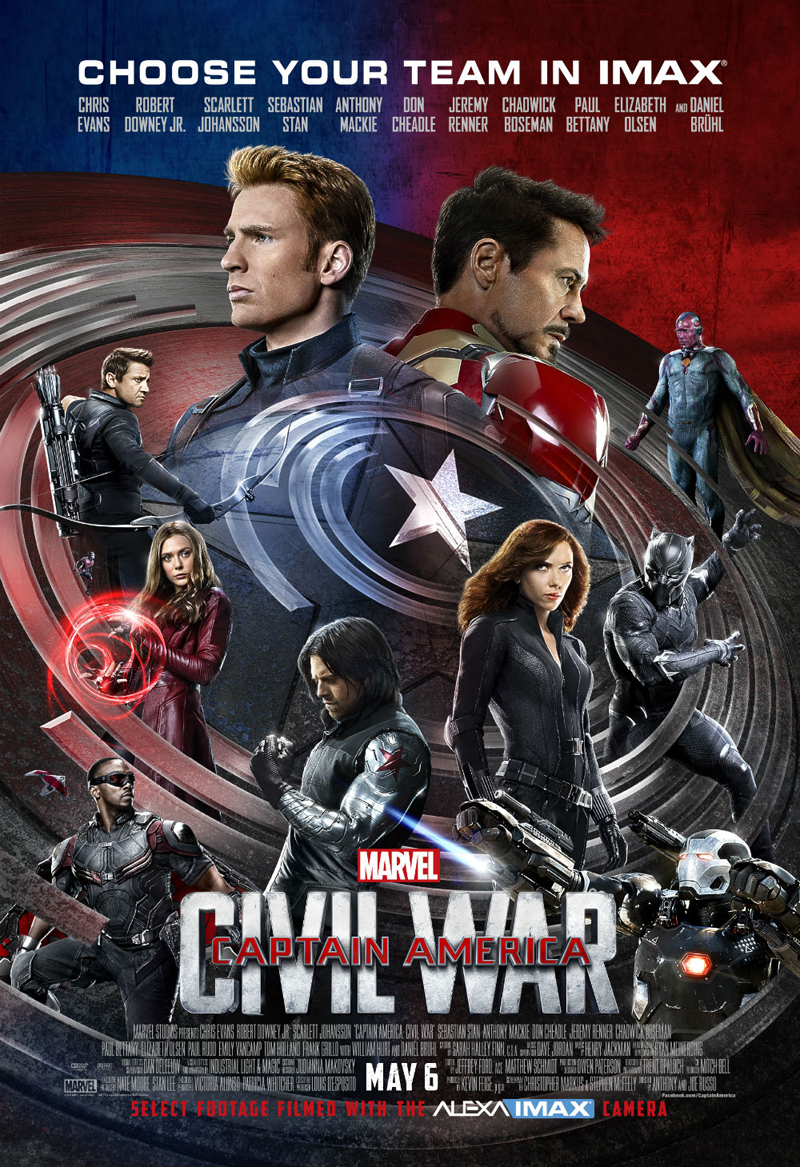
The most important element of any superhero movie is the villain. He (or she) has to pose a credible threat to humanity and challenge particular strengths and vulnerabilities of someone with extraordinary powers. In “Captain America: Winter Soldier” there was a paranoiac Pogo-esque “we have met the enemy and he is us” theme that is expanded in “Civil War.” It goes to the heart of the Avengers themselves as a critical issues divides them so they are fighting each other.

The issue is not one we usually see in superhero movies or indeed action movies in any category: consequences. Part of the fun of action movies is seeing all of the chases, fights, and explosions, without having to worry about the cleanup or what the military euphemistically calls “collateral damage.” But this story has more impact because it acknowledges and engages with the damage that superheroes do while they are preventing worse damage. It falls somewhere between “The Incredibles” and “Eye in the Sky.”

The true meaning of collateral damage is presented early on in “Civil War.” Tony Stark (Robert Downey, Jr.) has just announced that he will fund all of the student research projects at MIT when he is confronted by a mother (a small masterpiece of devastation and fury from the extraordinary Alfre Woodard). Her son was on a humanitarian mission when he was killed in the Sokovia crash of an entire city at the end of Avengers: the Age of Ultron. For her, it doesn’t matter that the entire world was saved in theory by a supervillain who is not around when her son was killed in reality by a man who is. “You think you fight for us,” she says. “You fight for yourself.”

Stark is devastated. “We’re no better than the bad guys.” The man we first saw demonstrating his company’s military weapons as though he was a rock star performing an arena show and who had no problem defending the money he made in munitions finally has to reckon with the truth he barely realized he had been moving closer to. And that is why, after the typical superhero opening action sequence we get a non-typical reaction. With SHIELD collapsed following “Winter Soldier,” the Avengers are operating on their own, without any oversight. A coalition of 117 nations insist that they agree to be subject to a UN commission (the “or what” is not ever spelled out because, what would it be?).

One of the film’s most intriguing developments is that not only do the Avengers line up on opposite sides but they don’t take the positions we might expect. Stark’s post-confrontation grapple with guilt has the most anarchistic of superheroes suddenly looking for the comfort of some rules. And the shock of SHIELD’s corruption has the most Boy Scout-ish of all superheroes, Captain America (Chris Evans) suddenly resistant to putting himself under anyone’s control. Some of the avengers pick a side on principle; some are more instrumental or practical. The Black Widow (Scarlett Johansson), who has her own history of unspeakable crimes, says, “Staying together is more important than how we stay together.”

Directors Anthony and Joe Russo deftly manage an enormous cast of characters. It’s easier to list those who do not appear in this film: Pepper Potts, Thor, Nick Fury, and the Hulk. Pretty much everyone else is here, and superbly added to the mix we have Paul Rudd as Ant-Man, who has some surprises in store, Black Panther (a lithe, powerful, and compelling Chadwick Boseman), avenging the death of his father, and the brand-new Spidey (Tom Holland, with Marisa Tomei as Aunt May). Bucky/Winter Soldier (Sebastian Stan) is here, too, and his storyline nicely mirrors the larger themes. He has been responsible for terrible crimes and abuses and some can never forgive him. But Captain America knows something about military operations. “We try to save as many people as we can,” he says. “Sometimes doesn’t mean everybody.” He knows how a human can become a weapon, and he is determined to get his friend back. Remember, this is not the Justice League. They are Avengers, and another character’s determination to get vengeance provides one of the movie’s most signficiant twists.

I don’t want to give away too much, so I’ll just say the action is everything you’d hope, with superhero-on-superhero collisions beyond the dreams of fanboy heaven. Keep an eye on the motorcycle. And the helicopter. And Ant-Man. And some cool special effects with Stark’s augmented flashback/therapy. And stay through the credits, of course.

Parents should know that this film includes extended sci-fi/comic book action violence with chases, crashes, and explosions, characters injured and killed, and brief strong language.

Family discussion: What are the best arguments for Ironman’s position on the accords? For Cap’s? How is this Spider-Man different from other portrayals of the character?

If you like this, try: “The Avengers” and “Captain America: The Winter Soldier”

Related Tags:


3D Action/Adventure Comic book/Comic Strip/Graphic Novel DVD/Blu-Ray Pick of the Week Scene After the Credits Science-Fiction Series/Sequel Superhero
Keanu

Keanu

Posted on April 28, 2016 at 5:58 pm

B+
Lowest Recommended Age: Mature High Schooler
MPAA Rating: Rated R for violence, language throughout, drug use and sexuality/nudity
Profanity: Very strong language including n-word
Alcohol/ Drugs: Drinking, drugs, and drug dealing
Violence/ Scariness: Extended action violence, many guns, characters injured and killed
Diversity Issues: A theme of the movie
Date Released to Theaters: April 29, 2016
Date Released to DVD: August 1, 2016
Amazon.com ASIN: B01DYX9Y9M

Copyright 2016 Warner Brothers
I laughed so much and so hard at this movie that by the time it was over I had become of those Key and Peele show parking valets. I just wanted to stand in front of a hotel in my red vest saying over and over, “How about them Keys and Peeles, though! How ABOUT them Keys and Peeles!”

Keegan-Michael Key and Jordan Peele, with a script co-written by Peele and directed by their series director Peter Atencio, have made one of the smartest and funniest comedies of the year, a film that works at every level from slapstick to sophisticated wit to social commentary and slam-bang action, with even a little romance.

Fans of the series will appreciate references like a trip to see a movie starring “Liam Neesons” but even those who have never heard of their Obama anger translator routine or their legendary East-West Bowl player names will immediately understand their characters and their situation.

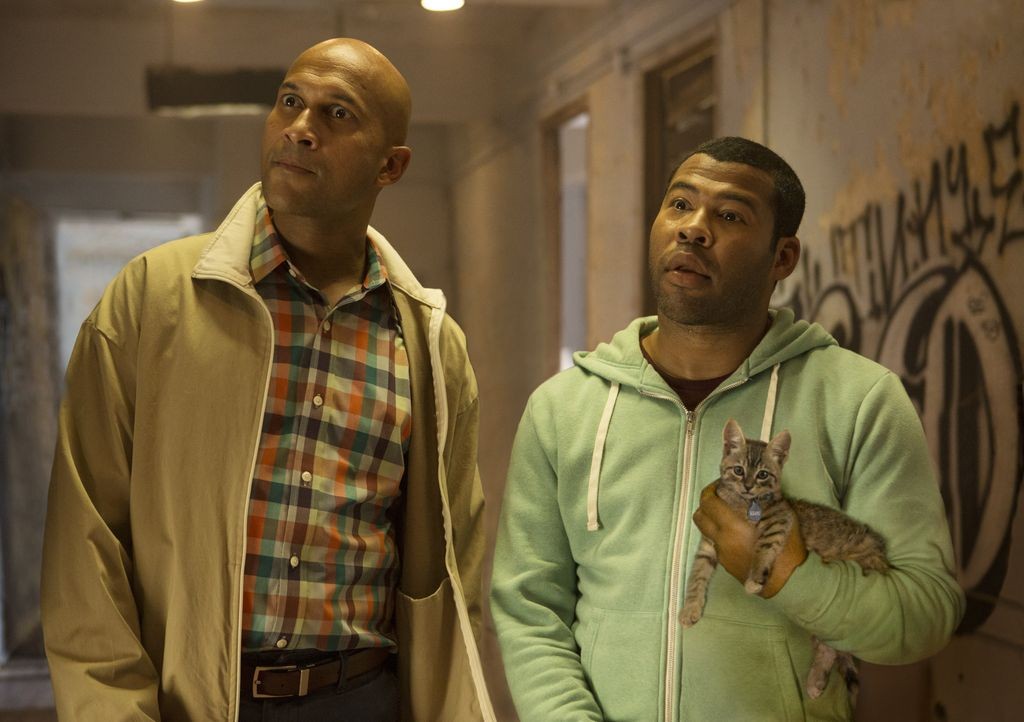
Clarence (Key) is a happily married father who drives a minivan and listens to George Michael. His cousin Rell (Peele) is a pot-smoking slacker who is devastated following a break-up. But when he adopts an abandoned kitten his spirits lift, and he names it Keanu. When Keanu is stolen by the 17th Street Blips, a gang made up of gangsters who could not make it in the Bloods or the Crips, Clarence and Rel decide to rescue him. This leads to a strip club called HPV with a two-for-one lap dance special, run by drug dealer known as Cheddar (Wu-Tang Clan’s Method Man). Clarence and Rell, trying to look tough, introduce themselves as Shark Tank and Tectonic. Clarence wonders how tough someone named Cheddar could be, but Rell points out that “You only name yourself something adorable if you can back it up.” When they explain to Cheddar that they are in the market for a “gangster pet,” Cheddar tells them they can have the kitten he has dubbed New Jack (complete with do-rag and gold chain) if they lead his gang on the delivery of an ultra-potent new drug. A series of encounters, escalating in peril, violence, and hilarity. It would be wrong to spoil more, so I will leave it at this: there is a very funny surprise guest star and Clarence’s professional team-building skills come in handy.

Key and Peele, both biracial, have always found comedy/commentary gold in their ability to reflect on race and culture. By casting themselves as highly and somewhat self-consciously assimilated black men who assume the media-created image of violent black drug dealers, they have added some sharp meta-commentary to a classic set up: fish-out-of-water, normal characters drawn into abnormal circumstances. Rell’s own weed dealer, played by SNL alum Will Forte, is a white man who is also taking on a stereotyped black persona, including cornrows. Clarence, who tries to order a white wine spritzer in the strip club and who tells Rell he sounds like John Ritter, swings into what he thinks is gangster mode when Chedder’s hostile n-word-spouting henchmen approach him. The transformation is wildly funny, both the specificity of it, and the way it fits so seamlessly into our own media-created notion of that archtype and the porous aspects of his new persona as the “real” Clarence keeps peeking out. Clarence and Rell are as innocent and helpless as the adorable kitty in the midst of druglord shoot-outs. Key and Peele are pretty adorable, too, in a gangster pet sort of way.

Parents should know that this film includes extended peril and violence, many guns, characters injured and killed, drugs and drug dealing, sexual references and nudity, strip club, and very strong and crude language including the n-word.

Family discussion: Where did Rel and Clarence get their ideas of how to behave with the Blips? How did Clarence’s team building training come in handy?

If you like this, try: the Key and Peele television series, “Date Night,” and “Analyze This”

Related Tags:


Comedy DVD/Blu-Ray Pick of the Week Race and Diversity
Ratchet & Clank

Ratchet & Clank

Posted on April 28, 2016 at 5:50 pm

Copyright 2016 Focus Features

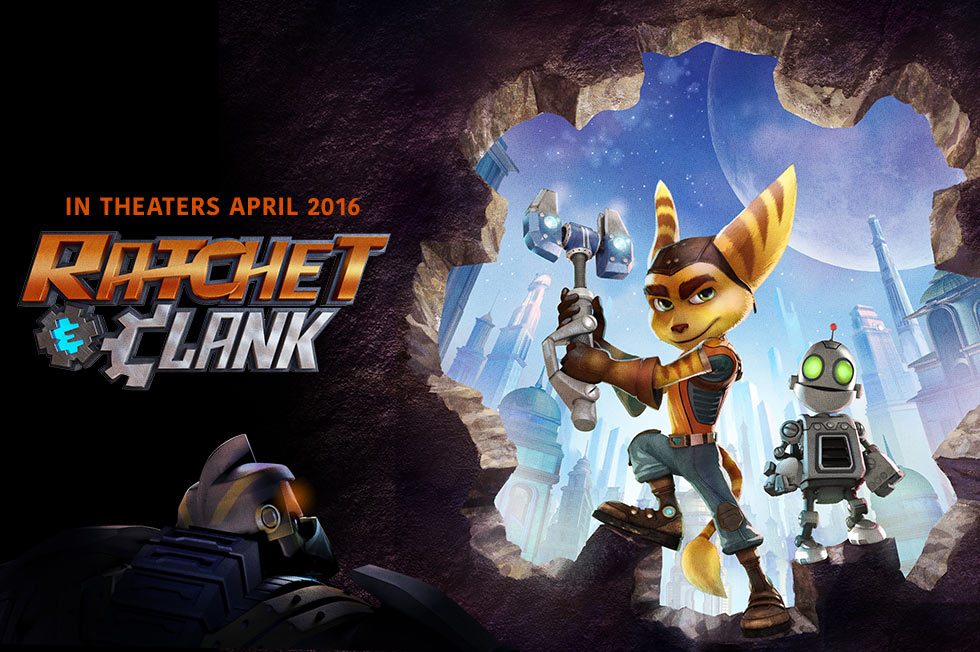
Roger Ebert famously declared that a video game could not be art, giving rise to howls of protest. I believe that videogames, like movies, can and will rise to the level of art. But movies like “Ratchet & Clank” will continue to be compelling arguments to the contrary. Video games have striking visual design and some promising characters, though, in my limited experience, they are superficially sketched in to give the player room to inhabit them fully. If most of them don’t have what we might consider a plot, they have as much of a plot premise as many action movies: the world is under attack! And yet, so far no video game has successfully made the leap to a movie with enough of a story to succeed even as mildly entertaining.

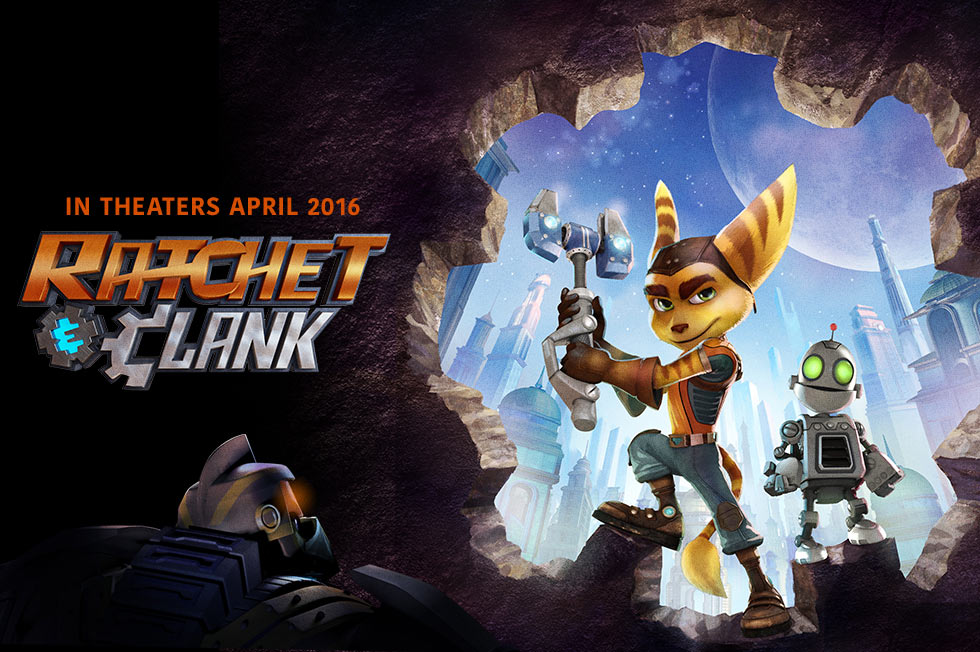
Playstation’s Ratchet & Clank games, with names like “Full Frontal Assault” and “Tools of Destruction” are renowed for their varieties of weaponry. “With all that hardware at hand, it’s no wonder Ratchet, a wrench-wielding Lombax, and his robot buddy Clank, have itchy trigger fingers. Think about it. You can choose from burning, bombing, exploding or obliterating your enemies. So go ahead, blow it up. Blow it all up. It isn’t the size of your weapons that count. It’s how many you have and better yet… How you use ’em.”

So, not much by way for storyline or character and not exactly child-friendly. So, I am not sure what inspired Focus Features to turn that into a movie that is rated PG (“for action and some rude humor”) and intended for children.

Ratchet (James Arnold Taylor) is a well-meaning but not entirely competent Lombax, a talking fox-like orphan of mysterious origin who works as a mechanic in a garage owned by Grimroth (John Goodman). His heroes are the Rangers, an elite fighting squad led by the preening, jut-jawed Captain Qwark (Jim Ward). When the planet is under attack from the evil Chairman Drek (Paul Giamatti) and mad scientist Dr Nefarious (Armin Shimerman), the Rangers decide to take on another member and Ratchet is determined to be the one to join the team.

That slight framework leads to a lot of shooting scenes with different weapons and some minor plot developments about shifting loyalties as a runt robot created for Drek becomes Ratchet’s partner, Clank (David Kaye), and Qwark, his feelings hurt by Ratchet’s popularity, is lulled by Drek’s promises of support. And then more shooting.

Without the interactive element of a game to make up for the thin characterization and repetitive plotline, the settings and action scene set-ups are generic and under-imagined, only reminding us of how much better original films like “Megamind” and “Monsters vs. Aliens” were in handing similar material.

Parents should know that this movie has a lot of sci-fi, action-style peril and weapons, with the entire galaxy at risk, though the film makes it clear that the planets being blown up are not occupied. There is brief bodily function humor.

Family discussion: Why was Qwark the leader of the Rangers? How many characters changed their loyalties in this movie, and what were their reasons? Why didn’t Qwark listen to Elaris?

If you like this, try: “Monsters vs. Aliens” and “Megamind”

Related Tags:


Animation Based on a video game
THE MOVIE MOM® is a registered trademark of Nell Minow. Use of the mark without express consent from Nell Minow constitutes trademark infringement and unfair competition in violation of federal and state laws. All material © Nell Minow 1995-2026, all rights reserved, and no use or republication is permitted without explicit permission. This site hosts Nell Minow’s Movie Mom® archive, with material that originally appeared on Yahoo! Movies, Beliefnet, and other sources. Much of her new material can be found at Rogerebert.com, Huffington Post, and WheretoWatch. Her books include The Movie Mom’s Guide to Family Movies and 101 Must-See Movie Moments, and she can be heard each week on radio stations across the country.

Website Designed by Max LaZebnik