Irreplaceable

Posted on May 5, 2014 at 8:00 am

F
Lowest Recommended Age: Middle School
Profanity: None
Alcohol/ Drugs: None
Violence/ Scariness: None
Diversity Issues: Expressions of intolerance
Date Released to Theaters: May 6, 2014

Irreplaceable” is indefensible.

My parents taught me that you automatically lose an argument if you (1) fail to state the other side’s views in a manner they approve or (2) fail to attribute to the other side the same good intentions you assume for your own. Focus on the Family’s faux documentary “Irreplaceable” fails on both grounds.  It probably also violates one of the Commandments as well, the one prohibiting the bearing of false witness.

I’m in favor of strong, loving families with responsible parents. You’re in favor of strong. loving, families with responsible parents. It is safe to say that there is just about no one who is not in favor of strong, loving families with responsible parents. It is about the least controversial position imaginable. But this film uses the rhetoric of support for family as a thin and increasingly cynical and specious cover for a pernicious agenda disguised as a “conversation.” It’s so smug, constricted, and phony that it does not even qualify as one-sided.

irreplaceable movieThe unctuous tones of the participants are intended to convey concern. But the false humility is merely an attempt to distract the audience from a poisonous message. Though some vague generalities acknowledge that in some cases marriages cannot be made safe and spouses must leave, the real message is that there is only one kind of family and everything else is unstable for its members and for culture and society. If it had any faith in its positions, Focus on the Family would accurately explain the views of those who embrace a variety of family structures and roles, allowing each family to find what is best for them.  Instead it slants and distorts those messages because it knows it has no effective arguments to make honestly.  It relies on innuendo and the basest slur to keep its base too scared to be anything but compliant.

The “experts” in the film tell us that the problem is that we are getting cultural messages about valuing self, possessions, and pleasure over the family.  Those are serious questions and worth exploring.  But they fall back on an imagined war between faith and culture without any exploration of why the faith community has failed to communicate its message more effectively or how the faith community or society as a whole could provide more support for families in need.  There is no place in the world of these experts for families that do not fit into their one-size-fits-all vision of mother, father, children all living together.  Is it possible for strong, loving, intact families with gay parents to raise happy, healthy children?  For single parents and blended families to raise happy, healthy, children?  Are fathers today more deeply involved in their children’s lives than in the falsely idealized vision of the mid-20th century promoted here?  Statistics say yes, but you would not know that from this film.  If indeed that era was so ideal, why did the overwhelming majority of those who grew up that way advocate with such passion for alternatives?

Those who wish to persuade others can best do so by building a bridge to establish a common foundation, making it clear that what connects us is more important than what separates us. Or, as they have done here, they can build a moat around their shrinking base, reinforcing the condescending sense of superiority of their own little group by telling them that only their answers work for everyone and playing into their worst fears and stereotypes.

One of the “experts” in this film tells us, “If anyone says they can fix the world, run.”  Yet that is just what they do here, imagining that once there was a heavenly era of intact families living out God’s plan without acknowledging that the mid-century “ideal” was neither universal nor considered ideal by those living in it.  The dissatisfactions that model engendered led to a cultural upheaval that created its own problems, but none so grave to lead to a widespread call for a return to stultifying, rigidly conformist norms.  While commentators in this film make vague concessions to those whose situations are so intolerable that the marriage cannot survive, the essential condescension, arrogance, and total absence of grace or compassion is its primary message.

With this cynical, meretricious and hypocritical film, Focus on the Family has dug a moat and burned the drawbridge. It purports to be about the importance of fathers taking responsibility for their children (again, something everyone agrees on, but you would not know that from this film). It purports to be about forgiveness, something else everyone agrees on, but it engages in the most immoral tactics by demonizing anyone who does not meet its standards.

I am happy for the person in the film who is glad his mother stayed with his father even after he went to jail for stealing money but that does not mean that it would be right for all spouses. And it does not mean I will forgive Focus on the Family for this shoddy, hateful, and dishonest film.

Parents should know that this is a dishonest film that attempts to hide its biased agenda.

Family discussion:  What families do you admire and why?  What can you to do help your family be stronger?

If you like this, try: “A Family is a Family is a Family”

Related Tags:


Movies -- format

Walking With the Enemy

Posted on April 24, 2014 at 6:00 pm

Why do we keep making movies about the Holocaust?

Because we are still trying to understand one of the most shocking, inhumane tragedies in history. Because it is the essence of heightened, dramatic storylines, with the most depraved real-life villains, the bravest heroes, and the direst moral dilemmas, the most devastating sacrifices. Because we have to ask ourselves, “What would I do?”

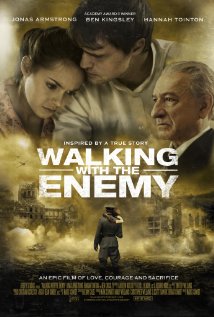
And because there are still stories left to tell. “Walking With the Enemy” is inspired by the true story of Pinchas Tibor Rosenbaum, a Hungarian student who escaped from a labor camp to help the “Glass House” workers forging Swiss citizenship papers to get Jews out of the country. He impersonated an SS officer to rescue Jews they were about to execute.

This first movie from the brand new Liberty Studios and first-time director Mark Schmidt is a tense and exciting story of a part of the Holocaust not widely known.  Because Hungary’s Regent (played by Sir Ben Kingsley) made an alliance with Germany, the Nazis did not interfere with the country or its Jewish citizens for the first years of World War II.  “I aligned Hungary with what I thought was the lesser of two evils.”  walking with the enemy

But then, as Germany started to be hemmed in by the Allied forces, it took over Hungary and began to send Jews to labor camps and concentration camps.  A heroic Swiss diplomat named Carl Lutz (played by William Hope) was given permission to issue 8000 passes to Hungarian Jews with family in Switzerland.  He managed to get those passes to tens of thousands, who were able to escape the Nazis.

Handsome and likeable Jonas Armstrong (television’s “Robin Hood”) plays Elek Cohen, a character based on Rosenbaum.  While his uncle worked with Lutz in the “Glass House” (called that because it had been a glass factory), helping to hide Jews, Elek wore a Nazi uniform to infiltrate Nazi offices and operations to free Jews about to be sent away or killed.  Over and over, he takes terrible risks, knowing that even if he survives, he will fail more than he succeeds.  “Why does it have to be you?” someone asks.  “Because I have one thing left.”

The first-time director wisely worked with experienced filmmakers, especially cinematographer Dean Cundey (“Apollo 13,” “Jurassic Park”) and a capable cast of top British actors.  The film is ably scripted, shot, and edited.  The sound effects are exceptional; I don’t remember ever hearing gunshot sounds so sharp and directed.  The story is very affecting.  One oddly sterile note is that for a story about Jews, there is very little Jewish activity other than a blessing over a family dinner.  Reminiscences of the Holocaust include many stories of Jews praying together and doing their best to observe rituals and worship, reciting the Shema as they were led to the gas chambers.  Here, even those about to be shot by a firing squad do not say a prayer, an odd oversight in a story that is about those who were trying to preserve their right to maintain their religion and their community.

Parents should know that this is a WWII movie depicting events of the Holocaust.  There are many scenes of wartime and anti-Semitic violence and many characters are injured and killed.

Family discussion: What was Elek’s toughest decision?  Is it hard to help, knowing how much more cannot be fixed?  What can we learn from Elek and Lutz?  Who is most like them today?

If you like this, try: “Schindler’s List” and “Conspiracy”

Related Tags:


Drama Epic/Historical Inspired by a true story War

Family Movies for the Olympics

Posted on February 7, 2014 at 7:00 am

The First Olympics: Athens 1896, one of my very favorite sports movies ever, is a made-for-TV miniseries about the first modern-day Olympics. We take the Olympics as a given now, but there were 1500 years between the time of the ancient games and the establishment of the modern Olympics with countries from all over the world putting aside their political differences for athletic competition in the spirit of good sportsmanship and teamwork. Showing the origins of everything from the starting position for sprinters to the impulsive selection of the Star Spangled Banner as the U.S. national anthem, the story is filled with drama, wit, and unforgettable characters, sumptuously filmed and beautifully performed by a sensational cast that includes then-unknown David Caruso of “CSI,” one-time Bond Girl Honor Blackman, David Ogden Stiers, Angela Lansbury, and Louis Jourdan. It was a Writer’s Guild and Casting Society award winner when it was first released. Though the events are summer games, it is a great introduction to the Olympics, a thrilling and inspiring story, and outstanding family entertainment.

The Cutting Edge A spoiled figure skater (named Kate as in “Taming of the Shrew”) and a working class hockey player team up in this romantic comedy on skates starring Moira Kelly and D.B. Sweeney. This was the first screenplay by “Michael Clayton’s” Tony Gilroy.

Miracle Sportscaster Al Michaels unforgettably called out “Do you believe in miracles? Yes!” as the 1980 US Olympic hockey team beat the Russians. They then went on to win the gold medal. And so the team, the last group of amateurs sent by the US to play ice hockey, has been known ever after as the “Miracle on Ice.” Kurt Russell plays coach Herb Brooks and this movie shows us that the real story is better than a miracle because it is about a team that succeeded through heart and hard work and commitment. If it is a miracle, it is in the “God helps those who help themselves” category. Be sure to watch the documentary, “Do You Believe in Miracles?” as well.

Ice Castles A young figure skater on the brink of becoming a champion loses her sight in an accident and has to start all over. Melissa Manchester sings the hit theme song, “Through the Eyes of Love.”

Cool Runnings One of the biggest long shots in history was the Jamaican bobsled team at the 1988 winter Olympics. Yes, Jamaica is a tropical country and no, Jamaica does not have any snow. But a fast start is important in bobsledding and it does have sprinters. The actual footage of the real team’s crash is featured in the film. And while a lot of it is fictional, the grace and panache of the team is based on the real story. And they will be back for the 2010 games.

Downhill Racer Robert Redford plays an arrogant skiier who clashes with his coach (Gene Hackman) in this film, which captures the focus of the athletes and the exhilaration of the sport, filmed on location in the Alps.

Sonja Henie: Queen Of The Ice and It’s a Pleasure Real-life gold medalist Sonja Henie went on to become the highest-paid performer (we won’t say “actress”) in Hollywood for her very successful series of skating films. No one paid any attention to the plots even then, but the skating scenes hold up well and the documentary about her life as an athlete and performer is worth seeing.

Related Tags:


For Your Netflix Queue Lists Neglected gem Sports

Interview: Steve Taravella, Author of a New Book about Mary Wickes

Posted on June 9, 2013 at 8:00 am

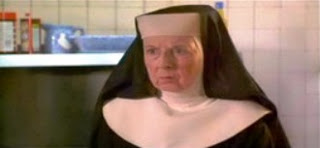
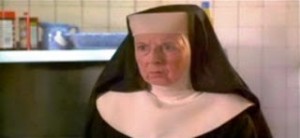
I love the great character actress Mary Wickes, who was the nun who was replaced by Whoopi Goldberg as choir director in “Sister Act,” the nurse who was “a treasure” opposite Bette Davis in “Now Voyager,” and the hotel staff who operated the switchboard in “White Christmas.”  And it was a very great pleasure to read the new biography about Wickes by Steve Taravella called Mary Wickes: I Know I’ve Seen That Face Before, the meticulously researched and beautifully written story of her life on and off camera.  As an actress, she had impeccable comic timing.  She appeared on Broadway, on radio, and on television as well as in the movies, appearing with some of Hollywood’s brightest stars.  Off-screen, she was for decades the closest friend of Lucille Ball.  Taravella generously took time to answer my questions about the book.wickes nun
How did you decide to write about Mary Wickes?

As a former journalist who likes researching people’s lives, I always thought I’d enjoy preparing a proper biography some day, though certainly I never had Mary in mind. When I found myself moving from San Francisco to Washington DC without a job lined up, I decided this was my opportunity to try. Since I’d often considered writing a magazine profile of Mary, I turned to her life first, to determine if it might be interesting enough to justify a book treatment. I mean, would readers find her life genuinely intriguing or was my interest in her unusual?  I quickly decided there was indeed a book in Mary’s story. It wasn’t generally known that she had been the original Mary Poppins, the animator’s model for Cruella de Vil, and a member of Orson Welles’ groundbreaking Mercury Theatre. There were interesting stories in each of these things – and many more, like her close friendship with Lucille Ball.

I began in spring of 1998, giving myself a year to research and write full-time. I was naïve to think I could finish this in a year. Twelve months became thirteen and, not wanting to incur debt to complete this, I returned to the workforce. My new job required frequent travel to the developing world – mostly Ethiopia, Kenya and South Africa, but also Uganda, India and other places – so the book lost some momentum.  I’d pull it out on vacation to work on a chapter here or there, but was far from done.  When I took a job with the UN in Italy four years ago, I decided that if I didn’t finish the book now, I’d never complete it, and I didn’t want all that effort to have been wasted. So my time in Rome became extraordinarily single-focused – not the typical ex-pat experience.mary wickes cover

Your breadth and depth of research is remarkable.  What or who was toughest to track down?

Hardest to track down were former child stars, who often leave the business, form social circles outside the entertainment industry and, especially with women, build lives under different names. I had great trouble finding Anne Whitfield, who played a teenager in White Christmas and would have been the only surviving member of the film’s principle cast. Finally, after several hundred pages in a Google search, I found her name in a PDF of promotional materials for an “old radio days” festival in the Pacific Northwest in the 1980s. I tracked down the organizer of the event, who agreed to pass my contact information to her husband. When we finally spoke, Whitfield was very helpful. She long ago stopped performing, became a grandmother, and worked in environmental programs in Washington State under her new last name, Phillips.

One of the biggest stars quoted in the book keeps her personal address and phone number private. My requests to her public PO box went unanswered. Since I knew the city she lived in, I searched public records available online in hopes that her name would be recorded with her residential address somewhere. I discovered a recent permit approval for a home construction project under a name that jumped out at me – that of the actress’ long-deceased mother. Female stars of a certain generation sometimes used their mother’s name to preserve their privacy (just as Mary used her grandmother’s name (Mary Shannon) whenever she was hospitalized, and I recognized this name from the actress’ own memoir years before. I sent a letter by International DHL to this address, and received the reply I needed.

In the end, I interviewed almost 300 people. In some ways, I had an easier time than expected because people sort of figure, If he’s going to all this trouble about Mary Wickes, it’s got to be for a legitimate effort, and they agree to cooperate. If I’d been preparing, say, yet another biography of Elizabeth Taylor, I don’t think doors would have opened so easily.

What surprised you the most in what you found out?

That for her entire life, Mary knowingly kept a man in Ohio from learning that they were first cousins. Discovering this episode of her life was stunning. Even though Mary had very little family herself — she was an only child, as was her father, and her mother had only one sibling – she always professed great devotion to family ties and family history. Mary knew everything about this man, one of her only two cousins – yet he knew nothing of Mary Wickes until I reached out to him for this book after her death, showing him personal family papers of hers that were clearly about him. This was a powerful family secret for her, and a painful one for him, even in his 80s. For instance, his whole life, he was unable to learn where his mother was buried; meanwhile, Mary visited her gravesite often.

She appeared in one of her signature roles, the nurse in “The Man Who Came to Dinner,” on stage, film, TV and radio — which did she prefer and why?  Why was that role one of her favorites?

No doubt, she preferred the stage version. The Broadway run was her big break, gave her steady, high-profile work for almost two years, brought her to the attention of casting directors and pushed her into social circles she wouldn’t otherwise have been part of. It cemented her as a performer who could deliver – and it reassured her that she could in fact make it as an actress. She got one of the show’s longest, loudest laughs every night. On the other hand, a TV version 30 years later was a disappointment for all involved, even with Orson Welles as star and the Hallmark Hall of Fame people behind it.

What was the change made from the theatrical to film version for “taste” reasons?

We forget today the power that Hayes Office censors once had over film releases. In this case, the play’s central character – arrogant, abrasive and over-bearing – refers to Mary’s character, a nurse, as “Miss Bedpan.”  That was changed to “Miss Stomach Pump,” which censors felt would offend filmgoers less.

Mary Wickes worked with a range of top directors and actors.  Who did she admire most? 

She adored George S. Kaufman, the playwright who also directed her on stage often. The two of them developed a strong rapport; he didn’t just understand her comic gifts, he celebrated them. The director George Seaton (“Miracle on 34th Street”) was another favorite. Years later, she also really admired Mike Nichols, who directed her in “Postcards from the Edge” with Meryl Streep and Shirley MacLaine. Nichols won her over at the start by hiring her without asking for an audition or reading of any kind; this was during a particularly dry spell in her career, and she never forgot the gesture. As to performers, it’s hard to know who she most admired because Mary spoke so little about work. But she did on several occasions mention the respect she had for Bette Davis; no doubt Mary admired Davis’ directness on the set. They worked together in three films and one television show.

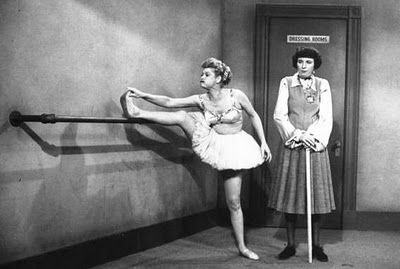
She was a close friend of Lucille Ball’s.  What made their friendship so enduring?wickes and ball
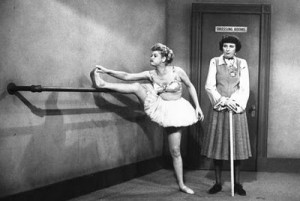
Yes, Mary was inarguably Lucille Ball’s best friend for some 30 years, and was virtually a member of the family. Both women were both bold and direct and a little ‘in-your-face.’  They both loved to laugh, and neither had much patience for ineptness. Because they started working about the same time (Mary was 14 months older), they had experiences in common. Lucy appeared in the film version of Stage Door, while Mary appeared in the original Broadway production, for which Lucy had auditioned.  They had deep affection for each other, evidenced by never-before-published letters that I excerpt in the book.

How did she get Cary Grant’s trunk?

An interesting story. In the 1930s, while Mary was a young amateur performer in St. Louis, an actor performing in a touring stage show there got a film contract offer and left quickly for Los Angeles. His name was Archie Leach and, when he left, he gave his theatrical costume trunk to a friend of Mary’s, Clifford Newdahl, who asked Mary’s family to store it for him when he entered World War II. It sat in their basement until after the war, when Newdahl decided he no longer needed it. So the trunk became Mary’s . . . and Leach, of course, became Cary Grant. Mary loved the trunk and made great use of it, like during her national tour of Oklahoma! in 1979.

What problem did she face on the set of “The Trouble With Angels?”

This was one of the few moments in her career where she let others down, and she no doubt agonized over it. Playing a nun at a Catholic girl’s school, she was to jump in a swimming pool in full habit to help two young girls flailing in the water. Mary had never learned to swim, so producers arranged for her to receive lessons at the YMCA in advance. The day of the shoot, without any warning to producer or director, Mary refused to enter the water, saying she was afraid she’d drown. In reality, she’d never showed up for the lessons that Columbia paid for – not out of fear of drowning, but out of fear that others would learn from her swimsuit and swollen arm that she had undergone a mastectomy. Mary went to great lengths to hide her breast cancer. So this consummate professional made a conscious decision to let her co-workers down rather than risk revealing her condition, since the production was now forced to hire a stuntman, incur additional costs and delay shooting. Both the cancer and the stigma surrounding it in the 1960s shaped many of her interactions with people later.

What role did her faith play in her life?

Mary’s faith was profoundly important to her. To her, church was not a place merely to spend Sunday mornings; it was the very center of her community. She was completely engaged in the life of her church (All Saints’ Episcopal Church in Beverly Hills, Calif.), serving on various committees, helping to organize special events, and even teaching Sunday School when in town. More than this, Mary put her faith into practice. She had a strong sense of service to others that was rooted in her faith. She was a longtime hospital volunteer in Los Angeles. She did not just providing comfort to patients, keep them company, arrange interpreters or assist the chaplain, but advocate on patient care issues to management. She spoke on public occasions about the importance of volunteerism and about her faith, often citing a verse from First Corinthians about having faith strong enough to move mountains not being enough without charity.

 

Related Tags:


Actors Books Great Characters Interview Writers

Interview: Alex Gibney of “We Steal Secrets: The Wikileaks Story”

Posted on May 31, 2013 at 11:13 am

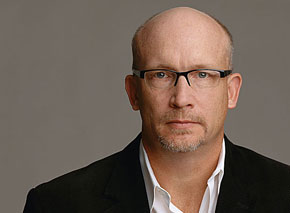
I spoke to Alex Gibney, one of my favorite filmmakers, about his brilliant documentary on Wikileaks.

The most interesting character in the movie is Bradley Manning.  Where is he now?

He’s in prison, finally Leavenworth, after eight months in solitary confinement and being kept in a cage in Kuwait.  While he was in solitary confinement, he was stripped naked, they took his glasses, they kept the lights on, sleep deprivation, no blanket.  It was abusive treatment that rose to the level of torture.  It’s really a shocking episode which I think was trying to send a message in the most brutal way possible.  Like the British navy used to hoist the wretch on the yardarm of the ship.  “Pay attention, if you’re thinking about leaking stuff.  This could happen to you.”  I made a film about the poor kid, Steve Bartman, the Cubs fan, and I think he’s a scapegoat. Governments and organizations go after someone who’s weak because they can.  And Manning was weak — in some ways.  In some ways he was very strong.  That’s what makes him such an interesting character.  He’s what Phil Zimbardo calls “an everyday hero.”  He’s not a Daniel Ellsberg type.  He doesn’t stand up there with his hands on his lapels and proclaim.  He has a lot of problems, a lot of issues, a lot of emotional turbulence in his life.  But he was determined to do something.  And so he is important to all of us because we are all weak, flawed individuals who can occasionally do something big.Alex-gibney

Why would the US military give a troubled, unstable person at a very low rank access to almost unlimited highly sensitive material? 

They are desperate for bodies, especially smart people.  He was in a discharge unit.  A guy who was in it with him says in the movie, “This is the most unlikely military man you could possibly imagine.”  But he’s in there because he wants to get a college education.  This is the route for poor kids who want to go to college.  The army doesn’t want to let him go because he is super-smart.  But he has a lot of emotional baggage.  He’s gay at a time of Don’t Ask, Don’t Tell.  He thinks he might want a sex-change operation.

The music choices in the movie were excellent.

I worked very closely with a guy named Will Bates, from a group called Fall on Your Sword.  He created these wonderful themes for each of the characters in an environment where you feel the space of the internet.  And all of these people live out worlds in their imagination, and there’s no place to do that better than rock and roll.  So you have Midnight Oil, which is a favorite group of Julian Assange.  You  have Radiohead for James Ball.  And for Bradley Manning — he himself says he was listening to Lady Gaga singing “Telephone” while he was downloading the documents.  It’s perfect in terms of what she’s concerned about — gender identity, bullying.  And then at the end, the Ink Spots, “If I Didn’t Care.”  There’s a ghostly quality to that moment, like “The Shining.”  It takes you into the past, like an artifact in space that seemed to be mythic in some way.

What did you have to cut out of the movie that we may see on the DVD?

I wish we could have kept more on Julian’s childhood on Magnetic Island off the coast of Queensland.  It got its name when Captain Cook sailed by there and said their compasses were “fouled.”  What a perfect metaphor for Julian Assange, messing with military compasses.  There was a big section we had on Tunisia, and a much longer section on Iceland.  That’s when the goal was at its purest and they were operating on this barren rock.  It was tough to let it go.  This version is a haiku — we had a three hour and thirty minute cut.  There are some interesting characters on the DVD extras.

Do we have too many secrets?

Maybe we don’t have enough.  You have to assume once you go online, anything you put there can be made public.  Yet while you’re online you feel like it’s a private, sacred space.  But you’re really broadcasting to the world.  When it comes to governments and corporations, we should demand that less is secret.  That’s where corruption flowers.  When two Reuters journalists are killed and they won’t give the video to Reuters, what’s that about?  What about when the images of Abu Gharib were made public?  Their concerns were not about what happened, but that when we released the photos we gave comfort to the enemy.

The New York Times and The Guardian play a crucial role in your film in acting as a filter for processing and providing context for the documents Manning provided, and making sure that what was made public was not detrimental to the safety of our troops.  What will happen to that function as traditional journalism is in collapse?

JulianAssangeThere’s a part of this film that argues for renegade organizations like Wikileaks, but there’s a part that argues very strongly for traditional journalism and the kind of decisions you have to make about what should and should not be secret and how stories should be properly contextualized.  When I began this movie, I was interested in the leaking machine, the technical challenge and the technical solution, which we may have to continue to pursue as the Obama administration makes journalism more of a crime.  But what Manning needed was a journalist, someone in whom he could confide and trust.  That relationship turns out to be terribly important.

Instead, he had a relationship — online only — with a man who had the wrenching moral challenge of protecting Manning or telling the police what he knew.

The biggest problem for him is that he lied to Manning.  He squeezed him like a lemon.  He said, “Your secrets are safe with me.”  Maybe he meant it at the time or maybe he had decided to keep probing so he could get more secrets.  He’s a complicated character.  If you’re a journalist, you have a bigger conundrum.  You have to examine whether this information is in the public interest, whether people will be hurt.  But Assange would say journalists are too subject to political pressure.

If everything becomes secret and leaking becomes a capital offense – which is what Bradley Manning is facing — where are we at now?  You’d think the law would provide us that easy guidance, but it’s much more of a gray area.  The job of a journalist is to find out stuff.  The job of the government — sometimes — is to keep stuff secret.  There’s a natural tension there.  But now they want to make finding out stuff a crime.

Who should decide what is private?

It can’t just be corporations or government.  It has to be all of us.

Related Tags:


Directors Documentary Interview
THE MOVIE MOM® is a registered trademark of Nell Minow. Use of the mark without express consent from Nell Minow constitutes trademark infringement and unfair competition in violation of federal and state laws. All material © Nell Minow 1995-2026, all rights reserved, and no use or republication is permitted without explicit permission. This site hosts Nell Minow’s Movie Mom® archive, with material that originally appeared on Yahoo! Movies, Beliefnet, and other sources. Much of her new material can be found at Rogerebert.com, Huffington Post, and WheretoWatch. Her books include The Movie Mom’s Guide to Family Movies and 101 Must-See Movie Moments, and she can be heard each week on radio stations across the country.

Website Designed by Max LaZebnik