Celebrate Presidents on Election Day

Posted on November 6, 2012 at 8:00 am

After you vote, take a break from red and blue maps to enjoy some of the portrayals of real US Presidents on screen.  This week, the second 2012 movie about our 16th President opens — Steven Spielberg’s “Lincoln,” starring Daniel Day-Lewis.  And we’ll see another movie about a real President later this month when Bill Murray plays Franklin Roosevelt in “Hyde Park on the Hudson.”

I’ve already written about some of the many other movie versions of Lincoln’s life.  “Wilson” stars Oscar nominee Alexander Knox in a dignified tribute to the 29th President. Gary Sinese gave a powerful performance in the HBO movie, Truman. Rough Riders has Tom Berenger as Theodore Roosevelt, leading Cuban rebels against Spain.

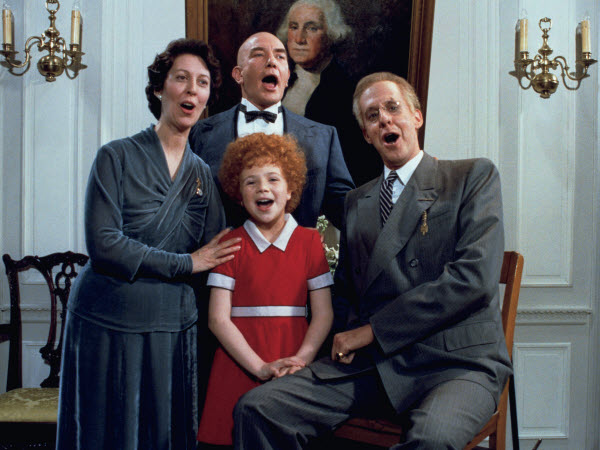
Perhaps the most fanciful portrayal of a real US President is “The Remarkable Andrew,” with William Holden as an honorable accountant who discovers a discrepancy in the town books and is visited by the ghost of his favorite President, Andrew Jackson (Brian Donlevy), who provides guidance and support. According to TIME Magazine, Lincoln has been portrayed most frequently on screen but perhaps the President most memorable on film is Franklin Roosevelt, the only man to be elected four times, with Sunrise At Campobello, Eleanor and Franklin and its sequel, Warm Springs, and, of course, Annie!  (TIME notes that the only US President never to show up as a character in a movie is Warren G. Harding.)

Related Tags:


For Your Netflix Queue

Interview: Lauren Greenfield of “The Queen of Versailles”

Posted on July 12, 2012 at 8:00 am

Lauren Greenfield is the director of the new documentary, The Queen of Versailles, the story of Jackie Siegel and her husband David, a monumentally wealthy couple who were building the largest residence in the United States, a 90,000 square foot mansion with ten kitchens, a baseball field, a spa, and two tennis courts.  While Greenfield was filming, the financial crisis hit the Siegels and like millions of other Americans, they were suddenly and unexpectedly at risk of losing their home.  It is just that their home was modeled on the palace that Marie Antoinette and Louis XVI lived in before the French revolution.  Greenfield spoke to me as she was in town for the Silverdocs film festival and was preparing to show her film to the Secretary of the Department of Housing and Urban Development.  David Seigel’s fortune comes from the timeshare company Westgate.

http://www.youtube.com/watch?v=bqDreqlPe98

Where are the Siegels now?

Jackie was here at Silverdocs last night and she’s on a road trip with her kids, a vacation road-trip. I asked if it was a downsized vacation and she said “kind of,” but she stopped at Saks Fifth Avenue and went to Chanel and Westgate is continuing to make sales, and David says it’s very profitable. At the end of the film Richard, his son, says, “If he gives up the keys to Vegas, the lenders will continue to lend and they can go back to making money, and he can go back to his life as it was.” Some of that has happened, the lenders have continued to land and so the rest of the resorts are making money and they are still in debt (I think they have estimated a few years to get out of debt). And David would like to start construction on the house again.

He’s such a good businessman in so many ways and yet he was very foolish about not segregating his own assets from the company’s and that put him under a lot of financial pressure he’d really didn’t need to be under.

Vegas was such a gamble and in a way such an irrational gamble, I think was part business and part emotion because he was also thinking about the $2 billion he was going to make there and was kind of holding onto that as his crowning achievement. He also had the Westgate name and lights brighter than anything else on the strip, perfect spot on the strip, and then the legacy of Vegas with his parents and then perhaps the other legacy of their gambling which ultimately kind of brings that dream down for him.

How do you as a film maker state close to a family like that over such a long period of time and yet maintain some objectivity? It must’ve been very difficult, particularly as you observe the way they behave with each other.

In a way that’s my modus operandi. I feel like I have that perspective in all my work and in my photography, too. I do get really close to the subjects, but I also am always kind of looking at things from a sociological perspective. I think with Jackie and David’s story – I could feel a lot of compassion for them and I really liked Jackie a lot and respected David.  The original premise of the film I really saw it as allegory that represented what happened to so many Americans. So, I saw their virtues and their flaws as speaking to our virtues and flaws as Americans, too, and so I guess I solve them as individuals and also sort of symbolic. I am able to kind of get close to people and be there on a day-to-day basis but also step back and look at “what does it mean, what does it mean for us in the context of the bigger picture, eventually the allegorical picture?” With that said, some of that comes with living with the footage.  I filmed over a three-year period and I cut over a six-month period in that process would show mentors and other editors and I went to the Sundance lab with the film, so I also had a chance to kind of step back, how do people react what do they get what do they not get?  But in terms of my view I was always looking at them as both incredibly fascinating characters, incredibly fascinating story and also kind of a symbolic one; that in a way is a viewpoint in all my work.

I just don’t take on being an interventionist in the work. I feel like in a way this is a social issue film, it’s about the housing crisis, it’s about our culture of consumerism. I feel like it’s a morality tale that also speaks to the consequences of access, but I would never take it upon myself to intervene. I try not to judge, too, and I think you can see that in the perspective of the film that I am kind of there, and let’s step back and see what it means.

Tell me about the decision to include in the film the incredibly poignant commentary from Virginia the nanny about her own situation.

The minor characters are always important to me, and even before when they were building the house, when I thought this was going to be about the building of the house, I was interested in the upstairs downstairs quality of the house and the kind of different cultures, different classes all living as a kind of unusual extended family and with Virginia and with Cliff and with Jonquil , I was really interested in showing other experiences of the American dream, both their similarities and their differences. So, Virginia has a tragic story about not seeing her kids for over 20 years now. And yet, I think her story also speaks to so many people stories about coming to America to find fortune and Virginia is a salaried employee, her two other colleagues have gone back to the Philippines and yet Virginia chooses to send all her money home and not go there herself. I think she would like to, she was actually saving for it but her mother died and there was a funeral to pay for.  So, these are really hard choices. I saw a parallel, too, between Jackie and Virginia because money was the reason both of them were not doing direct parenting. So, I guess I saw a lot of relationships and when Virginia said her dream was to build a concrete house in the Philippines, that was really poignant to me, and I also got the sense that she thought it was hard to go back if you didn’t have something to show for it – in other words, she could afford the ticket, but she couldn’t afford to go and give everybody money, and she didn’t want to go back without that. Again, I think that story speaks to the virtues and flaws of the American dream and the importance of money. She works seven days a week she has another job on the weekends at the supermarket.

What does Jonquil bring to the story?

Jackie’s niece and adopted daughter Jonquil is another story; in a way, she represented Jackie’s experience because she came from Binghamton, but overnight she went from poverty (she came from a poor family and her mother passed away and Jackie took her in) to the mansion overnight, and also has a down to earth, quirky character. What was interesting was to see her evolution because she kind of goes from “I can’t believe I’m in this house” and Victoria—her sister now talks about how she’s had this positive influence on all the other kids so they won’t be spoiled.  By the end you can see how she is  when she says, “When I used to see rich people on TV, I thought I’d be happy, and now I see I just want more and more” and so that, to me, really speaks to the whole story.

Have you been surprised by people’s reaction to the film?

I’ve been really pleased that people have found them relatable. Not everybody does, but most people tell me that they don’t expect to in the beginning, and they’re surprised to find themselves in the end. I feel like that is really what I wanted to get through because I think there’s no point in a film where you’re like, “Look at them and their bad decisions!” It’s really only valuable if you’re kind of like, “Did I spend too much on my credit card? How am I complicit in this?”  It makes the movie more compelling if you understand them or care about them.

 

Related Tags:


Directors Documentary Interview

Beauty and the Beast

Posted on January 12, 2012 at 6:00 pm

A+
Lowest Recommended Age: Kindergarten - 3rd Grade
MPAA Rating: G
Profanity: None
Alcohol/ Drugs: Beer, scenes in bar
Violence/ Scariness: Some scary moments with wolves, fighting
Diversity Issues: Theme of not judging by appearances
Date Released to Theaters: January 13, 2012
Date Released to DVD: September 20, 2016
Amazon.com ASIN: B004WE01YA

“Beauty and the Beast” is one of Disney’s most beloved fairy tales and the first animated film to be nominated for a Best Picture Oscar.  This week Disney celebrates its 25th anniversary with a splendid new DVD release that includes some special extras. 

Ultimately, what makes “Beauty and the Beast” so winning, though, is its story, characters, and songs, which need no restoration.  They are as fresh as ever.  Clever lyrics by the late Howard Ashman are a delight, with a brute singing about how he decorates with antlers or the stirring Oscar-winning theme song played as the couple dances alone in an enormous ballroom.  And it is a joy to revisit the timeless pleasures of traditional Disney storytelling, with no attempts to add sizzle from celebrity voice talent or radio-friendly pop songs.  The movie’s roots are in Broadway, with performances from Tony-winners Angela Lansbury and Jerry Orbach and tuneful ballads from composer Alan Menken, including the rousing “Be Our Guest” and the joyous introductory “Belle.” Notice the way that only Belle wears blue in the opening scenes, helping to set her apart from the people in her village.  We know before she does that she and the Beast have something in common when we see that he also wears blue.

Belle (voice of Broadway star Paige O’Hara)  is the book-loving daughter of an absent-minded inventor. She wants “more than this provincial life” and the boorish hunter Gaston, who hopes to marry her.

Lost in the woods, Belle’s father stumbles into what appears to be a deserted castle. But the castle is inhabited by the angry Beast, once a prince, now under a spell that will last forever unless he finds love before he turns 21. The same spell turned all of the human staff of the castle into objects — a clock, a candelabra, a teapot, a mop.

The Beast, furious at being seen by an intruder, locks Belle’s father in the dungeon. Belle comes after her father and offers to take his place. The Beast accepts, lets her father go, and tells Belle she must stay with him forever.

At first antagonistic, she begins to find the Beast appealingly gentle and kind, wounded in spirit, rather than cruel.  He shares her love of books.  Back in Belle’s village, Gaston tries to get Belle’s father committed, saying that his talk of the Beast shows he is delusional.  Belle, home on a visit to care for her father, proves that the Beast exists to show that her father is telling the truth.  The townspeople are terrified and form a mob to kill the Beast.

In a fight with Gaston, the Beast is badly wounded. Belle tells him she loves him, which ends the spell. He becomes once again the handsome prince, and they live happily ever after.

Parents should know that this movie has some scary moments when Belle is chased by wolves and when Gaston and the townspeople storm the Beast’s castle.  It appears briefly that the Beast has been killed.  Characters drink beer and there are scenes in a bar.

Family discussion: Gaston and the Beast both wanted to marry Belle — how were their reasons different?  Why did the prince became the beast and what did he have to learn before he could return to his handsome exterior? What did Belle have to learn? What made her decide she liked the Beast?

If you like this, try: Some of the other movie adaptations of this story. One of the most lyrically beautiful of all films ever made is Jean Cocteau’s version of this story, “Belle et Bete.” The Faerie Tale Theatre version stars Susan Sarandon and Klaus Kinski, and is very well done.

Related Tags:


3D Animation Based on a book Classic Comedy DVD/Blu-Ray Pick of the Week For the Whole Family Movies -- format Musical Romance

Enough Already with ‘In the Hall of the Mountain King’

Posted on April 13, 2011 at 3:59 pm

Indiewire has a very funny piece about the popularity — the near-ubiquity — of Edvard Grieg’s “In the Hall of the Mountain King” in movies and trailers.  Before I go any further, let’s listen to it and see if it brings back any memories.

Wikipedia has an extensive list of “Mountain King” in film and television and trailers.


  • “In the Hall of the Mountain King” was famously used in the 1931 film “M,” in which Peter Lorre’s character whistles it. As of February 2008, it may be viewed and heard on YouTube.
  • In the ‘boat race’ scene of “The Social Network” (2010), a Trent Reznor remix is used when the Winklevoss brothers compete before discovering that Facebook reaches both Europe and video live streaming.
  • The song also was used in the opening promo for WWE’s Vengeance 2001
  • The song also appears during the teaser trailer of Tim Burton’s “Corpse Bride” and “How the Grinch Stole Christmas,” “Beetlejuice,” “Funny Games, Bride Wars,” “Rat Race,” “Friday After Next” and “Night at the Museum 2: Battle of the Smithsonian.”
  • The song is the theme music for Dr. Ivo Robotnik in the animated series, Adventures of Sonic the Hedgehog.
  • The semi-fictional characters Tristan Farnon and James Herriot in the BBC televised series “All Creatures Great and Small” perform the piece drunkenly with their dates at a pub.
  • It is also played over the end credits of the Woody Allen film “Scoop.”
  • A young boy is seen playing “In the Hall of The Mountain King” as a piano practice piece in an episode of Mad Men entitled “The Mountain King”.
  • In the final episode of Beavis and Butthead, “In the Hall of the Mountain King” is being played when Principal McVicker has flashbacks to their antics.
  • In the Courage the Cowardly Dog episode, entitled “Farmer-Hunter, Farmer Hunted”, the song can be heard several times.
  • “In the Hall of the Mountain King” is also featured in the intro of the television series “The Dudesons.”
  • The vampires in “The Lost Boys: The Tribe” whistle the tune to this song.
  • Lamberto Bava’s 1985 horror film “Dèmoni” (aka Demons) includes a title theme by Claudio Simonetti that incorporates the melody of “In the Hall of the Mountain King”.
  • Fragments of the piece are heard in the BBC Oscar-winning documentary “Man on Wire” in a re-enactment where Philippe Petit and an accomplice herd the infamous tightrope wire up the stairs, past a guard on duty. Though not played in full, the song is listed in the film’s musical credits.
  • It was used as the three brothers theme on the “Garfield and Friends” spin-off “Orson’s Farm.”
  • It is played when the antiestablishment Mozzie enters the FBI offices in USA Network’s “White Collar” (season 2, episode 4, 2010). song of the French author Bernard Werber’s short film “La Reine de Nacre.”
  • It served as a basis for the theme of the Inspector Gadget animated series.
  • A version of the song is used during a scene featuring a game of charades in a 2010 episode (“Chuck Versus the Leftovers”) of “Chuck.” Scenes immediately following this one then work cues of In the Hall of the Mountain King into the show’s original score.
  • It is used in the movie trailer of “Dinner for Schmucks.”
  • This song is the main theme of Microsoft’s commercial for its Windows Phone 7: Really.
  • It the sixth episode of 2nd season of “Misfits” (TV series) .
  • It was used in “The King of Kong: A Fistful of Quarters” during a graphing of Steve Wiebe’s world record attempt.
  • It was also played in the opening scenes of the Norwegian movie “Død Snø (Dead Snow).”
  • In “Mickey, Donald, Goofy: The Three Musketeers,” Pete’s song “Petey’s King of France” is sung to the tune of this song.


Two more over-used tunes:

(A lot of sports movies including “The Sandlot,” “The Mighty Ducks,” “The Replacements,” “The Longest Yard,” “Ice Princess” and many more)

(Also mentioned by Indiewire and used for a lot of battle scenes, series and comic, in everything from “Excalibur” and “Detroit Rock City,” to “Glee,” “Wrestlemania” and “Jackass”)

Any other candidates?


Related Tags:


Music Understanding Media and Pop Culture

Tribute: Elizabeth Taylor

Posted on March 23, 2011 at 9:42 am

Elizabeth Taylor, who exemplified grace, beauty, and stardom, has died at age 79.   In an era of reality show “celebrities” and fame that lasts not 15 minutes but 15 seconds, Elizabeth Taylor reminds us of what it meant to truly be a star.  She will be remembered for her flamboyant, headline-grabbing personal life — the eight marriages to seven men, the tempestuous romance with Richard Burton, the jewelry, her kindness to troubled performers like Montgomery Clift and Michael Jackson, her tireless work against AIDS.  But it is her work that truly endures, from her performances as a child in “Lassie Come Home,” “Jane Eyre,” and “National Velvet” to her Oscar-winning role in “Who’s Afraid of Virginia Woolf.”

I will have a more complete tribute soon.  For now, just a moment to mourn her passing.  May her memory be a blessing.

Related Tags:


Actors Tribute
THE MOVIE MOM® is a registered trademark of Nell Minow. Use of the mark without express consent from Nell Minow constitutes trademark infringement and unfair competition in violation of federal and state laws. All material © Nell Minow 1995-2025, all rights reserved, and no use or republication is permitted without explicit permission. This site hosts Nell Minow’s Movie Mom® archive, with material that originally appeared on Yahoo! Movies, Beliefnet, and other sources. Much of her new material can be found at Rogerebert.com, Huffington Post, and WheretoWatch. Her books include The Movie Mom’s Guide to Family Movies and 101 Must-See Movie Moments, and she can be heard each week on radio stations across the country.

Website Designed by Max LaZebnik