Free State of Jones

Free State of Jones

Posted on June 23, 2016 at 5:40 pm

B+
Lowest Recommended Age: High School
MPAA Rating: Rated R for brutal battle scenes and disturbing graphic images
Profanity: Some strong and racist language
Alcohol/ Drugs: Alcohol
Violence/ Scariness: Intense and graphic violence including battle scenes, hanging of adults and children, brutal abuse, rape, and lynching
Diversity Issues: A theme of the movie
Date Released to Theaters: June 24, 2016

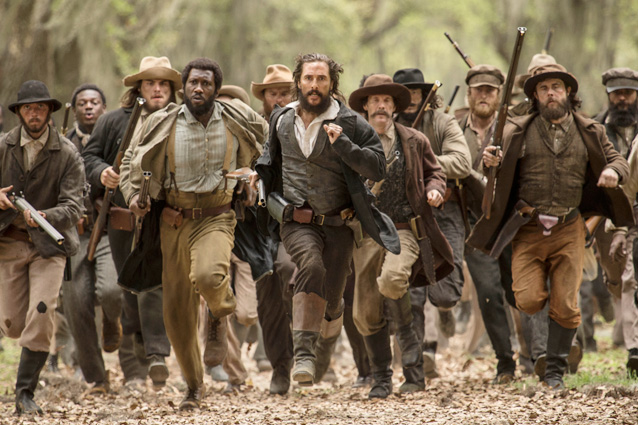
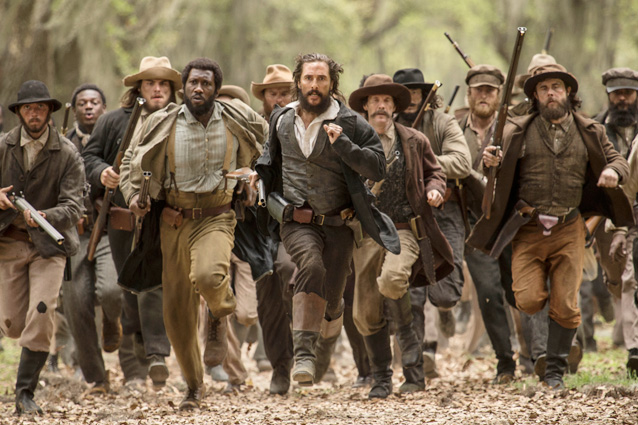
freestateofjonesThe timing is not great. “Free State of Jones” is a Civil War drama based on the true story of a community of Confederate deserters and runaway enslaved people who banded together to fight for their own vision of freedom. It was filmed once before as “Tap Roots,” with Van Heflin, Susan Hayward, and Boris Karloff (as an Indian!), but this version, from “The Hunger Games'” Gary Ross, deals forthrightly with the racial issues, or at least tries to. There is an inescapable and maybe unconquerable problem in telling a story set in Civil War era Mississippi with a glorified white man as the hero, in a time when one of the most anticipated films of the year is the Sundance Grand Jury and Audience award winner “Birth of a Nation,” a film that grabbed and repurposed its title from the blatantly racist D.W. Griffith film of the silent era.

Ross brings the same passion for tackling tyranny to this story that he did to “Hunger Games.” It’s just that we’re no longer dealing with speculation and metaphor, and that means a political overlay reflecting both historical and contemporary controversies.

Matthew McConaughey plays Newt Knight, a Mississippi farmer with a wife and young son who is serving as a nurse in the Confederate army. Early on, we see him removing the uniform from a wounded enlisted man so he can tell the doctors he is an officer and get him treated. Increasingly frustrated with the endless carnage on behalf of wealthy elites who exploit the poor, it is too much for him at last when his nephew is killed in battle and he leaves, taking the body home to be buried. There he finds the Confederate forces are taking all of the food from the local farmers, leaving them to starve. On the run from the military seeking defectors, he hides out in a swamp, where he meets up with runaway slaves. There he decides that his allegiance is not to the Confederacy, which is sending poor boys to fight to preserve what today we might call the 1 percent. “I ain’t fighting for cotton,” another solider tells him. “I’m fighting for honor.” “That’s good,” Knight responds. I’d hate to be fighting for cotton.”

Writer/director Ross, working with the locations where these events occurred and a touching score from Nicholas Britell, evocatively conveys the hardscrabble lives, the literal and spiritual grit, the desperation and conviction it inspires. Knight hands guns to three little girls and, when the Confederate officer does not take them serious, Knight tells him that guns will shoot anybody. “It don’t seem to matter where the bullet comes from.” The depth of research is evident throughout, but it is never pedantic. The storyline is grounded in historical events like the Confederacy’s requisitioning of food and supplies, and post-war exploitation and terrorism, led by former Confederate officials, that prevented former enslaved persons from basic rights and murdered those who tried to assert them. There are brief glimpses into a conflict 85 years later, as the descendent of Knight’s relationship with a former slave named Rachel (Gugu Mbatha-Raw) is criminally prosecuted for marrying a white woman in violation of the state’s laws prohibiting mixed marriages. It is there to remind us that we can never dismiss the events of the past as behind us.

Parents should know that this film has very intense and graphic violence including Civil War battles and skirmishes, hanging, rape, and lynching, adults and children injured and killed, very disturbing images, some strong language with racist epithets, some sexual references

Family discussion: What did Knight find most unjust about the Confederacy?  What did we learn from the 1948 courtroom scenes?

If you like this, try: “Glory” and “The Red Badge of Courage” and read about the story that inspired the film.
Related Tags:


Based on a book Based on a true story Drama Epic/Historical Movies -- format Race and Diversity War
The Phenom

The Phenom

Posted on June 23, 2016 at 5:38 pm

Copyright 2016 Bron Capital Partners

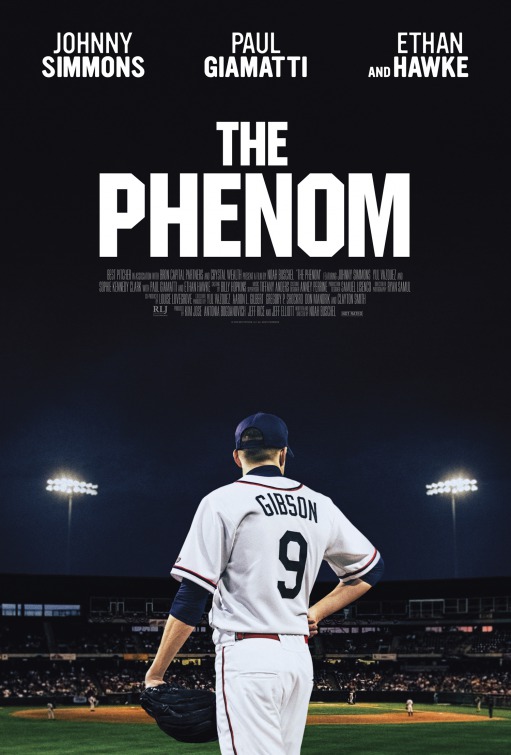
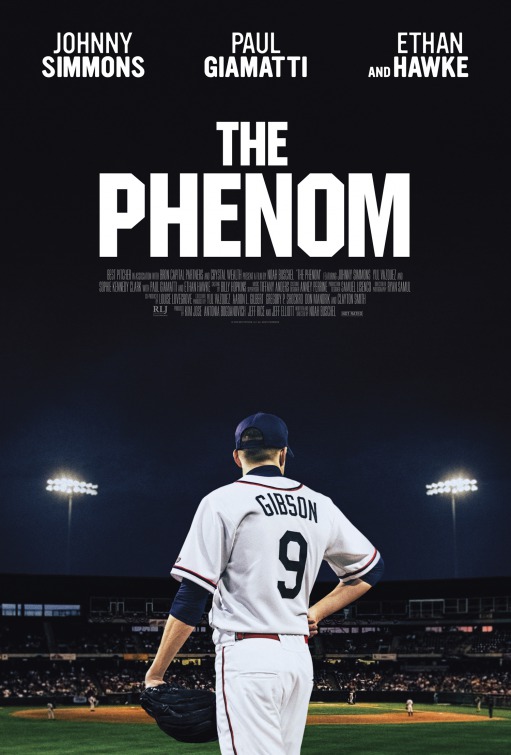
For writer/director Noah Buschel, “The Phenom” is clearly a labor of love. For the audience, it is a small gem filled with unexpected insight and performances of exceptional precision and intelligence. We may think we know what to expect from a film about a gifted athlete who explores the impact of his abusive father with the help of an understanding therapist. But each scene has surprises, with sharp dialogue, vivid characters, and a lot to say about the business of both sports and media. This is a sports movie that quotes F. Scott Fitzgerald. And there’s a brief but powerful scene as the athlete talks to the press that reminds us of how mch this film rewards careful attention.

Johnny Simmons plays Hopper, a “phenom” of a pitcher who has had trouble delivering in the major leagues. He’s sent to the team’s psychologist, a former phenom himself, who was featured on the cover of TIME Magazine at age 22 because of his pioneering work in helping athletes achieve focus and overcome fear. Dr. Mobley is played by Paul Giamatti, who has another connection to baseball — his father, Bart Giamatti served as the Commissioner of Major League Baseball.

Giamatti’s Dr. Mobley is understated, reassuring, and accessible. “A lot of young pitchers struggle with control,” he tells Hopper. It’s “a passing thing.” He does not even want to give it a name because that would “legitimize” it. He tells Hopper that it can be good to look back because damage from the past can be “vaseline on the lens” that interferes with our ability to understand the present and accomplish what we hope for.

Hopper’s whole life has been about getting to the major leagues. His father, Hopper senior (Ethan Hawke) is a volatile bully Hopper’s teacher describes as “an expert at cutting corners and when there weren’t any corners, he’d make circles around her.” He constantly berates his son, bragging that he taught him everything he knows, forcing him to run splits as punishment for smiling. “Never show emotion on the mound. And you’re always on the mound.” He tells Hopper to develop an “intimidation face.”

Hopper has dinner at his girlfriend’s house and is so disconnected from life off the field that he has no idea of how to respond in a home where people discuss ideas and events at the dinner table. Later, when he hurts the girl’s feelings and she speaks up, he tells her the only thing he knows: “You need to toughen up.”

Hopper clearly has to choose between two father figures — his biological father, whose approval he cannot help seeking, and Mobley, whose safe space could be something Hopper could learn to trust. Simmons finds a way to show us the feelings the repressed young pitcher still cannot acknowledge, and his scenes with both Giamatti and Hawke are all the stronger for being understated, never overly dramatic. Owing more to “Ordinary People” than to baseball classics like “Bang the Drum Slowly,” this is a touching drama made up of small moments told with truth and care.

Parents should know that this unrated film has some adult material including drugs and drug dealing, an abusive parent, and strong language.

Family discussion: Why didn’t Hopper know how to talk to Dorothy? Should Dr. Mobley have told him the truth? What was his best advice?

If you like this, try: “Ordinary People” and “Fear Strikes Out”

Related Tags:


Drama Family Issues Sports VOD and Streaming
Hunt for the Wilderpeople

Hunt for the Wilderpeople

Posted on June 23, 2016 at 5:22 pm

B+
Lowest Recommended Age: High School
MPAA Rating: Rated PG-13 for thematic elements including violent content, and for some language
Profanity: Some strong language
Alcohol/ Drugs: Drug reference
Violence/ Scariness: Extended action-style peril and violence, some injuries
Diversity Issues: Diverse characters
Date Released to Theaters: June 24, 2016

Copyright 2016 Piki Films
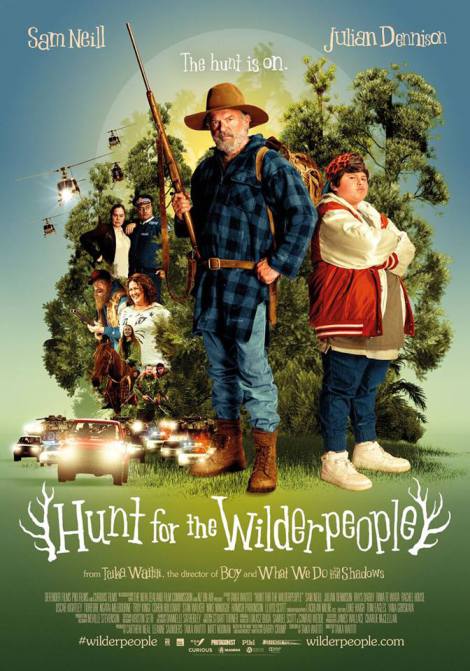
Writer-director Taika Waititi brings the same wild imagination and subversive wit to “Hunt for the Wilderpeople” that he did to the vampire comedy “What We Do in the Shadows.” Based on the book by New Zealand favorite Barry Crump, it is the story of “a real bad egg,” a boy named Ricky (Julian Dennison) who has been in an endless series of foster homes and finally comes to live out in the wilderness with the warmhearted Bella (Rima Te Wiata) and silent, reserved Hec (Sam Neill). Just when Ricky begins to feel at home, a tragic loss has him running away into the bush, followed by Hec, and then followed by the social worker (Rachel House) and the cops.

Waititi’s films have a lively energy that provides a delicious counterpoint to the understated comedy. The story is told with wry chapter titles, beginning with “A Real Bad Egg.” Ricky is described as “a bit of a handful” with a history that includes “disobedience, spitting, running away…and that’s just the stuff we know about.” But we can see that this chubby kid who says he intends to grow up to be a drug dealer and rap star and get killed in a drive-by wants to be part of a family, even though he does not know exactly how. Bella has just the combination of bluntness and generosity of spirit to make Ricky begin to feel welcome. He’s not looking for cuddles and compliments. There is a bracing reality to Bella that begins to help him thaw. She kills a pig with a knife and says, “There’s dinner, sorted. Want to help me gut it?” He gets a dog and comes up with three possible names: Psycho, Megatron, or Tupac. This is a place where those names are just fine.

On the run, he is back to trusting no one but himself. He says he lives in Rickytown, population: Ricky. Hec tells him it’s time to get back to Realitytown. But that trip has to wait when Hec is injured and they have to stay in “Broken Foot Camp” until he is well enough to walk. And that gives them a chance to get to know each other, and become enough of a team to take on some of the challenges they meet along the way.

They meet some delightfully quirky characters, including three hunters who mistake Hec a child molester (an attempt at humor that does not work at all well), a paranoid hermit known as Psycho Sam (Rhys Darby), and a girl on a horse who brings Ricky home, where her father asks him if he can take a selfie. Waititi’s affection for the independent spirits of the people who live in the wilderness make us, like Ricky, glad to spend time with them.

(NOTE: look for writer/director Waititi in a small role as a clergyman)

Parents should know that this film includes extended peril and some violence including guns, with characters injured, a sad death, themes of abandonment, references to molestation, a drug reference, and some strong language.

Family discussion: When did Ricky and Hec begin to trust each other? When were they in the greatest danger?

If you like this, try: “Big Game” and “The Dish”

Related Tags:


Action/Adventure Based on a book Movies -- format Stories About Kids

The Real Story: Free State of Jones

Posted on June 23, 2016 at 3:34 pm

The new film about group who refused to fight for the Confederacy and established a free community in Civil War-era Mississippi is based on a true story. Matthew McConaughey stars as Newton Knight, a nurse in the Confederate Army who deserted because he did not want to fight for slavery or for wealthy plantation owners. In “Free State of Jones,” co-written and directed by Gary Ross (“The Hunger Games”), Knight is a Robin Hood-like figure, with a swamp taking the place of Sherwood Forest.

There was a Newton Knight and he did lead a rebellion, one of several groups who seceded from the Confederacy as the Confederacy seceded from the United States. The story was filmed in 1948 as “Tap Roots,”with Van Heflin, Susan Hayward, and Boris Karloff (as an Indian).

“Free State of Jones” is based on more recent research that indicates that Knight was opposed to secession and considered his “Jones” state a part of the union. The film’s website has detailed information with citations explaining the historical basis for characters like the real-life Newton Knight and Rachel and characters like Moses who are based on several real-life former slaves. The Smithsonian has a comprehensive article with the history of the story and the film.

Incidents described in a book by Sally Jenkins, including Knight’s rescue of an “apprenticed” black child captured by a plantation owner during the post-Civil War period and his decision to live in an all-black community, are in the film. The film also depicts the 1948 miscegenation trial of one of Knight’s descendents, who, allegedly one-eighth black, had violated the law by marrying a white woman. The real story is not as romantic as the one portrayed in the film, but the film is correct in stating that the ruling against the couple was overturned on appeal on a technicality because the Mississippi court did not want a Constitutional challenge to its laws prohibiting marriage between people of different races. Those laws would remain in place for almost 20 more years, and a film based on that case, Loving v. Virginia, will be released later this year.

Related Tags:


The Real Story
Interview: Morgan Neville on Yo-Yo Ma and “Music of Strangers”

Interview: Morgan Neville on Yo-Yo Ma and “Music of Strangers”

Posted on June 22, 2016 at 3:55 pm

© 2016 THE MUSIC OF STRANGERS

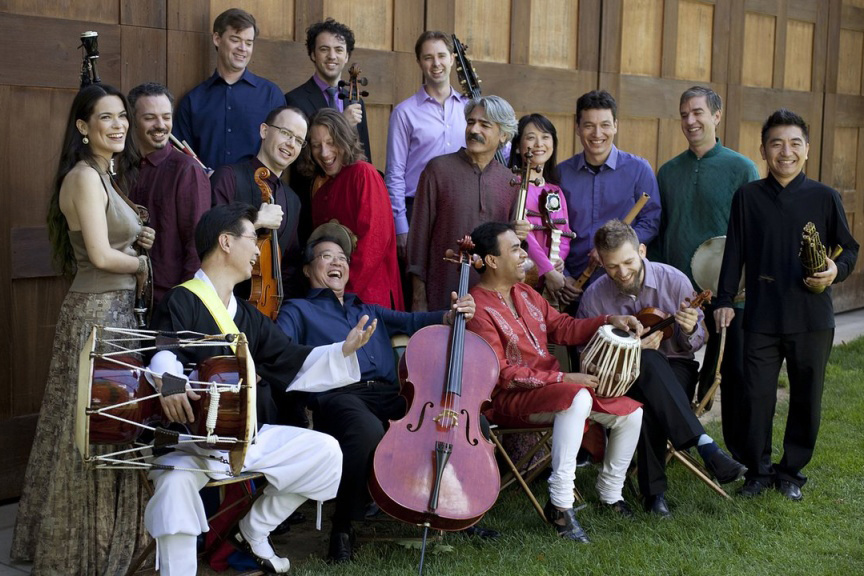
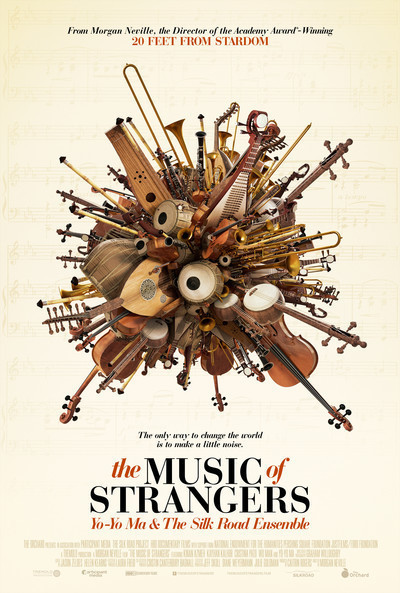
music of strangersMorgan Neville is the man behind some of my favorite documentaries including “20 Feet from Stardom” and “Best of Enemies.” His latest film, “The Music of Strangers: Yo-Yo Ma and the Silk Road Ensemble,” is about cellist Yo-Yo Man bringing together international musicians to share their sounds and traditions in a group called The Silk Road Ensemble. As we learn more about the challenges faced by performers from Spain, Syria, China, and other countries, the music they create together becomes even more moving.

That does not mean it was not a challenge for Neville to work with people from so many different cultures, whose only common language was music. “It was difficult but incredibly rewarding. I mean this was such an ambitious film that I think if I had known how ambitious it was at the beginning I would have been a lot more scared. I think when you make films it’s like being like a mother who’s had a baby. Your body forgets the pain; you have this conscious amnesia where you convince yourself that it won’t be that hard. And this was hard. We shot in seven countries in six languages and so from a production point of view it was hard, but creatively it was fascinating. Trying to take the ideas and the music and the scale of what is happening in the Silk Road Ensemble and trying to put that into a movie was daunting, but it was amazing experience at the same time.”

The film goes back to the first gathering in 2000, and some of the film was archival, coming from a local PBS station. “I didn’t know when I started making the film that any of that stuff existed but we just found little bit and pieces in archives that helped us tell the story and helped shape the story. But I basically filmed everything from 2011 on.” There were so many musicians he had to select a few to focus on. “Not only did I want to represent the diversity of the geography and background and experience but at the same time they had to be on the same type of journey. There were other great musicians and great stories in the ensemble but their stories are less related. I think the thing that united everybody that we focused on was that they all made a decision to leave, to not do the obvious thing or take the road less traveled and to go out into the world and then all returned back to home with some new found perspective on what made their home special or made that tradition special.”

The musicians all cherish their traditions and cultures, but they clearly relish the musical adventure of combining sounds and trying something new. Neville agreed that those two impulses could create some tension. “In all these cultures there are traditionalists, people who basically don’t want things to change, and I get that, but I think what Yo-Yo says in the film is that all traditions are born of real innovation. In a way what they’ve all tried to do with their tradition is the best way of preserving it. They are trying to keep it growing. What you are doing with a bagpipe or a peepa; a Galician gaita or a pipa, it’s taking it and expanding the vocabulary of that language. That’s a way of celebrating its uniqueness and making sure it stays relevant, it doesn’t die out like you see with the Xang Family banned in China . To me they are just tremendous, they are amazing, but there is no future for it. And there is a whole other counter-argument you could make, which is why the metaphor the Silk Road is so appropriate. Things that seem like pure embodiments of specific cultures usually aren’t, whether we are talking about pipas or pasta. I will give you one example, the Persian instrument which is a Kamancheh, a very traditional, personal instrument. It has four strings on it; it used to have two strings on it until they saw violins and said, ‘Well, if they’ve got four strings we should have four strings.’ And now people want to protect it but it already has a vocabulary, it’s already in dialogue with the rest of the world even going back before this tradition. People like Wu Man and Kayhan , even though actually they left their homes, they’ve done more to preserve their tradition than the people that stayed. If you look at how China regards its own traditional music now or how Iran regarded its traditional music after the Gulf War, they not only stopped all Western influence, they stopped all traditional music in the cultural Revolution and that’s part of why Kayhan had to leave, everybody had forgotten how to play the Kamancheh.”

While Neville has made documentaries on other subjects, his favorite topics begin with music. “To me, the best music films are not about music. Music is a way of telling the story. It’s a language but it’s got to say something with that language. I think Yo-Yo is very much about that. I feel like it’s an amazing tool to have as filmmaker and I love investigating those stories. But every music film I’ve done is about something beyond the music. This one is about all these ideas. I mean it’s really about these big questions in its most elemental form, the importance of culture. Does culture matter, how does it define us and connect us in ways we don’t see? How can culture help us humanize the other in a world where we are so caught up in building walls and demonizing the other, how does culture work as antidote to that? I mean all of these kinds of questions I think we’re the ones we were investigating.” He gave as an example one moment in the film he said was one of his favorites: when Yo-Yo Ma is playing a Bach piece and another musician is singing a very traditional Taiwanese song as a mashup between the two seamlessly.” At first, the film had more expert explanations, but “at the end of the day it just felt like we were talking more than showing and that the music expressed so much that we just kept pulling back on it and trying to find the emotional story.”

Related Tags:


Directors Documentary Interview Music
THE MOVIE MOM® is a registered trademark of Nell Minow. Use of the mark without express consent from Nell Minow constitutes trademark infringement and unfair competition in violation of federal and state laws. All material © Nell Minow 1995-2026, all rights reserved, and no use or republication is permitted without explicit permission. This site hosts Nell Minow’s Movie Mom® archive, with material that originally appeared on Yahoo! Movies, Beliefnet, and other sources. Much of her new material can be found at Rogerebert.com, Huffington Post, and WheretoWatch. Her books include The Movie Mom’s Guide to Family Movies and 101 Must-See Movie Moments, and she can be heard each week on radio stations across the country.

Website Designed by Max LaZebnik